Cross-Polarization Methods in Gaseous NMR Experimentation
SEP 22, 20259 MIN READ
Generate Your Research Report Instantly with AI Agent
Patsnap Eureka helps you evaluate technical feasibility & market potential.
Cross-Polarization NMR Background and Objectives
Nuclear Magnetic Resonance (NMR) spectroscopy has evolved significantly since its discovery in the 1940s, with cross-polarization (CP) techniques representing a pivotal advancement in enhancing signal sensitivity. Traditionally, CP methods have been extensively applied in solid-state NMR, where they facilitate magnetization transfer between abundant and rare nuclear spins. However, the application of these techniques to gaseous samples presents unique challenges and opportunities that remain largely unexplored in contemporary research landscapes.
The evolution of CP techniques in NMR can be traced through several key developmental phases. Initial breakthroughs occurred in the 1960s with the pioneering work of Hartmann and Hahn, who established the theoretical foundation for cross-polarization. Subsequent decades witnessed refinements in pulse sequences and hardware capabilities, enabling more sophisticated experimental designs. Recent advancements in superconducting magnets, cryogenic probes, and digital signal processing have further expanded the potential applications of CP methods.
In gaseous environments, NMR experiments face distinctive challenges related to molecular mobility, reduced spin density, and rapid relaxation processes. These factors have historically limited the application of conventional CP approaches in gas-phase studies. The technical objective of this research is to overcome these limitations by developing specialized CP methodologies optimized for gaseous samples, potentially revolutionizing analytical capabilities in fields ranging from atmospheric chemistry to industrial process monitoring.
Current research trends indicate growing interest in adapting solid-state CP techniques for gaseous applications, with particular focus on hyperpolarization methods that can dramatically enhance signal-to-noise ratios. Parallel developments in microfluidic NMR systems and miniaturized spectrometers suggest promising avenues for practical implementation of these techniques in portable analytical devices.
The primary technical goals for advancing cross-polarization methods in gaseous NMR experimentation include: optimizing radio-frequency pulse sequences for gas-phase molecular dynamics; developing specialized probe designs that maximize sensitivity in low-density samples; establishing robust calibration protocols for quantitative analysis; and integrating machine learning algorithms for automated spectral interpretation. Success in these objectives would enable unprecedented insights into molecular structures and interactions in gaseous systems.
Beyond analytical chemistry applications, enhanced gaseous NMR capabilities could significantly impact fields such as medical diagnostics (through breath analysis), environmental monitoring, and fundamental physics research. The convergence of CP techniques with complementary technologies like optical pumping and parahydrogen-induced polarization represents a particularly promising direction for achieving transformative advances in this domain.
The evolution of CP techniques in NMR can be traced through several key developmental phases. Initial breakthroughs occurred in the 1960s with the pioneering work of Hartmann and Hahn, who established the theoretical foundation for cross-polarization. Subsequent decades witnessed refinements in pulse sequences and hardware capabilities, enabling more sophisticated experimental designs. Recent advancements in superconducting magnets, cryogenic probes, and digital signal processing have further expanded the potential applications of CP methods.
In gaseous environments, NMR experiments face distinctive challenges related to molecular mobility, reduced spin density, and rapid relaxation processes. These factors have historically limited the application of conventional CP approaches in gas-phase studies. The technical objective of this research is to overcome these limitations by developing specialized CP methodologies optimized for gaseous samples, potentially revolutionizing analytical capabilities in fields ranging from atmospheric chemistry to industrial process monitoring.
Current research trends indicate growing interest in adapting solid-state CP techniques for gaseous applications, with particular focus on hyperpolarization methods that can dramatically enhance signal-to-noise ratios. Parallel developments in microfluidic NMR systems and miniaturized spectrometers suggest promising avenues for practical implementation of these techniques in portable analytical devices.
The primary technical goals for advancing cross-polarization methods in gaseous NMR experimentation include: optimizing radio-frequency pulse sequences for gas-phase molecular dynamics; developing specialized probe designs that maximize sensitivity in low-density samples; establishing robust calibration protocols for quantitative analysis; and integrating machine learning algorithms for automated spectral interpretation. Success in these objectives would enable unprecedented insights into molecular structures and interactions in gaseous systems.
Beyond analytical chemistry applications, enhanced gaseous NMR capabilities could significantly impact fields such as medical diagnostics (through breath analysis), environmental monitoring, and fundamental physics research. The convergence of CP techniques with complementary technologies like optical pumping and parahydrogen-induced polarization represents a particularly promising direction for achieving transformative advances in this domain.
Market Applications for Gaseous NMR Technologies
Gaseous NMR technologies have established a significant presence across various industrial and research sectors, with applications continuing to expand as the technology matures. The healthcare and pharmaceutical industries represent the largest market segment, where gaseous NMR with cross-polarization methods enables advanced lung imaging techniques for diagnosing respiratory conditions. This non-invasive approach provides detailed visualization of gas distribution in lung tissues, offering substantial advantages over conventional imaging methods.
The energy sector has embraced gaseous NMR technologies for analyzing natural gas compositions, optimizing extraction processes, and monitoring gas purity in real-time. Cross-polarization techniques have enhanced sensitivity in these applications, allowing for detection of trace components that would otherwise remain undetectable using standard NMR methods. This capability has proven particularly valuable in natural gas processing facilities where composition monitoring directly impacts operational efficiency.
Environmental monitoring represents another rapidly growing application area, with gaseous NMR systems being deployed for atmospheric analysis and pollution detection. The enhanced sensitivity provided by cross-polarization methods allows for identification of low-concentration pollutants and greenhouse gases, supporting climate research and regulatory compliance monitoring programs.
In materials science and chemical manufacturing, gaseous NMR technologies facilitate the study of gas-solid interactions, catalytic processes, and reaction kinetics. Cross-polarization techniques have revolutionized these applications by enabling researchers to observe previously undetectable molecular interactions at interfaces, leading to improved catalyst designs and more efficient chemical processes.
The food and beverage industry utilizes gaseous NMR for quality control, particularly in packaging applications where headspace gas analysis ensures product freshness and safety. The technology's ability to detect minute changes in gas composition serves as an early warning system for product degradation.
Aerospace and defense sectors have implemented specialized gaseous NMR systems for analyzing cabin air quality, fuel compositions, and propellant performance. The non-destructive nature of NMR analysis makes it particularly valuable for safety-critical applications where sample preservation is essential.
Market forecasts indicate the global gaseous NMR technology market will experience compound annual growth exceeding traditional analytical instrumentation sectors, driven primarily by healthcare applications and industrial process control implementations. Cross-polarization methods specifically are expected to accelerate market expansion by enabling applications previously considered impractical due to sensitivity limitations.
The energy sector has embraced gaseous NMR technologies for analyzing natural gas compositions, optimizing extraction processes, and monitoring gas purity in real-time. Cross-polarization techniques have enhanced sensitivity in these applications, allowing for detection of trace components that would otherwise remain undetectable using standard NMR methods. This capability has proven particularly valuable in natural gas processing facilities where composition monitoring directly impacts operational efficiency.
Environmental monitoring represents another rapidly growing application area, with gaseous NMR systems being deployed for atmospheric analysis and pollution detection. The enhanced sensitivity provided by cross-polarization methods allows for identification of low-concentration pollutants and greenhouse gases, supporting climate research and regulatory compliance monitoring programs.
In materials science and chemical manufacturing, gaseous NMR technologies facilitate the study of gas-solid interactions, catalytic processes, and reaction kinetics. Cross-polarization techniques have revolutionized these applications by enabling researchers to observe previously undetectable molecular interactions at interfaces, leading to improved catalyst designs and more efficient chemical processes.
The food and beverage industry utilizes gaseous NMR for quality control, particularly in packaging applications where headspace gas analysis ensures product freshness and safety. The technology's ability to detect minute changes in gas composition serves as an early warning system for product degradation.
Aerospace and defense sectors have implemented specialized gaseous NMR systems for analyzing cabin air quality, fuel compositions, and propellant performance. The non-destructive nature of NMR analysis makes it particularly valuable for safety-critical applications where sample preservation is essential.
Market forecasts indicate the global gaseous NMR technology market will experience compound annual growth exceeding traditional analytical instrumentation sectors, driven primarily by healthcare applications and industrial process control implementations. Cross-polarization methods specifically are expected to accelerate market expansion by enabling applications previously considered impractical due to sensitivity limitations.
Current Challenges in Gaseous NMR Cross-Polarization
Despite significant advancements in Nuclear Magnetic Resonance (NMR) spectroscopy, gaseous NMR cross-polarization techniques face substantial challenges that limit their widespread application. The inherent low density of gas samples results in significantly reduced signal intensity compared to liquid or solid samples, creating a fundamental sensitivity barrier. This challenge is particularly pronounced when attempting to detect nuclei with low natural abundance or low gyromagnetic ratios in gaseous environments.
The molecular dynamics in gases present another critical obstacle. The rapid molecular motion and extended intermolecular distances in gaseous samples drastically reduce dipolar coupling efficiency, which is the primary mechanism facilitating polarization transfer in traditional cross-polarization experiments. This fundamental physical limitation undermines the effectiveness of conventional cross-polarization pulse sequences that were originally designed for solid-state applications.
Hardware limitations further complicate gaseous NMR cross-polarization. Specialized probe designs capable of handling variable pressure conditions while maintaining high sensitivity are required but remain technically challenging to develop. Additionally, the radio frequency (RF) coil efficiency must be optimized for the unique properties of gaseous samples, requiring innovative engineering solutions that differ from those used in conventional NMR probes.
Pulse sequence optimization represents another significant challenge. Traditional cross-polarization sequences require substantial modification to accommodate the distinctive relaxation properties and molecular dynamics of gases. The Hartmann-Hahn matching condition, critical for effective polarization transfer, is particularly difficult to achieve and maintain in gaseous environments due to molecular motion effects.
Signal-to-noise ratio (SNR) enhancement techniques face implementation barriers in gaseous systems. While hyperpolarization methods like Dynamic Nuclear Polarization (DNP) or Parahydrogen-Induced Polarization (PHIP) offer promising solutions, their application to diverse gas mixtures remains technically demanding and often requires specialized equipment not readily available in standard NMR facilities.
Temperature and pressure control introduce additional complexities. Gaseous NMR experiments frequently require precise regulation of these parameters to optimize signal acquisition, but maintaining stable conditions while ensuring efficient cross-polarization presents significant engineering challenges. Pressure fluctuations can dramatically affect spectral quality and polarization transfer efficiency.
Quantification accuracy is compromised by the variable density of gaseous samples and the non-linear response of cross-polarization efficiency to changing experimental conditions. This creates difficulties in developing reliable quantitative analytical methods based on gaseous NMR cross-polarization techniques, limiting their application in precise analytical chemistry and industrial process monitoring.
The molecular dynamics in gases present another critical obstacle. The rapid molecular motion and extended intermolecular distances in gaseous samples drastically reduce dipolar coupling efficiency, which is the primary mechanism facilitating polarization transfer in traditional cross-polarization experiments. This fundamental physical limitation undermines the effectiveness of conventional cross-polarization pulse sequences that were originally designed for solid-state applications.
Hardware limitations further complicate gaseous NMR cross-polarization. Specialized probe designs capable of handling variable pressure conditions while maintaining high sensitivity are required but remain technically challenging to develop. Additionally, the radio frequency (RF) coil efficiency must be optimized for the unique properties of gaseous samples, requiring innovative engineering solutions that differ from those used in conventional NMR probes.
Pulse sequence optimization represents another significant challenge. Traditional cross-polarization sequences require substantial modification to accommodate the distinctive relaxation properties and molecular dynamics of gases. The Hartmann-Hahn matching condition, critical for effective polarization transfer, is particularly difficult to achieve and maintain in gaseous environments due to molecular motion effects.
Signal-to-noise ratio (SNR) enhancement techniques face implementation barriers in gaseous systems. While hyperpolarization methods like Dynamic Nuclear Polarization (DNP) or Parahydrogen-Induced Polarization (PHIP) offer promising solutions, their application to diverse gas mixtures remains technically demanding and often requires specialized equipment not readily available in standard NMR facilities.
Temperature and pressure control introduce additional complexities. Gaseous NMR experiments frequently require precise regulation of these parameters to optimize signal acquisition, but maintaining stable conditions while ensuring efficient cross-polarization presents significant engineering challenges. Pressure fluctuations can dramatically affect spectral quality and polarization transfer efficiency.
Quantification accuracy is compromised by the variable density of gaseous samples and the non-linear response of cross-polarization efficiency to changing experimental conditions. This creates difficulties in developing reliable quantitative analytical methods based on gaseous NMR cross-polarization techniques, limiting their application in precise analytical chemistry and industrial process monitoring.
State-of-the-Art Cross-Polarization Methodologies
01 Cross-polarization techniques for enhancing NMR signals in gaseous samples
Cross-polarization methods can be used to enhance nuclear magnetic resonance (NMR) signals in gaseous samples by transferring polarization from one nuclear spin species to another. This technique is particularly useful for increasing the sensitivity of NMR measurements in gases with low natural abundance or inherently weak signals. The method involves matching specific resonance conditions between different nuclei to facilitate efficient polarization transfer, resulting in significantly improved signal-to-noise ratios in gaseous NMR experiments.- Cross-polarization techniques for enhancing NMR signals in gaseous samples: Cross-polarization methods can be used to enhance nuclear magnetic resonance (NMR) signals in gaseous samples by transferring polarization from one nuclear spin species to another. This technique is particularly useful for increasing sensitivity in gas-phase NMR experiments where signal strength is typically low. The method involves matching specific radiofrequency conditions to facilitate efficient polarization transfer between different nuclei in the gaseous state, resulting in enhanced signal detection and improved spectral quality.
- Hyperpolarization methods for gaseous NMR applications: Hyperpolarization techniques significantly enhance NMR signals in gaseous samples by creating non-equilibrium nuclear spin populations. These methods include optical pumping, dynamic nuclear polarization (DNP), and parahydrogen-induced polarization. By generating hyperpolarized gases, researchers can achieve signal enhancements of several orders of magnitude compared to conventional NMR techniques, enabling applications in medical imaging, materials science, and fundamental physics studies where gaseous samples are utilized.
- Hardware configurations for gaseous NMR polarization transfer: Specialized hardware configurations are essential for effective polarization transfer in gaseous NMR experiments. These setups include custom-designed RF coils, optimized probe geometries, and specialized sample chambers that accommodate the unique properties of gaseous samples. Advanced hardware systems may incorporate temperature control mechanisms, pressure regulation, and flow systems to maintain optimal conditions for polarization transfer in the gaseous phase, ensuring maximum sensitivity and reproducibility in experimental results.
- Pulse sequence optimization for gaseous polarization transfer: Specialized pulse sequences are developed to optimize polarization transfer in gaseous NMR experiments. These sequences are designed to account for the unique relaxation properties, molecular motion, and diffusion characteristics of gases. Advanced timing parameters, phase cycling schemes, and composite pulses are employed to maximize coherence transfer efficiency while minimizing signal losses. Pulse sequence optimization enables researchers to achieve higher sensitivity and resolution in gaseous NMR studies, particularly when investigating dilute samples or nuclei with low natural abundance.
- Applications of gaseous NMR polarization transfer techniques: Gaseous NMR polarization transfer techniques have diverse applications across multiple fields. In medical imaging, hyperpolarized gases like xenon-129 and helium-3 enable high-resolution lung imaging and functional studies. In materials science, these methods facilitate the characterization of porous materials, surface interactions, and gas adsorption phenomena. Environmental monitoring applications include trace gas analysis and reaction mechanism studies. Additionally, these techniques contribute to fundamental physics research by enabling investigations of quantum phenomena and molecular dynamics in the gas phase.
02 Hyperpolarization methods for gaseous samples in NMR spectroscopy
Hyperpolarization techniques can dramatically increase the polarization of nuclear spins in gaseous samples beyond thermal equilibrium levels, enhancing NMR signal intensity by several orders of magnitude. These methods include spin-exchange optical pumping (SEOP), dynamic nuclear polarization (DNP), and parahydrogen-induced polarization (PHIP). The enhanced polarization can be transferred between different nuclear species in the gas phase using cross-polarization techniques, enabling advanced applications in medical imaging, materials science, and chemical analysis with previously unattainable sensitivity.Expand Specific Solutions03 Hardware configurations for gaseous NMR polarization transfer
Specialized hardware configurations are essential for effective cross-polarization in gaseous NMR experiments. These setups typically include modified RF coils, gradient systems, and pulse sequence generators designed to handle the unique challenges of gaseous samples. Key components may include temperature-controlled sample chambers, specialized RF circuits for generating the required field gradients, and precise timing systems for coordinating the polarization transfer process. These hardware innovations enable efficient polarization transfer between different nuclear species in the gas phase, maximizing signal enhancement.Expand Specific Solutions04 Pulse sequence designs for gaseous cross-polarization NMR
Advanced pulse sequence designs are crucial for achieving efficient polarization transfer in gaseous NMR experiments. These sequences typically involve carefully timed RF pulses with specific phase relationships to facilitate coherent transfer of magnetization between different nuclear spin species. Techniques such as adiabatic passage, composite pulses, and phase cycling are employed to overcome challenges related to field inhomogeneities and relaxation effects in gaseous samples. Optimized pulse sequences can significantly improve the efficiency of polarization transfer, resulting in enhanced signal detection and spectral resolution.Expand Specific Solutions05 Applications of gaseous NMR polarization transfer techniques
Gaseous NMR polarization transfer techniques have diverse applications across multiple fields. In medical imaging, hyperpolarized gases like xenon-129 can be used for lung imaging and functional studies. In materials science, these methods enable the characterization of porous materials, surface interactions, and gas diffusion properties. Chemical analysis applications include reaction monitoring, structural determination of gaseous compounds, and isotope-specific studies. Environmental monitoring and industrial process control also benefit from the enhanced sensitivity provided by cross-polarization techniques in gaseous NMR.Expand Specific Solutions
Leading Research Groups and Instrument Manufacturers
Cross-polarization methods in gaseous NMR experimentation represent an emerging field at the intersection of analytical chemistry and molecular physics. The market is in its early growth phase, characterized by significant research activity but limited commercial deployment. Current market size is modest but expected to expand as applications in medical imaging, materials science, and industrial process monitoring mature. Technologically, the field is advancing rapidly with key players demonstrating varying levels of expertise. Bruker Switzerland AG and GE Healthcare AS lead in commercial instrumentation development, while academic institutions like MIT, EPFL, and Wuhan Institute of Physics & Mathematics CAS drive fundamental research innovations. Polarean, Inc. has established a specialized position in hyperpolarized gas production equipment. Oxford Instruments and Aspect Imaging are advancing compact MRI systems that leverage these techniques, indicating a gradual progression toward technological maturity and broader market adoption.
Wuhan Institute of Physics & Mathematics CAS
Technical Solution: The Wuhan Institute has pioneered innovative cross-polarization techniques specifically designed for low-density gaseous samples. Their approach combines traditional CP methods with specialized pulse sequence modifications that account for the unique molecular dynamics in gas-phase environments. The institute has developed custom-built NMR probes featuring high filling factors and optimized RF coil geometries that maximize sensitivity for dilute gas samples. Their methodology incorporates variable temperature capabilities spanning from cryogenic to elevated temperatures (77-500K) to manipulate molecular motion and optimize cross-polarization efficiency in different gas mixtures. The institute has also developed novel paramagnetic relaxation enhancement techniques that selectively accelerate relaxation of specific nuclei to improve polarization transfer efficiency in gaseous samples. Their research includes the development of specialized gas-handling systems that maintain sample purity and pressure stability during extended NMR experiments, which is critical for successful cross-polarization in gaseous samples.
Strengths: Cutting-edge fundamental research capabilities; specialized expertise in low-field NMR applications to gases; innovative pulse sequence development. Weaknesses: Less commercial focus than industry competitors; limited global distribution of developed technologies; primarily research-oriented rather than application-focused.
Bruker Switzerland AG
Technical Solution: Bruker has developed advanced cross-polarization techniques for gaseous NMR through their AVANCE NEO platform, which incorporates specialized pulse sequences optimized for gas-phase samples. Their technology utilizes high-field magnets (up to 1.2 GHz) combined with cryogenic probe technology to enhance sensitivity in gaseous samples where signal is inherently weak. Bruker's cross-polarization methods employ sophisticated RF pulse sequences that facilitate polarization transfer from high-abundance nuclei (typically 1H) to less sensitive nuclei (such as 13C, 15N) in gas-phase molecules. Their systems incorporate automated tuning and matching capabilities specifically calibrated for the unique challenges of gaseous samples, where sample density is significantly lower than in liquids or solids. Bruker has also pioneered specialized gas-flow NMR cells with temperature control systems that maintain optimal conditions for cross-polarization experiments in various gas mixtures.
Strengths: Industry-leading hardware sensitivity and stability; comprehensive pulse sequence libraries specifically optimized for gaseous samples; integrated software solutions for complex experimental design. Weaknesses: High cost of implementation; requires significant expertise to operate effectively; hardware complexity can lead to maintenance challenges in routine laboratory settings.
Key Patents and Publications in Gaseous NMR Enhancement
NMR probe for cross-polarization measurements
PatentInactiveUS5539315A
Innovation
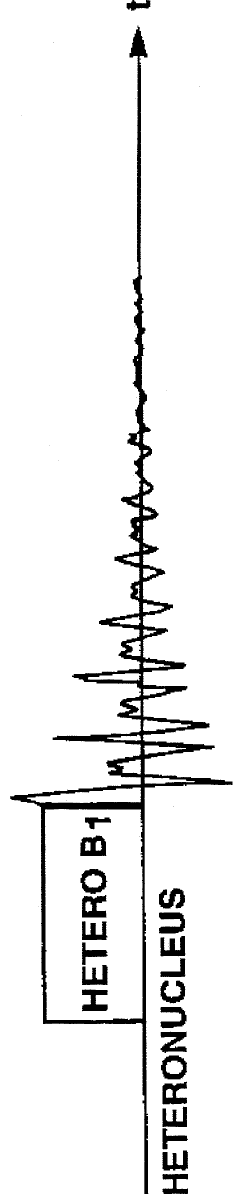
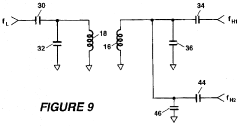
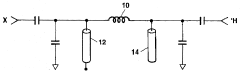
- A dual-coil NMR probe design is employed, where a single-turn inner coil is tuned to a higher frequency and a solenoid outer coil is tuned to a lower frequency, with the inner coil acting as a flux concentrator for the outer coil, ensuring high RF homogeneity and individual optimization of inductance for both channels.

Patent
Innovation
- Development of specialized pulse sequences that enhance polarization transfer efficiency between heteronuclear spins in gaseous samples, overcoming the inherent low sensitivity challenges in gas-phase NMR.
- Novel hardware configurations combining cryogenic probe technology with specialized gas-handling systems that maintain sample integrity while maximizing signal-to-noise ratios in cross-polarization experiments.
- Implementation of machine learning algorithms for automated optimization of cross-polarization parameters specific to different gas compositions and pressure conditions.
Safety Protocols for High-Field NMR Experimentation
High-field NMR experimentation, particularly when employing cross-polarization methods in gaseous samples, presents unique safety challenges that require rigorous protocols. The primary concern stems from the powerful magnetic fields generated by superconducting magnets, which typically range from 7 to 23 Tesla in modern research facilities. These fields create significant hazards for personnel and equipment if not properly managed.
Personnel working with high-field NMR systems must undergo comprehensive safety training before accessing laboratory facilities. This training should cover magnetic field awareness, emergency procedures, and specific protocols for working with gaseous samples under cross-polarization conditions. Documentation of training completion must be maintained and regularly updated as equipment and methodologies evolve.
The establishment of clearly marked safety zones around NMR equipment is essential. These zones should be designated according to magnetic field strength gradients, with restricted access to areas exceeding 5 Gauss. Particular attention must be paid to the fringe field boundaries, which may extend several meters from the magnet core when working with high-field systems necessary for effective cross-polarization in gaseous samples.
Equipment considerations present another critical safety dimension. All tools and accessories brought into the NMR laboratory must be non-ferromagnetic to prevent projectile hazards. Specialized pressure-rated vessels designed specifically for gaseous NMR experiments must undergo regular inspection and certification. These vessels must withstand both the magnetic environment and the pressures required for optimal cross-polarization signal transfer in gaseous media.
Cryogen management represents a significant safety concern in high-field NMR operations. Liquid helium and nitrogen used for magnet cooling can cause severe cold burns and asphyxiation if improperly handled. Automated monitoring systems should continuously assess oxygen levels in the laboratory, with automatic alarms and emergency ventilation systems activated when levels fall below 19.5% by volume.
Emergency response procedures must be clearly documented and regularly practiced. These should include quench management protocols specific to high-field systems, evacuation procedures, and first aid measures for potential injuries related to magnetic fields, cryogens, or pressurized gas systems used in cross-polarization experiments.
Regular safety audits and equipment inspections form the foundation of a comprehensive safety program. These should be conducted quarterly by qualified personnel, with particular attention to pressure vessels, gas delivery systems, and magnetic field containment measures that may be affected by the specialized equipment configurations required for gaseous cross-polarization experiments.
Personnel working with high-field NMR systems must undergo comprehensive safety training before accessing laboratory facilities. This training should cover magnetic field awareness, emergency procedures, and specific protocols for working with gaseous samples under cross-polarization conditions. Documentation of training completion must be maintained and regularly updated as equipment and methodologies evolve.
The establishment of clearly marked safety zones around NMR equipment is essential. These zones should be designated according to magnetic field strength gradients, with restricted access to areas exceeding 5 Gauss. Particular attention must be paid to the fringe field boundaries, which may extend several meters from the magnet core when working with high-field systems necessary for effective cross-polarization in gaseous samples.
Equipment considerations present another critical safety dimension. All tools and accessories brought into the NMR laboratory must be non-ferromagnetic to prevent projectile hazards. Specialized pressure-rated vessels designed specifically for gaseous NMR experiments must undergo regular inspection and certification. These vessels must withstand both the magnetic environment and the pressures required for optimal cross-polarization signal transfer in gaseous media.
Cryogen management represents a significant safety concern in high-field NMR operations. Liquid helium and nitrogen used for magnet cooling can cause severe cold burns and asphyxiation if improperly handled. Automated monitoring systems should continuously assess oxygen levels in the laboratory, with automatic alarms and emergency ventilation systems activated when levels fall below 19.5% by volume.
Emergency response procedures must be clearly documented and regularly practiced. These should include quench management protocols specific to high-field systems, evacuation procedures, and first aid measures for potential injuries related to magnetic fields, cryogens, or pressurized gas systems used in cross-polarization experiments.
Regular safety audits and equipment inspections form the foundation of a comprehensive safety program. These should be conducted quarterly by qualified personnel, with particular attention to pressure vessels, gas delivery systems, and magnetic field containment measures that may be affected by the specialized equipment configurations required for gaseous cross-polarization experiments.
Materials Compatibility in Gaseous NMR Systems
The selection of appropriate materials for gaseous NMR systems is critical when implementing cross-polarization methods, as these materials must withstand specific experimental conditions while maintaining signal integrity. Traditional NMR probe materials designed for liquid or solid samples often prove inadequate for gaseous experiments due to the unique challenges posed by gas-phase measurements.
Glass and ceramic components commonly used in NMR systems require careful evaluation when applied to gaseous cross-polarization experiments. These materials must exhibit minimal magnetic susceptibility variations to prevent field distortions that could compromise the already weak signals obtained from gaseous samples. Borosilicate glass and high-purity alumina ceramics have demonstrated superior performance in maintaining field homogeneity during cross-polarization sequences.
Metal components within gaseous NMR systems demand special consideration due to their potential for eddy current generation and RF interference. Non-magnetic alloys such as certain grades of titanium and brass have proven effective in minimizing these effects. However, the thermal expansion properties of these metals must be carefully matched to other system components to prevent stress-induced failures during temperature variations that commonly occur in cross-polarization experiments.
Polymer materials used for seals, gaskets, and insulation present unique compatibility challenges in gaseous NMR systems. Fluoropolymers like PTFE and PCTFE offer excellent chemical resistance and low magnetic signatures, making them suitable for many applications. However, their gas permeability characteristics must be evaluated, particularly when working with lightweight gases such as hydrogen or helium during cross-polarization experiments.
Surface treatments and coatings have emerged as critical factors in gaseous NMR system performance. Specialized coatings can minimize gas adsorption on internal surfaces, reducing signal contamination and improving experimental reproducibility. Passivation treatments for metal surfaces have shown particular promise in maintaining sample purity during extended cross-polarization sequences.
Recent advances in composite materials have introduced new possibilities for gaseous NMR probe construction. Carbon-fiber reinforced polymers offer exceptional strength-to-weight ratios and thermal stability while maintaining low magnetic signatures. These materials are increasingly being incorporated into next-generation probe designs specifically optimized for cross-polarization methods in gaseous samples.
The integration of microfluidic components with compatible materials has enabled more sophisticated gas handling capabilities in modern NMR systems. These components must be fabricated from materials that maintain dimensional stability under pressure fluctuations while preserving signal quality during cross-polarization experiments.
Glass and ceramic components commonly used in NMR systems require careful evaluation when applied to gaseous cross-polarization experiments. These materials must exhibit minimal magnetic susceptibility variations to prevent field distortions that could compromise the already weak signals obtained from gaseous samples. Borosilicate glass and high-purity alumina ceramics have demonstrated superior performance in maintaining field homogeneity during cross-polarization sequences.
Metal components within gaseous NMR systems demand special consideration due to their potential for eddy current generation and RF interference. Non-magnetic alloys such as certain grades of titanium and brass have proven effective in minimizing these effects. However, the thermal expansion properties of these metals must be carefully matched to other system components to prevent stress-induced failures during temperature variations that commonly occur in cross-polarization experiments.
Polymer materials used for seals, gaskets, and insulation present unique compatibility challenges in gaseous NMR systems. Fluoropolymers like PTFE and PCTFE offer excellent chemical resistance and low magnetic signatures, making them suitable for many applications. However, their gas permeability characteristics must be evaluated, particularly when working with lightweight gases such as hydrogen or helium during cross-polarization experiments.
Surface treatments and coatings have emerged as critical factors in gaseous NMR system performance. Specialized coatings can minimize gas adsorption on internal surfaces, reducing signal contamination and improving experimental reproducibility. Passivation treatments for metal surfaces have shown particular promise in maintaining sample purity during extended cross-polarization sequences.
Recent advances in composite materials have introduced new possibilities for gaseous NMR probe construction. Carbon-fiber reinforced polymers offer exceptional strength-to-weight ratios and thermal stability while maintaining low magnetic signatures. These materials are increasingly being incorporated into next-generation probe designs specifically optimized for cross-polarization methods in gaseous samples.
The integration of microfluidic components with compatible materials has enabled more sophisticated gas handling capabilities in modern NMR systems. These components must be fabricated from materials that maintain dimensional stability under pressure fluctuations while preserving signal quality during cross-polarization experiments.
Unlock deeper insights with Patsnap Eureka Quick Research — get a full tech report to explore trends and direct your research. Try now!
Generate Your Research Report Instantly with AI Agent
Supercharge your innovation with Patsnap Eureka AI Agent Platform!