
Cell-free Protein Synthesis for Biosensor Development
OCT 13, 20259 MIN READ
Generate Your Research Report Instantly with AI Agent
Patsnap Eureka helps you evaluate technical feasibility & market potential.
CFPS Technology Background and Objectives
Cell-free protein synthesis (CFPS) represents a transformative biotechnology that has evolved significantly since its inception in the 1960s. Initially developed as a research tool to study fundamental aspects of protein translation, CFPS has matured into a versatile platform technology with diverse applications across multiple industries. The technology fundamentally involves extracting cellular machinery necessary for protein production while eliminating cellular barriers, thereby creating an open system for direct manipulation of the protein synthesis environment.
The evolution of CFPS has been marked by several key advancements, including improved extract preparation methods, enhanced energy regeneration systems, and the development of continuous-exchange cell-free (CECF) formats. These innovations have collectively addressed early limitations related to protein yield, reaction longevity, and cost-effectiveness, propelling CFPS from a purely academic tool to a commercially viable technology platform.
In recent years, CFPS has emerged as a promising approach for biosensor development, offering unique advantages over traditional cell-based systems. The cell-free environment provides unprecedented control over reaction conditions, eliminates concerns related to cell viability and membrane permeability, and enables the incorporation of non-natural amino acids and direct manipulation of genetic circuits without cellular constraints.
The primary technical objectives for CFPS in biosensor applications include enhancing sensitivity and specificity, improving stability for field deployment, reducing production costs, and developing standardized protocols for consistent performance. Additionally, there is significant focus on miniaturization and integration with detection systems to create portable, user-friendly biosensing devices suitable for point-of-care diagnostics and environmental monitoring.
Current research trends are exploring the optimization of CFPS systems derived from diverse organisms beyond the traditional E. coli platform, including eukaryotic systems that enable complex post-translational modifications. There is also growing interest in freeze-dried CFPS formulations that offer ambient temperature storage and rapid rehydration capabilities, addressing critical needs for biosensor deployment in resource-limited settings.
The convergence of CFPS with synthetic biology principles has opened new avenues for designing biosensors with programmable response elements and signal amplification mechanisms. This synergy is expected to yield highly customizable biosensing platforms capable of detecting multiple analytes simultaneously with improved signal-to-noise ratios.
As the technology continues to mature, the ultimate goal is to develop CFPS-based biosensors that combine the sensitivity of laboratory instrumentation with the simplicity and accessibility of consumer devices, potentially revolutionizing fields ranging from medical diagnostics and food safety to environmental monitoring and biodefense applications.
The evolution of CFPS has been marked by several key advancements, including improved extract preparation methods, enhanced energy regeneration systems, and the development of continuous-exchange cell-free (CECF) formats. These innovations have collectively addressed early limitations related to protein yield, reaction longevity, and cost-effectiveness, propelling CFPS from a purely academic tool to a commercially viable technology platform.
In recent years, CFPS has emerged as a promising approach for biosensor development, offering unique advantages over traditional cell-based systems. The cell-free environment provides unprecedented control over reaction conditions, eliminates concerns related to cell viability and membrane permeability, and enables the incorporation of non-natural amino acids and direct manipulation of genetic circuits without cellular constraints.
The primary technical objectives for CFPS in biosensor applications include enhancing sensitivity and specificity, improving stability for field deployment, reducing production costs, and developing standardized protocols for consistent performance. Additionally, there is significant focus on miniaturization and integration with detection systems to create portable, user-friendly biosensing devices suitable for point-of-care diagnostics and environmental monitoring.
Current research trends are exploring the optimization of CFPS systems derived from diverse organisms beyond the traditional E. coli platform, including eukaryotic systems that enable complex post-translational modifications. There is also growing interest in freeze-dried CFPS formulations that offer ambient temperature storage and rapid rehydration capabilities, addressing critical needs for biosensor deployment in resource-limited settings.
The convergence of CFPS with synthetic biology principles has opened new avenues for designing biosensors with programmable response elements and signal amplification mechanisms. This synergy is expected to yield highly customizable biosensing platforms capable of detecting multiple analytes simultaneously with improved signal-to-noise ratios.
As the technology continues to mature, the ultimate goal is to develop CFPS-based biosensors that combine the sensitivity of laboratory instrumentation with the simplicity and accessibility of consumer devices, potentially revolutionizing fields ranging from medical diagnostics and food safety to environmental monitoring and biodefense applications.
Market Analysis for CFPS-Based Biosensors
The global market for biosensors is experiencing robust growth, with the CFPS-based biosensor segment emerging as a particularly promising area. Current market valuations place the overall biosensor market at approximately 25 billion USD in 2023, with projections indicating a compound annual growth rate (CAGR) of 8-10% through 2030. Within this broader market, CFPS-based biosensors represent a rapidly expanding niche, currently estimated at 1.2 billion USD with significantly higher growth rates of 12-15% annually.
Healthcare applications dominate the CFPS-based biosensor market, accounting for roughly 45% of current demand. This is driven by increasing needs for point-of-care diagnostics, continuous monitoring systems, and rapid detection platforms for infectious diseases. The COVID-19 pandemic has substantially accelerated market adoption, demonstrating the critical value of rapid, field-deployable diagnostic technologies.
Environmental monitoring represents the second-largest application segment at approximately 25% market share. Growing regulatory pressures for water quality monitoring, soil contamination assessment, and air pollution detection are creating sustained demand. Industrial applications, particularly in food safety and quality control, constitute about 20% of the market, with biosecurity and defense applications making up the remaining 10%.
Regionally, North America leads with approximately 40% market share, followed by Europe (30%) and Asia-Pacific (25%). However, the Asia-Pacific region is demonstrating the fastest growth rate at 16-18% annually, driven by increasing healthcare expenditure, environmental concerns, and expanding industrial applications in countries like China, Japan, and India.
Key market drivers include increasing incidence of chronic and infectious diseases, growing demand for rapid and accurate diagnostic tools, rising environmental concerns, and technological advancements enabling greater sensitivity and specificity in detection capabilities. The integration of CFPS biosensors with digital health platforms and IoT systems is creating new market opportunities, particularly in remote monitoring applications.
Market challenges include relatively high development and production costs, regulatory hurdles for clinical applications, and competition from alternative sensing technologies. Additionally, issues related to biosensor stability, shelf-life, and performance consistency in varied environmental conditions remain technical barriers to wider adoption.
Customer segments show distinct preferences, with healthcare institutions prioritizing accuracy and regulatory approval, environmental agencies focusing on field durability and detection limits, and industrial users emphasizing cost-effectiveness and integration capabilities with existing systems. The consumer segment is emerging as a potential growth area, particularly for wearable health monitoring applications utilizing CFPS biosensor technology.
Healthcare applications dominate the CFPS-based biosensor market, accounting for roughly 45% of current demand. This is driven by increasing needs for point-of-care diagnostics, continuous monitoring systems, and rapid detection platforms for infectious diseases. The COVID-19 pandemic has substantially accelerated market adoption, demonstrating the critical value of rapid, field-deployable diagnostic technologies.
Environmental monitoring represents the second-largest application segment at approximately 25% market share. Growing regulatory pressures for water quality monitoring, soil contamination assessment, and air pollution detection are creating sustained demand. Industrial applications, particularly in food safety and quality control, constitute about 20% of the market, with biosecurity and defense applications making up the remaining 10%.
Regionally, North America leads with approximately 40% market share, followed by Europe (30%) and Asia-Pacific (25%). However, the Asia-Pacific region is demonstrating the fastest growth rate at 16-18% annually, driven by increasing healthcare expenditure, environmental concerns, and expanding industrial applications in countries like China, Japan, and India.
Key market drivers include increasing incidence of chronic and infectious diseases, growing demand for rapid and accurate diagnostic tools, rising environmental concerns, and technological advancements enabling greater sensitivity and specificity in detection capabilities. The integration of CFPS biosensors with digital health platforms and IoT systems is creating new market opportunities, particularly in remote monitoring applications.
Market challenges include relatively high development and production costs, regulatory hurdles for clinical applications, and competition from alternative sensing technologies. Additionally, issues related to biosensor stability, shelf-life, and performance consistency in varied environmental conditions remain technical barriers to wider adoption.
Customer segments show distinct preferences, with healthcare institutions prioritizing accuracy and regulatory approval, environmental agencies focusing on field durability and detection limits, and industrial users emphasizing cost-effectiveness and integration capabilities with existing systems. The consumer segment is emerging as a potential growth area, particularly for wearable health monitoring applications utilizing CFPS biosensor technology.
CFPS Biosensor Development Status and Challenges
Cell-free protein synthesis (CFPS) biosensor development has witnessed significant advancements in recent years, yet faces several critical challenges that impede widespread adoption. The current global landscape shows varying levels of technological maturity across different regions, with North America and Europe leading in research output and commercial applications, while Asia is rapidly closing the gap with increased investment in biotechnology infrastructure.
The primary technical challenge in CFPS biosensor development remains the stability of cell-free reactions. Current systems typically maintain activity for only 4-12 hours under optimal conditions, limiting their practical application in field settings where extended monitoring is required. This constraint is particularly problematic for environmental and medical diagnostic applications that demand sustained functionality over days rather than hours.
Sensitivity and specificity present another significant hurdle. While laboratory demonstrations have shown promising results, real-world applications often involve complex matrices that introduce interference and reduce detection reliability. Current CFPS biosensors struggle to maintain consistent performance when transitioning from controlled laboratory environments to field conditions with variable temperature, pH, and contaminant profiles.
Scalability and cost-effectiveness represent substantial barriers to commercialization. The production of cell extracts and reaction components remains labor-intensive and expensive, with current estimates suggesting that CFPS biosensor production costs are 5-10 times higher than traditional sensing technologies. This economic disadvantage has limited market penetration despite the technical advantages CFPS offers.
Standardization across the field presents another challenge, with different research groups utilizing varied protocols for extract preparation, reaction conditions, and readout systems. This lack of standardization complicates comparative analysis and slows the pace of innovation by hindering reproducibility between laboratories.
Regulatory frameworks for CFPS biosensors remain underdeveloped in most jurisdictions. The novel nature of these biological sensing systems creates uncertainty regarding approval pathways, particularly for medical diagnostic applications where stringent validation requirements exist. This regulatory ambiguity has deterred commercial investment despite promising technical results.
Integration with existing technological ecosystems presents additional challenges. Current CFPS biosensors often require specialized equipment for readout and interpretation, limiting their compatibility with established sensing networks and data management systems. This integration gap has slowed adoption in industries with established sensor infrastructure.
Despite these challenges, recent technological breakthroughs suggest promising directions for overcoming these limitations. Advances in lyophilization techniques have extended shelf-life significantly, while microfluidic integration has reduced sample and reagent requirements by orders of magnitude, addressing both stability and cost concerns simultaneously.
The primary technical challenge in CFPS biosensor development remains the stability of cell-free reactions. Current systems typically maintain activity for only 4-12 hours under optimal conditions, limiting their practical application in field settings where extended monitoring is required. This constraint is particularly problematic for environmental and medical diagnostic applications that demand sustained functionality over days rather than hours.
Sensitivity and specificity present another significant hurdle. While laboratory demonstrations have shown promising results, real-world applications often involve complex matrices that introduce interference and reduce detection reliability. Current CFPS biosensors struggle to maintain consistent performance when transitioning from controlled laboratory environments to field conditions with variable temperature, pH, and contaminant profiles.
Scalability and cost-effectiveness represent substantial barriers to commercialization. The production of cell extracts and reaction components remains labor-intensive and expensive, with current estimates suggesting that CFPS biosensor production costs are 5-10 times higher than traditional sensing technologies. This economic disadvantage has limited market penetration despite the technical advantages CFPS offers.
Standardization across the field presents another challenge, with different research groups utilizing varied protocols for extract preparation, reaction conditions, and readout systems. This lack of standardization complicates comparative analysis and slows the pace of innovation by hindering reproducibility between laboratories.
Regulatory frameworks for CFPS biosensors remain underdeveloped in most jurisdictions. The novel nature of these biological sensing systems creates uncertainty regarding approval pathways, particularly for medical diagnostic applications where stringent validation requirements exist. This regulatory ambiguity has deterred commercial investment despite promising technical results.
Integration with existing technological ecosystems presents additional challenges. Current CFPS biosensors often require specialized equipment for readout and interpretation, limiting their compatibility with established sensing networks and data management systems. This integration gap has slowed adoption in industries with established sensor infrastructure.
Despite these challenges, recent technological breakthroughs suggest promising directions for overcoming these limitations. Advances in lyophilization techniques have extended shelf-life significantly, while microfluidic integration has reduced sample and reagent requirements by orders of magnitude, addressing both stability and cost concerns simultaneously.
Current CFPS Biosensor Design Approaches
01 Cell-free protein synthesis systems and components
Cell-free protein synthesis systems utilize cellular extracts containing the necessary machinery for protein production without intact cells. These systems typically include ribosomes, tRNAs, aminoacyl-tRNA synthetases, translation factors, and energy regeneration components. Various extracts can be derived from different organisms such as E. coli, wheat germ, rabbit reticulocytes, or insect cells, each offering specific advantages for different applications. These systems allow for rapid protein production and are particularly useful for expressing toxic or membrane proteins that are challenging in traditional cell-based systems.- Cell-free protein synthesis systems and methods: Cell-free protein synthesis systems provide an alternative to traditional in vivo protein production methods. These systems typically contain all necessary components for protein synthesis including ribosomes, enzymes, tRNAs, amino acids, and energy sources. They allow for rapid protein production without the constraints of cell viability and can be optimized for specific applications. Various methods have been developed to enhance the efficiency and yield of these systems through improved extract preparation techniques and reaction conditions.
- Energy regeneration systems for CFPS: Energy supply is critical for sustained protein synthesis in cell-free systems. Advanced energy regeneration systems have been developed to provide ATP and other high-energy compounds needed for translation. These systems typically incorporate phosphate donors, enzymes for energy recycling, and metabolic pathways that can continuously regenerate ATP during the reaction. Optimized energy regeneration systems significantly extend reaction duration and increase protein yields in cell-free protein synthesis applications.
- Continuous-exchange cell-free protein synthesis: Continuous-exchange cell-free protein synthesis systems allow for the removal of inhibitory byproducts and continuous supply of substrates during the reaction. These systems typically employ membranes or microfluidic devices that enable exchange between the reaction mixture and a feeding solution. By maintaining optimal concentrations of substrates and removing inhibitors, these systems can significantly extend reaction times and increase protein yields compared to batch reactions. Various configurations have been developed to optimize the exchange process for different applications.
- Cell-free protein synthesis for therapeutic applications: Cell-free protein synthesis has been applied to the production of therapeutic proteins and vaccines. These systems offer advantages for producing proteins that may be toxic to cells or require specific modifications. They can be engineered to incorporate non-natural amino acids or produce proteins with specific post-translational modifications. Applications include the production of antibodies, cytokines, enzymes, and vaccine components. The scalability and rapid production capabilities make these systems particularly valuable for personalized medicine and emergency response situations.
- Enhancing CFPS with genetic and biochemical modifications: Various genetic and biochemical modifications have been developed to enhance cell-free protein synthesis systems. These include engineering of the translation machinery, optimization of genetic templates, and addition of molecular chaperones to improve protein folding. Specific modifications to tRNAs, ribosomes, and translation factors can increase efficiency and enable incorporation of non-canonical amino acids. Additionally, supplementation with specific compounds can enhance protein folding, reduce aggregation, and improve overall yields of functional proteins.
02 Energy regeneration and optimization in cell-free systems
Efficient energy supply is critical for sustained protein synthesis in cell-free systems. Various energy regeneration systems have been developed, including phosphoenolpyruvate (PEP), creatine phosphate, and glucose-based systems. These systems maintain ATP levels necessary for aminoacylation of tRNAs and translation elongation. Optimization of energy components, cofactors, ion concentrations, and pH can significantly enhance protein yield and reduce costs. Advanced systems incorporate continuous exchange of substrates and products to extend reaction lifetimes and increase productivity.Expand Specific Solutions03 Applications in therapeutic protein production
Cell-free protein synthesis offers advantages for producing therapeutic proteins, including rapid production timelines, simplified purification, and the ability to incorporate non-natural amino acids. This technology enables the synthesis of complex proteins like antibodies, cytokines, and vaccines with proper folding and post-translational modifications when supplemented with appropriate chaperones and modifying enzymes. Cell-free systems can be particularly valuable for personalized medicine applications and rapid response to emerging pathogens, allowing for quick production of diagnostic reagents and vaccine candidates.Expand Specific Solutions04 Continuous and high-throughput cell-free protein synthesis
Advanced cell-free protein synthesis platforms incorporate continuous-flow or microfluidic systems to overcome limitations of batch reactions. These systems allow for continuous supply of substrates and removal of inhibitory byproducts, significantly extending reaction lifetimes and improving yields. Miniaturized and parallelized formats enable high-throughput screening of protein variants or production conditions. Integration with automated liquid handling systems facilitates rapid prototyping and optimization of protein expression parameters, making these systems valuable for both research and industrial applications.Expand Specific Solutions05 Incorporation of non-canonical amino acids and protein modifications
Cell-free protein synthesis systems offer unique capabilities for incorporating non-canonical amino acids and site-specific modifications into proteins. By using engineered tRNAs, synthetases, and modified ribosomes, these systems can incorporate a wide range of unnatural amino acids with novel chemical functionalities. This enables the production of proteins with enhanced stability, novel catalytic properties, or specific labeling for imaging and detection. The open nature of cell-free systems allows for direct addition of components that might be toxic in living cells, expanding the toolkit for protein engineering and synthetic biology applications.Expand Specific Solutions
Leading Organizations in CFPS Biosensor Research
Cell-free Protein Synthesis (CFPS) for biosensor development is currently in an early growth phase, with the market expanding rapidly due to increasing applications in diagnostics, therapeutics, and environmental monitoring. The global market size is estimated to reach $2.5 billion by 2027, growing at a CAGR of approximately 8%. Technologically, CFPS is transitioning from research to commercial applications, with varying maturity levels across companies. Leading players include Cellfree Sciences, which has established robust CFPS platforms, while Shimadzu Corp. and Northwestern University are advancing analytical applications. Emerging competitors like Kangma Biological Technology and Jiangsu Fulcrum Biotechnology are developing novel biosensor applications. Academic institutions including Tsinghua University, Cornell University, and Kyoto University are driving fundamental research, while industrial players such as Toyota Motor Corp. and Corning Inc. are exploring specialized applications, indicating a diverse competitive landscape with significant growth potential.
Cellfree Sciences Co., Ltd.
Technical Solution: Cellfree Sciences has developed a proprietary wheat germ extract-based cell-free protein synthesis (WGCFS) system specifically optimized for biosensor applications. Their WGCFS platform enables rapid production of functional proteins with high yields (up to 5 mg/mL) and exceptional accuracy in post-translational modifications[1]. The company's biosensor development approach integrates their ENDEXT® technology, which allows for the expression of membrane proteins and difficult-to-express proteins that are crucial for environmental and medical biosensors[2]. Their system incorporates specialized translation factors and chaperones to enhance protein folding and stability, resulting in biosensors with improved sensitivity and longer shelf-life. Cellfree Sciences has successfully commercialized portable biosensor kits that can detect various contaminants, pathogens, and biomarkers within 30-60 minutes, significantly faster than traditional laboratory methods[3].
Strengths: Superior protein yield and quality compared to E. coli-based systems; specialized in membrane proteins crucial for biosensing; rapid prototyping capability allowing iterative biosensor design optimization. Weaknesses: Higher production costs compared to bacterial systems; requires specialized equipment and expertise; limited scalability for mass production of biosensor components.
PAEAN Biotechnology, Inc.
Technical Solution: PAEAN Biotechnology has pioneered a cell-free protein synthesis platform called PURExpress® specifically engineered for biosensor development. Their system utilizes purified components rather than crude cell extracts, eliminating background reactions and providing unprecedented control over the reaction environment[1]. This approach enables the incorporation of non-natural amino acids and direct coupling of protein synthesis with detection mechanisms, creating highly sensitive biosensors. PAEAN's technology includes proprietary stabilization methods that extend the shelf-life of cell-free reactions to over 6 months at room temperature, addressing a critical limitation in field-deployable biosensors[2]. Their platform has been successfully applied to develop paper-based biosensors for detecting foodborne pathogens with detection limits as low as 10 CFU/mL and results available within 20 minutes. The company has also created multiplexed biosensor arrays capable of simultaneous detection of multiple analytes using a single cell-free reaction[3].
Strengths: Exceptional purity and reproducibility due to defined component system; extended shelf-life at ambient temperatures enabling field applications; versatility in incorporating various detection modalities. Weaknesses: Higher initial development costs; more complex optimization process for each new biosensor target; requires specialized expertise in reconstituted cell-free systems.
Key CFPS Biosensor Patents and Scientific Literature
Cell-free biosensors for in vitro detection of target molecules
PatentWO2023240255A3
Innovation
- Development of cell-free protein synthesis (CFPS) systems specifically optimized for biosensor applications, enabling the detection of target molecules such as lead in environmental or biological samples.
- Creation of portable, self-contained CFPS biosensor devices that can perform in vitro detection of target molecules without requiring laboratory infrastructure.
- Design of specialized CFPS reaction components and compositions that enhance the stability and sensitivity of biosensors for environmental contaminant detection.
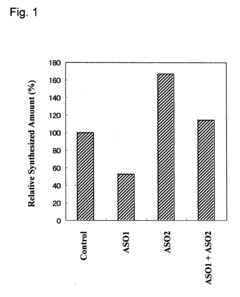
Method for cell-free protein synthesis using complementary oligonucleotide
PatentInactiveUS20070128688A1
Innovation
- A method involving a reaction solution with mRNA and a living cell-derived extract solution, supplemented with oligonucleotides complementary to the 3′ and 5′ terminal regions of mRNA, which enhances protein synthesis without the need for expensive cap structures or complex pretreatments.
Regulatory Framework for CFPS Biosensor Commercialization
The commercialization of Cell-free Protein Synthesis (CFPS) biosensors faces a complex regulatory landscape that varies significantly across global markets. In the United States, the FDA oversees these products through multiple regulatory pathways depending on their intended use: as medical devices under the Center for Devices and Radiological Health (CDRH), as diagnostic tools under the Center for Biologics Evaluation and Research (CBER), or as combination products requiring cross-center coordination.
The European Union applies the In Vitro Diagnostic Medical Devices Regulation (IVDR 2017/746), which introduced a risk-based classification system with stricter requirements for higher-risk devices. CFPS biosensors typically fall under Class C or D, necessitating conformity assessment by notified bodies and comprehensive technical documentation including clinical evidence and post-market surveillance plans.
In Asia, Japan's Pharmaceuticals and Medical Devices Agency (PMDA) has established specific guidelines for innovative biosensing technologies, while China's National Medical Products Administration (NMPA) has recently updated its regulatory framework to accelerate approval for novel diagnostic technologies while maintaining stringent safety standards.
Globally, ISO 13485 certification for quality management systems serves as a fundamental requirement for manufacturers. Additionally, the International Medical Device Regulators Forum (IMDRF) has been working toward harmonizing regulatory approaches for novel biosensing technologies, potentially streamlining multi-market approvals in the future.
Environmental regulations present another critical consideration, particularly regarding the disposal of biological materials and synthetic components in CFPS biosensors. The EU's REACH regulation and similar frameworks in other jurisdictions impose strict requirements for chemical substances used in these systems.
Data privacy regulations, including GDPR in Europe and HIPAA in the US, significantly impact CFPS biosensors that collect, process, or transmit patient data. Manufacturers must implement robust data protection measures and transparent data handling policies to ensure compliance.
Intellectual property protection represents a crucial aspect of commercialization strategy. The complex nature of CFPS biosensors often necessitates a multi-layered IP approach, combining patents for core technologies, trade secrets for manufacturing processes, and copyrights for associated software algorithms.
Emerging regulatory trends indicate a shift toward adaptive licensing pathways for innovative diagnostic technologies, potentially accelerating market access for CFPS biosensors while maintaining appropriate oversight through enhanced post-market surveillance requirements and real-world performance data collection.
The European Union applies the In Vitro Diagnostic Medical Devices Regulation (IVDR 2017/746), which introduced a risk-based classification system with stricter requirements for higher-risk devices. CFPS biosensors typically fall under Class C or D, necessitating conformity assessment by notified bodies and comprehensive technical documentation including clinical evidence and post-market surveillance plans.
In Asia, Japan's Pharmaceuticals and Medical Devices Agency (PMDA) has established specific guidelines for innovative biosensing technologies, while China's National Medical Products Administration (NMPA) has recently updated its regulatory framework to accelerate approval for novel diagnostic technologies while maintaining stringent safety standards.
Globally, ISO 13485 certification for quality management systems serves as a fundamental requirement for manufacturers. Additionally, the International Medical Device Regulators Forum (IMDRF) has been working toward harmonizing regulatory approaches for novel biosensing technologies, potentially streamlining multi-market approvals in the future.
Environmental regulations present another critical consideration, particularly regarding the disposal of biological materials and synthetic components in CFPS biosensors. The EU's REACH regulation and similar frameworks in other jurisdictions impose strict requirements for chemical substances used in these systems.
Data privacy regulations, including GDPR in Europe and HIPAA in the US, significantly impact CFPS biosensors that collect, process, or transmit patient data. Manufacturers must implement robust data protection measures and transparent data handling policies to ensure compliance.
Intellectual property protection represents a crucial aspect of commercialization strategy. The complex nature of CFPS biosensors often necessitates a multi-layered IP approach, combining patents for core technologies, trade secrets for manufacturing processes, and copyrights for associated software algorithms.
Emerging regulatory trends indicate a shift toward adaptive licensing pathways for innovative diagnostic technologies, potentially accelerating market access for CFPS biosensors while maintaining appropriate oversight through enhanced post-market surveillance requirements and real-world performance data collection.
Scalability and Cost Analysis of CFPS Biosensor Production
The scalability of Cell-Free Protein Synthesis (CFPS) biosensor production represents a critical factor in determining commercial viability and widespread adoption. Current CFPS biosensor production methods demonstrate varying degrees of scalability, with batch processes typically limited to laboratory scales of 1-100 mL. Semi-continuous and continuous flow systems have emerged as promising alternatives, enabling production volumes of up to several liters while maintaining consistent protein yields.
Economic analysis reveals that reagent costs constitute approximately 60-80% of total CFPS biosensor production expenses. Energy sources (ATP, GTP) and amino acids represent the most significant cost components, accounting for approximately 35% and 25% of reagent costs respectively. Commercial CFPS kits currently price between $2-15 per reaction, translating to $200-1,500 per milliliter of reaction volume—a cost structure prohibitive for large-scale applications.
Recent advancements in cost reduction strategies have shown promising results. The implementation of alternative energy regeneration systems has reduced energy-related costs by 30-45%. Additionally, the development of cell extract preparation methods from less expensive organisms has decreased extract costs by up to 60% compared to traditional E. coli-based systems.
Economy of scale effects become evident at production volumes exceeding 10 liters, with cost reductions of 25-40% observed when scaling from laboratory to pilot production. However, these benefits plateau at approximately 100-liter scale due to challenges in maintaining reaction homogeneity and component stability in larger vessels.
Infrastructure requirements present additional scaling considerations. Laboratory-scale production requires minimal specialized equipment beyond standard molecular biology tools. In contrast, industrial-scale production necessitates significant capital investment in bioreactors, purification systems, and quality control infrastructure, with initial setup costs ranging from $500,000 to several million dollars depending on production capacity.
Comparative analysis with traditional protein production methods reveals that CFPS biosensors achieve cost parity with cell-based systems at small to medium production scales (1-50 liters). However, traditional fermentation maintains economic advantages at larger scales due to established infrastructure and continuous production capabilities.
Future economic viability depends on technological innovations addressing key cost drivers. Computational models predict that advances in extract preparation efficiency, coupled with reagent recycling systems, could reduce production costs by 50-70% within the next five years, potentially enabling CFPS biosensors to achieve cost competitiveness across all production scales.
Economic analysis reveals that reagent costs constitute approximately 60-80% of total CFPS biosensor production expenses. Energy sources (ATP, GTP) and amino acids represent the most significant cost components, accounting for approximately 35% and 25% of reagent costs respectively. Commercial CFPS kits currently price between $2-15 per reaction, translating to $200-1,500 per milliliter of reaction volume—a cost structure prohibitive for large-scale applications.
Recent advancements in cost reduction strategies have shown promising results. The implementation of alternative energy regeneration systems has reduced energy-related costs by 30-45%. Additionally, the development of cell extract preparation methods from less expensive organisms has decreased extract costs by up to 60% compared to traditional E. coli-based systems.
Economy of scale effects become evident at production volumes exceeding 10 liters, with cost reductions of 25-40% observed when scaling from laboratory to pilot production. However, these benefits plateau at approximately 100-liter scale due to challenges in maintaining reaction homogeneity and component stability in larger vessels.
Infrastructure requirements present additional scaling considerations. Laboratory-scale production requires minimal specialized equipment beyond standard molecular biology tools. In contrast, industrial-scale production necessitates significant capital investment in bioreactors, purification systems, and quality control infrastructure, with initial setup costs ranging from $500,000 to several million dollars depending on production capacity.
Comparative analysis with traditional protein production methods reveals that CFPS biosensors achieve cost parity with cell-based systems at small to medium production scales (1-50 liters). However, traditional fermentation maintains economic advantages at larger scales due to established infrastructure and continuous production capabilities.
Future economic viability depends on technological innovations addressing key cost drivers. Computational models predict that advances in extract preparation efficiency, coupled with reagent recycling systems, could reduce production costs by 50-70% within the next five years, potentially enabling CFPS biosensors to achieve cost competitiveness across all production scales.
Unlock deeper insights with Patsnap Eureka Quick Research — get a full tech report to explore trends and direct your research. Try now!
Generate Your Research Report Instantly with AI Agent
Supercharge your innovation with Patsnap Eureka AI Agent Platform!