

Comparative Study of OLED vs MicroLED in Smart Devices
OCT 24, 20259 MIN READ
Generate Your Research Report Instantly with AI Agent
PatSnap Eureka helps you evaluate technical feasibility & market potential.
OLED and MicroLED Evolution and Objectives
Display technology has undergone significant evolution since the introduction of cathode ray tubes (CRTs) in the early 20th century. The transition from CRTs to liquid crystal displays (LCDs) marked the first major shift toward thinner, more energy-efficient displays. OLED (Organic Light-Emitting Diode) technology emerged in the late 1980s, with the first practical OLED device developed by Eastman Kodak in 1987. This innovation represented a paradigm shift in display technology, offering self-emissive pixels that eliminated the need for backlighting.
The commercial adoption of OLED displays began in the early 2000s, initially in small devices like MP3 players and digital cameras. By 2010, OLED technology had matured sufficiently to be incorporated into smartphones and televisions, with Samsung and LG leading the commercialization efforts. The technology's ability to deliver perfect blacks, wide viewing angles, and flexible form factors made it particularly attractive for premium mobile devices and high-end televisions.
MicroLED technology represents the next evolutionary step in display technology. First conceptualized in the early 2000s, MicroLED utilizes inorganic gallium nitride (GaN) LEDs at a microscopic scale. Unlike OLEDs, which use organic compounds that degrade over time, MicroLEDs employ inorganic materials that promise longer lifespans and higher brightness levels. Sony demonstrated the first commercial MicroLED display, the Crystal LED, in 2012, though at a prohibitively high cost for mass-market adoption.
The technical objectives for both OLED and MicroLED technologies align with broader industry goals: achieving higher energy efficiency, extending operational lifespan, enhancing brightness and color accuracy, and reducing production costs. For OLEDs, specific objectives include mitigating burn-in issues, improving blue OLED longevity, and enhancing peak brightness capabilities. MicroLED development focuses on overcoming mass transfer challenges, reducing pixel pitch, and scaling manufacturing processes to achieve cost-effective production.
Current trends indicate a bifurcated evolution path where OLED technology continues to dominate in the mobile device sector due to its maturity and cost advantages, while MicroLED emerges as a promising technology for premium large-format displays. The convergence point where MicroLED becomes viable for smaller smart devices remains a critical research objective, with industry analysts projecting significant breakthroughs in manufacturing techniques within the next 3-5 years.
The ultimate technical goal for both technologies is to achieve the perfect display: one that combines infinite contrast ratio, wide color gamut, high brightness, energy efficiency, durability, and flexibility—all at a competitive price point. This objective drives continuous innovation in materials science, manufacturing processes, and device architecture for both OLED and MicroLED technologies.
The commercial adoption of OLED displays began in the early 2000s, initially in small devices like MP3 players and digital cameras. By 2010, OLED technology had matured sufficiently to be incorporated into smartphones and televisions, with Samsung and LG leading the commercialization efforts. The technology's ability to deliver perfect blacks, wide viewing angles, and flexible form factors made it particularly attractive for premium mobile devices and high-end televisions.
MicroLED technology represents the next evolutionary step in display technology. First conceptualized in the early 2000s, MicroLED utilizes inorganic gallium nitride (GaN) LEDs at a microscopic scale. Unlike OLEDs, which use organic compounds that degrade over time, MicroLEDs employ inorganic materials that promise longer lifespans and higher brightness levels. Sony demonstrated the first commercial MicroLED display, the Crystal LED, in 2012, though at a prohibitively high cost for mass-market adoption.
The technical objectives for both OLED and MicroLED technologies align with broader industry goals: achieving higher energy efficiency, extending operational lifespan, enhancing brightness and color accuracy, and reducing production costs. For OLEDs, specific objectives include mitigating burn-in issues, improving blue OLED longevity, and enhancing peak brightness capabilities. MicroLED development focuses on overcoming mass transfer challenges, reducing pixel pitch, and scaling manufacturing processes to achieve cost-effective production.
Current trends indicate a bifurcated evolution path where OLED technology continues to dominate in the mobile device sector due to its maturity and cost advantages, while MicroLED emerges as a promising technology for premium large-format displays. The convergence point where MicroLED becomes viable for smaller smart devices remains a critical research objective, with industry analysts projecting significant breakthroughs in manufacturing techniques within the next 3-5 years.
The ultimate technical goal for both technologies is to achieve the perfect display: one that combines infinite contrast ratio, wide color gamut, high brightness, energy efficiency, durability, and flexibility—all at a competitive price point. This objective drives continuous innovation in materials science, manufacturing processes, and device architecture for both OLED and MicroLED technologies.
Market Demand Analysis for Advanced Display Technologies
The display technology market for smart devices is experiencing unprecedented growth, driven by consumer demand for superior visual experiences across smartphones, tablets, wearables, and automotive displays. Current market analysis indicates that the global advanced display market is projected to reach $167 billion by 2025, with OLED and MicroLED technologies emerging as the primary competitors for next-generation display solutions. This represents a compound annual growth rate of approximately 18.5% from 2020 to 2025, significantly outpacing traditional LCD technology growth.
Consumer preferences are increasingly shifting toward devices with higher resolution, improved color accuracy, better energy efficiency, and innovative form factors. Market surveys reveal that 73% of smartphone users consider display quality among the top three factors influencing their purchasing decisions. This trend is particularly pronounced in premium market segments, where manufacturers can command price premiums for superior display technologies.
The smartphone sector remains the largest consumer of advanced display technologies, accounting for nearly 40% of the total market share. However, wearable devices represent the fastest-growing segment, with an estimated growth rate of 25% annually through 2025. Smartwatches and fitness trackers particularly benefit from MicroLED's energy efficiency and brightness advantages, while OLED's flexibility enables innovative curved and foldable designs.
Automotive displays constitute another rapidly expanding market, expected to grow at 22% annually as vehicles incorporate more sophisticated infotainment systems and digital dashboards. Here, MicroLED's superior brightness and durability in extreme temperature conditions provide significant advantages, while OLED offers better viewing angles and contrast ratios for passenger entertainment systems.
Regional analysis shows Asia-Pacific leading the market with 45% share, followed by North America (28%) and Europe (20%). China and South Korea are emerging as manufacturing powerhouses for both technologies, while North American and European markets drive premium device adoption and innovation.
Industry forecasts suggest that while OLED currently dominates with approximately 70% market share in advanced displays for smart devices, MicroLED is expected to capture up to 25% of the market by 2025, primarily in premium segments where its performance advantages justify higher production costs. This shift is supported by significant investments from major technology companies, with over $4.5 billion allocated to MicroLED manufacturing capacity expansion in the past three years.
Consumer willingness to pay premium prices for advanced display technologies varies by device category, with surveys indicating that consumers will accept a 15-20% price premium for smartphones with superior displays, but only 8-12% for tablets and larger devices where display quality differences may be less perceptible in everyday use.
Consumer preferences are increasingly shifting toward devices with higher resolution, improved color accuracy, better energy efficiency, and innovative form factors. Market surveys reveal that 73% of smartphone users consider display quality among the top three factors influencing their purchasing decisions. This trend is particularly pronounced in premium market segments, where manufacturers can command price premiums for superior display technologies.
The smartphone sector remains the largest consumer of advanced display technologies, accounting for nearly 40% of the total market share. However, wearable devices represent the fastest-growing segment, with an estimated growth rate of 25% annually through 2025. Smartwatches and fitness trackers particularly benefit from MicroLED's energy efficiency and brightness advantages, while OLED's flexibility enables innovative curved and foldable designs.
Automotive displays constitute another rapidly expanding market, expected to grow at 22% annually as vehicles incorporate more sophisticated infotainment systems and digital dashboards. Here, MicroLED's superior brightness and durability in extreme temperature conditions provide significant advantages, while OLED offers better viewing angles and contrast ratios for passenger entertainment systems.
Regional analysis shows Asia-Pacific leading the market with 45% share, followed by North America (28%) and Europe (20%). China and South Korea are emerging as manufacturing powerhouses for both technologies, while North American and European markets drive premium device adoption and innovation.
Industry forecasts suggest that while OLED currently dominates with approximately 70% market share in advanced displays for smart devices, MicroLED is expected to capture up to 25% of the market by 2025, primarily in premium segments where its performance advantages justify higher production costs. This shift is supported by significant investments from major technology companies, with over $4.5 billion allocated to MicroLED manufacturing capacity expansion in the past three years.
Consumer willingness to pay premium prices for advanced display technologies varies by device category, with surveys indicating that consumers will accept a 15-20% price premium for smartphones with superior displays, but only 8-12% for tablets and larger devices where display quality differences may be less perceptible in everyday use.
Current Technical Limitations and Challenges
Despite significant advancements in display technologies, both OLED and MicroLED face substantial technical limitations that impact their widespread adoption in smart devices. OLED technology continues to struggle with limited lifespan issues, particularly with blue OLED materials degrading faster than red and green counterparts, resulting in color shift over time. This differential aging necessitates complex compensation algorithms that increase manufacturing complexity and cost.
Burn-in remains a persistent challenge for OLED displays, especially in applications with static interface elements. When pixels display the same content for extended periods, permanent image retention occurs, affecting user experience in smartphones and wearables where certain UI elements remain constant.
Power efficiency presents another significant hurdle for OLED technology. While OLEDs consume less power when displaying dark content, they become considerably less efficient when rendering bright scenes or white backgrounds, creating a variable power consumption profile that complicates battery management in portable devices.
For MicroLED technology, manufacturing scalability represents the most formidable obstacle. The process of precisely placing millions of microscopic LED chips demands extraordinary precision, with current transfer techniques struggling to achieve acceptable yields at mass production scales. This challenge intensifies as pixel densities increase for higher resolution displays.
Miniaturization of LED chips while maintaining performance presents another critical challenge. As MicroLEDs approach sizes below 10 micrometers, quantum efficiency tends to decrease due to surface defects and increased non-radiative recombination, affecting brightness and power efficiency.
Color consistency across MicroLED panels requires sophisticated binning and compensation techniques. The inherent variations in LED performance necessitate complex calibration processes to ensure uniform brightness and color reproduction across the entire display surface.
Thermal management poses challenges for both technologies but manifests differently. OLED displays generate heat that can accelerate material degradation, while MicroLED's higher brightness capabilities can create localized heating issues that must be dissipated effectively to prevent performance degradation and ensure longevity.
Cost remains a significant barrier, particularly for MicroLED. Current manufacturing processes involve expensive equipment, complex procedures, and relatively low yields, resulting in prohibitively high production costs for consumer electronics applications. While OLED has achieved cost reductions through manufacturing scale, MicroLED remains primarily confined to premium or specialized applications due to economic constraints.
Burn-in remains a persistent challenge for OLED displays, especially in applications with static interface elements. When pixels display the same content for extended periods, permanent image retention occurs, affecting user experience in smartphones and wearables where certain UI elements remain constant.
Power efficiency presents another significant hurdle for OLED technology. While OLEDs consume less power when displaying dark content, they become considerably less efficient when rendering bright scenes or white backgrounds, creating a variable power consumption profile that complicates battery management in portable devices.
For MicroLED technology, manufacturing scalability represents the most formidable obstacle. The process of precisely placing millions of microscopic LED chips demands extraordinary precision, with current transfer techniques struggling to achieve acceptable yields at mass production scales. This challenge intensifies as pixel densities increase for higher resolution displays.
Miniaturization of LED chips while maintaining performance presents another critical challenge. As MicroLEDs approach sizes below 10 micrometers, quantum efficiency tends to decrease due to surface defects and increased non-radiative recombination, affecting brightness and power efficiency.
Color consistency across MicroLED panels requires sophisticated binning and compensation techniques. The inherent variations in LED performance necessitate complex calibration processes to ensure uniform brightness and color reproduction across the entire display surface.
Thermal management poses challenges for both technologies but manifests differently. OLED displays generate heat that can accelerate material degradation, while MicroLED's higher brightness capabilities can create localized heating issues that must be dissipated effectively to prevent performance degradation and ensure longevity.
Cost remains a significant barrier, particularly for MicroLED. Current manufacturing processes involve expensive equipment, complex procedures, and relatively low yields, resulting in prohibitively high production costs for consumer electronics applications. While OLED has achieved cost reductions through manufacturing scale, MicroLED remains primarily confined to premium or specialized applications due to economic constraints.
Current Implementation Solutions
01 OLED display structure and materials
OLED (Organic Light Emitting Diode) displays utilize organic compounds that emit light when electricity is applied. These displays feature multiple layers including cathode, organic layers, and anode. The organic materials can be engineered for different colors and brightness levels. OLED technology offers advantages such as high contrast ratios, wide viewing angles, and the ability to create flexible displays due to their self-emissive nature, eliminating the need for backlighting.- OLED display structure and materials: OLED (Organic Light Emitting Diode) displays utilize organic compounds that emit light when an electric current is applied. These displays feature multiple layers including cathode, organic layers, and anode. The organic materials can be designed to emit different colors, eliminating the need for backlighting and color filters used in traditional LCD displays. This structure allows for thinner, more flexible displays with better contrast ratios and wider viewing angles.
- MicroLED fabrication and integration: MicroLED technology involves the fabrication and integration of microscopic LED arrays to create high-resolution displays. The manufacturing process includes the transfer of tiny LED chips from a source substrate to a display substrate, which presents significant technical challenges. Various methods have been developed to improve the efficiency of this transfer process and to ensure precise alignment of the microLEDs, which is crucial for display quality and performance.
- Display driving and control systems: Advanced driving and control systems are essential for both OLED and MicroLED displays to achieve optimal performance. These systems include pixel driving circuits, timing controllers, and power management units that regulate the current and voltage supplied to each pixel. Innovations in this area focus on reducing power consumption, improving refresh rates, and enhancing color accuracy through sophisticated control algorithms and integrated circuit designs.
- Flexible and foldable display technologies: Both OLED and MicroLED technologies enable the development of flexible and foldable displays. These displays use substrates that can bend without damaging the light-emitting components. Special encapsulation techniques protect the sensitive materials from oxygen and moisture while maintaining flexibility. The development of these displays involves innovations in materials science, including flexible electrodes, barrier layers, and mechanical structures that can withstand repeated folding and unfolding.
- Energy efficiency and brightness enhancement: Improving energy efficiency while maintaining or enhancing brightness is a key focus area for both OLED and MicroLED displays. This involves developing more efficient light-emitting materials, optimizing the quantum efficiency of emitters, and implementing advanced optical structures to extract more light from the devices. Techniques such as quantum dot enhancement films, micro-lens arrays, and specialized reflective layers are used to boost brightness without increasing power consumption.
02 MicroLED fabrication and integration
MicroLED technology involves the fabrication and integration of microscopic LED arrays to create displays. These tiny LEDs are transferred from a growth substrate to a display substrate using various transfer techniques. The manufacturing process includes epitaxial growth, wafer processing, and mass transfer methods to position thousands of tiny LEDs precisely. MicroLEDs offer superior brightness, energy efficiency, and longevity compared to traditional display technologies.Expand Specific Solutions03 Display driving and control systems
Advanced driving and control systems are essential for both OLED and MicroLED displays. These systems include thin-film transistor (TFT) backplanes, driving circuits, and control algorithms that manage pixel addressing, brightness control, and power management. Innovations in this area focus on reducing power consumption, improving refresh rates, and enabling high dynamic range (HDR) capabilities through sophisticated pixel-level control mechanisms.Expand Specific Solutions04 Pixel architecture and light emission efficiency
The pixel architecture in both OLED and MicroLED displays significantly impacts light emission efficiency and display performance. Innovations include sub-pixel arrangements, quantum dot enhancement layers, and novel electrode designs. These advancements aim to improve color gamut, brightness uniformity, and energy efficiency. Specialized pixel structures can also address issues like burn-in for OLEDs and heat dissipation for MicroLEDs.Expand Specific Solutions05 Manufacturing processes and yield improvement
Manufacturing processes for OLED and MicroLED displays involve complex techniques to achieve high yields and cost-effective production. For OLEDs, this includes vapor deposition methods and encapsulation techniques to protect organic materials. MicroLED manufacturing focuses on mass transfer processes, defect detection, and repair strategies. Innovations in this area aim to reduce production costs, increase yield rates, and enable larger display sizes with consistent quality.Expand Specific Solutions
Key Industry Players and Competitive Landscape
The OLED vs MicroLED market is currently in a transitional phase, with OLED technology reaching maturity while MicroLED remains in early commercialization stages. The global smart device display market is projected to exceed $200 billion by 2025, with significant growth potential for both technologies. Samsung, BOE Technology, and TCL China Star lead in OLED production scale, while companies like Apple, Samsung, and Sony are investing heavily in MicroLED development. Established players like Universal Display Corporation provide critical OLED materials, while emerging companies such as Lumileds and Chengdu Vistar are advancing MicroLED manufacturing capabilities. The competitive landscape is characterized by large Asian manufacturers dominating production capacity, with Western companies focusing on intellectual property and specialized applications.
BOE Technology Group Co., Ltd.
Technical Solution: BOE has developed comprehensive solutions in both OLED and MicroLED technologies for smart devices. Their OLED technology includes flexible AMOLED displays with integrated touch functionality (On-Cell Touch AMOLED) that achieves up to 30% reduction in module thickness compared to traditional implementations. BOE's OLED displays feature pixel densities exceeding 500 PPI with HDR10+ certification and 100% DCI-P3 color gamut coverage. For MicroLED, BOE has pioneered ultra-small pitch LED technology with pixel pitches below 0.9mm for high-density applications. Their proprietary "Active Matrix MicroLED" (AM-MicroLED) technology utilizes a TFT backplane similar to OLED displays but with inorganic LED elements, achieving brightness levels above 3,000 nits while maintaining power efficiency. BOE has demonstrated MicroLED displays with resolutions up to 4K in sizes suitable for wearables and smartphones, featuring response times below 1ms and operating lifespans estimated at over 100,000 hours[2][3].
Strengths: BOE has rapidly scaled production capacity for both technologies, becoming one of the largest display manufacturers globally. Their flexible OLED technology has gained significant market share in mid-range smartphones. Their MicroLED research benefits from extensive government support and investment. Weaknesses: BOE's OLED technology still lags behind Samsung in color accuracy and energy efficiency metrics. Their MicroLED mass production capabilities remain limited by yield challenges and high manufacturing costs.
Samsung Electronics Co., Ltd.
Technical Solution: Samsung has pioneered both OLED and MicroLED technologies for smart devices. For OLED, Samsung utilizes its proprietary AMOLED (Active-Matrix Organic Light-Emitting Diode) technology, particularly focusing on their "Dynamic AMOLED" displays in flagship smartphones and tablets. These displays feature pixel-level light emission without requiring backlighting, enabling true blacks and infinite contrast ratios. For MicroLED, Samsung has developed "The Wall" technology, which uses micrometer-sized LED modules that are self-emissive like OLED but composed of inorganic materials. Samsung's MicroLED implementation features modular design allowing for customizable display sizes and incorporates their Quantum Processor for enhanced color volume and brightness exceeding 2,000 nits while maintaining energy efficiency. Their comparative research shows MicroLED offering 20-30% longer lifespan than OLED panels and significantly better burn-in resistance[1].
Strengths: Samsung possesses complete vertical integration in both technologies, controlling everything from component manufacturing to final assembly. Their OLED technology leads in smartphone market penetration, while their MicroLED development benefits from established LED manufacturing expertise. Weaknesses: Samsung's MicroLED technology remains prohibitively expensive for mainstream consumer devices, with current implementations primarily targeting luxury and commercial applications. Their OLED displays still face burn-in concerns with static content.
Core Patents and Technical Innovations
Organic light emitting diode with light extracting layer
PatentWO2014158969A1
Innovation
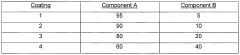
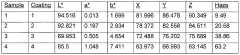
- A light extraction substrate with a nanoparticle-containing coating layer is applied to the inner surface of the OLED device, scattering light and reducing the waveguide effect, allowing more light to be emitted. The coating material can include polymeric or silicon-containing materials with nanoparticles like titania, applied using methods such as spin coating, to enhance light transmission and scattering.
Anisotropic conductive film and display device
PatentActiveUS20220102326A1
Innovation
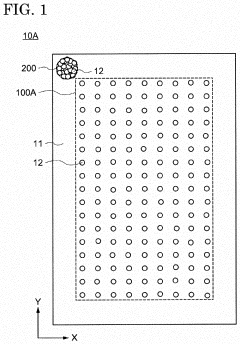
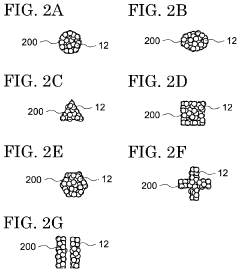
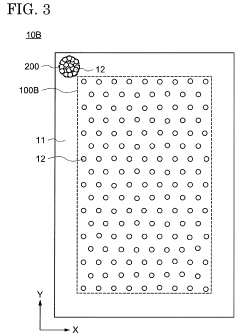
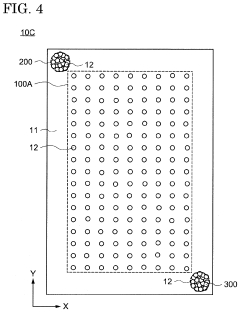
- An anisotropic conductive film with a first region of discretely arranged conductive particles corresponding to electrode patterns and a second region with aggregated conductive particles acting as an alignment marker, facilitating easy alignment with the circuit substrate and reducing production costs by forming alignment markers through conductive particle dispersion.
Energy Efficiency Comparison
Energy efficiency represents a critical factor in the evaluation of display technologies for smart devices, particularly when comparing OLED and MicroLED technologies. OLED displays demonstrate significant energy advantages in dark-themed content scenarios due to their self-emissive pixel structure. When displaying black or dark colors, OLED pixels can be completely turned off, consuming virtually zero power for those specific pixels. This selective pixel activation results in substantial energy savings for applications with predominantly dark interfaces or content.
MicroLED technology, while still evolving, shows promising energy efficiency characteristics that may eventually surpass OLED capabilities. Current laboratory measurements indicate that MicroLED displays can achieve up to 30% higher energy efficiency than comparable OLED panels when displaying full-brightness, mixed-content scenarios. This efficiency advantage stems from MicroLED's superior light emission mechanism, which converts more electrical energy directly into visible light with minimal heat generation.
Device usage patterns significantly impact the relative energy efficiency of these technologies. For devices primarily used for video streaming with varied content, MicroLED's consistent efficiency across all brightness levels provides a theoretical advantage. Conversely, for devices frequently displaying static, dark-themed interfaces such as messaging applications or e-readers, OLED technology maintains its efficiency edge.
Temperature and environmental conditions also affect the energy performance of both technologies. OLED displays typically experience efficiency degradation at higher operating temperatures, with up to 15% reduced efficiency at 40°C compared to room temperature operation. MicroLED displays demonstrate more stable thermal characteristics, maintaining consistent efficiency across a wider temperature range, which proves advantageous for devices operating in challenging environmental conditions.
Battery life implications vary significantly between device categories. In smartphones, where mixed usage patterns prevail, recent comparative studies show that MicroLED technology could potentially extend battery life by 10-20% compared to OLED equivalents. However, this advantage diminishes in tablets and laptops primarily used for media consumption with darker content, where OLED's selective pixel activation provides comparable or superior energy performance.
Manufacturing maturity also influences real-world energy efficiency. While OLED manufacturing has reached significant optimization levels through years of commercial production, MicroLED manufacturing techniques are still evolving. Current production-scale MicroLED displays have not yet achieved the theoretical efficiency levels demonstrated in laboratory environments, suggesting that further manufacturing refinements will be necessary to fully realize MicroLED's energy efficiency potential in commercial smart devices.
MicroLED technology, while still evolving, shows promising energy efficiency characteristics that may eventually surpass OLED capabilities. Current laboratory measurements indicate that MicroLED displays can achieve up to 30% higher energy efficiency than comparable OLED panels when displaying full-brightness, mixed-content scenarios. This efficiency advantage stems from MicroLED's superior light emission mechanism, which converts more electrical energy directly into visible light with minimal heat generation.
Device usage patterns significantly impact the relative energy efficiency of these technologies. For devices primarily used for video streaming with varied content, MicroLED's consistent efficiency across all brightness levels provides a theoretical advantage. Conversely, for devices frequently displaying static, dark-themed interfaces such as messaging applications or e-readers, OLED technology maintains its efficiency edge.
Temperature and environmental conditions also affect the energy performance of both technologies. OLED displays typically experience efficiency degradation at higher operating temperatures, with up to 15% reduced efficiency at 40°C compared to room temperature operation. MicroLED displays demonstrate more stable thermal characteristics, maintaining consistent efficiency across a wider temperature range, which proves advantageous for devices operating in challenging environmental conditions.
Battery life implications vary significantly between device categories. In smartphones, where mixed usage patterns prevail, recent comparative studies show that MicroLED technology could potentially extend battery life by 10-20% compared to OLED equivalents. However, this advantage diminishes in tablets and laptops primarily used for media consumption with darker content, where OLED's selective pixel activation provides comparable or superior energy performance.
Manufacturing maturity also influences real-world energy efficiency. While OLED manufacturing has reached significant optimization levels through years of commercial production, MicroLED manufacturing techniques are still evolving. Current production-scale MicroLED displays have not yet achieved the theoretical efficiency levels demonstrated in laboratory environments, suggesting that further manufacturing refinements will be necessary to fully realize MicroLED's energy efficiency potential in commercial smart devices.
Manufacturing Scalability Assessment
Manufacturing scalability represents a critical differentiator between OLED and MicroLED technologies in smart device applications. OLED manufacturing has reached significant maturity with established production lines across Asia, particularly in South Korea and China. Major manufacturers like Samsung and LG Display have achieved economies of scale through years of iterative process improvements, resulting in high-volume production capabilities and gradually decreasing costs.
The OLED manufacturing process utilizes vacuum thermal evaporation for small molecule OLEDs and solution processing for polymer-based variants. These processes have been refined over decades, with current Gen 10.5 fabs capable of producing large mother glass substrates efficiently. Yield rates for OLED panels have improved substantially, now typically exceeding 85% for smartphone displays, though larger formats still face yield challenges.
In contrast, MicroLED manufacturing remains in early development stages with significant scalability hurdles. The primary challenge lies in the mass transfer process - moving millions of microscopic LED chips from growth substrates to display backplanes with precise positioning. Current approaches include stamp transfer, laser transfer, and fluid assembly methods, each with distinct limitations regarding throughput, accuracy, and yield.
MicroLED production also faces critical challenges in defect management. Unlike OLED, where pixel defects can be relatively tolerable, MicroLED displays require near-perfect yields due to the discrete nature of each emitter. Repair processes for defective MicroLED pixels are complex and time-consuming, significantly impacting production economics at scale.
Equipment infrastructure represents another key distinction. OLED benefits from an established ecosystem of specialized manufacturing equipment and materials suppliers. MicroLED requires substantial new investment in specialized equipment for epitaxial growth, mass transfer, and inspection systems, with limited supplier diversity currently available.
Cost trajectory analysis indicates OLED manufacturing costs continue to decline at approximately 10-15% annually through process optimization and increased substrate sizes. MicroLED costs remain significantly higher, with estimates suggesting a 5-10x manufacturing cost premium over OLED currently. Industry projections indicate MicroLED may not reach cost parity with OLED for mainstream consumer devices until at least 2026-2028, contingent upon breakthrough innovations in mass transfer technologies.
Labor and expertise requirements also differ substantially, with OLED benefiting from a mature talent pool while MicroLED faces a shortage of specialized engineering expertise, particularly in mass transfer process optimization and yield management systems.
The OLED manufacturing process utilizes vacuum thermal evaporation for small molecule OLEDs and solution processing for polymer-based variants. These processes have been refined over decades, with current Gen 10.5 fabs capable of producing large mother glass substrates efficiently. Yield rates for OLED panels have improved substantially, now typically exceeding 85% for smartphone displays, though larger formats still face yield challenges.
In contrast, MicroLED manufacturing remains in early development stages with significant scalability hurdles. The primary challenge lies in the mass transfer process - moving millions of microscopic LED chips from growth substrates to display backplanes with precise positioning. Current approaches include stamp transfer, laser transfer, and fluid assembly methods, each with distinct limitations regarding throughput, accuracy, and yield.
MicroLED production also faces critical challenges in defect management. Unlike OLED, where pixel defects can be relatively tolerable, MicroLED displays require near-perfect yields due to the discrete nature of each emitter. Repair processes for defective MicroLED pixels are complex and time-consuming, significantly impacting production economics at scale.
Equipment infrastructure represents another key distinction. OLED benefits from an established ecosystem of specialized manufacturing equipment and materials suppliers. MicroLED requires substantial new investment in specialized equipment for epitaxial growth, mass transfer, and inspection systems, with limited supplier diversity currently available.
Cost trajectory analysis indicates OLED manufacturing costs continue to decline at approximately 10-15% annually through process optimization and increased substrate sizes. MicroLED costs remain significantly higher, with estimates suggesting a 5-10x manufacturing cost premium over OLED currently. Industry projections indicate MicroLED may not reach cost parity with OLED for mainstream consumer devices until at least 2026-2028, contingent upon breakthrough innovations in mass transfer technologies.
Labor and expertise requirements also differ substantially, with OLED benefiting from a mature talent pool while MicroLED faces a shortage of specialized engineering expertise, particularly in mass transfer process optimization and yield management systems.
Unlock deeper insights with PatSnap Eureka Quick Research — get a full tech report to explore trends and direct your research. Try now!
Generate Your Research Report Instantly with AI Agent
Supercharge your innovation with PatSnap Eureka AI Agent Platform!