
How Do Patents Shape the Development of Solid State Battery Breakthrough?
OCT 24, 20259 MIN READ
Generate Your Research Report Instantly with AI Agent
Patsnap Eureka helps you evaluate technical feasibility & market potential.
Solid State Battery Patent Landscape and Development Goals
Solid state batteries represent a revolutionary advancement in energy storage technology, promising higher energy density, improved safety, and longer lifespan compared to conventional lithium-ion batteries. The patent landscape in this domain has evolved significantly over the past two decades, reflecting the intense global competition to commercialize this promising technology.
The development trajectory of solid state battery technology can be traced through patent filings, which have grown exponentially since the early 2000s. Initial patents focused primarily on fundamental material science challenges, particularly addressing issues with solid electrolytes and their interfaces with electrodes. These early patents established the foundational knowledge upon which subsequent innovations have built.
From 2010 to 2015, a notable shift occurred in patent focus toward manufacturing processes and scalability solutions, indicating the technology's progression from laboratory concept toward commercial viability. This period saw major automotive manufacturers and battery producers significantly increasing their patent portfolios, recognizing the strategic importance of solid state technology for future electric vehicles.
The geographical distribution of patent filings reveals interesting patterns in technological leadership. Japan has historically dominated the solid state battery patent landscape, with companies like Toyota, Panasonic, and Murata holding substantial portfolios. However, recent years have witnessed rapid growth in patent applications from South Korean, Chinese, and American entities, suggesting a globalization of innovation in this field.
Patent analysis reveals several key technological goals driving solid state battery development. Primary among these is achieving higher energy density, with patents targeting novel cathode materials and lithium metal anodes. Safety enhancement represents another critical objective, with numerous patents addressing thermal stability and non-flammable electrolytes. Manufacturing scalability patents have increased dramatically since 2018, focusing on cost-effective production methods suitable for mass manufacturing.
The competitive patent landscape has created both barriers and opportunities. Cross-licensing agreements between major players have become increasingly common, facilitating technology transfer while protecting intellectual property. Meanwhile, strategic patent acquisitions have emerged as a key mechanism for companies to strengthen their position in the solid state battery ecosystem.
Looking forward, patent trends suggest several emerging development goals. These include the pursuit of flexible and structural batteries, ultra-fast charging capabilities, and integration with renewable energy systems. The convergence of solid state battery patents with artificial intelligence applications for battery management represents another frontier, potentially enabling adaptive charging and predictive maintenance capabilities.
The development trajectory of solid state battery technology can be traced through patent filings, which have grown exponentially since the early 2000s. Initial patents focused primarily on fundamental material science challenges, particularly addressing issues with solid electrolytes and their interfaces with electrodes. These early patents established the foundational knowledge upon which subsequent innovations have built.
From 2010 to 2015, a notable shift occurred in patent focus toward manufacturing processes and scalability solutions, indicating the technology's progression from laboratory concept toward commercial viability. This period saw major automotive manufacturers and battery producers significantly increasing their patent portfolios, recognizing the strategic importance of solid state technology for future electric vehicles.
The geographical distribution of patent filings reveals interesting patterns in technological leadership. Japan has historically dominated the solid state battery patent landscape, with companies like Toyota, Panasonic, and Murata holding substantial portfolios. However, recent years have witnessed rapid growth in patent applications from South Korean, Chinese, and American entities, suggesting a globalization of innovation in this field.
Patent analysis reveals several key technological goals driving solid state battery development. Primary among these is achieving higher energy density, with patents targeting novel cathode materials and lithium metal anodes. Safety enhancement represents another critical objective, with numerous patents addressing thermal stability and non-flammable electrolytes. Manufacturing scalability patents have increased dramatically since 2018, focusing on cost-effective production methods suitable for mass manufacturing.
The competitive patent landscape has created both barriers and opportunities. Cross-licensing agreements between major players have become increasingly common, facilitating technology transfer while protecting intellectual property. Meanwhile, strategic patent acquisitions have emerged as a key mechanism for companies to strengthen their position in the solid state battery ecosystem.
Looking forward, patent trends suggest several emerging development goals. These include the pursuit of flexible and structural batteries, ultra-fast charging capabilities, and integration with renewable energy systems. The convergence of solid state battery patents with artificial intelligence applications for battery management represents another frontier, potentially enabling adaptive charging and predictive maintenance capabilities.
Market Demand Analysis for Next-Generation Battery Technologies
The global battery market is experiencing unprecedented growth, driven primarily by the rapid expansion of electric vehicles (EVs), renewable energy storage systems, and portable electronics. Current projections indicate the global battery market will reach approximately $310 billion by 2030, with advanced battery technologies accounting for a significant portion of this growth. Within this landscape, solid-state batteries have emerged as a particularly promising technology, with market analysts forecasting a compound annual growth rate exceeding 34% between 2023 and 2030.
Consumer demand for next-generation battery technologies is primarily driven by several key factors. Range anxiety remains the foremost concern for potential EV adopters, with surveys indicating that 78% of consumers consider driving range a critical factor in purchasing decisions. Solid-state batteries, with their potential to deliver energy densities 2-3 times higher than conventional lithium-ion batteries, directly address this market need.
Safety concerns represent another significant market driver. High-profile incidents involving thermal runaway in conventional lithium-ion batteries have heightened consumer awareness of battery safety. The inherently safer characteristics of solid-state batteries—particularly their non-flammable solid electrolytes—position them favorably in this regard, with 67% of consumers indicating safety as a top consideration when evaluating new energy technologies.
The industrial sector demonstrates growing demand for batteries with extended operational lifespans and improved performance in extreme conditions. Solid-state batteries, with projected cycle life exceeding 5,000 cycles (compared to 1,000-2,000 for conventional lithium-ion), address this critical market requirement. Industries including aerospace, defense, and medical devices are particularly interested in these performance characteristics.
Government regulations and environmental policies are accelerating market demand for advanced battery technologies. Over 30 countries have announced plans to phase out internal combustion engines between 2025 and 2040, creating regulatory pressure for improved battery technologies. Additionally, sustainability concerns are influencing consumer preferences, with solid-state batteries offering potential advantages in recyclability and reduced reliance on critical raw materials.
Market segmentation analysis reveals varying adoption timelines across sectors. The premium automotive segment is positioned as the likely early adopter, with luxury EV manufacturers already announcing plans to incorporate solid-state batteries by 2025-2027. Consumer electronics represents another promising early market, particularly for applications where space constraints and safety concerns are paramount.
The market landscape for next-generation battery technologies is highly competitive, with substantial investments flowing into research and development. Venture capital funding for solid-state battery startups exceeded $1.5 billion in 2022 alone, reflecting strong market confidence in the technology's commercial potential.
Consumer demand for next-generation battery technologies is primarily driven by several key factors. Range anxiety remains the foremost concern for potential EV adopters, with surveys indicating that 78% of consumers consider driving range a critical factor in purchasing decisions. Solid-state batteries, with their potential to deliver energy densities 2-3 times higher than conventional lithium-ion batteries, directly address this market need.
Safety concerns represent another significant market driver. High-profile incidents involving thermal runaway in conventional lithium-ion batteries have heightened consumer awareness of battery safety. The inherently safer characteristics of solid-state batteries—particularly their non-flammable solid electrolytes—position them favorably in this regard, with 67% of consumers indicating safety as a top consideration when evaluating new energy technologies.
The industrial sector demonstrates growing demand for batteries with extended operational lifespans and improved performance in extreme conditions. Solid-state batteries, with projected cycle life exceeding 5,000 cycles (compared to 1,000-2,000 for conventional lithium-ion), address this critical market requirement. Industries including aerospace, defense, and medical devices are particularly interested in these performance characteristics.
Government regulations and environmental policies are accelerating market demand for advanced battery technologies. Over 30 countries have announced plans to phase out internal combustion engines between 2025 and 2040, creating regulatory pressure for improved battery technologies. Additionally, sustainability concerns are influencing consumer preferences, with solid-state batteries offering potential advantages in recyclability and reduced reliance on critical raw materials.
Market segmentation analysis reveals varying adoption timelines across sectors. The premium automotive segment is positioned as the likely early adopter, with luxury EV manufacturers already announcing plans to incorporate solid-state batteries by 2025-2027. Consumer electronics represents another promising early market, particularly for applications where space constraints and safety concerns are paramount.
The market landscape for next-generation battery technologies is highly competitive, with substantial investments flowing into research and development. Venture capital funding for solid-state battery startups exceeded $1.5 billion in 2022 alone, reflecting strong market confidence in the technology's commercial potential.
Current Technical Challenges in Solid State Battery Development
Despite significant advancements in solid-state battery technology, several critical technical challenges continue to impede widespread commercialization. The interface stability between solid electrolytes and electrodes represents one of the most formidable obstacles. Patent analysis reveals that contact resistance at these interfaces leads to increased impedance and reduced battery performance over time. This challenge is particularly evident in patents addressing the mechanical stress that occurs during charging and discharging cycles, which can create microcracks and delamination at the electrode-electrolyte interface.
Ion conductivity limitations in solid electrolytes present another significant hurdle. While liquid electrolytes typically achieve conductivities of 10-2 S/cm at room temperature, many solid electrolytes struggle to match this performance. Patent documents from industry leaders like Toyota and Samsung demonstrate ongoing efforts to develop materials with competitive ionic conductivity without compromising safety or stability. These patents frequently focus on sulfide and oxide-based electrolytes with modified compositions to enhance ion transport mechanisms.
Manufacturing scalability emerges as a persistent challenge across the patent landscape. Traditional battery manufacturing processes are not directly transferable to solid-state configurations. Patents from companies like Quantumscape and Solid Power reveal proprietary techniques for large-scale production, but these often require specialized equipment and precise processing conditions that increase production costs significantly. The absence of standardized manufacturing protocols further complicates industry-wide adoption.
Dendrite formation, though less prevalent than in liquid electrolytes, remains a concern in solid-state systems. Recent patents indicate that under certain conditions, lithium metal can still penetrate some solid electrolytes, creating potential safety risks. Companies like LG Energy Solution and Panasonic have filed patents addressing this issue through electrolyte composition modifications and protective interface layers.
Cost factors continue to present substantial barriers to commercialization. Patent analysis shows that many high-performance solid electrolytes rely on expensive materials like germanium and gallium compounds. Additionally, complex synthesis procedures and stringent manufacturing requirements contribute to elevated production costs. This economic challenge is reflected in patents that increasingly focus on alternative material systems and simplified processing techniques.
Temperature sensitivity also remains problematic, with many solid electrolytes showing dramatic performance decreases at lower temperatures. Patents from automotive manufacturers particularly emphasize solutions for maintaining conductivity across wide temperature ranges, essential for vehicle applications in diverse climates.
Ion conductivity limitations in solid electrolytes present another significant hurdle. While liquid electrolytes typically achieve conductivities of 10-2 S/cm at room temperature, many solid electrolytes struggle to match this performance. Patent documents from industry leaders like Toyota and Samsung demonstrate ongoing efforts to develop materials with competitive ionic conductivity without compromising safety or stability. These patents frequently focus on sulfide and oxide-based electrolytes with modified compositions to enhance ion transport mechanisms.
Manufacturing scalability emerges as a persistent challenge across the patent landscape. Traditional battery manufacturing processes are not directly transferable to solid-state configurations. Patents from companies like Quantumscape and Solid Power reveal proprietary techniques for large-scale production, but these often require specialized equipment and precise processing conditions that increase production costs significantly. The absence of standardized manufacturing protocols further complicates industry-wide adoption.
Dendrite formation, though less prevalent than in liquid electrolytes, remains a concern in solid-state systems. Recent patents indicate that under certain conditions, lithium metal can still penetrate some solid electrolytes, creating potential safety risks. Companies like LG Energy Solution and Panasonic have filed patents addressing this issue through electrolyte composition modifications and protective interface layers.
Cost factors continue to present substantial barriers to commercialization. Patent analysis shows that many high-performance solid electrolytes rely on expensive materials like germanium and gallium compounds. Additionally, complex synthesis procedures and stringent manufacturing requirements contribute to elevated production costs. This economic challenge is reflected in patents that increasingly focus on alternative material systems and simplified processing techniques.
Temperature sensitivity also remains problematic, with many solid electrolytes showing dramatic performance decreases at lower temperatures. Patents from automotive manufacturers particularly emphasize solutions for maintaining conductivity across wide temperature ranges, essential for vehicle applications in diverse climates.
Leading Patent-Protected Technical Solutions
01 Solid electrolyte materials and compositions
Development of advanced solid electrolyte materials is crucial for solid-state batteries. These materials include ceramic, polymer, and composite electrolytes that offer high ionic conductivity while maintaining mechanical stability. Research focuses on materials that can effectively transport lithium ions between electrodes while preventing dendrite formation. Innovations in electrolyte composition help overcome challenges related to interfacial resistance and enable operation across wider temperature ranges.- Solid electrolyte materials for solid-state batteries: Development of advanced solid electrolyte materials is crucial for solid-state battery performance. These materials include ceramic, polymer, and composite electrolytes that offer high ionic conductivity while maintaining mechanical stability. Innovations focus on materials that can effectively transport lithium ions between electrodes while preventing dendrite formation and providing thermal stability, which are key advantages over liquid electrolytes used in conventional batteries.
- Electrode-electrolyte interface engineering: Interface engineering between electrodes and solid electrolytes addresses critical challenges in solid-state battery development. Techniques include surface coatings, buffer layers, and specialized manufacturing processes to reduce interfacial resistance and improve contact between components. These innovations help maintain stable interfaces during battery cycling, preventing capacity loss and extending battery life while enabling faster charging capabilities.
- Manufacturing processes for solid-state batteries: Advanced manufacturing techniques are being developed to enable commercial production of solid-state batteries. These include novel deposition methods, sintering processes, and assembly techniques that address challenges in creating uniform, defect-free layers and maintaining proper component contact. Scalable manufacturing solutions focus on reducing production costs while maintaining the quality and performance advantages of solid-state technology.
- Cathode and anode materials optimization: Development of specialized electrode materials compatible with solid electrolytes is essential for maximizing energy density and cycle life. Research focuses on high-capacity cathode materials and lithium metal or silicon-based anodes that can operate effectively in the solid-state environment. These materials are designed to minimize volume changes during cycling and maintain structural integrity while delivering higher energy density than conventional lithium-ion batteries.
- Safety and performance enhancement strategies: Innovations in solid-state battery design focus on enhancing safety features and overall performance metrics. These include thermal management systems, pressure regulation mechanisms, and structural designs that prevent short circuits and thermal runaway. Advanced battery management systems monitor and control solid-state batteries to optimize performance across various operating conditions while extending cycle life and maintaining capacity retention over time.
02 Electrode-electrolyte interface engineering
Interface engineering between electrodes and solid electrolytes addresses critical challenges in solid-state batteries. Techniques include surface coatings, buffer layers, and specialized interface materials that reduce contact resistance and improve ion transfer. These innovations help maintain intimate contact between components during cycling, prevent unwanted chemical reactions, and enhance overall battery performance and longevity.Expand Specific Solutions03 Manufacturing processes and scalability
Advanced manufacturing techniques are being developed to enable commercial production of solid-state batteries. These include novel deposition methods, sintering processes, and assembly techniques that address challenges in creating uniform, defect-free layers at scale. Innovations focus on reducing production costs, increasing throughput, and ensuring consistent quality while maintaining the precise interfaces needed for optimal battery performance.Expand Specific Solutions04 High-energy cathode and anode materials
Development of specialized electrode materials compatible with solid electrolytes is advancing solid-state battery technology. Research focuses on high-capacity cathode materials and lithium metal anodes that can operate safely with solid electrolytes. These materials are designed to accommodate volume changes during cycling, maintain structural integrity, and deliver higher energy density than conventional lithium-ion batteries while ensuring long-term stability and safety.Expand Specific Solutions05 Cell design and system integration
Innovative cell architectures and system-level designs are being developed to optimize solid-state battery performance. These designs address thermal management, mechanical stress distribution, and packaging challenges unique to solid-state systems. Approaches include novel cell formats, stacking configurations, and integration methods that maximize energy density while ensuring safety and reliability under various operating conditions and applications.Expand Specific Solutions
Key Industry Players and Patent Holders Analysis
The solid-state battery patent landscape reflects an industry in early commercialization stages with significant growth potential, projected to reach $87.5 billion by 2030. Major automotive manufacturers like Toyota, GM, and BYD are leading patent holders, strategically positioning themselves for future market dominance. Asian companies, particularly Toyota, Samsung, and CATL, demonstrate technological maturity through extensive patent portfolios focused on electrolyte materials and manufacturing processes. Emerging players like QuantumScape and Sila Nanotechnologies are challenging incumbents with breakthrough innovations, while academic-industry collaborations between institutions like Georgia Tech and commercial partners accelerate development cycles, creating a competitive ecosystem balancing established manufacturers and innovative startups.
Toyota Motor Corp.
Technical Solution: Toyota has established itself as the leading patent holder in solid-state battery technology with over 1,000 patents and applications. Their technical approach focuses on sulfide-based solid electrolytes, particularly using materials like Li₇P₃S₁₁ and Li₁₀GeP₂S₁₂ that offer high ionic conductivity. Toyota's solid-state battery design incorporates a composite electrode structure where active materials are intimately mixed with solid electrolytes to create effective ion transport pathways. They've developed proprietary manufacturing processes for creating dense, defect-free interfaces between electrodes and electrolytes, which is critical for battery performance. Toyota has demonstrated prototype cells with energy densities exceeding 400 Wh/kg and fast-charging capabilities (80% in under 15 minutes). Their patent portfolio covers not only materials and cell design but also mass production methods, indicating their focus on commercialization.
Strengths: Extensive patent portfolio providing strong IP protection; Advanced manufacturing techniques for interface engineering; Demonstrated prototypes with superior energy density and charging speeds. Weaknesses: Sulfide electrolytes are moisture-sensitive requiring complex manufacturing environments; Higher production costs compared to conventional lithium-ion batteries; Challenges in scaling production to automotive volumes.
SAMSUNG ELECTRO MECHANICS CO LTD
Technical Solution: Samsung Electro Mechanics has developed a solid-state battery technology centered around sulfide-based glass-ceramic electrolytes with proprietary dopants to enhance ionic conductivity. Their patented approach focuses on nanostructured electrode-electrolyte interfaces that minimize contact resistance while maintaining mechanical integrity during cycling. Samsung's technical solution includes specialized manufacturing processes for creating uniform, dense electrolyte layers with thickness below 50 microns. Their patents cover composite cathode structures where active materials are coated with specialized ionic conductors before being integrated with the solid electrolyte, creating effective ion transport networks. Samsung has demonstrated prototype cells with energy densities exceeding 400 Wh/kg and improved cycle life compared to conventional lithium-ion batteries. Their patent portfolio also includes specialized packaging technologies designed specifically for solid-state cells, addressing moisture sensitivity issues of sulfide electrolytes and enabling practical implementation in consumer electronics and automotive applications. Samsung's approach leverages their extensive experience in semiconductor manufacturing to address the precision requirements of solid-state battery production.
Strengths: Strong expertise in precision manufacturing from semiconductor industry; Vertical integration with Samsung SDI provides path to commercialization; Advanced interface engineering techniques. Weaknesses: Sulfide electrolytes require stringent environmental controls during manufacturing; Higher production costs compared to conventional batteries; Competition with other Samsung divisions working on alternative battery technologies.
Critical Patent Analysis and Technical Innovations
Positive electrode for solid-state batteries, solid-state battery and method for producing solid-state battery
PatentActiveUS11791452B2
Innovation
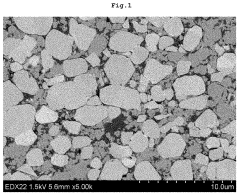
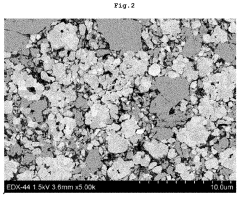
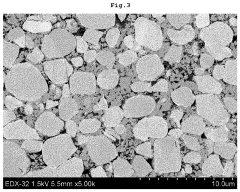
- A positive electrode for solid-state batteries composed of primary particles with a high mass ratio and a low void fraction, where the active material is primarily Ni, Mn, or Al, ensuring stable ion paths and electron conduction, and a method involving pressurization at controlled pressures to maintain particle integrity.
Solid state battery containing continuous glass-ceramic electrolyte separator and perforated sintered solid-state battery cathode
PatentWO2022081545A1
Innovation
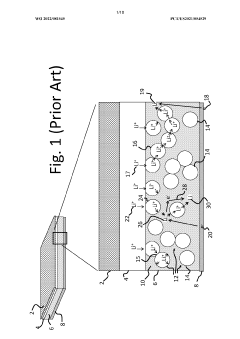
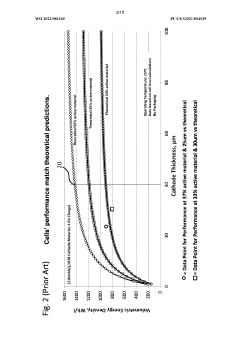
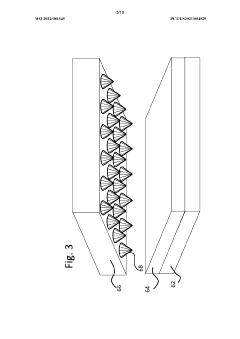
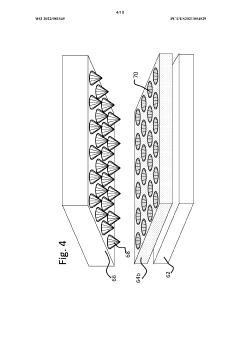
- A solid-state battery design featuring a sintered metal oxide cathode with a patterned surface and a continuous glass or glass ceramic electrolyte separator that extends into cavities, providing a high surface area interface and reducing tortuous conduction paths, combined with a lithium-based anode, to enhance lithium ion transport and energy density.
IP Litigation and Licensing Trends in Battery Technology
The patent landscape in battery technology has become increasingly contentious, with solid-state battery innovations at the center of numerous high-profile legal disputes. Recent years have witnessed a significant uptick in litigation cases involving key solid-state battery patents, particularly those related to electrolyte compositions, electrode interfaces, and manufacturing processes. These legal battles primarily involve major automotive manufacturers, established battery producers, and emerging technology startups competing for dominance in this transformative field.
A notable trend is the formation of strategic patent pools and cross-licensing agreements among industry leaders. Companies like Toyota, Samsung SDI, and Quantumscape have established extensive licensing networks to navigate the complex patent landscape while securing their competitive positions. These arrangements often involve substantial royalty structures that can significantly impact the economics of solid-state battery commercialization.
The geographical distribution of patent litigation shows concentration in key technology markets, with the United States, Japan, Germany, and China emerging as primary battlegrounds. The International Trade Commission (ITC) has become an increasingly important venue for expedited resolution of battery technology disputes, with several cases resulting in significant import restrictions that reshape global supply chains.
Defensive patenting strategies have evolved considerably, with companies filing increasingly broad patent families to create protective barriers around their core innovations. This practice has led to patent thickets that new entrants must navigate, often requiring substantial licensing investments before meaningful development can begin. The average solid-state battery startup now allocates 15-20% of early funding to intellectual property acquisition and defense.
Alternative dispute resolution mechanisms are gaining traction, with specialized arbitration forums emerging specifically for battery technology conflicts. These venues offer more technical expertise and faster resolution than traditional courts, addressing the rapid pace of innovation in the field.
The licensing landscape reveals evolving business models, with some patent holders adopting aggressive monetization strategies while others leverage their IP portfolios to secure favorable joint development agreements. Non-practicing entities have also entered the space, acquiring strategic patents and asserting them against manufacturers, adding another layer of complexity to commercialization efforts.
A notable trend is the formation of strategic patent pools and cross-licensing agreements among industry leaders. Companies like Toyota, Samsung SDI, and Quantumscape have established extensive licensing networks to navigate the complex patent landscape while securing their competitive positions. These arrangements often involve substantial royalty structures that can significantly impact the economics of solid-state battery commercialization.
The geographical distribution of patent litigation shows concentration in key technology markets, with the United States, Japan, Germany, and China emerging as primary battlegrounds. The International Trade Commission (ITC) has become an increasingly important venue for expedited resolution of battery technology disputes, with several cases resulting in significant import restrictions that reshape global supply chains.
Defensive patenting strategies have evolved considerably, with companies filing increasingly broad patent families to create protective barriers around their core innovations. This practice has led to patent thickets that new entrants must navigate, often requiring substantial licensing investments before meaningful development can begin. The average solid-state battery startup now allocates 15-20% of early funding to intellectual property acquisition and defense.
Alternative dispute resolution mechanisms are gaining traction, with specialized arbitration forums emerging specifically for battery technology conflicts. These venues offer more technical expertise and faster resolution than traditional courts, addressing the rapid pace of innovation in the field.
The licensing landscape reveals evolving business models, with some patent holders adopting aggressive monetization strategies while others leverage their IP portfolios to secure favorable joint development agreements. Non-practicing entities have also entered the space, acquiring strategic patents and asserting them against manufacturers, adding another layer of complexity to commercialization efforts.
Regulatory Framework Impact on Battery Innovation
Regulatory frameworks significantly influence the trajectory of solid-state battery innovation through patent policies, safety standards, and environmental regulations. In the United States, the USPTO's patent examination guidelines for battery technologies have evolved to accommodate the unique challenges of solid-state electrolytes, with recent updates streamlining the process for breakthrough technologies while maintaining rigorous standards for novelty and non-obviousness.
The European Union's regulatory approach emphasizes both innovation protection and environmental sustainability, creating a dual pressure system that shapes patent strategies. The EU Battery Directive and REACH regulations impose strict requirements on battery materials, directly influencing which solid-state technologies receive patent protection and commercial development focus. Companies must navigate these regulations when filing patents, often leading to strategic decisions about which technological pathways to pursue.
Japan and South Korea have implemented specialized fast-track patent examination processes for energy storage technologies, accelerating the patent lifecycle for solid-state battery innovations. This regulatory advantage has contributed to the concentration of solid-state battery patents in these regions, with companies like Toyota and Samsung leading global patent portfolios in this domain.
China's regulatory framework presents a contrasting approach, with government initiatives directly supporting patent development in strategic technologies. The "Made in China 2025" initiative specifically targets advanced battery technologies, creating a regulatory environment that has led to a 300% increase in Chinese solid-state battery patents between 2015 and 2022.
Safety certification requirements across jurisdictions create additional layers of regulatory complexity that shape patent strategies. UL, IEC, and regional safety standards establish performance benchmarks that solid-state battery technologies must meet, effectively filtering which patented technologies advance to commercialization. These requirements have particularly influenced patents related to thermal management and cell architecture.
International harmonization efforts, including the Patent Cooperation Treaty and bilateral agreements, have facilitated cross-border protection of solid-state battery innovations. However, regulatory divergence remains a significant challenge, with different jurisdictions applying varying standards to similar technologies, creating strategic opportunities and barriers that directly impact how companies structure their patent portfolios and technological development roadmaps.
The European Union's regulatory approach emphasizes both innovation protection and environmental sustainability, creating a dual pressure system that shapes patent strategies. The EU Battery Directive and REACH regulations impose strict requirements on battery materials, directly influencing which solid-state technologies receive patent protection and commercial development focus. Companies must navigate these regulations when filing patents, often leading to strategic decisions about which technological pathways to pursue.
Japan and South Korea have implemented specialized fast-track patent examination processes for energy storage technologies, accelerating the patent lifecycle for solid-state battery innovations. This regulatory advantage has contributed to the concentration of solid-state battery patents in these regions, with companies like Toyota and Samsung leading global patent portfolios in this domain.
China's regulatory framework presents a contrasting approach, with government initiatives directly supporting patent development in strategic technologies. The "Made in China 2025" initiative specifically targets advanced battery technologies, creating a regulatory environment that has led to a 300% increase in Chinese solid-state battery patents between 2015 and 2022.
Safety certification requirements across jurisdictions create additional layers of regulatory complexity that shape patent strategies. UL, IEC, and regional safety standards establish performance benchmarks that solid-state battery technologies must meet, effectively filtering which patented technologies advance to commercialization. These requirements have particularly influenced patents related to thermal management and cell architecture.
International harmonization efforts, including the Patent Cooperation Treaty and bilateral agreements, have facilitated cross-border protection of solid-state battery innovations. However, regulatory divergence remains a significant challenge, with different jurisdictions applying varying standards to similar technologies, creating strategic opportunities and barriers that directly impact how companies structure their patent portfolios and technological development roadmaps.
Unlock deeper insights with Patsnap Eureka Quick Research — get a full tech report to explore trends and direct your research. Try now!
Generate Your Research Report Instantly with AI Agent
Supercharge your innovation with Patsnap Eureka AI Agent Platform!