

How Semi-Solid Electrolytes Limit Battery Thermal Runaway
SEP 23, 20259 MIN READ
Generate Your Research Report Instantly with AI Agent
PatSnap Eureka helps you evaluate technical feasibility & market potential.
Semi-Solid Electrolyte Battery Safety Background and Objectives
Semi-solid electrolytes represent a significant advancement in battery technology, emerging as a promising solution to address the critical safety concerns associated with conventional lithium-ion batteries. The evolution of battery technology has progressed from solid-state to liquid electrolytes, and now to semi-solid formulations that combine advantages of both. This technological progression has been driven by the increasing demand for safer energy storage solutions across various industries, particularly electric vehicles and portable electronics.
The development of semi-solid electrolytes can be traced back to the early 2000s, when researchers began exploring alternatives to traditional liquid electrolytes due to their flammability and thermal instability. By 2010, significant breakthroughs in polymer-based and gel-type semi-solid electrolytes marked a turning point in addressing thermal runaway issues. The past decade has witnessed accelerated research in this domain, with notable advancements in material science and electrochemistry contributing to enhanced safety profiles.
Thermal runaway, a catastrophic failure mode in batteries characterized by uncontrolled temperature increase leading to fire or explosion, remains one of the most significant challenges in battery technology. This phenomenon typically initiates when internal temperature exceeds critical thresholds, triggering exothermic reactions that rapidly escalate if not contained. Semi-solid electrolytes have emerged as a promising approach to mitigate this risk through multiple mechanisms.
The primary technical objective in this field is to develop semi-solid electrolyte formulations that effectively prevent or significantly delay thermal runaway while maintaining or improving battery performance metrics. Specifically, researchers aim to create electrolytes that provide thermal stability above 150°C, reduce oxygen generation during decomposition, and maintain ionic conductivity comparable to liquid electrolytes (>1 mS/cm at room temperature).
Secondary objectives include enhancing mechanical properties to prevent internal short circuits, extending cycle life beyond 1000 cycles, and ensuring compatibility with existing manufacturing infrastructure to facilitate commercial adoption. The ultimate goal is to enable batteries that can withstand abuse conditions (mechanical, thermal, and electrical) without catastrophic failure.
Current research trends indicate a convergence toward hybrid approaches that combine inorganic fillers with polymer matrices, creating composite semi-solid electrolytes with synergistic properties. The integration of flame-retardant additives and thermally responsive materials represents another promising direction, potentially enabling self-healing or adaptive safety mechanisms that respond dynamically to thermal events.
The development of semi-solid electrolytes can be traced back to the early 2000s, when researchers began exploring alternatives to traditional liquid electrolytes due to their flammability and thermal instability. By 2010, significant breakthroughs in polymer-based and gel-type semi-solid electrolytes marked a turning point in addressing thermal runaway issues. The past decade has witnessed accelerated research in this domain, with notable advancements in material science and electrochemistry contributing to enhanced safety profiles.
Thermal runaway, a catastrophic failure mode in batteries characterized by uncontrolled temperature increase leading to fire or explosion, remains one of the most significant challenges in battery technology. This phenomenon typically initiates when internal temperature exceeds critical thresholds, triggering exothermic reactions that rapidly escalate if not contained. Semi-solid electrolytes have emerged as a promising approach to mitigate this risk through multiple mechanisms.
The primary technical objective in this field is to develop semi-solid electrolyte formulations that effectively prevent or significantly delay thermal runaway while maintaining or improving battery performance metrics. Specifically, researchers aim to create electrolytes that provide thermal stability above 150°C, reduce oxygen generation during decomposition, and maintain ionic conductivity comparable to liquid electrolytes (>1 mS/cm at room temperature).
Secondary objectives include enhancing mechanical properties to prevent internal short circuits, extending cycle life beyond 1000 cycles, and ensuring compatibility with existing manufacturing infrastructure to facilitate commercial adoption. The ultimate goal is to enable batteries that can withstand abuse conditions (mechanical, thermal, and electrical) without catastrophic failure.
Current research trends indicate a convergence toward hybrid approaches that combine inorganic fillers with polymer matrices, creating composite semi-solid electrolytes with synergistic properties. The integration of flame-retardant additives and thermally responsive materials represents another promising direction, potentially enabling self-healing or adaptive safety mechanisms that respond dynamically to thermal events.
Market Analysis for Thermal Runaway Resistant Batteries
The global market for thermal runaway resistant batteries is experiencing significant growth, driven by increasing safety concerns across various battery applications. The market size for advanced battery safety technologies was valued at approximately $3.2 billion in 2022 and is projected to reach $8.7 billion by 2028, representing a compound annual growth rate of 18.3%. This growth trajectory is particularly pronounced in the electric vehicle (EV) segment, where battery safety has become a paramount concern for manufacturers and consumers alike.
Consumer demand for safer battery technologies has intensified following widely publicized incidents of battery fires in electric vehicles, consumer electronics, and energy storage systems. A recent industry survey revealed that 78% of potential EV buyers consider battery safety features as "very important" or "extremely important" in their purchasing decisions, highlighting the market pull for thermal runaway resistant solutions.
The semi-solid electrolyte segment within this market is projected to grow at 22.5% annually through 2030, outpacing other safety technologies. This accelerated growth is attributed to semi-solid electrolytes' unique position as a commercially viable middle ground between traditional liquid electrolytes and still-developing solid-state technologies.
Regional analysis indicates that Asia-Pacific currently dominates the market with 42% share, led by China, Japan, and South Korea where major battery manufacturers have established significant research and production capabilities for advanced electrolyte systems. North America follows with 31% market share, with particularly strong growth in the energy storage system (ESS) sector where thermal runaway prevention is critical for grid-scale applications.
The automotive sector represents the largest application segment (58% of market value), followed by consumer electronics (22%) and grid storage (15%). Within automotive applications, premium and luxury vehicle segments have shown the highest adoption rates for semi-solid electrolyte technologies, though mid-market penetration is accelerating as production scales and costs decrease.
Market forecasts suggest that semi-solid electrolyte technologies will achieve price parity with conventional safety systems by 2026, potentially triggering widespread adoption across multiple price segments. Industry analysts project that by 2030, over 40% of all new EV batteries will incorporate some form of semi-solid or hybrid electrolyte technology specifically designed to mitigate thermal runaway risks.
The regulatory landscape is also driving market growth, with several countries implementing or considering stricter battery safety standards. The European Union's proposed Battery Regulation includes specific provisions for thermal management and safety, while China's latest EV subsidy programs provide additional incentives for vehicles with enhanced battery safety features.
Consumer demand for safer battery technologies has intensified following widely publicized incidents of battery fires in electric vehicles, consumer electronics, and energy storage systems. A recent industry survey revealed that 78% of potential EV buyers consider battery safety features as "very important" or "extremely important" in their purchasing decisions, highlighting the market pull for thermal runaway resistant solutions.
The semi-solid electrolyte segment within this market is projected to grow at 22.5% annually through 2030, outpacing other safety technologies. This accelerated growth is attributed to semi-solid electrolytes' unique position as a commercially viable middle ground between traditional liquid electrolytes and still-developing solid-state technologies.
Regional analysis indicates that Asia-Pacific currently dominates the market with 42% share, led by China, Japan, and South Korea where major battery manufacturers have established significant research and production capabilities for advanced electrolyte systems. North America follows with 31% market share, with particularly strong growth in the energy storage system (ESS) sector where thermal runaway prevention is critical for grid-scale applications.
The automotive sector represents the largest application segment (58% of market value), followed by consumer electronics (22%) and grid storage (15%). Within automotive applications, premium and luxury vehicle segments have shown the highest adoption rates for semi-solid electrolyte technologies, though mid-market penetration is accelerating as production scales and costs decrease.
Market forecasts suggest that semi-solid electrolyte technologies will achieve price parity with conventional safety systems by 2026, potentially triggering widespread adoption across multiple price segments. Industry analysts project that by 2030, over 40% of all new EV batteries will incorporate some form of semi-solid or hybrid electrolyte technology specifically designed to mitigate thermal runaway risks.
The regulatory landscape is also driving market growth, with several countries implementing or considering stricter battery safety standards. The European Union's proposed Battery Regulation includes specific provisions for thermal management and safety, while China's latest EV subsidy programs provide additional incentives for vehicles with enhanced battery safety features.
Current Status and Challenges in Battery Thermal Management
Battery thermal management systems (BTMS) have evolved significantly over the past decade, yet they continue to face substantial challenges in effectively controlling thermal runaway events. Current thermal management approaches include active cooling systems utilizing air, liquid, or phase change materials, and passive systems incorporating heat pipes, thermal interface materials, and insulation layers. Despite these advancements, the integration of these systems with semi-solid electrolytes presents unique engineering challenges.
The state-of-the-art BTMS technologies demonstrate varying degrees of effectiveness. Liquid cooling systems offer superior heat dissipation capabilities but introduce complexity and potential leakage risks. Air cooling systems, while simpler and more cost-effective, often provide insufficient cooling capacity for high-power applications. Phase change materials show promise for their high energy absorption during state transitions but face challenges in thermal conductivity and long-term stability.
A significant challenge in current thermal management approaches is the detection and prevention of thermal runaway propagation between cells. Contemporary battery management systems (BMS) typically rely on temperature sensors placed at strategic locations within battery packs. However, these systems often suffer from delayed response times and insufficient spatial resolution, particularly in large-format batteries where temperature gradients can be substantial.
The integration of semi-solid electrolytes introduces additional complexities to thermal management strategies. While these electrolytes offer inherent safety advantages through reduced flammability, they typically exhibit lower ionic conductivity at room temperature compared to liquid electrolytes. This necessitates operation at elevated temperatures, creating a narrow thermal operating window that BTMS must maintain with high precision.
Material compatibility represents another critical challenge. The interaction between semi-solid electrolytes and conventional thermal management materials can lead to degradation of thermal interfaces over time. Additionally, the mechanical properties of semi-solid electrolytes change with temperature fluctuations, potentially creating thermal contact resistance issues that reduce overall system efficiency.
From a manufacturing perspective, current BTMS designs face scalability challenges when incorporating semi-solid electrolytes. The production processes for these advanced electrolyte systems often require precise temperature control during assembly, adding complexity to manufacturing workflows and increasing production costs.
Regulatory standards for thermal management systems remain fragmented globally, with different requirements across automotive, consumer electronics, and grid storage applications. This regulatory landscape complicates the development of standardized thermal management solutions for batteries utilizing semi-solid electrolytes, particularly for products intended for international markets.
The state-of-the-art BTMS technologies demonstrate varying degrees of effectiveness. Liquid cooling systems offer superior heat dissipation capabilities but introduce complexity and potential leakage risks. Air cooling systems, while simpler and more cost-effective, often provide insufficient cooling capacity for high-power applications. Phase change materials show promise for their high energy absorption during state transitions but face challenges in thermal conductivity and long-term stability.
A significant challenge in current thermal management approaches is the detection and prevention of thermal runaway propagation between cells. Contemporary battery management systems (BMS) typically rely on temperature sensors placed at strategic locations within battery packs. However, these systems often suffer from delayed response times and insufficient spatial resolution, particularly in large-format batteries where temperature gradients can be substantial.
The integration of semi-solid electrolytes introduces additional complexities to thermal management strategies. While these electrolytes offer inherent safety advantages through reduced flammability, they typically exhibit lower ionic conductivity at room temperature compared to liquid electrolytes. This necessitates operation at elevated temperatures, creating a narrow thermal operating window that BTMS must maintain with high precision.
Material compatibility represents another critical challenge. The interaction between semi-solid electrolytes and conventional thermal management materials can lead to degradation of thermal interfaces over time. Additionally, the mechanical properties of semi-solid electrolytes change with temperature fluctuations, potentially creating thermal contact resistance issues that reduce overall system efficiency.
From a manufacturing perspective, current BTMS designs face scalability challenges when incorporating semi-solid electrolytes. The production processes for these advanced electrolyte systems often require precise temperature control during assembly, adding complexity to manufacturing workflows and increasing production costs.
Regulatory standards for thermal management systems remain fragmented globally, with different requirements across automotive, consumer electronics, and grid storage applications. This regulatory landscape complicates the development of standardized thermal management solutions for batteries utilizing semi-solid electrolytes, particularly for products intended for international markets.
Current Semi-Solid Electrolyte Solutions for Thermal Runaway Prevention
01 Semi-solid electrolyte compositions for thermal stability
Semi-solid electrolytes can be formulated with specific compositions to enhance thermal stability and prevent thermal runaway in batteries. These compositions typically include polymers, gelling agents, and additives that maintain structural integrity at elevated temperatures. The semi-solid nature provides mechanical barriers that limit heat propagation while maintaining ionic conductivity, effectively reducing the risk of catastrophic thermal events in battery systems.- Composition of semi-solid electrolytes to prevent thermal runaway: Semi-solid electrolytes can be formulated with specific compositions to mitigate thermal runaway risks in batteries. These compositions typically include polymers, ceramic fillers, and flame-retardant additives that maintain ionic conductivity while enhancing thermal stability. The semi-solid nature provides mechanical resistance to dendrite formation while allowing sufficient ion transport, creating a safer alternative to liquid electrolytes that are prone to leakage and combustion at high temperatures.
- Thermal management systems for batteries with semi-solid electrolytes: Specialized thermal management systems can be integrated with semi-solid electrolyte batteries to prevent thermal runaway events. These systems include heat dissipation structures, temperature monitoring sensors, and cooling mechanisms designed specifically for the unique properties of semi-solid electrolytes. By actively managing heat distribution and providing rapid response to temperature anomalies, these systems can prevent the cascade of exothermic reactions that lead to thermal runaway.
- Safety mechanisms and additives for semi-solid electrolytes: Various safety mechanisms and additives can be incorporated into semi-solid electrolytes to enhance their resistance to thermal runaway. These include shutdown separators that increase resistance at elevated temperatures, voltage-sensitive additives that become non-conductive when overcharged, and phase-change materials that absorb excess heat. These mechanisms provide multiple layers of protection against the conditions that typically trigger thermal runaway events in battery systems.
- Cell design optimization for semi-solid electrolyte batteries: Battery cell designs can be optimized specifically for semi-solid electrolytes to minimize thermal runaway risks. These designs include modified electrode structures, optimized electrolyte-electrode interfaces, and specialized current collectors that reduce internal resistance and hotspot formation. By addressing the mechanical and electrochemical interactions between components, these designs enhance the overall safety profile of batteries using semi-solid electrolytes while maintaining performance metrics.
- Testing and characterization methods for thermal stability of semi-solid electrolytes: Advanced testing and characterization methods have been developed to evaluate the thermal stability of semi-solid electrolytes and predict their behavior under extreme conditions. These methods include accelerated aging tests, thermal abuse protocols, and in-situ monitoring techniques that can identify early indicators of potential thermal runaway. By understanding the degradation mechanisms and failure modes specific to semi-solid electrolytes, manufacturers can improve formulations and implement appropriate safety measures.
02 Thermal management systems for semi-solid electrolyte batteries
Specialized thermal management systems can be integrated with semi-solid electrolyte batteries to monitor and control temperature distribution. These systems may include heat dissipation structures, temperature sensors, and control algorithms that detect early signs of thermal anomalies. By actively managing heat generation and dissipation, these systems prevent localized hotspots that could trigger thermal runaway events, thereby enhancing the overall safety of battery systems using semi-solid electrolytes.Expand Specific Solutions03 Flame-retardant additives in semi-solid electrolytes
Incorporating flame-retardant additives into semi-solid electrolyte formulations can significantly reduce the risk of thermal runaway. These additives function by suppressing combustion processes, absorbing heat, or forming protective char layers when exposed to high temperatures. Common additives include phosphorus compounds, metal oxides, and halogenated materials that effectively increase the thermal decomposition temperature of the electrolyte system while maintaining electrochemical performance.Expand Specific Solutions04 Separator technologies for semi-solid electrolyte systems
Advanced separator technologies designed specifically for semi-solid electrolyte systems can provide additional protection against thermal runaway. These separators often feature ceramic coatings, temperature-responsive polymers, or multi-layer structures that maintain mechanical integrity at high temperatures. When thermal events begin, these separators can shut down ionic transport pathways, effectively isolating sections of the battery and preventing propagation of thermal runaway throughout the entire cell.Expand Specific Solutions05 Safety mechanisms and detection systems for thermal runaway prevention
Integrated safety mechanisms and early detection systems can be implemented in batteries with semi-solid electrolytes to prevent thermal runaway incidents. These include pressure relief valves, current interrupt devices, and advanced sensing technologies that monitor for precursors to thermal events. By detecting abnormal temperature increases, gas evolution, or pressure changes, these systems can trigger protective responses such as circuit disconnection or controlled discharge before thermal runaway conditions develop.Expand Specific Solutions
Key Patents and Research in Semi-Solid Electrolyte Technology
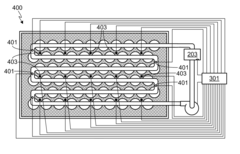
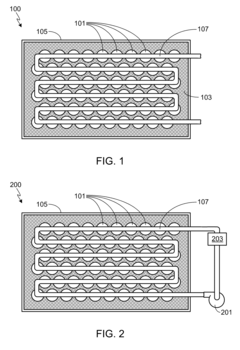
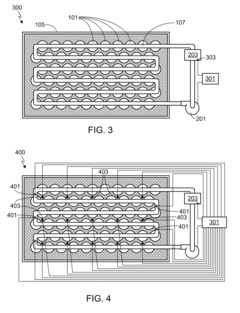
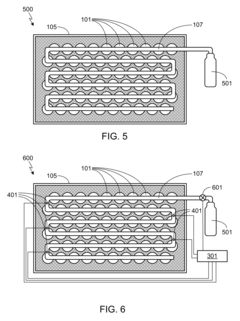
Active thermal runaway mitigation system for use within a battery pack
PatentActiveUS9093726B2
Innovation
- An active thermal runaway mitigation system is implemented, featuring a battery pack enclosure with fluid-containing conduits that breach at a preset temperature to discharge cooling fluids or gases onto overheated cells, using sensors and a system controller to manage fluid pump operation and prevent propagation of thermal runaway to adjacent cells.
Mitigation of thermal runaway in a battery module
PatentActiveUS12308404B2
Innovation
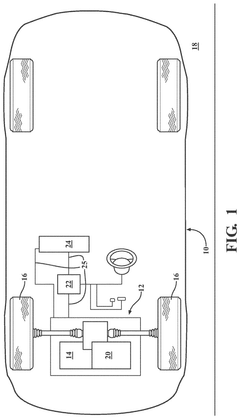
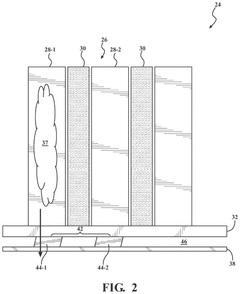
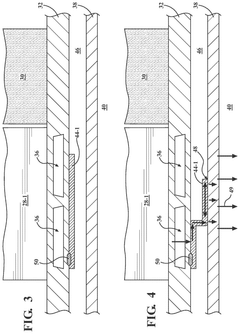
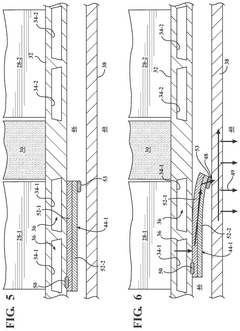
- The battery module incorporates a heat sink in contact with each battery cell to absorb thermal energy, along with a heat transfer mechanism featuring a switch that detects temperature exceeding a predetermined value, bridging an air gap to direct thermal energy from the overheated cell to the module enclosure, thereby controlling the propagation of thermal runaway.
Regulatory Framework for Battery Safety Standards
The regulatory landscape for battery safety has evolved significantly in response to the growing concerns about thermal runaway incidents in lithium-ion batteries. Semi-solid electrolytes, as a promising solution to mitigate thermal runaway risks, are increasingly becoming a focus of regulatory frameworks worldwide.
International standards organizations have established comprehensive guidelines specifically addressing battery thermal stability. The IEC 62133 standard, which covers safety requirements for portable sealed secondary cells and batteries, has been updated to include specific testing protocols for evaluating the thermal stability of batteries with semi-solid electrolytes. Similarly, UL 1642 provides detailed safety standards for lithium batteries, with recent amendments incorporating provisions for semi-solid electrolyte technologies.
Transportation regulations have also adapted to address the unique properties of batteries with semi-solid electrolytes. The UN Manual of Tests and Criteria, particularly UN 38.3, outlines rigorous testing requirements for lithium batteries during transport. These regulations now recognize the enhanced safety profile of semi-solid electrolyte systems, potentially allowing for less stringent shipping classifications when specific safety criteria are met.
Regional regulatory bodies have implemented varying approaches to battery safety standards. The European Union's Battery Directive (2006/66/EC) and its upcoming revision place increased emphasis on safety performance, with specific provisions for advanced electrolyte systems. In the United States, the Consumer Product Safety Commission (CPSC) has issued guidelines that acknowledge the thermal runaway mitigation capabilities of semi-solid electrolytes.
Industry-specific standards have emerged to address sector-specific concerns. For electric vehicles, SAE J2464 and ISO 12405 provide detailed testing procedures for evaluating battery safety, including thermal runaway resistance. These standards are being updated to incorporate test methodologies specifically designed for semi-solid electrolyte systems.
Certification processes are becoming more nuanced, with testing laboratories developing specialized protocols to evaluate the thermal stability advantages of semi-solid electrolytes. These certification pathways often include accelerated aging tests, abuse tolerance evaluations, and thermal propagation assessments that can demonstrate the superior safety characteristics of these advanced electrolyte systems.
Regulatory compliance timelines are creating market pressures for battery manufacturers. Many jurisdictions are implementing phased approaches to battery safety requirements, with increasingly stringent thermal runaway prevention standards taking effect over the next 3-5 years. This regulatory trajectory is accelerating industry adoption of semi-solid electrolyte technologies as a compliance strategy.
International standards organizations have established comprehensive guidelines specifically addressing battery thermal stability. The IEC 62133 standard, which covers safety requirements for portable sealed secondary cells and batteries, has been updated to include specific testing protocols for evaluating the thermal stability of batteries with semi-solid electrolytes. Similarly, UL 1642 provides detailed safety standards for lithium batteries, with recent amendments incorporating provisions for semi-solid electrolyte technologies.
Transportation regulations have also adapted to address the unique properties of batteries with semi-solid electrolytes. The UN Manual of Tests and Criteria, particularly UN 38.3, outlines rigorous testing requirements for lithium batteries during transport. These regulations now recognize the enhanced safety profile of semi-solid electrolyte systems, potentially allowing for less stringent shipping classifications when specific safety criteria are met.
Regional regulatory bodies have implemented varying approaches to battery safety standards. The European Union's Battery Directive (2006/66/EC) and its upcoming revision place increased emphasis on safety performance, with specific provisions for advanced electrolyte systems. In the United States, the Consumer Product Safety Commission (CPSC) has issued guidelines that acknowledge the thermal runaway mitigation capabilities of semi-solid electrolytes.
Industry-specific standards have emerged to address sector-specific concerns. For electric vehicles, SAE J2464 and ISO 12405 provide detailed testing procedures for evaluating battery safety, including thermal runaway resistance. These standards are being updated to incorporate test methodologies specifically designed for semi-solid electrolyte systems.
Certification processes are becoming more nuanced, with testing laboratories developing specialized protocols to evaluate the thermal stability advantages of semi-solid electrolytes. These certification pathways often include accelerated aging tests, abuse tolerance evaluations, and thermal propagation assessments that can demonstrate the superior safety characteristics of these advanced electrolyte systems.
Regulatory compliance timelines are creating market pressures for battery manufacturers. Many jurisdictions are implementing phased approaches to battery safety requirements, with increasingly stringent thermal runaway prevention standards taking effect over the next 3-5 years. This regulatory trajectory is accelerating industry adoption of semi-solid electrolyte technologies as a compliance strategy.
Environmental Impact of Semi-Solid Electrolyte Batteries
The adoption of semi-solid electrolyte batteries represents a significant advancement in sustainable energy storage technology, offering substantial environmental benefits compared to conventional lithium-ion batteries with liquid electrolytes. These batteries demonstrate reduced environmental impact throughout their lifecycle, from manufacturing to disposal, contributing to more sustainable energy solutions.
During production, semi-solid electrolyte batteries typically require fewer toxic solvents and processing chemicals than their liquid counterparts. The manufacturing process generates lower levels of volatile organic compounds (VOCs) and hazardous air pollutants, resulting in decreased air and water pollution. Additionally, the production energy requirements are generally lower, reducing the carbon footprint associated with battery manufacturing.
The operational phase of semi-solid electrolyte batteries presents further environmental advantages. Their enhanced thermal stability significantly reduces the risk of thermal runaway events, which can release harmful chemicals and particulates into the atmosphere. This improved safety profile minimizes the potential for environmental contamination resulting from battery failures or accidents, particularly in large-scale energy storage applications.
From a resource conservation perspective, semi-solid electrolyte batteries often utilize more abundant and less environmentally problematic materials than traditional batteries. Some formulations reduce dependence on rare earth elements and conflict minerals, alleviating concerns about resource depletion and unethical mining practices. The potential for longer cycle life also means fewer batteries need to be produced over time, conserving raw materials and energy.
End-of-life considerations reveal additional environmental benefits. Semi-solid electrolyte batteries typically contain fewer environmentally persistent toxic substances, making recycling processes safer and more straightforward. The more stable nature of the electrolyte components reduces leaching risks in landfill environments if improperly disposed of, though proper recycling remains the preferred end-of-life solution.
Water conservation represents another significant environmental advantage. Traditional battery manufacturing processes can be water-intensive, while semi-solid electrolyte production generally requires less water. This reduced water footprint is particularly valuable in regions facing water scarcity challenges, contributing to more sustainable manufacturing practices.
Looking forward, the environmental profile of semi-solid electrolyte batteries is expected to improve further as manufacturing scales up and recycling infrastructure develops. Research into bio-based or renewable components for semi-solid electrolytes shows promise for creating even more environmentally benign energy storage solutions, potentially establishing these batteries as a cornerstone of sustainable energy systems.
During production, semi-solid electrolyte batteries typically require fewer toxic solvents and processing chemicals than their liquid counterparts. The manufacturing process generates lower levels of volatile organic compounds (VOCs) and hazardous air pollutants, resulting in decreased air and water pollution. Additionally, the production energy requirements are generally lower, reducing the carbon footprint associated with battery manufacturing.
The operational phase of semi-solid electrolyte batteries presents further environmental advantages. Their enhanced thermal stability significantly reduces the risk of thermal runaway events, which can release harmful chemicals and particulates into the atmosphere. This improved safety profile minimizes the potential for environmental contamination resulting from battery failures or accidents, particularly in large-scale energy storage applications.
From a resource conservation perspective, semi-solid electrolyte batteries often utilize more abundant and less environmentally problematic materials than traditional batteries. Some formulations reduce dependence on rare earth elements and conflict minerals, alleviating concerns about resource depletion and unethical mining practices. The potential for longer cycle life also means fewer batteries need to be produced over time, conserving raw materials and energy.
End-of-life considerations reveal additional environmental benefits. Semi-solid electrolyte batteries typically contain fewer environmentally persistent toxic substances, making recycling processes safer and more straightforward. The more stable nature of the electrolyte components reduces leaching risks in landfill environments if improperly disposed of, though proper recycling remains the preferred end-of-life solution.
Water conservation represents another significant environmental advantage. Traditional battery manufacturing processes can be water-intensive, while semi-solid electrolyte production generally requires less water. This reduced water footprint is particularly valuable in regions facing water scarcity challenges, contributing to more sustainable manufacturing practices.
Looking forward, the environmental profile of semi-solid electrolyte batteries is expected to improve further as manufacturing scales up and recycling infrastructure develops. Research into bio-based or renewable components for semi-solid electrolytes shows promise for creating even more environmentally benign energy storage solutions, potentially establishing these batteries as a cornerstone of sustainable energy systems.
Unlock deeper insights with PatSnap Eureka Quick Research — get a full tech report to explore trends and direct your research. Try now!
Generate Your Research Report Instantly with AI Agent
Supercharge your innovation with PatSnap Eureka AI Agent Platform!