OLED vs MicroLED: Standards and Regulatory Challenges
OCT 24, 20259 MIN READ
Generate Your Research Report Instantly with AI Agent
Patsnap Eureka helps you evaluate technical feasibility & market potential.
OLED and MicroLED Display Technology Evolution
Display technology has undergone significant evolution over the decades, with OLED (Organic Light-Emitting Diode) and MicroLED representing two pivotal advancements in this journey. OLED technology emerged commercially in the early 2000s, pioneered by companies like Kodak and Sony, offering superior contrast ratios, wider viewing angles, and thinner form factors compared to traditional LCD displays.
The evolution of OLED has progressed through several generations, beginning with passive-matrix OLED (PMOLED) displays with limited resolution and size, advancing to active-matrix OLED (AMOLED) that enabled larger, higher-resolution screens with improved power efficiency. Further refinements led to flexible OLED panels, transparent displays, and most recently, foldable screen technologies that have revolutionized smartphone and tablet design.
MicroLED represents the next frontier in display technology, with development beginning in the early 2000s but only reaching commercial viability in recent years. Unlike OLED, which uses organic compounds that emit light when electricity is applied, MicroLED utilizes microscopic inorganic LED arrays, each functioning as individual pixels. This fundamental difference drives many of the comparative advantages and challenges between these technologies.
The technological trajectory of both OLED and MicroLED has been shaped by increasing demands for higher resolution, improved energy efficiency, enhanced color accuracy, and novel form factors. OLED has established itself as the premium display technology in smartphones, high-end televisions, and wearable devices, while MicroLED is positioned as its potential successor, promising even better performance characteristics.
A critical aspect of this evolution has been the development of manufacturing processes. OLED production has matured significantly, with techniques like vacuum thermal evaporation and inkjet printing enabling mass production, though yield rates remain a challenge for larger panels. MicroLED manufacturing faces even greater hurdles, particularly in the mass transfer process required to place millions of microscopic LEDs precisely onto substrates.
The standards landscape has evolved alongside these technologies, with organizations like the International Committee for Display Metrology (ICDM), the Society for Information Display (SID), and the International Electrotechnical Commission (IEC) developing specifications for performance metrics, testing methodologies, and safety requirements. However, the rapid pace of innovation has often outstripped standardization efforts, creating regulatory gaps.
As these display technologies continue to evolve, key trends include the pursuit of higher pixel densities, reduced power consumption, improved longevity (particularly addressing OLED's burn-in issues), and enhanced manufacturing efficiency to reduce costs. The convergence of these factors will determine which technology ultimately dominates the next generation of display applications.
The evolution of OLED has progressed through several generations, beginning with passive-matrix OLED (PMOLED) displays with limited resolution and size, advancing to active-matrix OLED (AMOLED) that enabled larger, higher-resolution screens with improved power efficiency. Further refinements led to flexible OLED panels, transparent displays, and most recently, foldable screen technologies that have revolutionized smartphone and tablet design.
MicroLED represents the next frontier in display technology, with development beginning in the early 2000s but only reaching commercial viability in recent years. Unlike OLED, which uses organic compounds that emit light when electricity is applied, MicroLED utilizes microscopic inorganic LED arrays, each functioning as individual pixels. This fundamental difference drives many of the comparative advantages and challenges between these technologies.
The technological trajectory of both OLED and MicroLED has been shaped by increasing demands for higher resolution, improved energy efficiency, enhanced color accuracy, and novel form factors. OLED has established itself as the premium display technology in smartphones, high-end televisions, and wearable devices, while MicroLED is positioned as its potential successor, promising even better performance characteristics.
A critical aspect of this evolution has been the development of manufacturing processes. OLED production has matured significantly, with techniques like vacuum thermal evaporation and inkjet printing enabling mass production, though yield rates remain a challenge for larger panels. MicroLED manufacturing faces even greater hurdles, particularly in the mass transfer process required to place millions of microscopic LEDs precisely onto substrates.
The standards landscape has evolved alongside these technologies, with organizations like the International Committee for Display Metrology (ICDM), the Society for Information Display (SID), and the International Electrotechnical Commission (IEC) developing specifications for performance metrics, testing methodologies, and safety requirements. However, the rapid pace of innovation has often outstripped standardization efforts, creating regulatory gaps.
As these display technologies continue to evolve, key trends include the pursuit of higher pixel densities, reduced power consumption, improved longevity (particularly addressing OLED's burn-in issues), and enhanced manufacturing efficiency to reduce costs. The convergence of these factors will determine which technology ultimately dominates the next generation of display applications.
Market Demand Analysis for Advanced Display Technologies
The display technology market is witnessing unprecedented growth driven by consumer electronics, automotive interfaces, and commercial signage applications. Current market analysis indicates that the global advanced display market reached approximately $148 billion in 2022, with projections suggesting growth to $206 billion by 2027, representing a compound annual growth rate of 6.8%. Within this expanding landscape, OLED technology currently dominates the premium segment with approximately 38% market share in high-end smartphones and 67% in premium televisions.
MicroLED technology, though still emerging, is generating significant market interest with projected growth rates exceeding 80% annually through 2026. This accelerated interest stems from MicroLED's superior performance characteristics, including brightness levels exceeding 5,000 nits compared to OLED's typical 1,000 nits maximum, and theoretical lifespans of over 100,000 hours versus OLED's 30,000-50,000 hours.
Consumer demand analysis reveals distinct market segments with varying priorities. The premium consumer electronics sector prioritizes visual quality and form factor innovation, with 72% of high-end smartphone purchasers citing display quality as a critical purchasing factor. The automotive sector increasingly demands displays with extreme brightness capabilities and temperature tolerance, with projections indicating that advanced display integration in vehicles will grow by 24% annually through 2028.
Commercial applications represent another significant growth vector, with digital signage and large-format displays requiring extended durability and power efficiency. Market research indicates that 83% of commercial buyers rank energy efficiency and maintenance costs as primary considerations, areas where MicroLED technology demonstrates particular promise.
Regional analysis shows Asia-Pacific leading advanced display technology adoption with 46% market share, followed by North America at 28% and Europe at 19%. China and South Korea remain manufacturing powerhouses, while North American markets drive premium segment innovation and adoption.
The transition from OLED to MicroLED faces significant market barriers including manufacturing scalability challenges and price premiums estimated at 4-6 times higher than equivalent OLED displays. Consumer surveys indicate price sensitivity thresholds, with only 18% of consumers willing to pay more than a 30% premium for MicroLED benefits, suggesting a gradual market penetration trajectory dependent on manufacturing cost reductions.
Industry forecasts suggest MicroLED will initially capture specialized high-value segments including luxury wearables, premium automotive displays, and commercial installations where performance advantages justify the cost premium, before gradually expanding into mainstream consumer electronics as manufacturing economies of scale develop.
MicroLED technology, though still emerging, is generating significant market interest with projected growth rates exceeding 80% annually through 2026. This accelerated interest stems from MicroLED's superior performance characteristics, including brightness levels exceeding 5,000 nits compared to OLED's typical 1,000 nits maximum, and theoretical lifespans of over 100,000 hours versus OLED's 30,000-50,000 hours.
Consumer demand analysis reveals distinct market segments with varying priorities. The premium consumer electronics sector prioritizes visual quality and form factor innovation, with 72% of high-end smartphone purchasers citing display quality as a critical purchasing factor. The automotive sector increasingly demands displays with extreme brightness capabilities and temperature tolerance, with projections indicating that advanced display integration in vehicles will grow by 24% annually through 2028.
Commercial applications represent another significant growth vector, with digital signage and large-format displays requiring extended durability and power efficiency. Market research indicates that 83% of commercial buyers rank energy efficiency and maintenance costs as primary considerations, areas where MicroLED technology demonstrates particular promise.
Regional analysis shows Asia-Pacific leading advanced display technology adoption with 46% market share, followed by North America at 28% and Europe at 19%. China and South Korea remain manufacturing powerhouses, while North American markets drive premium segment innovation and adoption.
The transition from OLED to MicroLED faces significant market barriers including manufacturing scalability challenges and price premiums estimated at 4-6 times higher than equivalent OLED displays. Consumer surveys indicate price sensitivity thresholds, with only 18% of consumers willing to pay more than a 30% premium for MicroLED benefits, suggesting a gradual market penetration trajectory dependent on manufacturing cost reductions.
Industry forecasts suggest MicroLED will initially capture specialized high-value segments including luxury wearables, premium automotive displays, and commercial installations where performance advantages justify the cost premium, before gradually expanding into mainstream consumer electronics as manufacturing economies of scale develop.
Technical Challenges and Regulatory Landscape
The OLED and MicroLED display technologies face distinct technical challenges that significantly impact their standardization and regulatory compliance. OLED displays struggle with issues of burn-in, where static images can permanently damage pixels over time, creating a complex challenge for establishing durability standards. Additionally, the organic materials in OLEDs degrade at different rates depending on usage patterns and environmental conditions, making it difficult to establish consistent performance metrics across different manufacturing processes and applications.
MicroLED technology, while promising superior longevity and brightness, confronts manufacturing hurdles that complicate standardization efforts. The mass transfer process of millions of microscopic LEDs presents yield challenges, with defect rates requiring standardized testing protocols that don't yet exist at industry scale. The nascent nature of MicroLED manufacturing means regulatory frameworks are still evolving, creating uncertainty for manufacturers investing in production capabilities.
Both technologies face environmental regulatory challenges related to materials usage. OLED displays contain organic compounds that may fall under various chemical regulations including REACH in Europe and similar frameworks in other jurisdictions. MicroLED manufacturing involves gallium nitride and other semiconductor materials that have their own regulatory considerations regarding sourcing, processing, and disposal.
Energy efficiency standards present another regulatory dimension. While both technologies offer power advantages over traditional LCD displays, the methods for measuring and certifying energy consumption differ significantly between them. OLED's pixel-level lighting allows for power savings with dark content, while MicroLED offers potentially better efficiency at high brightness levels. These differences complicate the creation of unified energy efficiency standards that fairly represent both technologies.
Electromagnetic interference (EMI) regulations also apply differently to these display technologies. MicroLED displays, operating at higher voltages than OLEDs, may require additional shielding and certification to meet EMI standards in sensitive environments like healthcare or aviation. The regulatory landscape here remains fragmented across different regions and use cases.
Safety certification presents additional challenges, particularly for MicroLED's higher brightness capabilities. Regulations regarding maximum luminance levels to prevent eye damage must be carefully considered, especially as MicroLED can achieve significantly higher nits than current OLED displays. This creates a need for new safety standards specific to ultra-bright display technologies.
The global nature of display manufacturing further complicates the regulatory landscape, with manufacturers needing to navigate different standards across North America, Europe, and Asia. Harmonization efforts are underway through organizations like the International Electrotechnical Commission (IEC) and the Society for Information Display (SID), but comprehensive standards remain a work in progress.
MicroLED technology, while promising superior longevity and brightness, confronts manufacturing hurdles that complicate standardization efforts. The mass transfer process of millions of microscopic LEDs presents yield challenges, with defect rates requiring standardized testing protocols that don't yet exist at industry scale. The nascent nature of MicroLED manufacturing means regulatory frameworks are still evolving, creating uncertainty for manufacturers investing in production capabilities.
Both technologies face environmental regulatory challenges related to materials usage. OLED displays contain organic compounds that may fall under various chemical regulations including REACH in Europe and similar frameworks in other jurisdictions. MicroLED manufacturing involves gallium nitride and other semiconductor materials that have their own regulatory considerations regarding sourcing, processing, and disposal.
Energy efficiency standards present another regulatory dimension. While both technologies offer power advantages over traditional LCD displays, the methods for measuring and certifying energy consumption differ significantly between them. OLED's pixel-level lighting allows for power savings with dark content, while MicroLED offers potentially better efficiency at high brightness levels. These differences complicate the creation of unified energy efficiency standards that fairly represent both technologies.
Electromagnetic interference (EMI) regulations also apply differently to these display technologies. MicroLED displays, operating at higher voltages than OLEDs, may require additional shielding and certification to meet EMI standards in sensitive environments like healthcare or aviation. The regulatory landscape here remains fragmented across different regions and use cases.
Safety certification presents additional challenges, particularly for MicroLED's higher brightness capabilities. Regulations regarding maximum luminance levels to prevent eye damage must be carefully considered, especially as MicroLED can achieve significantly higher nits than current OLED displays. This creates a need for new safety standards specific to ultra-bright display technologies.
The global nature of display manufacturing further complicates the regulatory landscape, with manufacturers needing to navigate different standards across North America, Europe, and Asia. Harmonization efforts are underway through organizations like the International Electrotechnical Commission (IEC) and the Society for Information Display (SID), but comprehensive standards remain a work in progress.
Current Technical Solutions and Implementation Approaches
01 Compliance frameworks for display technologies
Regulatory compliance frameworks specific to OLED and MicroLED display technologies establish standards for manufacturing, performance, and safety. These frameworks include certification processes, testing methodologies, and documentation requirements that manufacturers must follow to ensure their display products meet industry standards and regulatory requirements across different markets. Compliance management systems help track adherence to these standards throughout the product lifecycle.- Compliance frameworks for display technologies: Regulatory compliance frameworks specific to OLED and MicroLED display technologies establish standards for manufacturing, performance, and safety. These frameworks include certification requirements, testing protocols, and documentation procedures that manufacturers must follow to ensure their display products meet industry standards and legal requirements across different markets. Compliance management systems help track adherence to these regulations throughout the product lifecycle.
- Environmental and energy efficiency standards: OLED and MicroLED displays must comply with environmental regulations and energy efficiency standards that govern power consumption, hazardous materials usage, and end-of-life disposal. These standards include requirements for reduced energy consumption during operation, standby power limitations, and restrictions on materials like lead, mercury, and other hazardous substances. Manufacturers must document compliance with these standards through testing and certification processes.
- Quality control and testing protocols: Standardized testing protocols for OLED and MicroLED displays ensure consistent quality and performance across manufacturers. These protocols include tests for brightness, color accuracy, contrast ratio, viewing angle, response time, and lifespan. Automated testing systems can verify compliance with these standards during production, while documentation systems track test results and maintain quality records for regulatory purposes.
- Intellectual property and licensing standards: OLED and MicroLED technologies involve complex intellectual property considerations including patents, licensing agreements, and technology standards. Manufacturers must navigate patent pools, cross-licensing arrangements, and standard-essential patents to ensure legal compliance. Systems for tracking IP rights, managing licensing obligations, and documenting royalty payments help companies avoid infringement while implementing these advanced display technologies.
- Data security and privacy compliance: As smart displays incorporate more interactive features, they must comply with data security and privacy regulations. OLED and MicroLED display systems that collect user data, connect to networks, or integrate with other smart devices must implement security protocols, data protection measures, and privacy controls. Compliance requirements include secure data handling, user consent mechanisms, and protection against unauthorized access to display systems.
02 Environmental and energy efficiency standards
OLED and MicroLED displays must comply with environmental regulations and energy efficiency standards. These include requirements for power consumption, standby power usage, and environmental impact assessments. Standards often specify maximum energy usage limits, recyclability requirements, and restrictions on hazardous materials. Manufacturers must design their display technologies to meet these standards while maintaining performance characteristics, with certification processes verifying compliance before market entry.Expand Specific Solutions03 Quality and performance standardization
Standards for OLED and MicroLED displays define quality metrics and performance parameters that must be met for market approval. These include specifications for brightness, contrast ratio, color accuracy, refresh rate, and resolution. Standardized testing protocols ensure consistent evaluation across different manufacturers and models. Compliance with these standards ensures that displays meet minimum performance requirements and provide consistent user experience across devices implementing these technologies.Expand Specific Solutions04 Safety and electromagnetic compatibility regulations
Safety regulations for OLED and MicroLED displays address potential hazards such as electrical safety, thermal management, and electromagnetic interference. These standards specify maximum radiation limits, insulation requirements, and protection mechanisms against electrical faults. Manufacturers must conduct rigorous testing to demonstrate that their display technologies do not pose health risks to users or interfere with other electronic devices. Certification processes verify compliance with these safety standards before products can be marketed.Expand Specific Solutions05 Certification and documentation requirements
OLED and MicroLED display manufacturers must maintain comprehensive documentation demonstrating compliance with applicable standards and regulations. This includes test reports, technical files, declarations of conformity, and certification marks. Regulatory bodies require specific documentation formats and content to verify compliance throughout the product lifecycle. Automated systems help manage the complex documentation requirements across different markets and regulatory jurisdictions, ensuring that all necessary certifications are obtained and maintained.Expand Specific Solutions
Key Industry Players and Competitive Dynamics
The OLED vs MicroLED display technology landscape is currently in a transitional phase, with OLED being mature and commercially established while MicroLED remains in early commercialization stages. The global market for these advanced display technologies is projected to exceed $200 billion by 2025, driven by demand for higher performance displays in consumer electronics, automotive, and AR/VR applications. Leading players like Samsung Electronics and BOE Technology Group are heavily invested in both technologies, while specialized companies such as Lumileds, eMagin, and Vistar Optoelectronics focus on MicroLED innovations. Key regulatory challenges include standardization of performance metrics, environmental compliance for manufacturing processes, and safety certifications, particularly as these technologies expand into wearable and automotive applications.
BOE Technology Group Co., Ltd.
Technical Solution: BOE has established a comprehensive technical approach addressing both OLED and MicroLED regulatory challenges. For OLED, BOE has developed advanced oxide backplane technology with reduced power consumption that meets stringent energy efficiency standards in multiple markets. Their OLED panels incorporate blue light filtering layers that comply with TÜV Rheinland eye comfort certification standards. In the MicroLED space, BOE has pioneered mass transfer technology using electrostatic forces rather than traditional pick-and-place methods, reducing manufacturing energy consumption by approximately 40%. Their MicroLED displays utilize proprietary phosphor materials that eliminate the need for certain rare earth elements restricted under RoHS regulations. BOE has also implemented a comprehensive end-of-life recycling program for both technologies that addresses the EU's WEEE Directive requirements, with recovery rates exceeding 85% for critical materials. Their regulatory compliance strategy includes early engagement with standards bodies like the International Electrotechnical Commission (IEC) to help shape emerging display technology standards rather than merely responding to them.
Strengths: BOE's strong position in the Chinese market provides advantages in navigating China's rapidly evolving display technology regulations, which increasingly influence global standards. Their extensive patent portfolio in both technologies offers protection against intellectual property challenges. Weaknesses: BOE's MicroLED technology still lags behind some competitors in terms of commercialization readiness, creating uncertainty about meeting future regulatory requirements for mass-market products. Their global certification infrastructure is less developed than some international competitors, potentially creating delays in multi-market product launches.
Samsung Electronics Co., Ltd.
Technical Solution: Samsung has developed a dual-track approach to next-generation display technologies, with significant investments in both OLED and MicroLED. For OLED, Samsung has pioneered quantum dot (QD)-OLED technology that combines quantum dots with blue OLED emitters to achieve superior color performance while addressing burn-in issues. Their MicroLED development focuses on modular designs using inorganic gallium nitride (GaN) LEDs with sizes below 100 micrometers, allowing for seamless tiling of display modules. Samsung has addressed regulatory challenges by developing low blue light emissions in both technologies to meet eye safety standards across global markets. Their manufacturing processes for MicroLED have been optimized to reduce hazardous material usage by approximately 30% compared to traditional LED production, helping meet stricter environmental regulations in the EU and Asia. Samsung has also established an industry-leading certification program that exceeds minimum regulatory requirements for both technologies.
Strengths: Samsung's vertical integration allows for complete control over the supply chain for both technologies, enabling faster adaptation to regulatory changes. Their established global compliance infrastructure provides advantages in navigating regional certification differences. Weaknesses: Their dual-technology approach requires dividing R&D resources between competing standards, potentially slowing development in either area. MicroLED manufacturing still faces yield challenges that impact cost-effectiveness compared to their more mature OLED production.
Patent Analysis and Intellectual Property Landscape
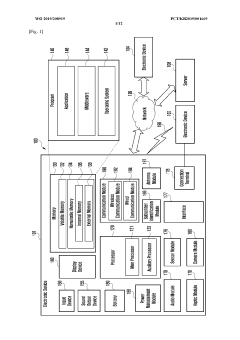
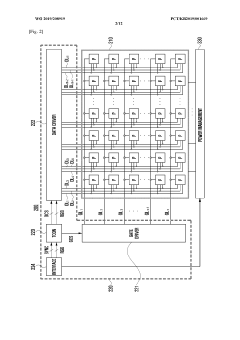
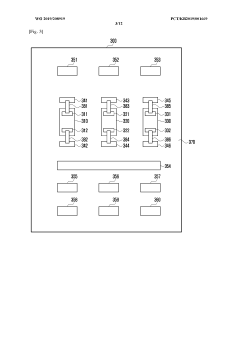
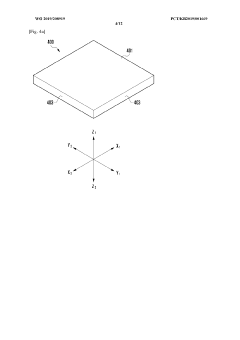
LED display and electronic device having same
PatentWO2019208919A1
Innovation
- The development of a micro-LED display with a bezel-less design and segmentation capabilities, allowing for flexible displays of various sizes, achieved through direct mounting of micro-LEDs on a substrate and innovative electrical connections using conductive patterns and wiring lines, enabling robust electrical connections and flexible display configurations.
Encapsulated light emitting diodes for selective fluidic assembly
PatentActiveUS12119432B2
Innovation
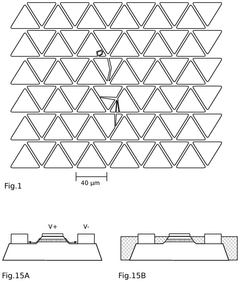
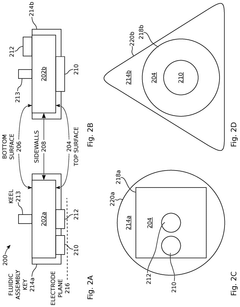
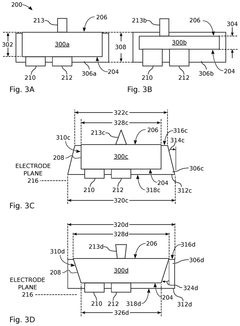
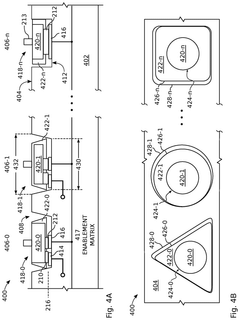
- The use of partially encapsulated semiconductor-based inorganic micro-LEDs with a patternable polymer encapsulant that protects the LEDs from collisions and optimizes their shape for efficient assembly, allowing for higher speed and yield while preventing defects, and enabling precise alignment of LED colors on a display substrate.
Environmental Impact and Sustainability Considerations
The environmental impact of display technologies has become increasingly important as sustainability considerations gain prominence in regulatory frameworks and consumer preferences. OLED and MicroLED technologies present distinct environmental profiles throughout their lifecycles, from raw material extraction to end-of-life disposal.
OLED displays typically contain organic compounds and heavy metals that pose environmental challenges. The manufacturing process involves energy-intensive clean rooms and specialized equipment, contributing to a significant carbon footprint. However, OLEDs offer energy efficiency advantages during operation, particularly when displaying darker content, which partially offsets their production impact. The thin, flexible nature of OLED panels also allows for reduced material usage in device construction.
MicroLED technology, while promising superior performance, currently faces sustainability hurdles related to manufacturing complexity. The production process requires precise placement of millions of microscopic LEDs, resulting in high energy consumption and potential material waste from yield issues. Nevertheless, MicroLEDs offer exceptional energy efficiency during operation and contain fewer toxic substances than OLEDs, potentially reducing environmental harm at disposal.
Regulatory frameworks addressing these technologies are evolving globally. The European Union's Restriction of Hazardous Substances (RoHS) and Waste Electrical and Electronic Equipment (WEEE) directives impact both technologies, with particular scrutiny on heavy metals and end-of-life management. Countries like Japan and South Korea have implemented similar regulations with specific provisions for display technologies.
Industry certification programs such as EPEAT and Energy Star are increasingly incorporating criteria related to display technology sustainability. These standards evaluate energy consumption, material selection, and recyclability, influencing market adoption and consumer choices. The TCO Certified standard specifically addresses display technologies with comprehensive environmental criteria.
Supply chain considerations present another environmental dimension. Both technologies rely on rare earth elements and specialized materials with complex extraction and processing requirements. MicroLED may face additional challenges due to gallium nitride sourcing, while OLED production depends on specific organic compounds with their own environmental footprints.
As these technologies mature, manufacturers are developing innovative approaches to reduce environmental impact, including improved recycling methods, reduced energy consumption in production, and alternative material research. The industry's response to sustainability challenges will likely shape future regulatory standards and market dynamics in the display technology sector.
OLED displays typically contain organic compounds and heavy metals that pose environmental challenges. The manufacturing process involves energy-intensive clean rooms and specialized equipment, contributing to a significant carbon footprint. However, OLEDs offer energy efficiency advantages during operation, particularly when displaying darker content, which partially offsets their production impact. The thin, flexible nature of OLED panels also allows for reduced material usage in device construction.
MicroLED technology, while promising superior performance, currently faces sustainability hurdles related to manufacturing complexity. The production process requires precise placement of millions of microscopic LEDs, resulting in high energy consumption and potential material waste from yield issues. Nevertheless, MicroLEDs offer exceptional energy efficiency during operation and contain fewer toxic substances than OLEDs, potentially reducing environmental harm at disposal.
Regulatory frameworks addressing these technologies are evolving globally. The European Union's Restriction of Hazardous Substances (RoHS) and Waste Electrical and Electronic Equipment (WEEE) directives impact both technologies, with particular scrutiny on heavy metals and end-of-life management. Countries like Japan and South Korea have implemented similar regulations with specific provisions for display technologies.
Industry certification programs such as EPEAT and Energy Star are increasingly incorporating criteria related to display technology sustainability. These standards evaluate energy consumption, material selection, and recyclability, influencing market adoption and consumer choices. The TCO Certified standard specifically addresses display technologies with comprehensive environmental criteria.
Supply chain considerations present another environmental dimension. Both technologies rely on rare earth elements and specialized materials with complex extraction and processing requirements. MicroLED may face additional challenges due to gallium nitride sourcing, while OLED production depends on specific organic compounds with their own environmental footprints.
As these technologies mature, manufacturers are developing innovative approaches to reduce environmental impact, including improved recycling methods, reduced energy consumption in production, and alternative material research. The industry's response to sustainability challenges will likely shape future regulatory standards and market dynamics in the display technology sector.
Global Standards Harmonization and Compliance Strategies
The global display technology landscape faces significant challenges in standardization as OLED and MicroLED technologies continue to evolve at different rates. Currently, international standards organizations such as the International Electrotechnical Commission (IEC), International Organization for Standardization (ISO), and the International Commission on Illumination (CIE) are working to establish unified frameworks for these emerging display technologies.
A critical challenge in harmonizing global standards lies in the fundamental differences between OLED and MicroLED technologies. While OLED standards have matured over decades of commercial implementation, MicroLED standards remain in nascent stages, creating regulatory disparities across major markets including North America, Europe, and Asia-Pacific regions.
Effective compliance strategies require manufacturers to navigate a complex matrix of regional requirements. In the European Union, both technologies must adhere to RoHS and REACH regulations, with specific attention to heavy metal content in MicroLED phosphors. Meanwhile, North American markets emphasize Energy Star certification with distinct efficiency metrics for each technology, creating compliance challenges for global product lines.
Cross-border certification recognition represents a promising pathway toward harmonization. The CB Scheme under the IECEE (IEC System for Conformity Assessment Schemes for Electrotechnical Equipment and Components) allows test results from one member country to be accepted in others, reducing redundant testing requirements. However, implementation remains inconsistent for newer display technologies.
Industry consortia are emerging as influential forces in standards development. The MicroLED Industry Association and OLED Association are collaborating with traditional standards bodies to accelerate framework development that accommodates both technologies' unique characteristics while ensuring interoperability and measurement consistency.
Forward-looking compliance strategies should incorporate adaptive regulatory monitoring systems that track evolving standards across key markets. Companies investing in either technology should establish dedicated standards engagement teams to participate in technical committees and working groups, influencing standards development while gaining early insight into regulatory changes.
The convergence toward technology-neutral performance standards represents the most promising long-term solution. Rather than developing separate regulatory frameworks for OLED and MicroLED, standards bodies are increasingly focusing on outcome-based metrics such as energy efficiency, color accuracy, and lifetime performance that can be applied consistently across display technologies.
A critical challenge in harmonizing global standards lies in the fundamental differences between OLED and MicroLED technologies. While OLED standards have matured over decades of commercial implementation, MicroLED standards remain in nascent stages, creating regulatory disparities across major markets including North America, Europe, and Asia-Pacific regions.
Effective compliance strategies require manufacturers to navigate a complex matrix of regional requirements. In the European Union, both technologies must adhere to RoHS and REACH regulations, with specific attention to heavy metal content in MicroLED phosphors. Meanwhile, North American markets emphasize Energy Star certification with distinct efficiency metrics for each technology, creating compliance challenges for global product lines.
Cross-border certification recognition represents a promising pathway toward harmonization. The CB Scheme under the IECEE (IEC System for Conformity Assessment Schemes for Electrotechnical Equipment and Components) allows test results from one member country to be accepted in others, reducing redundant testing requirements. However, implementation remains inconsistent for newer display technologies.
Industry consortia are emerging as influential forces in standards development. The MicroLED Industry Association and OLED Association are collaborating with traditional standards bodies to accelerate framework development that accommodates both technologies' unique characteristics while ensuring interoperability and measurement consistency.
Forward-looking compliance strategies should incorporate adaptive regulatory monitoring systems that track evolving standards across key markets. Companies investing in either technology should establish dedicated standards engagement teams to participate in technical committees and working groups, influencing standards development while gaining early insight into regulatory changes.
The convergence toward technology-neutral performance standards represents the most promising long-term solution. Rather than developing separate regulatory frameworks for OLED and MicroLED, standards bodies are increasingly focusing on outcome-based metrics such as energy efficiency, color accuracy, and lifetime performance that can be applied consistently across display technologies.
Unlock deeper insights with Patsnap Eureka Quick Research — get a full tech report to explore trends and direct your research. Try now!
Generate Your Research Report Instantly with AI Agent
Supercharge your innovation with Patsnap Eureka AI Agent Platform!