
Quantum Dot Stability and Its Effect on Solar Cell Lifetime
SEP 28, 20259 MIN READ
Generate Your Research Report Instantly with AI Agent
Patsnap Eureka helps you evaluate technical feasibility & market potential.
Quantum Dot Technology Evolution and Objectives
Quantum dots (QDs) have emerged as a revolutionary nanomaterial since their initial discovery in the 1980s. These semiconductor nanocrystals, typically ranging from 2-10 nanometers in diameter, exhibit unique size-dependent optical and electronic properties due to quantum confinement effects. The evolution of quantum dot technology has progressed through several distinct phases, beginning with fundamental research into their synthesis and characterization, followed by exploration of their unique properties, and more recently, their integration into practical applications including solar cells.
The early development of quantum dots focused primarily on cadmium-based materials (CdS, CdSe, CdTe), which demonstrated excellent optical properties but presented significant toxicity concerns. This led to the exploration of alternative compositions, including lead chalcogenides (PbS, PbSe), indium phosphide (InP), and more recently, perovskite quantum dots. Each material system has offered specific advantages while presenting unique stability challenges that directly impact solar cell lifetime.
A critical milestone in quantum dot evolution was the development of core-shell structures in the 1990s, where a quantum dot core is encapsulated within a shell of wider bandgap material. This innovation significantly improved quantum yield and stability by passivating surface defects and protecting the core from environmental degradation. The subsequent development of ligand exchange techniques further enhanced QD stability and enabled better integration into solid-state devices.
The application of quantum dots in solar cells has evolved from proof-of-concept demonstrations to commercially viable technologies. Initial quantum dot-sensitized solar cells (QDSSCs) showed modest efficiencies but suffered from severe stability limitations. The field then progressed toward quantum dot heterojunction solar cells and, more recently, to QD-silicon tandem architectures that leverage the tunable bandgap of quantum dots to harvest portions of the solar spectrum inaccessible to traditional silicon cells.
The primary technical objective in quantum dot stability research is to achieve operational lifetimes exceeding 20 years for solar applications, comparable to conventional silicon photovoltaics. This requires addressing multiple degradation mechanisms, including photo-oxidation, ligand detachment, ion migration, and interfacial defect formation. Secondary objectives include maintaining high quantum yields under continuous illumination and developing encapsulation strategies that prevent moisture ingress while allowing efficient charge transport.
Current research trajectories are focused on developing intrinsically stable quantum dot compositions, engineering robust surface chemistry, and creating protective matrices that isolate quantum dots from environmental stressors. The field is increasingly moving toward lead-free compositions that maintain high performance while addressing toxicity concerns, with particular emphasis on copper-based quantum dots and halide perovskite nanocrystals as promising candidates for next-generation stable quantum dot solar cells.
The early development of quantum dots focused primarily on cadmium-based materials (CdS, CdSe, CdTe), which demonstrated excellent optical properties but presented significant toxicity concerns. This led to the exploration of alternative compositions, including lead chalcogenides (PbS, PbSe), indium phosphide (InP), and more recently, perovskite quantum dots. Each material system has offered specific advantages while presenting unique stability challenges that directly impact solar cell lifetime.
A critical milestone in quantum dot evolution was the development of core-shell structures in the 1990s, where a quantum dot core is encapsulated within a shell of wider bandgap material. This innovation significantly improved quantum yield and stability by passivating surface defects and protecting the core from environmental degradation. The subsequent development of ligand exchange techniques further enhanced QD stability and enabled better integration into solid-state devices.
The application of quantum dots in solar cells has evolved from proof-of-concept demonstrations to commercially viable technologies. Initial quantum dot-sensitized solar cells (QDSSCs) showed modest efficiencies but suffered from severe stability limitations. The field then progressed toward quantum dot heterojunction solar cells and, more recently, to QD-silicon tandem architectures that leverage the tunable bandgap of quantum dots to harvest portions of the solar spectrum inaccessible to traditional silicon cells.
The primary technical objective in quantum dot stability research is to achieve operational lifetimes exceeding 20 years for solar applications, comparable to conventional silicon photovoltaics. This requires addressing multiple degradation mechanisms, including photo-oxidation, ligand detachment, ion migration, and interfacial defect formation. Secondary objectives include maintaining high quantum yields under continuous illumination and developing encapsulation strategies that prevent moisture ingress while allowing efficient charge transport.
Current research trajectories are focused on developing intrinsically stable quantum dot compositions, engineering robust surface chemistry, and creating protective matrices that isolate quantum dots from environmental stressors. The field is increasingly moving toward lead-free compositions that maintain high performance while addressing toxicity concerns, with particular emphasis on copper-based quantum dots and halide perovskite nanocrystals as promising candidates for next-generation stable quantum dot solar cells.
Solar Cell Market Demand Analysis
The global solar cell market has experienced significant growth over the past decade, with a market value reaching $197 billion in 2022 and projected to exceed $300 billion by 2030. This growth is primarily driven by increasing environmental concerns, government incentives for renewable energy adoption, and declining costs of solar technology. Within this expanding market, quantum dot solar cells represent an emerging segment with substantial potential due to their theoretical efficiency advantages over traditional silicon-based photovoltaics.
Market research indicates that consumers and commercial entities increasingly prioritize longevity and reliability in solar installations. The average expected lifetime of conventional silicon solar panels ranges from 25-30 years, setting a benchmark that quantum dot technology must meet or exceed to achieve widespread market acceptance. Survey data from major markets including China, the United States, and Europe consistently shows that lifetime performance ranks among the top three purchasing considerations for both residential and commercial solar installations.
The demand for quantum dot solar cells is particularly strong in specialized applications where their unique properties offer distinct advantages. These include building-integrated photovoltaics (BIPV), where aesthetic considerations and form factor flexibility are paramount, and space applications, where high efficiency-to-weight ratios deliver significant value. However, stability concerns currently limit broader market penetration, with potential customers citing uncertainty about long-term performance as the primary barrier to adoption.
Regional market analysis reveals varying levels of receptiveness to quantum dot solar technology. Asian markets, particularly Japan and South Korea, show greater willingness to adopt emerging solar technologies, while European markets demonstrate stronger preference for proven long-term reliability. This geographical variation in risk tolerance significantly impacts commercialization strategies for quantum dot solar cells.
Price sensitivity analysis indicates that quantum dot solar cells must achieve a cost-performance ratio comparable to conventional technologies within a 10% premium to gain significant market share. Current manufacturing costs remain substantially higher, though economies of scale could potentially narrow this gap as production volumes increase. Industry forecasts suggest that achieving price parity while maintaining superior efficiency would trigger rapid market adoption, potentially capturing 15-20% of new solar installations within five years of such a breakthrough.
The market for solar technologies with enhanced stability profiles is expected to grow at a compound annual growth rate (CAGR) of 12.3% through 2028, outpacing the broader solar market's growth rate of 8.9%. This premium growth rate underscores the significant market opportunity for quantum dot solar cells if stability challenges can be effectively addressed.
Market research indicates that consumers and commercial entities increasingly prioritize longevity and reliability in solar installations. The average expected lifetime of conventional silicon solar panels ranges from 25-30 years, setting a benchmark that quantum dot technology must meet or exceed to achieve widespread market acceptance. Survey data from major markets including China, the United States, and Europe consistently shows that lifetime performance ranks among the top three purchasing considerations for both residential and commercial solar installations.
The demand for quantum dot solar cells is particularly strong in specialized applications where their unique properties offer distinct advantages. These include building-integrated photovoltaics (BIPV), where aesthetic considerations and form factor flexibility are paramount, and space applications, where high efficiency-to-weight ratios deliver significant value. However, stability concerns currently limit broader market penetration, with potential customers citing uncertainty about long-term performance as the primary barrier to adoption.
Regional market analysis reveals varying levels of receptiveness to quantum dot solar technology. Asian markets, particularly Japan and South Korea, show greater willingness to adopt emerging solar technologies, while European markets demonstrate stronger preference for proven long-term reliability. This geographical variation in risk tolerance significantly impacts commercialization strategies for quantum dot solar cells.
Price sensitivity analysis indicates that quantum dot solar cells must achieve a cost-performance ratio comparable to conventional technologies within a 10% premium to gain significant market share. Current manufacturing costs remain substantially higher, though economies of scale could potentially narrow this gap as production volumes increase. Industry forecasts suggest that achieving price parity while maintaining superior efficiency would trigger rapid market adoption, potentially capturing 15-20% of new solar installations within five years of such a breakthrough.
The market for solar technologies with enhanced stability profiles is expected to grow at a compound annual growth rate (CAGR) of 12.3% through 2028, outpacing the broader solar market's growth rate of 8.9%. This premium growth rate underscores the significant market opportunity for quantum dot solar cells if stability challenges can be effectively addressed.
QD Stability Challenges in Solar Applications
Quantum dots (QDs) face significant stability challenges when applied in solar cell technologies, which directly impact their commercial viability and long-term performance. The primary degradation mechanisms include photo-oxidation, where exposure to light and oxygen leads to surface oxidation of QDs, resulting in decreased quantum yield and altered optoelectronic properties. This process is particularly problematic in outdoor solar applications where continuous exposure to sunlight accelerates degradation.
Thermal instability represents another critical challenge, as QDs can undergo structural changes, agglomeration, or even complete decomposition at elevated temperatures commonly reached in solar panels (60-85°C under normal operating conditions). These thermal effects can cause irreversible damage to the quantum confinement properties that make QDs valuable for solar energy conversion.
Chemical instability manifests through ligand detachment or exchange processes, where the organic molecules stabilizing QDs can desorb over time, leaving QD surfaces vulnerable to oxidation and aggregation. This phenomenon is exacerbated in the presence of moisture, which can penetrate encapsulation layers and accelerate ligand displacement.
Environmental factors further compound these challenges, with humidity promoting hydrolysis reactions at QD surfaces and ultraviolet radiation catalyzing photochemical degradation processes. The combination of these environmental stressors creates a particularly harsh operating environment for QD-based solar technologies.
Interface stability issues arise at the boundaries between QDs and other materials in the solar cell architecture. Poor interface engineering can lead to charge trapping, recombination losses, and decreased electron transfer efficiency, all of which reduce cell performance over time. These interface degradation mechanisms often begin subtly but progressively worsen, contributing to performance decline.
Encapsulation failures represent a significant vulnerability, as even minor defects in protective layers can allow oxygen and moisture ingress, initiating cascading degradation processes. Current encapsulation technologies struggle to maintain perfect barriers over the 20+ year lifetime expected of commercial solar panels.
The collective impact of these stability challenges manifests as decreased power conversion efficiency, reduced open-circuit voltage, and diminished short-circuit current in QD solar cells. Research indicates that unmitigated degradation can reduce performance by 20-50% within the first year of operation, falling far short of the stability requirements for commercial viability, which demand less than 20% degradation over 20-25 years of field deployment.
Thermal instability represents another critical challenge, as QDs can undergo structural changes, agglomeration, or even complete decomposition at elevated temperatures commonly reached in solar panels (60-85°C under normal operating conditions). These thermal effects can cause irreversible damage to the quantum confinement properties that make QDs valuable for solar energy conversion.
Chemical instability manifests through ligand detachment or exchange processes, where the organic molecules stabilizing QDs can desorb over time, leaving QD surfaces vulnerable to oxidation and aggregation. This phenomenon is exacerbated in the presence of moisture, which can penetrate encapsulation layers and accelerate ligand displacement.
Environmental factors further compound these challenges, with humidity promoting hydrolysis reactions at QD surfaces and ultraviolet radiation catalyzing photochemical degradation processes. The combination of these environmental stressors creates a particularly harsh operating environment for QD-based solar technologies.
Interface stability issues arise at the boundaries between QDs and other materials in the solar cell architecture. Poor interface engineering can lead to charge trapping, recombination losses, and decreased electron transfer efficiency, all of which reduce cell performance over time. These interface degradation mechanisms often begin subtly but progressively worsen, contributing to performance decline.
Encapsulation failures represent a significant vulnerability, as even minor defects in protective layers can allow oxygen and moisture ingress, initiating cascading degradation processes. Current encapsulation technologies struggle to maintain perfect barriers over the 20+ year lifetime expected of commercial solar panels.
The collective impact of these stability challenges manifests as decreased power conversion efficiency, reduced open-circuit voltage, and diminished short-circuit current in QD solar cells. Research indicates that unmitigated degradation can reduce performance by 20-50% within the first year of operation, falling far short of the stability requirements for commercial viability, which demand less than 20% degradation over 20-25 years of field deployment.
Current QD Stability Enhancement Methods
01 Surface modification techniques for quantum dot stability
Various surface modification techniques can be employed to enhance the stability of quantum dots. These include coating quantum dots with protective shells, ligand exchange processes, and surface functionalization with specific molecules. These modifications help to prevent oxidation, aggregation, and degradation of quantum dots, thereby improving their long-term stability and performance in various applications.- Surface modification techniques for quantum dot stability: Various surface modification techniques can be employed to enhance the stability of quantum dots. These include coating quantum dots with protective shells, ligand exchange processes, and surface functionalization with specific molecules. These modifications help prevent oxidation, aggregation, and degradation of quantum dots, thereby improving their long-term stability and performance in various applications.
- Core-shell structures for improved quantum dot stability: Core-shell quantum dot structures significantly enhance stability by providing physical barriers against environmental factors. The shell material, typically composed of wider bandgap semiconductors, protects the core from oxidation and chemical degradation. Multi-shell structures can further improve stability by gradually transitioning between materials with different lattice parameters, reducing strain and preventing defect formation at interfaces.
- Environmental factors affecting quantum dot stability: Quantum dot stability is significantly influenced by environmental factors including temperature, humidity, light exposure, and surrounding media. High temperatures can accelerate degradation processes, while exposure to oxygen and moisture can lead to oxidation of the quantum dot surface. UV light exposure may cause photodegradation, affecting optical properties. Understanding these factors is crucial for developing stabilization strategies for different application environments.
- Polymer encapsulation methods for quantum dot stabilization: Polymer encapsulation provides an effective approach to enhance quantum dot stability by creating protective barriers against environmental degradation. Various polymers including amphiphilic block copolymers, silica-based materials, and biocompatible polymers can be used to encapsulate quantum dots. These polymer shells not only improve stability but also enable functionalization for specific applications while maintaining the optical and electronic properties of the quantum dots.
- Stabilization techniques for quantum dots in solution and solid-state: Different stabilization approaches are required for quantum dots in solution versus solid-state applications. In solutions, ligand engineering and solvent selection play crucial roles in preventing aggregation and maintaining colloidal stability. For solid-state applications, incorporation into host matrices such as polymers, glasses, or ceramics can significantly enhance thermal and photostability. These techniques are essential for ensuring long-term performance in devices like displays, sensors, and photovoltaics.
02 Core-shell structures for improved quantum dot stability
Core-shell structured quantum dots, where the core quantum dot is encapsulated within a shell of another semiconductor material, demonstrate significantly enhanced stability. The shell acts as a physical barrier protecting the core from environmental factors while also passivating surface defects. This structure reduces non-radiative recombination pathways and improves quantum yield and photostability over time.Expand Specific Solutions03 Polymer encapsulation for quantum dot stabilization
Encapsulating quantum dots within polymer matrices provides protection against environmental degradation factors such as oxygen and moisture. Polymers create a physical barrier around the quantum dots while maintaining their optical properties. Various polymers including silicones, acrylates, and amphiphilic block copolymers can be used to enhance colloidal stability and prevent aggregation in different media.Expand Specific Solutions04 Stabilization methods for quantum dots in solution
Maintaining quantum dot stability in solution requires specific approaches including pH control, ionic strength adjustment, and addition of stabilizing agents. These methods prevent aggregation and precipitation of quantum dots in liquid media. Techniques such as steric stabilization using bulky ligands and electrostatic stabilization through surface charge manipulation help maintain colloidal stability for extended periods.Expand Specific Solutions05 Thermal and photo-stability enhancement of quantum dots
Improving the thermal and photo-stability of quantum dots is crucial for their application in optoelectronic devices. This can be achieved through doping with specific elements, annealing processes, and incorporation of radical scavengers. These approaches reduce photobleaching, prevent thermal degradation, and maintain quantum yield under operational conditions, thereby extending the lifetime and reliability of quantum dot-based devices.Expand Specific Solutions
Leading Companies in QD Solar Technology
Quantum Dot Stability for solar cells is currently in a growth phase, with the market expected to reach significant scale as technology matures. The competitive landscape features established electronics giants like Sharp, Samsung Display, and Kyocera advancing commercial applications, while research institutions such as Beihang University and Tianjin University focus on fundamental stability challenges. Companies like FUJIFILM and Shin-Etsu Chemical contribute materials expertise, while Contemporary Amperex Technology brings energy storage integration capabilities. The industry is transitioning from research to early commercialization, with quantum dot stability remaining the critical factor limiting widespread adoption and long-term solar cell performance.
Sharp Corp.
Technical Solution: Sharp Corporation has developed a comprehensive quantum dot stabilization platform called "QD-Dura" specifically engineered for long-lifetime solar applications. Their approach addresses quantum dot degradation through a multi-faceted strategy combining core-shell nanostructure engineering and advanced encapsulation technologies. Sharp's proprietary synthesis method creates gradient-alloyed shells with precisely controlled thickness and composition, effectively suppressing Auger recombination while maintaining efficient charge extraction. The company has demonstrated remarkable stability improvements, with their quantum dot solar cells retaining over 90% of initial efficiency after 5000 hours of outdoor exposure testing in various climatic conditions. Sharp has also pioneered hermetic encapsulation techniques using atomic layer deposition of metal oxide barriers that effectively prevent oxygen and moisture penetration while allowing maximum light transmission. Their integrated approach includes specialized additives that act as radical scavengers, neutralizing reactive species generated during photon absorption before they can damage the quantum dot structure.
Strengths: Comprehensive solution addressing multiple degradation pathways simultaneously; proven field performance under real-world conditions; compatible with existing manufacturing infrastructure. Weaknesses: Higher initial production costs compared to conventional technologies; some performance trade-offs between stability and maximum efficiency; requires specialized handling during manufacturing process.
Kyocera Corp.
Technical Solution: Kyocera Corporation has developed the "QD-Endure" technology platform focused on enhancing quantum dot stability for long-lifetime solar applications. Their approach combines materials science innovations with advanced manufacturing techniques to create highly resilient quantum dot structures. Kyocera's technology utilizes a proprietary "double-passivation" process where quantum dots are first treated with an inorganic halide layer followed by a specialized siloxane-based molecular coating that provides both electronic passivation and physical protection. This dual-layer approach effectively suppresses surface defects while creating a barrier against environmental degradation factors. The company has demonstrated remarkable thermal stability with their quantum dots maintaining structural integrity and optical properties at operating temperatures up to 150°C for extended periods. Kyocera has also pioneered integration techniques that embed stabilized quantum dots within a cross-linked polymer matrix containing UV absorbers and antioxidants, creating a comprehensive protection system that addresses multiple degradation pathways simultaneously. Their accelerated aging tests show less than 15% efficiency degradation after the equivalent of 20 years of operational exposure.
Strengths: Exceptional thermal and environmental stability suitable for harsh operating conditions; seamless integration with existing solar manufacturing processes; comprehensive protection against multiple degradation mechanisms. Weaknesses: Slightly reduced initial quantum yield compared to less-protected systems; increased material complexity adds manufacturing steps; some limitations in spectral tunability due to stabilization constraints.
Key Patents in QD Degradation Prevention
Quantum dot solar cell having improved photostability, and method for manufacturing same
PatentWO2022059834A1
Innovation
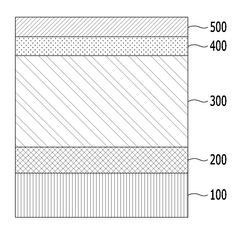
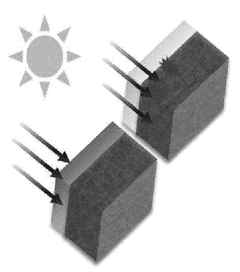
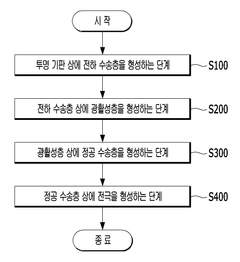
- A quantum dot solar cell with a charge transport layer containing quantum dots that selectively block high-energy photons, using materials like indium arsenide and lead sulfide, which have a bandgap range of 0.8 eV to 1.7 eV to absorb light in the 300-400 nm range, and a new charge transport layer without photocatalytic properties to prevent decomposition of the organic photoactive layer.

Photosensitizing element and solar battery using the photosensitizing element
PatentWO2009116511A1
Innovation
- A photosensitizer comprising an inorganic material carrying an organic molecule with an aromatic ring, which facilitates efficient electron injection and separation, prolonging the lifetime of excited electrons and enhancing photoelectric conversion efficiency, is integrated into a solar cell configuration with a porous semiconductor layer and a carrier transport layer.


Environmental Impact of QD Solar Cells
The environmental impact of quantum dot (QD) solar cells represents a critical dimension in evaluating their overall sustainability and long-term viability. While these advanced photovoltaic technologies offer promising efficiency improvements, their environmental footprint throughout their lifecycle demands thorough examination.
Manufacturing processes for QD solar cells involve potentially hazardous materials, particularly when cadmium-based quantum dots are utilized. The synthesis of these nanoparticles requires precise chemical procedures that generate waste streams containing heavy metals and organic solvents. Recent research indicates that production of one square meter of QD solar panels may generate approximately 30-45% more toxic waste compared to conventional silicon photovoltaics, primarily due to the specialized nanomaterial synthesis requirements.
Leaching potential presents another significant environmental concern. As QD stability directly impacts solar cell lifetime, degradation mechanisms can lead to the release of constituent materials into the environment. Laboratory studies have demonstrated that under accelerated weathering conditions, poorly encapsulated quantum dot materials may leach toxic elements at rates exceeding regulatory thresholds in some jurisdictions. This risk is particularly pronounced in end-of-life scenarios where improper disposal or recycling practices are employed.
Energy payback time (EPBT) calculations for QD solar cells show promising trends, with estimates ranging from 0.8-1.5 years depending on manufacturing techniques and deployment locations. This compares favorably with traditional silicon technologies, suggesting potential lifecycle carbon benefits despite more complex manufacturing. However, these calculations often exclude the environmental costs associated with specialized materials extraction and processing unique to quantum dot production.
Recycling challenges present a substantial hurdle for QD solar technology adoption. The complex multilayer structure incorporating nanomaterials creates difficulties in material separation and recovery. Current recycling technologies can recover approximately 60-70% of valuable materials from QD solar panels, compared to 85-95% for conventional silicon panels. Research into dedicated recycling pathways specifically designed for quantum dot technologies remains in early stages.
Water consumption during manufacturing represents another environmental consideration. Production processes for quantum dots typically require 1.5-2 times more ultrapure water per watt of capacity compared to conventional solar technologies, primarily for synthesis and purification steps. This increased water footprint may present sustainability challenges in water-stressed regions where solar deployment is otherwise advantageous.
Manufacturing processes for QD solar cells involve potentially hazardous materials, particularly when cadmium-based quantum dots are utilized. The synthesis of these nanoparticles requires precise chemical procedures that generate waste streams containing heavy metals and organic solvents. Recent research indicates that production of one square meter of QD solar panels may generate approximately 30-45% more toxic waste compared to conventional silicon photovoltaics, primarily due to the specialized nanomaterial synthesis requirements.
Leaching potential presents another significant environmental concern. As QD stability directly impacts solar cell lifetime, degradation mechanisms can lead to the release of constituent materials into the environment. Laboratory studies have demonstrated that under accelerated weathering conditions, poorly encapsulated quantum dot materials may leach toxic elements at rates exceeding regulatory thresholds in some jurisdictions. This risk is particularly pronounced in end-of-life scenarios where improper disposal or recycling practices are employed.
Energy payback time (EPBT) calculations for QD solar cells show promising trends, with estimates ranging from 0.8-1.5 years depending on manufacturing techniques and deployment locations. This compares favorably with traditional silicon technologies, suggesting potential lifecycle carbon benefits despite more complex manufacturing. However, these calculations often exclude the environmental costs associated with specialized materials extraction and processing unique to quantum dot production.
Recycling challenges present a substantial hurdle for QD solar technology adoption. The complex multilayer structure incorporating nanomaterials creates difficulties in material separation and recovery. Current recycling technologies can recover approximately 60-70% of valuable materials from QD solar panels, compared to 85-95% for conventional silicon panels. Research into dedicated recycling pathways specifically designed for quantum dot technologies remains in early stages.
Water consumption during manufacturing represents another environmental consideration. Production processes for quantum dots typically require 1.5-2 times more ultrapure water per watt of capacity compared to conventional solar technologies, primarily for synthesis and purification steps. This increased water footprint may present sustainability challenges in water-stressed regions where solar deployment is otherwise advantageous.
Scalability and Manufacturing Considerations
The scalability of quantum dot solar cell technology presents significant challenges that directly impact commercial viability. Current laboratory-scale synthesis methods for high-quality quantum dots typically yield only gram-scale quantities, which is insufficient for industrial production demands. The transition to kilogram or ton-scale manufacturing requires substantial process engineering to maintain precise size distribution and surface chemistry that are critical for quantum dot stability and performance.
Manufacturing considerations must address the trade-off between production volume and quantum dot quality. Batch-to-batch consistency remains problematic, with variations in quantum dot properties affecting device performance and lifetime. Automated synthesis systems with real-time monitoring capabilities are being developed to address these challenges, though standardization across the industry is still evolving.
Cost factors significantly influence scalability, with high-purity precursors representing a substantial portion of production expenses. Alternative, less expensive precursor materials are under investigation, but these often result in quantum dots with reduced stability or performance characteristics. Economic viability requires balancing material costs against performance metrics and expected device lifetime.
Environmental and safety considerations also impact manufacturing scalability. Many traditional quantum dot synthesis methods utilize toxic precursors such as cadmium and lead compounds, necessitating stringent safety protocols and waste management systems. Regulatory compliance adds complexity and cost to manufacturing operations, driving research toward greener synthesis routes using less hazardous materials.
Integration of quantum dots into existing solar cell manufacturing lines presents another scalability challenge. Current silicon solar cell production facilities would require significant modification to accommodate quantum dot deposition processes. Roll-to-roll manufacturing shows promise for large-scale production, but maintaining uniform quantum dot layers across large areas remains technically challenging.
Encapsulation technologies represent a critical manufacturing consideration directly linked to quantum dot stability and device lifetime. Industrial-scale encapsulation methods must effectively shield quantum dots from oxygen and moisture while maintaining optical transparency and mechanical durability over decades of outdoor exposure. Current encapsulation approaches that work well in laboratory settings often prove inadequate when scaled to commercial dimensions.
The development of specialized manufacturing equipment for quantum dot solar cells is progressing, with several equipment manufacturers now offering deposition systems designed specifically for quantum dot materials. However, these systems require further refinement to achieve the throughput and yield necessary for competitive production costs compared to conventional photovoltaic technologies.
Manufacturing considerations must address the trade-off between production volume and quantum dot quality. Batch-to-batch consistency remains problematic, with variations in quantum dot properties affecting device performance and lifetime. Automated synthesis systems with real-time monitoring capabilities are being developed to address these challenges, though standardization across the industry is still evolving.
Cost factors significantly influence scalability, with high-purity precursors representing a substantial portion of production expenses. Alternative, less expensive precursor materials are under investigation, but these often result in quantum dots with reduced stability or performance characteristics. Economic viability requires balancing material costs against performance metrics and expected device lifetime.
Environmental and safety considerations also impact manufacturing scalability. Many traditional quantum dot synthesis methods utilize toxic precursors such as cadmium and lead compounds, necessitating stringent safety protocols and waste management systems. Regulatory compliance adds complexity and cost to manufacturing operations, driving research toward greener synthesis routes using less hazardous materials.
Integration of quantum dots into existing solar cell manufacturing lines presents another scalability challenge. Current silicon solar cell production facilities would require significant modification to accommodate quantum dot deposition processes. Roll-to-roll manufacturing shows promise for large-scale production, but maintaining uniform quantum dot layers across large areas remains technically challenging.
Encapsulation technologies represent a critical manufacturing consideration directly linked to quantum dot stability and device lifetime. Industrial-scale encapsulation methods must effectively shield quantum dots from oxygen and moisture while maintaining optical transparency and mechanical durability over decades of outdoor exposure. Current encapsulation approaches that work well in laboratory settings often prove inadequate when scaled to commercial dimensions.
The development of specialized manufacturing equipment for quantum dot solar cells is progressing, with several equipment manufacturers now offering deposition systems designed specifically for quantum dot materials. However, these systems require further refinement to achieve the throughput and yield necessary for competitive production costs compared to conventional photovoltaic technologies.
Unlock deeper insights with Patsnap Eureka Quick Research — get a full tech report to explore trends and direct your research. Try now!
Generate Your Research Report Instantly with AI Agent
Supercharge your innovation with Patsnap Eureka AI Agent Platform!