
Machining line
A processing line and processing station technology, applied in the direction of metal processing, metal processing equipment, manufacturing tools, etc., can solve the problem of frequent deflection of the position, achieve the effect of reducing energy consumption, reducing manufacturing costs, and eliminating power peaks
- Summary
- Abstract
- Description
- Claims
- Application Information
AI Technical Summary
Problems solved by technology
Method used
Image

Examples
Embodiment Construction
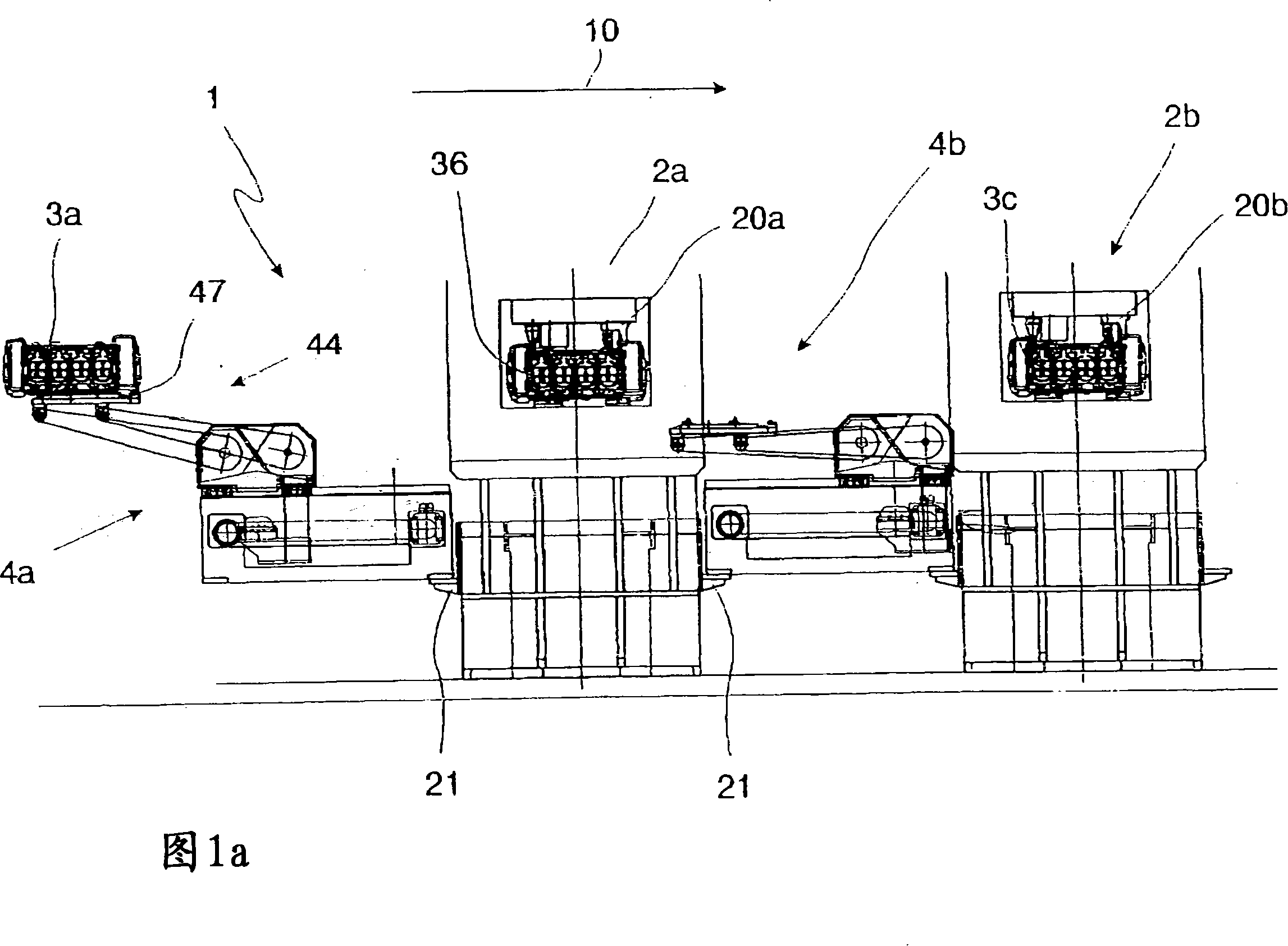
[0051] A simplified construction of a processing line 1 according to the invention is shown in FIG. 1a. The processing line 1 here comprises a plurality of processing stations 2a, 2b arranged along the direction of movement 10 of the workpieces 3a, 3b, 3c. Between the individual processing stations 2a, 2b, etc., respectively, conveying devices 4a, 4b are arranged which are driven and operate independently of one another. The transport devices 4a, 4b are supported on carriages 21 on the processing stations 2a, 2b.
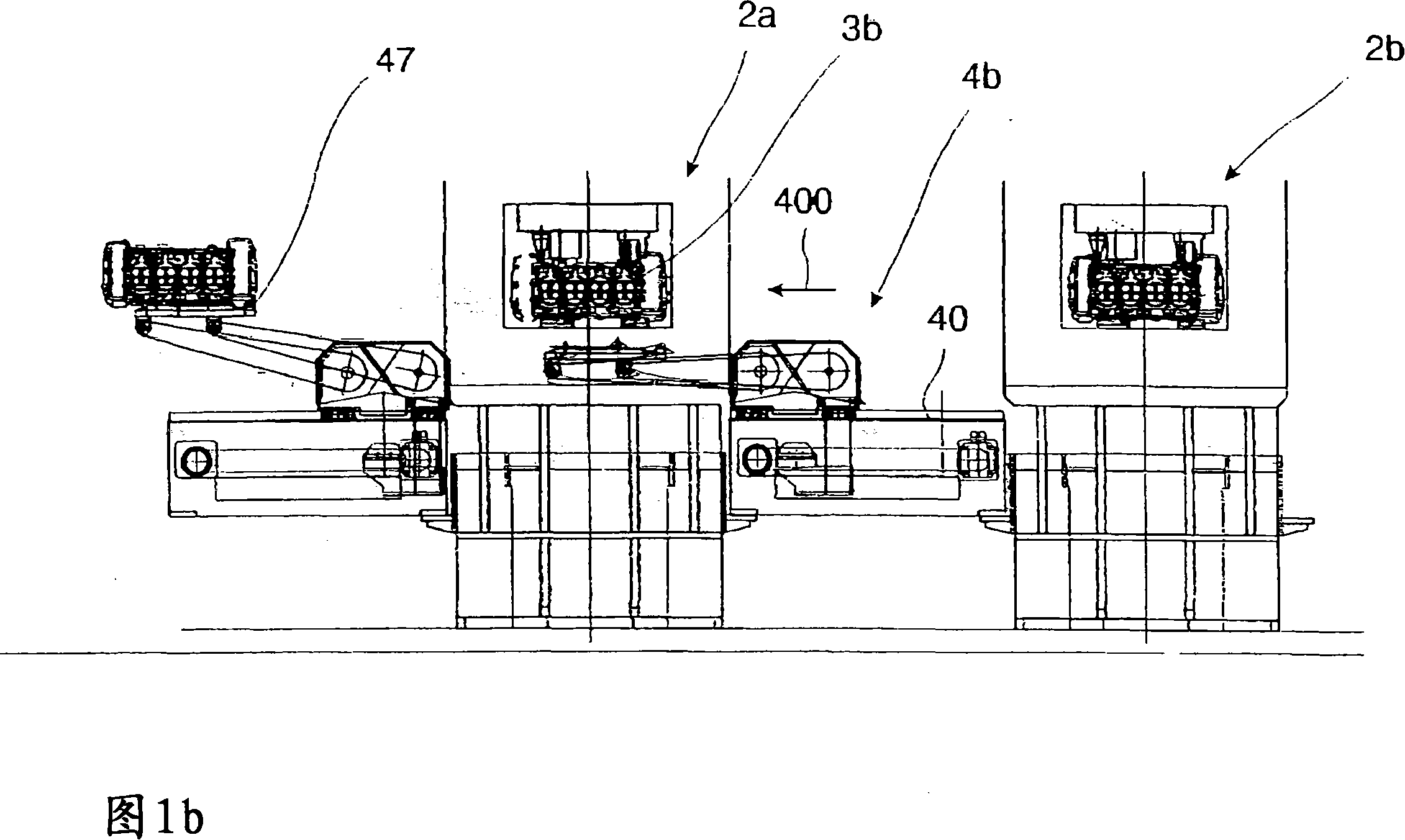
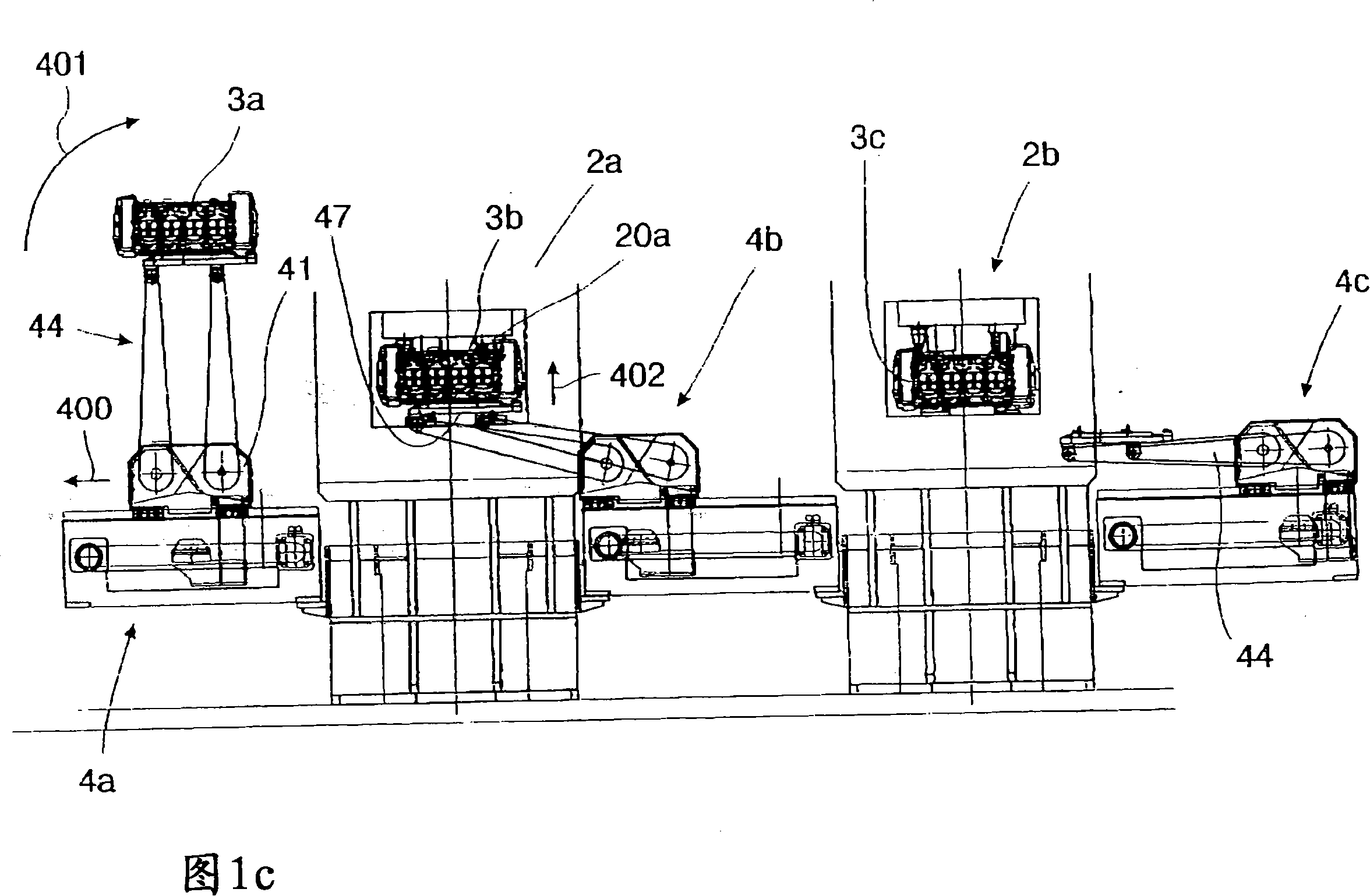
[0052] The direction of movement 10 runs from left to right on the paper. As a result, the workpiece 3 a delivered by the first transport device 4 a is loaded next into the processing station 2 a. This is of course only possible when the workpieces 3b located therein are transported out of the first processing station 2a by means of the second transport device 4b. This is also only possible after the workpiece 3b has left the first processing station 2a at the en...
PUM
 Login to View More
 Abstract
Description
Claims
Application Information
 Login to View More