
Nb-W-RE high-strength heat-resistant aluminum alloy material taking C for modification and preparation method thereof
An aluminum alloy material, nb-w-re technology, which is applied in the field of aluminum alloy materials and its preparation, can solve the problems of poor recyclability of waste materials and slag materials, reduction of alloy quasi-solid phase temperature range, low high temperature strength, etc.
- Summary
- Abstract
- Description
- Claims
- Application Information
AI Technical Summary
Problems solved by technology
Method used
Image

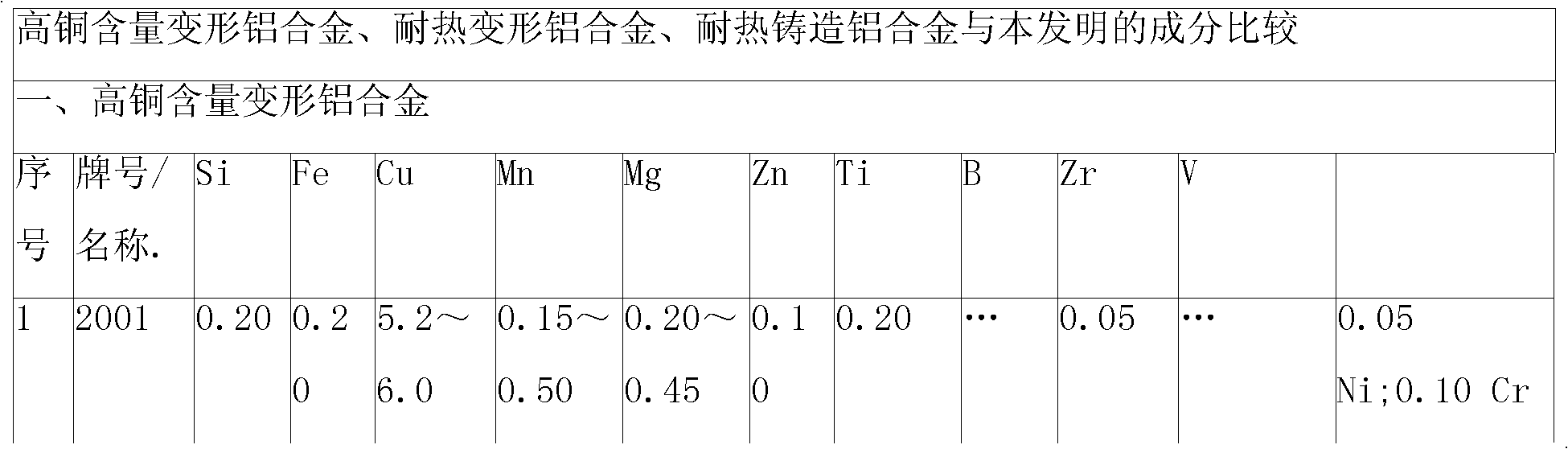
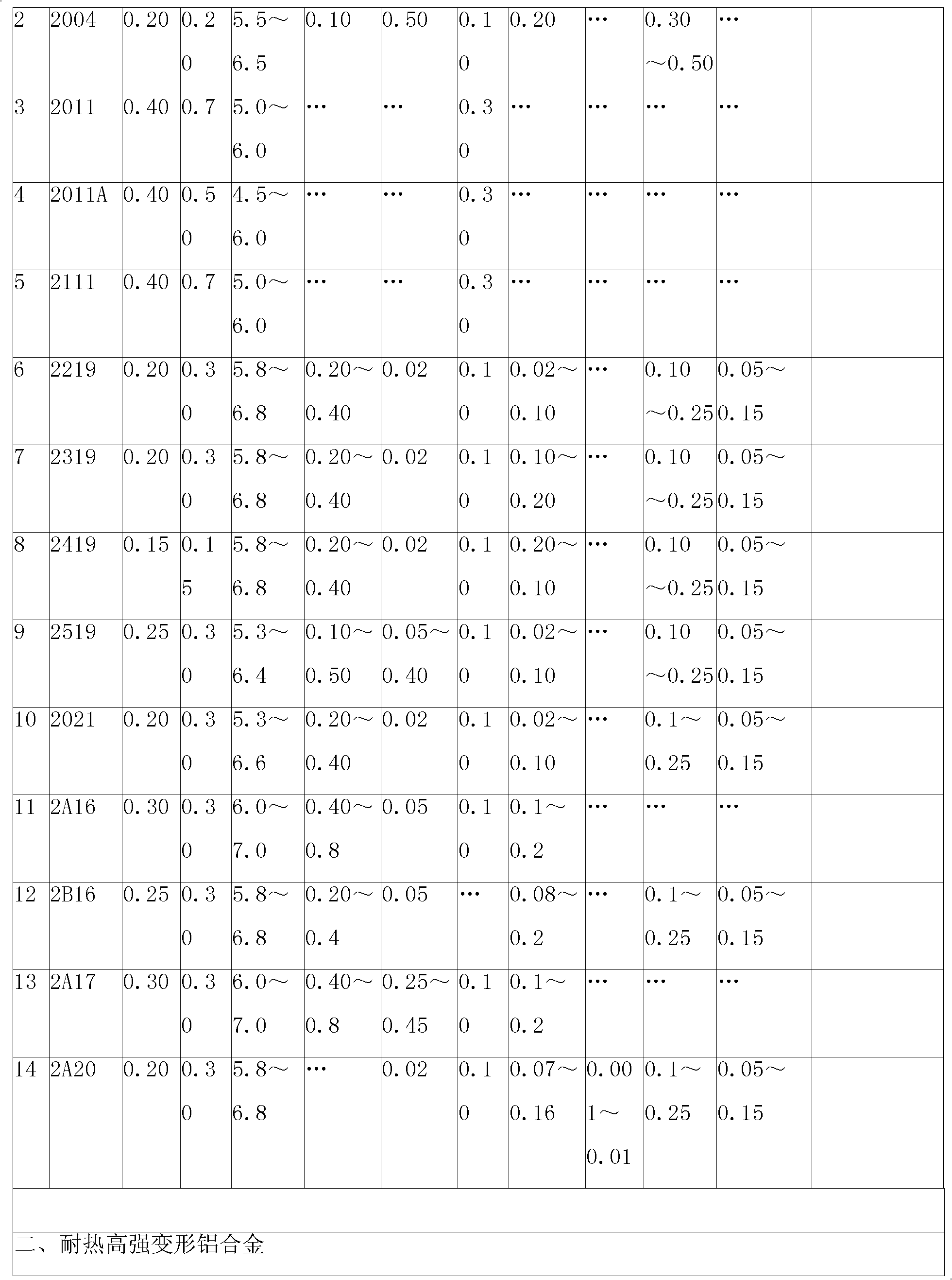
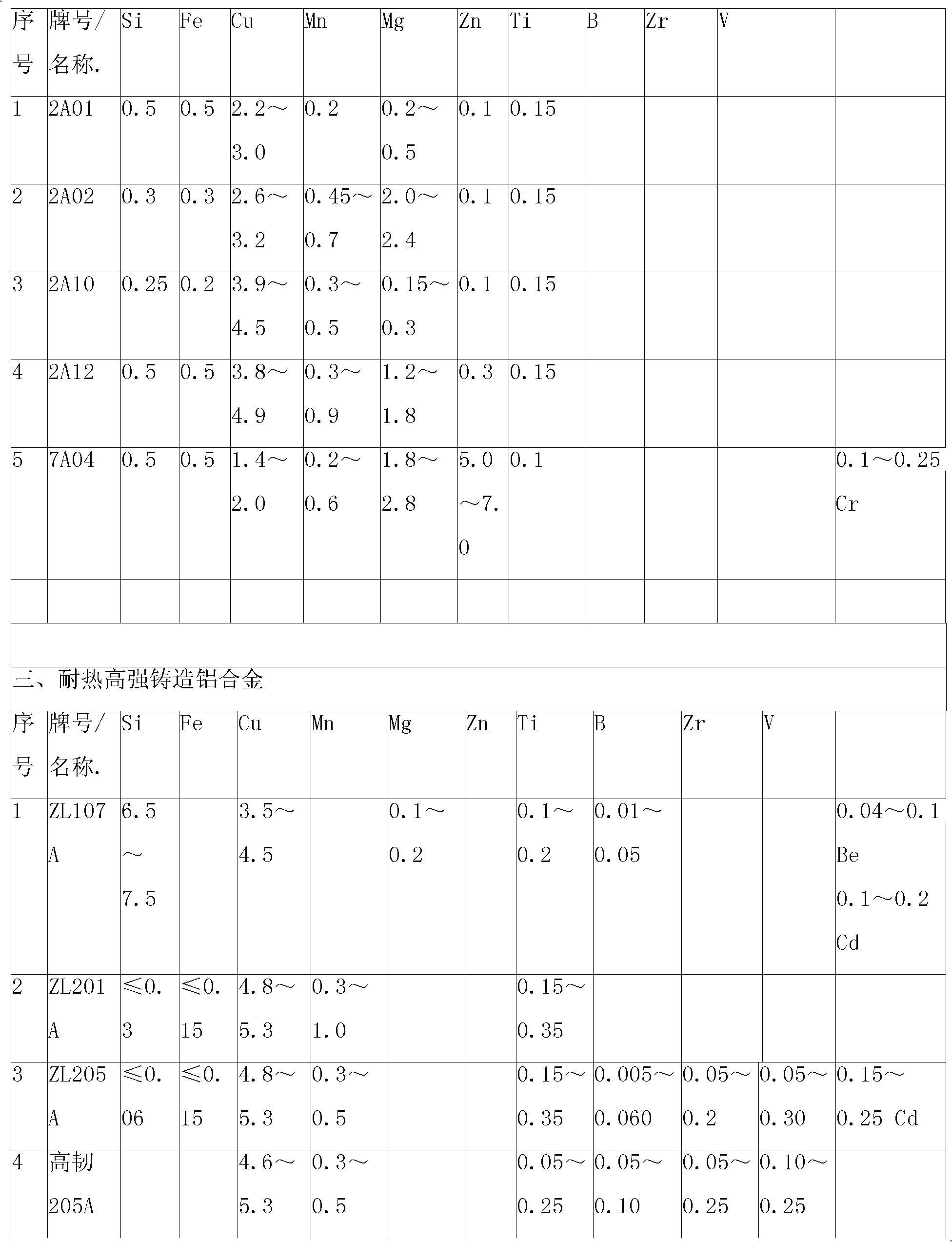
Examples
Embodiment 1
[0115] Example 1: Cu-1.0%, characteristic microalloying elements -Nb, W, basic microalloying rare earth element-lanthanum La, high-efficiency metamorphic element -C
[0116] (1) Weigh the required alloy elements according to the ingredient calculation table, as follows.
[0117]
[0118] (2) Add an appropriate amount of aluminum ingot to the melting furnace, heat it to melt completely and keep it at 700~800℃; in order to prevent the melt from inhaling too much air, the melting process should be as short as possible and in a closed environment carry out.
[0119] (3) Add Al-Mn, Al-Ti, Al-Nb, Al-W, Al-Zr master alloy or mixed metal additives (including salt compounds) according to the formula ratio, and then add Cu pure metal and Al-Cd master alloy or mixed metal additives, then add C and rare earth element La, and stir evenly.
[0120] Mixed metal additives refer to cake or block non-sintered powder metallurgy products used for adding and adjusting alloy components, including manganes...
Embodiment 2
[0126] Example 2: Cu-4.2%, characteristic microalloying elements -Nb, W, basic microalloying rare earth elements La, Ce mixed rare earths, high-efficiency metamorphic element -C
[0127] (1) Weigh the required alloy elements according to the ingredient calculation table, as follows.
[0128]
[0129]
[0130] (2) Add an appropriate amount of aluminum ingot to the melting furnace, heat it to melt completely and keep it at 700~800℃; in order to prevent the melt from inhaling too much air, the melting process should be as short as possible and in a closed environment carry out.
[0131] (3) Add Al-Mn, Al-Ti, Al-Nb, Al-W, Al-Zr master alloy or mixed metal additives (including salt compounds) according to the formula ratio, and then add Cu pure metal and Al-Cd master alloy or mixed metal additives, then add C and rare earth elements La and Ce mixed rare earths, and stir evenly.
[0132] Mixed metal additives refer to cake or block non-sintered powder metallurgy products used for adding an...
Embodiment 3
[0138] Example 3: Cu-5.1%, characteristic microalloying elements -Nb, W, basic microalloying rare earth element Eu, high-efficiency modification element -C
[0139] (1) Weigh various alloy elements required according to the following ingredients calculation table, as follows.
[0140]
[0141] (2) Add an appropriate amount of aluminum ingot to the melting furnace, heat it to melt completely and keep it at 700~800℃; in order to prevent the melt from inhaling too much air, the melting process should be as short as possible and in a closed environment carry out.
[0142] (3) Add Al-Mn, Al-Ti, Al-Nb, Al-W, Al-Zr master alloy or mixed metal additives (including salt compounds) according to the formula ratio, and then add Cu pure metal and Al-Cd master alloy or mixed metal additives, then add C and rare earth element Eu, and stir evenly.
[0143] Mixed metal additives refer to cake or block non-sintered powder metallurgy products used for adding and adjusting alloy components, including ma...
PUM
| Property | Measurement | Unit |
|---|---|---|
| tensile strength | aaaaa | aaaaa |
| tensile strength | aaaaa | aaaaa |
| tensile strength | aaaaa | aaaaa |
Abstract
Description
Claims
Application Information
 Login to View More