Determination method for pulse repetition rate lower limiting value of synthetic aperture radar

A synthetic aperture radar and pulse repetition frequency technology, which is applied in the direction of reflection/re-radiation of radio waves, utilization of re-radiation, measurement devices, etc., can solve the problems such as the design of the lower limit of PRF of the large-squinting spotlight SAR system that cannot be directly used, Achieve the effect of reducing the number of transmitted pulses and the amount of echo data

CN104880699AActive Publication Date: 2015-09-02XIDIAN UNIV
6 Cites 5 Cited by

Patent Information

Authority / Receiving Office
CN · China
Current Assignee / Owner
Publication Date
2015-09-02

Smart Images

  • Figure 1
    Figure 1
  • Figure 2
    Figure 2
  • Figure 3
    Figure 3
Patent Text Reader

Abstract

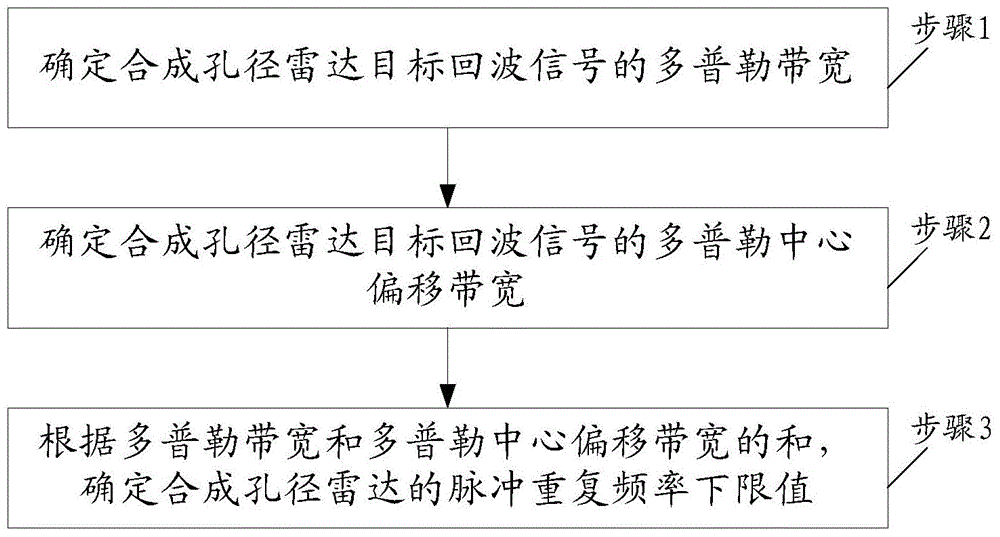
An embodiment of the invention provides a determination method for a pulse repetition rate lower limiting value of synthetic aperture radar. The determination method can break through restriction of a radar working platform and working modes to obtain the accurate pulse repetition rate lower limiting value. The method comprises the following steps: determining the Doppler bandwidth of a target echo signal of the synthetic aperture radar; determining the Doppler off-centering bandwidth of the target echo signal of the synthetic aperture radar; and according to the sum of the Doppler bandwidth and the Doppler off-centering bandwidth, determining the pulse repetition rate lower limiting value of the synthetic aperture radar.
Need to check novelty before this filing date? Find Prior Art

Description

technical field

[0001] The invention belongs to the technical field of synthetic aperture radar, and in particular relates to a method for determining the lower limit of the pulse repetition frequency of the synthetic aperture radar, which can break through the limitations of the radar working platform and working mode, and obtain an accurate lower limit of the pulse repetition frequency. Background technique

[0002] The missile-borne Synthetic Aperture Radar (SAR) seeker adopts the spotlight mode in the terminal guidance stage of the missile. By controlling the antenna beam to continuously illuminate the target scene, it can break through the limitation of the radar beam width and realize the two-dimensional height of the target area. Resolution focus imaging provides accurate target scene information for matching and positioning. When designing the Pulse Repetition Frequency (PRF) parameters of the missile-borne SAR system, factors such as azimuth ambiguity setting, range...

Examples

Embodiment Construction

[0035] The following will clearly and completely describe the technical solutions in the embodiments of the present invention with reference to the accompanying drawings in the embodiments of the present invention. Obviously, the described embodiments are only some, not all, embodiments of the present invention. Based on the embodiments of the present invention, all other embodiments obtained by persons of ordinary skill in the art without making creative efforts belong to the protection scope of the present invention.

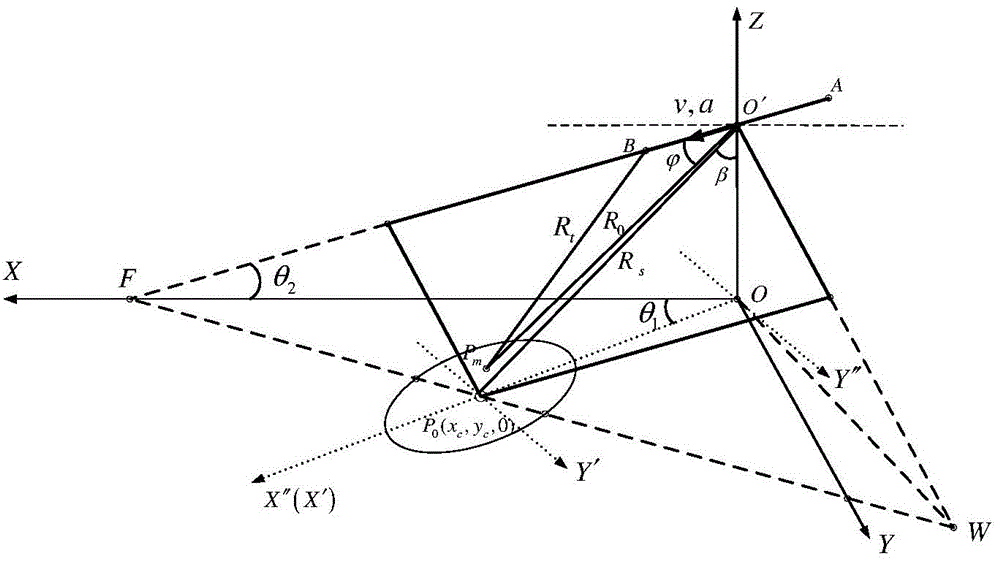
[0036] The present invention will be further described below in conjunction with the accompanying drawings. The following embodiments are described by taking the missile-borne synthetic aperture radar as an example.

[0037] refer to figure 1 , the specific implementation steps of the present invention are as follows:

[0038] Step 1, determine the Doppler bandwidth of the SAR target echo signal.

[0039] Step 1 specifically includes the following sub-steps...