
Acellular matrix repairing gel and new method for preparing the same
A technology of acellular matrix and gel, which is applied in the field of biomaterials, can solve problems such as the destruction of the active components of the acellular matrix, poor adhesion of granular materials, and unsatisfactory repair effects, so as to shorten the time of decellularization, facilitate the use of products, and prevent damage small effect
- Summary
- Abstract
- Description
- Claims
- Application Information
AI Technical Summary
Problems solved by technology
Method used
Image

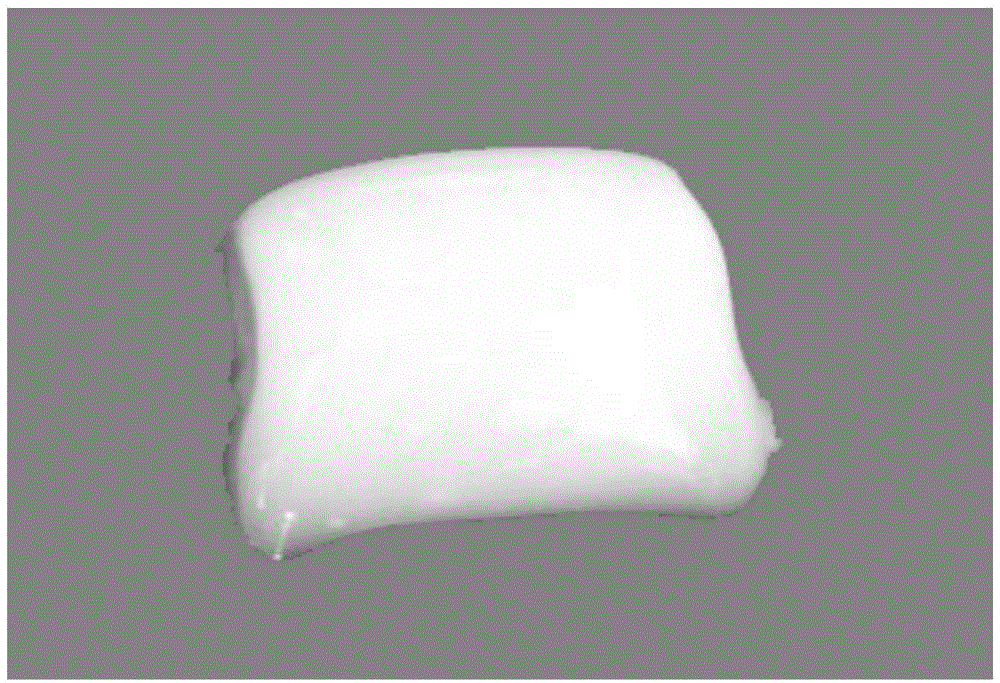
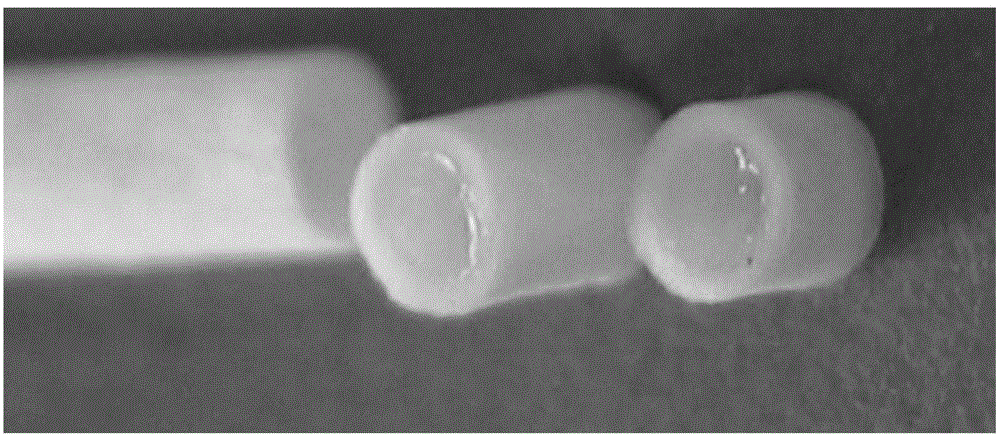
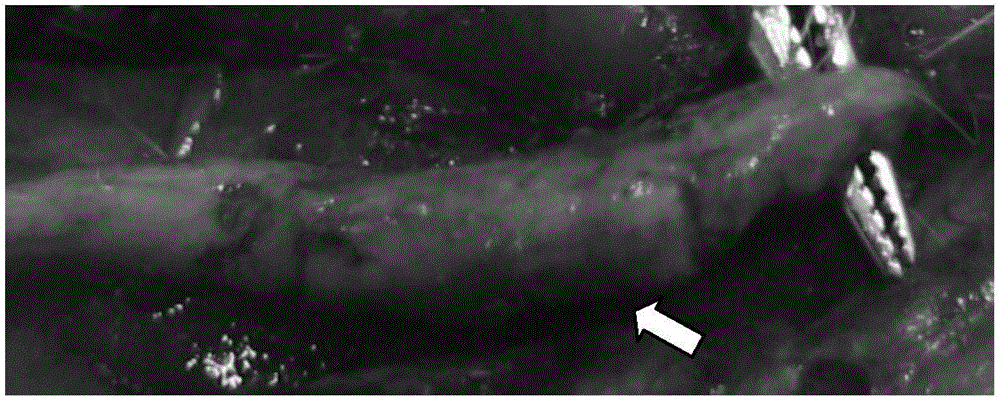
Examples
Embodiment 1
[0054] Example 1 Preparation of bovine sciatic nerve acellular matrix repair gel
[0055] 1. Preparation of Acellular Matrix Repair Gel
[0056] Take 20 g of bovine sciatic nerve, wash it with PBS buffer to remove blood and dirt, soak it in 200 ml of 0.1% peracetic acid solution for 0.5 h to sterilize, then cut the sciatic nerve into small pieces of about 0.1 cm, and place it in 200 ml of 2% Pull through X-100 PBS buffer solution, shake for 0.5h, then use 100ml of PBS buffer solution containing 0.1% trypsin and 1% EDTA for decellularization, shake for 4h, and then use 200ml of 5μg / ml ribonuclease and 50μg 5 g of bovine sciatic nerve decellularized matrix was obtained by removing residual nucleic acid in PBS buffer solution of / ml deoxyribonuclease, then digested with 50 ml of 0.01M hydrochloric acid solution containing 0.5% pepsin, shaken for 24 hours, and then added 5 ml of 0.1M sodium hydroxide solution and 50ml of PBS buffer, adjust pH to 7.4, and incubate at 37°C for 48h ...
Embodiment 2
[0060] Example 2 Preparation of porcine dermis acellular matrix repair gel
[0061] 1. Preparation of Acellular Matrix Repair Gel
[0062] About 100 g of pig dermis was taken, washed with PBS buffer to remove blood and dirt, soaked in 200 ml of 1% peracetic acid solution for 2 hours to sterilize, then cut the dermis into small pieces of 1 cm square and placed in 500 ml of 0.1% sodium deoxycholate In PBS buffer solution, shake for 2h, then use 500ml PBS buffer solution containing 1% trypsin and 0.1% EDTA for decellularization treatment, shake for 1h, and then use 200ml containing 50μg / ml ribonuclease and 500μg / ml DNA Enzyme in PBS buffer solution to remove residual nucleic acid to obtain 32g of pig dermis acellular matrix, then digest with 200ml PBS solution containing 0.1% papain, adjust pH to 2 after shaking for 48h to stop digestion, add 300ml PBS buffer, adjust pH To 7.4, incubate at 37℃ for 24h to obtain porcine dermal acellular matrix repair gel.
[0063] 2. Effect expe...
Embodiment 3
[0065] Example 3 Preparation of bovine tendon acellular matrix repair gel
[0066] Take 20 g of bovine tendon, wash it with PBS buffer to remove blood and dirt, soak it in 50 ml of 0.5% peracetic acid solution for 1 hour to sterilize, then cut the tendon into small pieces of about 0.5 cm, and place it in 50 ml of fat with a concentration of 0.5% In PBS buffer solution of alcohol polyoxyethylene ether (perparine), shake for 1 h, then decellularize with 60 ml of PBS buffer solution containing 0.1% trypsin and 0.1% EDTA, shake for 3 hours, and then use 40 ml of 10 μg / ml ribose Nuclease and 50μg / ml DNase in PBS buffer solution remove residual nucleic acid to obtain 5g of bovine tendon acellular matrix, which is then digested with 50ml of 0.01M hydrochloric acid solution containing 0.1% pepsin, shaken for 24h, and added with 5ml of 0.1M Sodium hydroxide solution and 50ml PBS buffer were adjusted to pH 7.4 and incubated at 37°C for 24h to obtain bovine tendon acellular matrix repair...
PUM
| Property | Measurement | Unit |
|---|---|---|
| particle diameter | aaaaa | aaaaa |
| particle diameter | aaaaa | aaaaa |
Abstract
Description
Claims
Application Information
 Login to View More