A Relevance Analysis and Division Method of Arterial Intersections Oriented to Coordinated Control

A technology of correlation analysis and coordinated control, applied in traffic control systems, traffic control systems of road vehicles, instruments, etc., can solve the problems of incomplete consideration of correlation factors between intersections and single division target.

CN105825690BInactive Publication Date: 2018-04-13BEIHANG UNIV
5 Cites 0 Cited by

Patent Information

Authority / Receiving Office
CN · China
Patent Type
Patents(China)
Current Assignee / Owner
Publication Date
2018-04-13
Estimated Expiration
Not applicable · inactive patent

Smart Images

  • Figure 1
    Figure 1
  • Figure 2
    Figure 2
  • Figure 3
    Figure 3
Patent Text Reader

Abstract

The invention discloses a coordinated control oriented trunk line crossing correlation analysis and division method. The method comprises the steps that 1, traffic parameters used for correlation analysis of crossings of a trunk line are acquired; 2, signal timing plan data generated when single-point control is executed on all the crossings of the trunk line is acquired; 3, the correlation degree of the adjacent crossings is determined; 4, the coordinated control crossings of the trunk line are divided. According to the method, a comprehensive correlation degree index is set up to express the relevancy between the adjacent signal crossings of the trunk line, five key factors influencing the relevancy of the adjacent crossings are comprehensively considered, maximization of the phase coordinating and traffic flow traffic capacity coordinating capacity is adopted as a main target, the correlation degree of the adjacent crossings is accurately quantized, and the scientific and comprehensive correlation analysis method is set up.
Need to check novelty before this filing date? Find Prior Art

Description

technical field

[0001] The invention belongs to the technical field of intelligent traffic management and control, and relates to an intersection division method used for correlation analysis and coordinated control of adjacent intersections of arterial lines in an urban traffic control system. Background technique

[0002] Urban traffic arteries bear the main traffic load of the entire city. Therefore, the coordinated control of arterial lines is mainly designed for the straight traffic flow of arterial lines. Whether the arterial line control is reasonable and effective will directly affect whether the entire urban road network can run quickly and effectively. Due to the randomness, time-varying and non-linear characteristics of urban traffic, the traditional arterial coordinated control method can no longer adapt to the modern and fast-developing traffic requirements. When carrying out coordinated control of traffic signals on an arterial line containing several intersect...

Examples

Embodiment 1

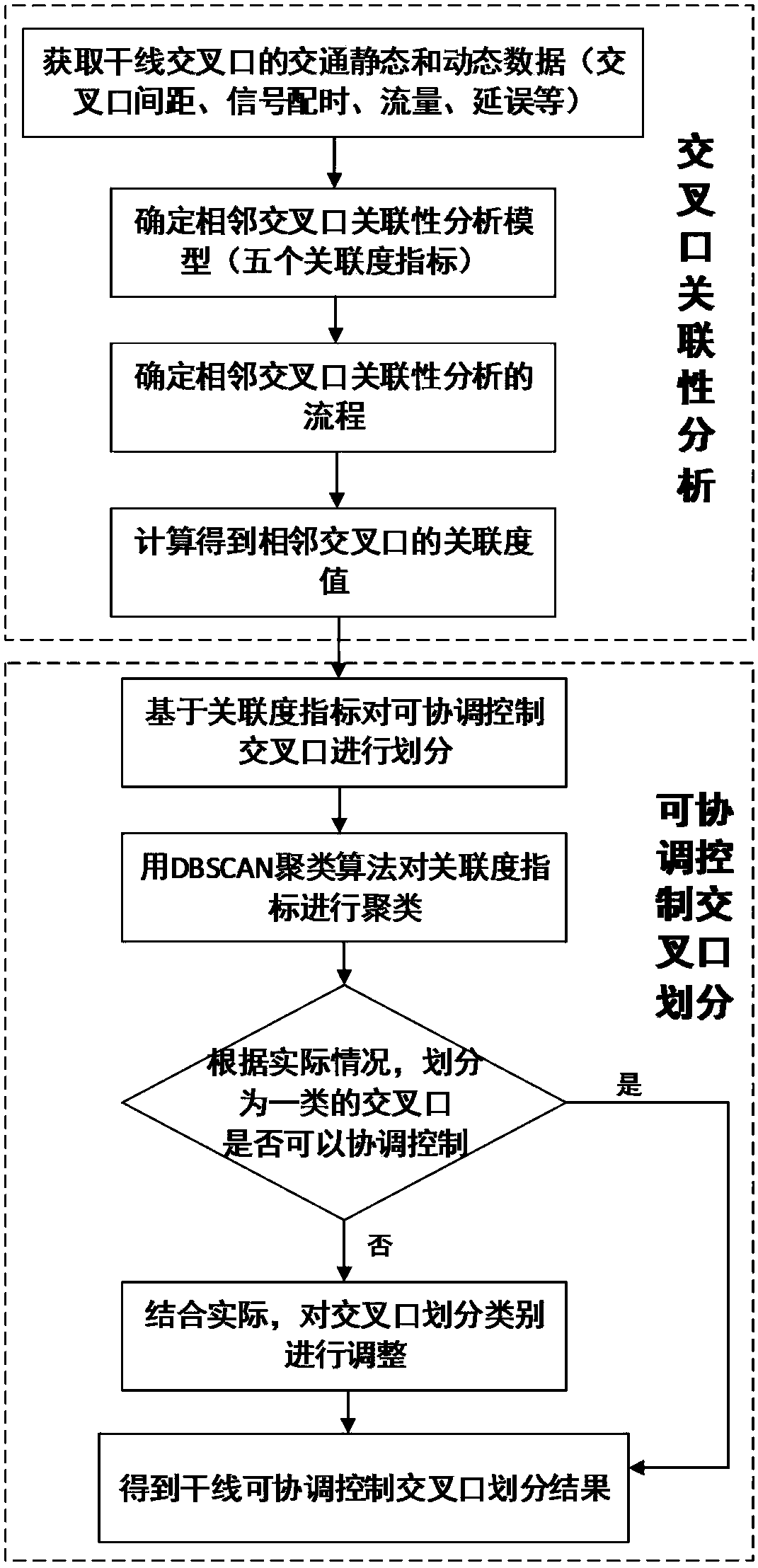
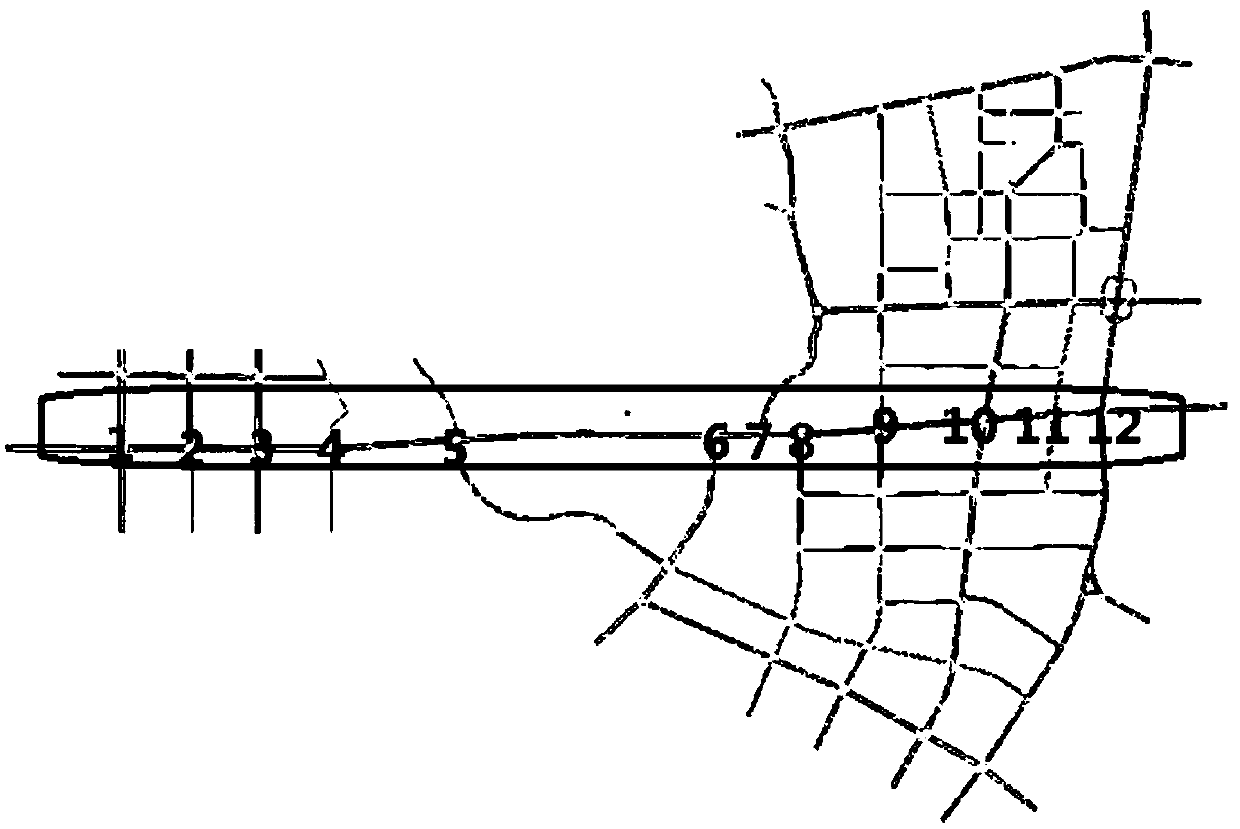
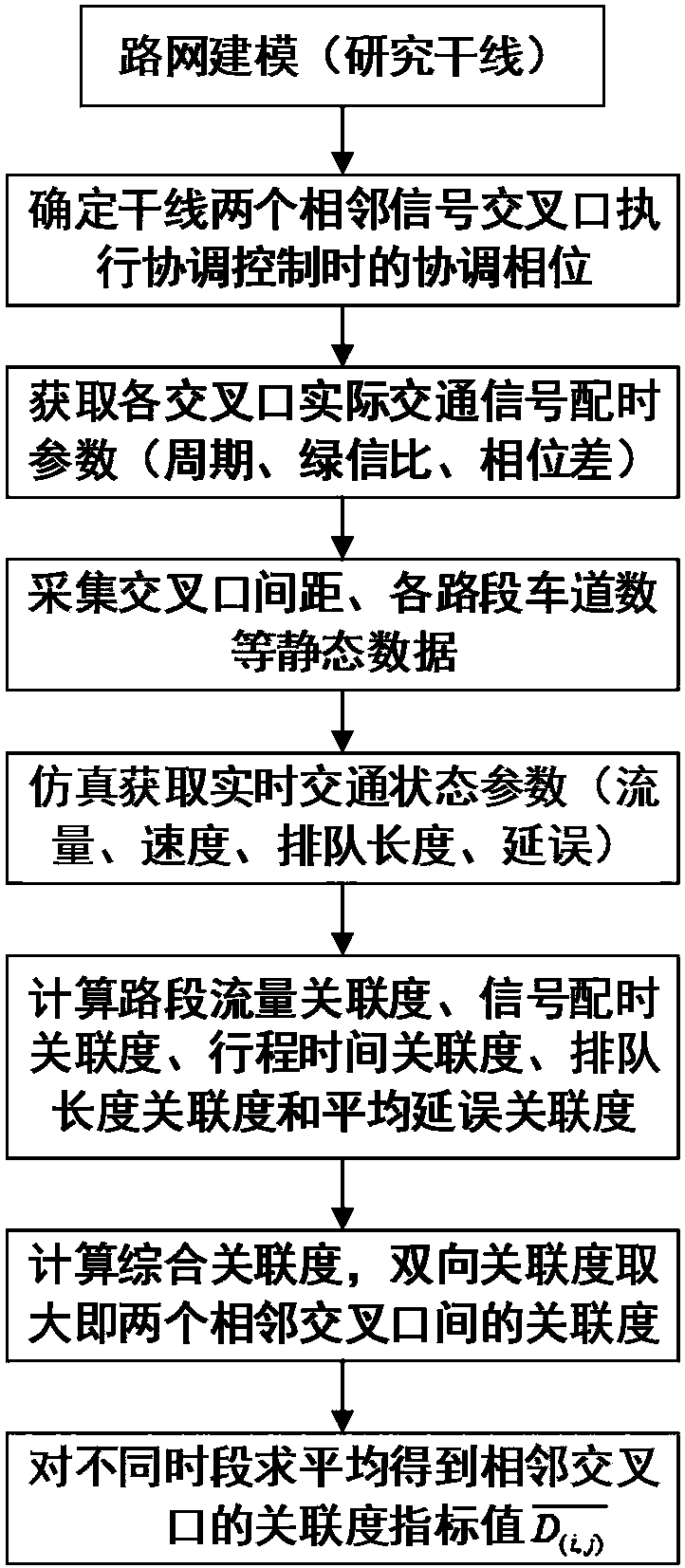
[0081] In this specific embodiment, the following embodiments are provided. In this embodiment, the traffic state data of the east-west trunk line of Wangjiang West Road, High-tech Zone, Hefei City is taken as an example, including the following figure 1 , image 3 and Figure 4 process shown. Specifically, it is achieved through the following steps:

[0082] Step 1: Obtain the signal timing scheme when single-point control is implemented at each intersection of the main line;

[0083] Signal timing parameters at intersections (signal period, green signal ratio, and phase difference) are static factors that directly affect the correlation degree, and the timing parameters of each intersection coordination direction are shown in Table 1. The coordination phase of coordinated control at arterial intersections is east-west, so the green light duration in the table represents the green light time of east-west direction, because the two-way green light time of intersection i is ...