Parking brake modules and brake cylinders, brake caliper units for rail vehicles

A technology for parking brakes and rail vehicles, applied in the direction of brake actuators, etc., can solve the problems of ring gear and pull pin wear, increase the resistance of manual sleeve movement, prolong the time of manual parking and release operations, etc., to speed up braking The effect of manual operation, shortened space size and improved service life

CN107461432BActive Publication Date: 2019-04-26CRRC QINGDAO SIFANG ROLLING STOCK RES INST
5 Cites 3 Cited by

Patent Information

Authority / Receiving Office
CN · China
Patent Type
Patents(China)
Current Assignee / Owner
Publication Date
2019-04-26

Smart Images

  • Figure 1
    Figure 1
  • Figure 2
    Figure 2
  • Figure 3
    Figure 3
Patent Text Reader

Abstract

The invention discloses a parking brake module for a rail vehicle, a brake cylinder and a brake clamp unit. The parking brake module comprises a parking cylinder; a first parking piston is arranged in the parking cylinder; a hand brake mechanism is arranged in the parking cylinder, and comprises a parking rod, a rotating wheel and a parking pin; the first parking piston is fixedly connected with the parking rod; a chute is formed in the parking rod; a slide piece clamped on the parking rod is arranged on the inner wall of the rotating wheel corresponding to the chute; and the slide piece is matched with the chute to prevent the parking rod from moving in the radial direction. As the parking rod and the rotating wheel in the parking brake module adopt a buckling fixation mode, when the parking braking is performed, the rotating wheel and the parking pin cannot slide in the parking braking process to effectively prevent wear of the parking pin.
Need to check novelty before this filing date? Find Prior Art

Description

technical field

[0001] The invention relates to the technical field of rail vehicle braking, in particular to a parking brake module, a brake cylinder and a brake caliper unit for rail vehicles. Background technique

[0002] Most of the braking devices used in rail transit vehicles use compressed air as the source of power, and the compressed air is usually converted into mechanical thrust through the brake cylinder. In recent years, due to the need for parking braking of motor vehicles and subway vehicles, a spring energy storage structure has been added to the braking device. When the vehicle is in a windless state, the spring force stored when there is wind is converted into mechanical thrust. The braking device mainly has two main forms: unit brake (tread brake module) and brake caliper unit.

[0003] The brake caliper unit is divided into two types with parking function and without parking function. Traditional brake devices mostly adopt modular design, and the entire...

Examples

Embodiment

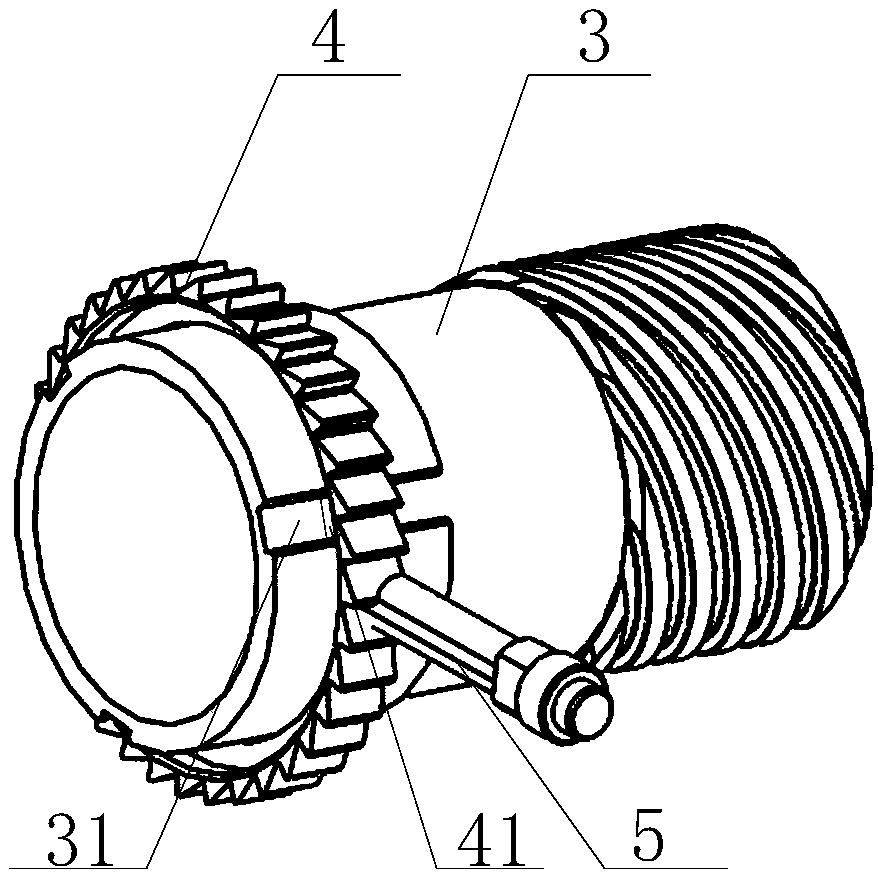
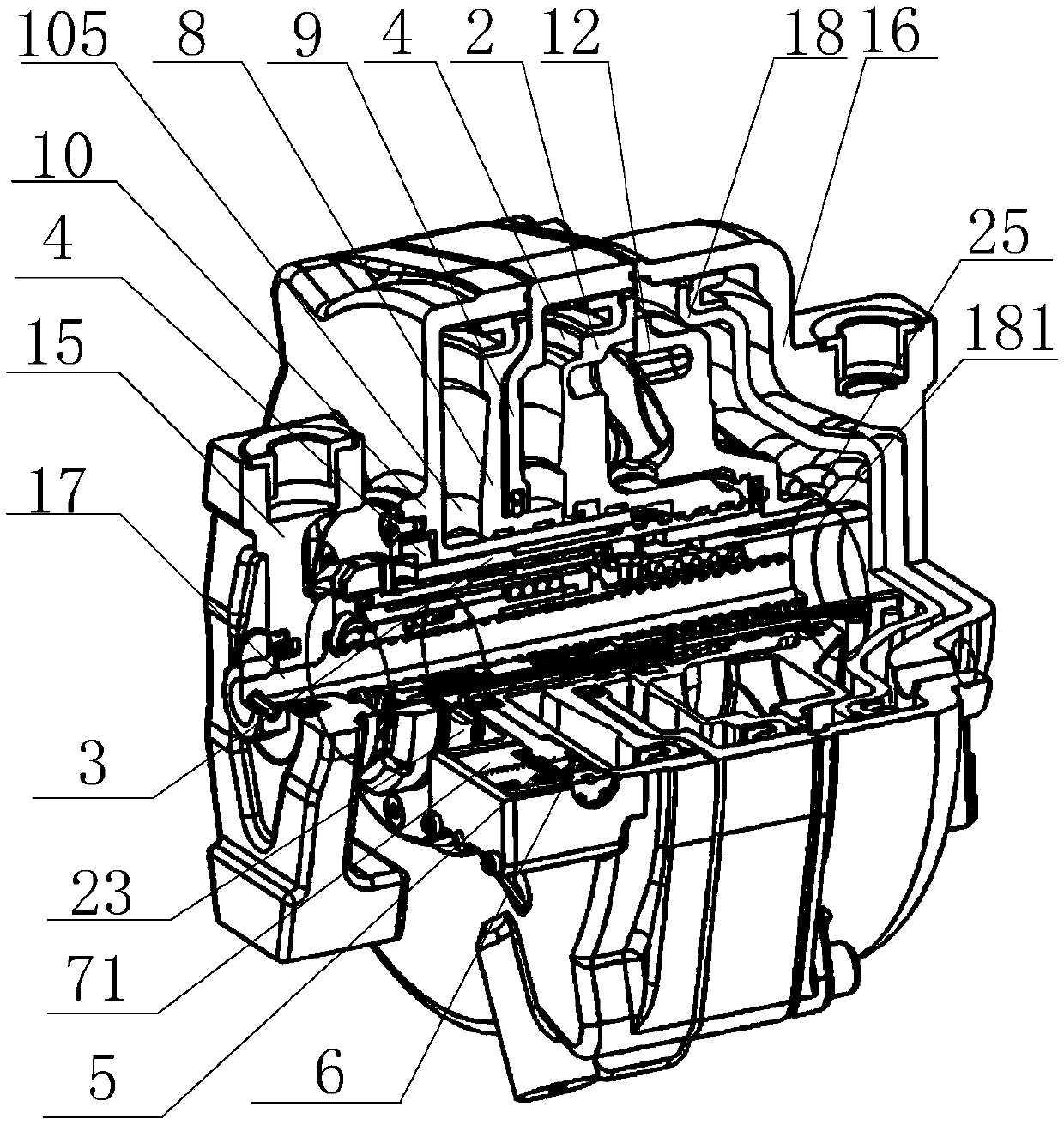
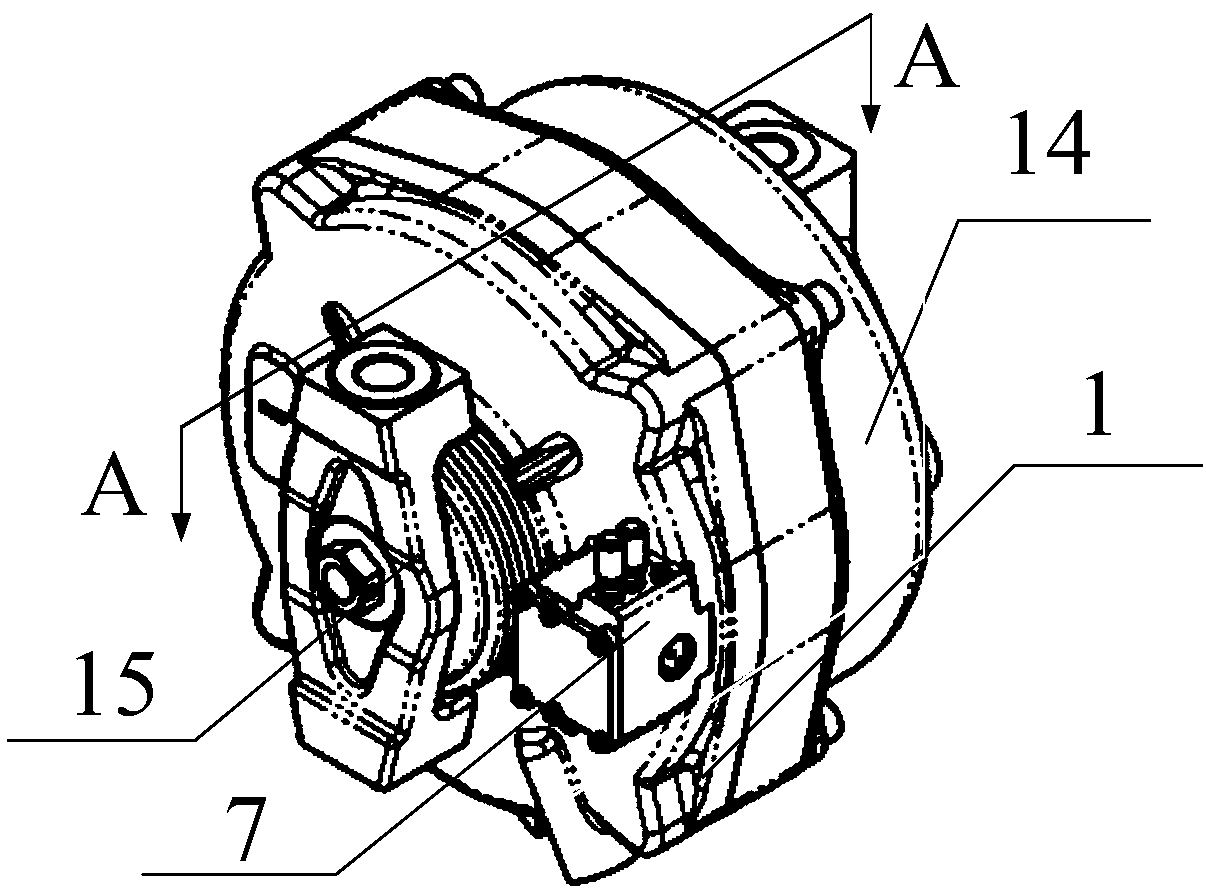
[0041] like figure 1 and figure 2 As shown, this embodiment provides a parking brake module 1 for rail vehicles, including a parking cylinder, a first parking piston 2 is arranged in the parking cylinder, and a hand brake is also arranged in the parking cylinder. The hand brake mechanism includes a parking rod 3, a runner 4 and a parking pin 5, the first parking piston 2 is fixedly connected to the parking rod 3, and the parking rod 3 is provided with a chute 31. On the inner wall of the runner 4, corresponding to the chute 31, there is a sliding piece 41 that is clamped on the parking rod 3, and the sliding piece 41 cooperates with the chute 32 to prevent the parking rod 3 from moving along its radial direction. sports.

[0042] The parking brake module of the specific embodiment above effectively avoids the abrasion between the parking lever and the running wheel, and the frictional resistance generated during the manual parking release operation is smaller, so that the m...