
Transcutaneous analyte sensors, applicators therefor, and associated methods
A technology of applicators and sensors, applied in the fields of sensors, medical science, diagnosis, etc., can solve problems such as inaccurate sensor line placement, tissue trauma, unpredictable slingshot, etc.
Patent Information
- Authority / Receiving Office
- CN · China
- Current Assignee / Owner
- Publication Date
- 2018-05-11
Smart Images
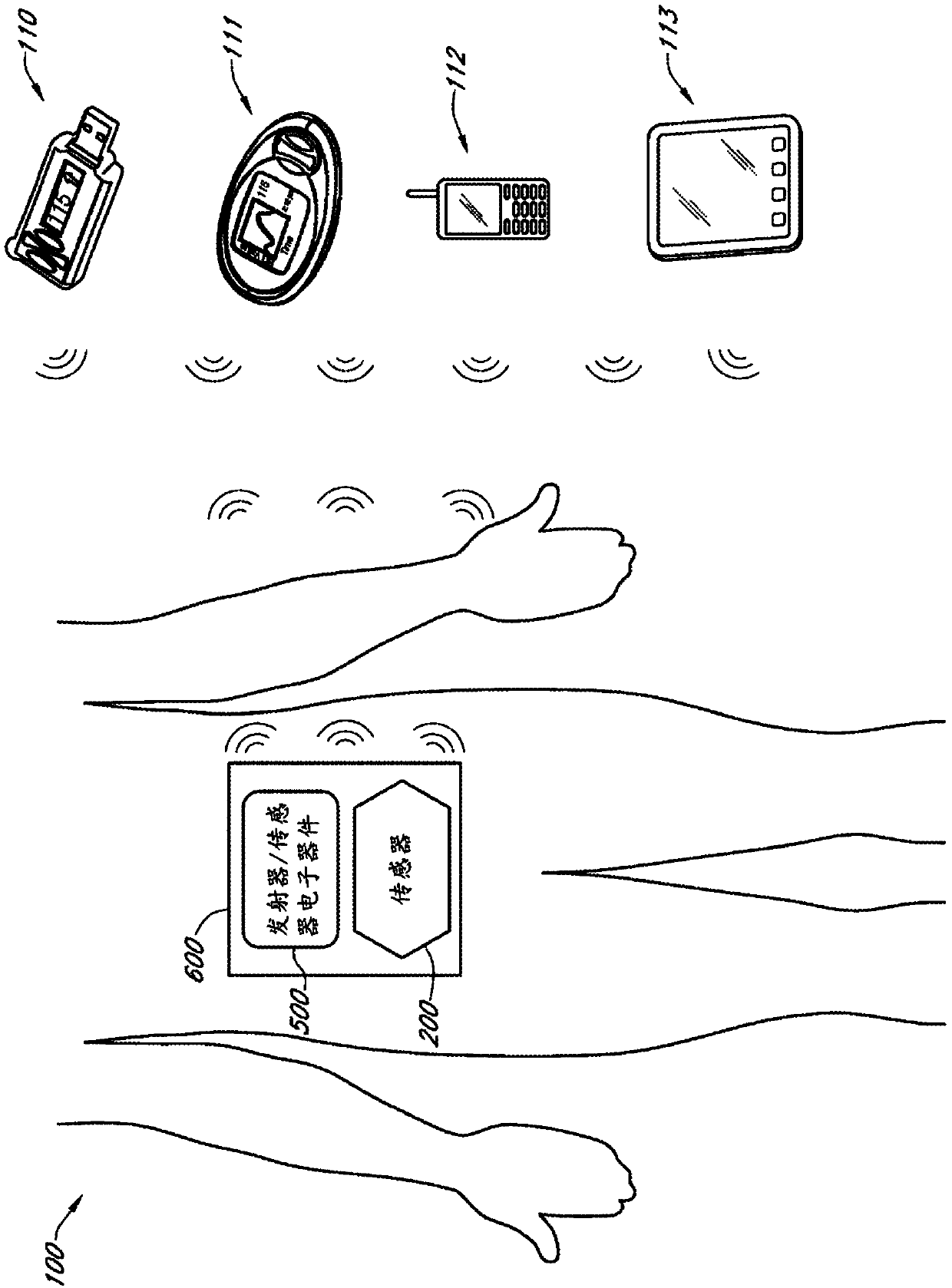
Figure 1 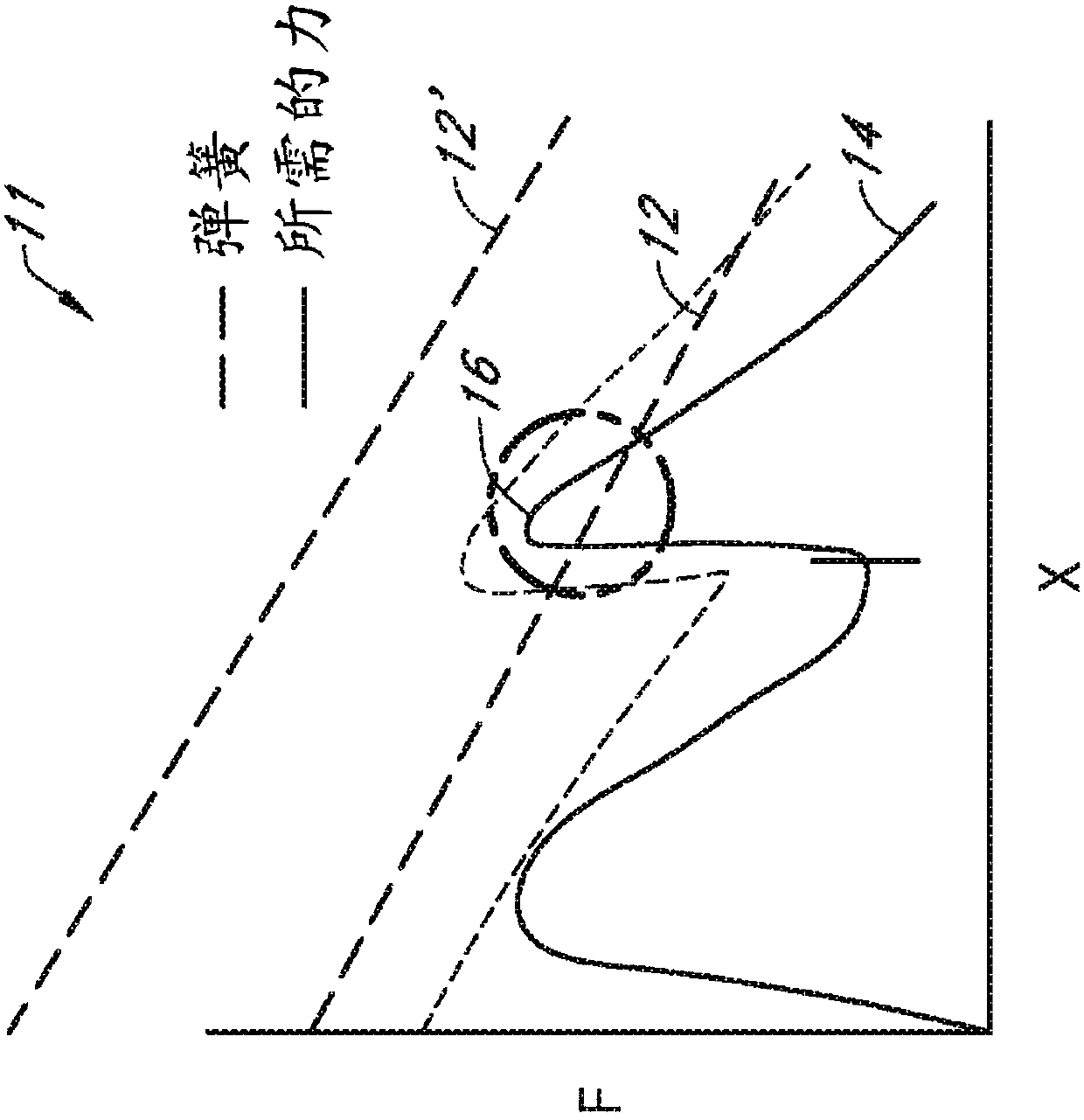
Figure 2 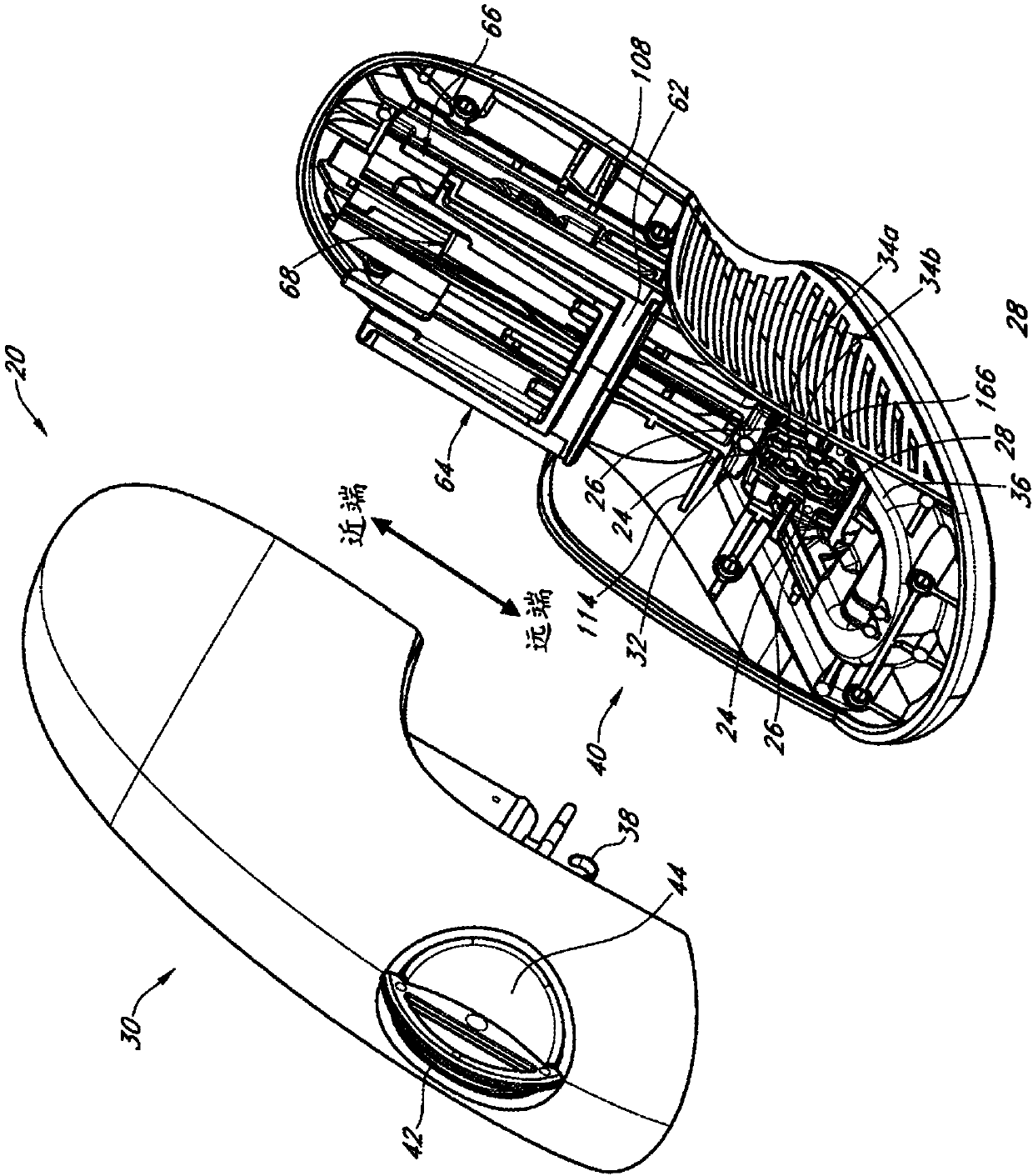
Figure 3
Abstract
Description
technical field
[0001] The present invention provides systems and methods for measuring analytes in a subject. More particularly, systems and methods for applying a transdermal analyte measurement system to a subject are provided. Background technique
[0002] Diabetes mellitus is a disorder in which the pancreas does not produce enough insulin (type 1 or insulin-dependent) and / or insulin is not effective (type 2 or non-insulin-dependent). In the diabetic state, patients experience hyperglycemia, which causes a host of physiological disturbances associated with the deterioration of small blood vessels, such as renal failure, skin ulcers, or hemorrhages in the vitreous of the eye. Hypoglycemic reactions (hypoglycemia) can be caused by inadvertent overdose of insulin, or after normal doses of insulin or glucose lowering agents accompanied by excessive exercise or insufficient food intake.
[0003] Traditionally, people with diabetes carry self-monitoring blood glucose (SMBG)...
Examples
Embodiment Construction
[0177] The following description and examples detail some example embodiments of the disclosed invention. Those skilled in the art will recognize that there are numerous variations and modifications of the invention encompassed by its scope. Therefore, a description of a certain example embodiment should not be taken as limiting the scope of the invention.
[0178] Sensor Systems and Applicators
[0179] figure 1 is a schematic diagram of a continuous analyte sensor system 100 attached to a subject and in communication with a number of other exemplary devices 110-113. A transdermal analyte sensor system is shown that includes an on-skin sensor assembly 600 that is fastened to the skin of a subject via a disposable housing (not shown). The system comprises a transcutaneous analyte sensor 200 and an electronics unit (interchangeably referred to as "sensor electronics" or "transmitter") 500 for wirelessly transmitting analyte information to a receiver. During use, the sensi...