Indoor unit of air conditioner and control method thereof

An air-conditioning indoor unit and chamber technology, which is applied in air-conditioning systems, heating and ventilation control systems, heating methods, etc., can solve the problems of air supply supercooling, overheating noise, etc. Overheating, suitable for large-scale promotion and use

CN108679713APending Publication Date: 2018-10-19QINGDAO HAIER AIR CONDITIONER GENERAL CORP LTD
8 Cites 5 Cited by

Patent Information

Authority / Receiving Office
CN · China
Patent Type
Applications(China)
Current Assignee / Owner
Publication Date
2018-10-19

Smart Images

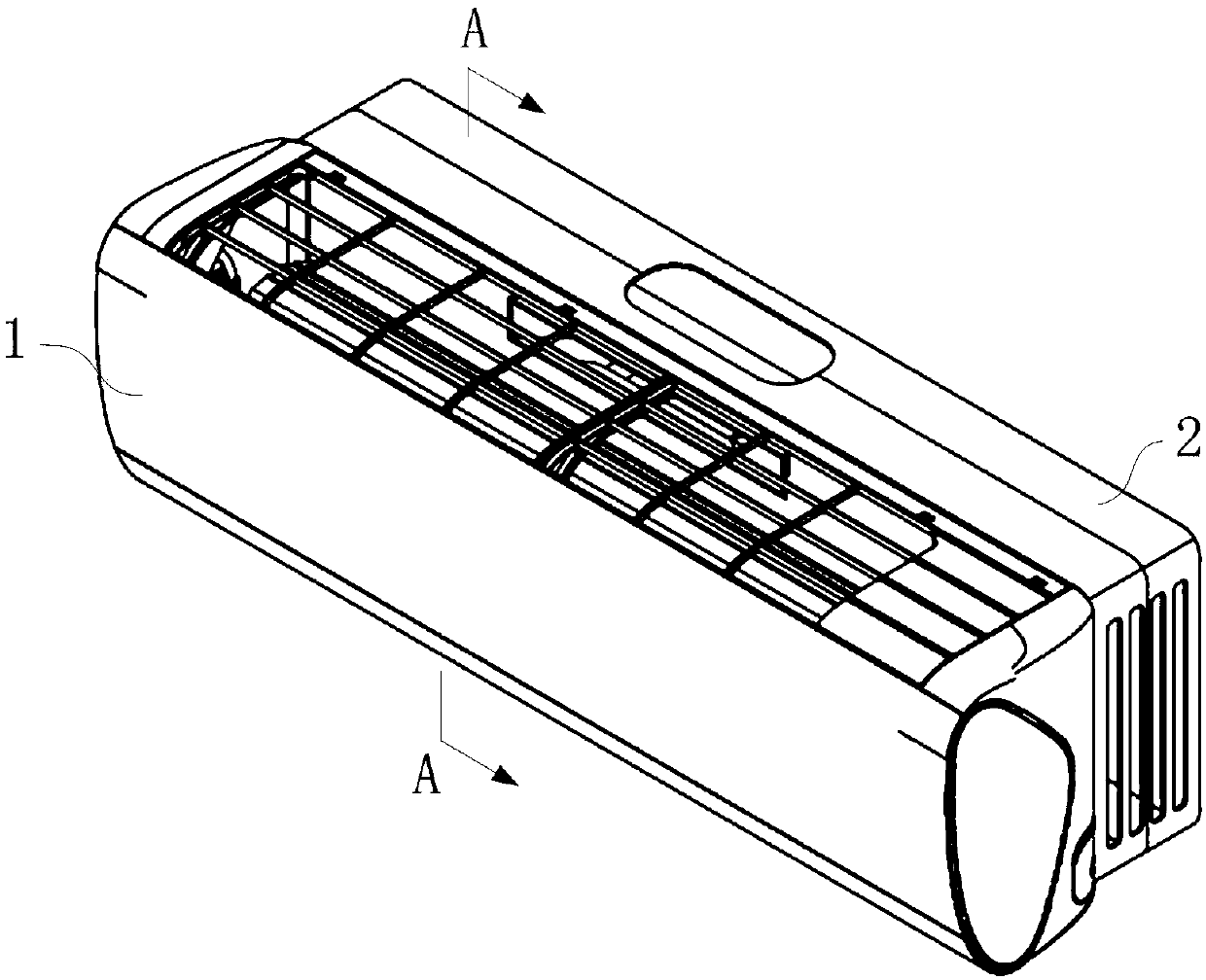
  • Figure 1
    Figure 1
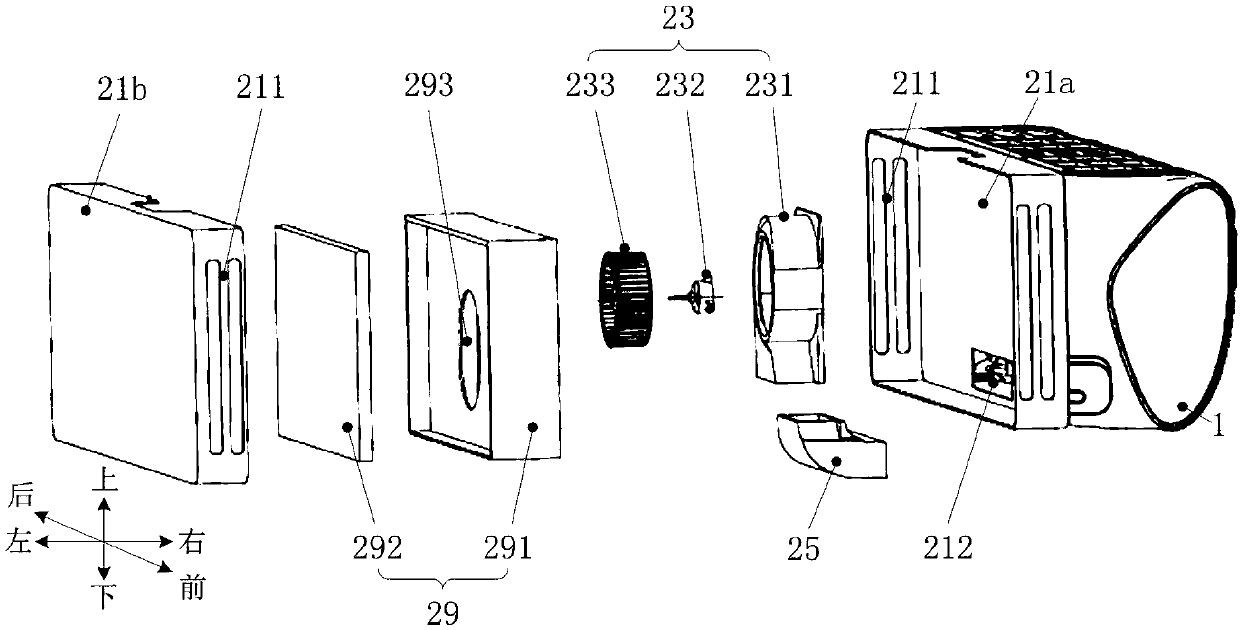
  • Figure 2
    Figure 2
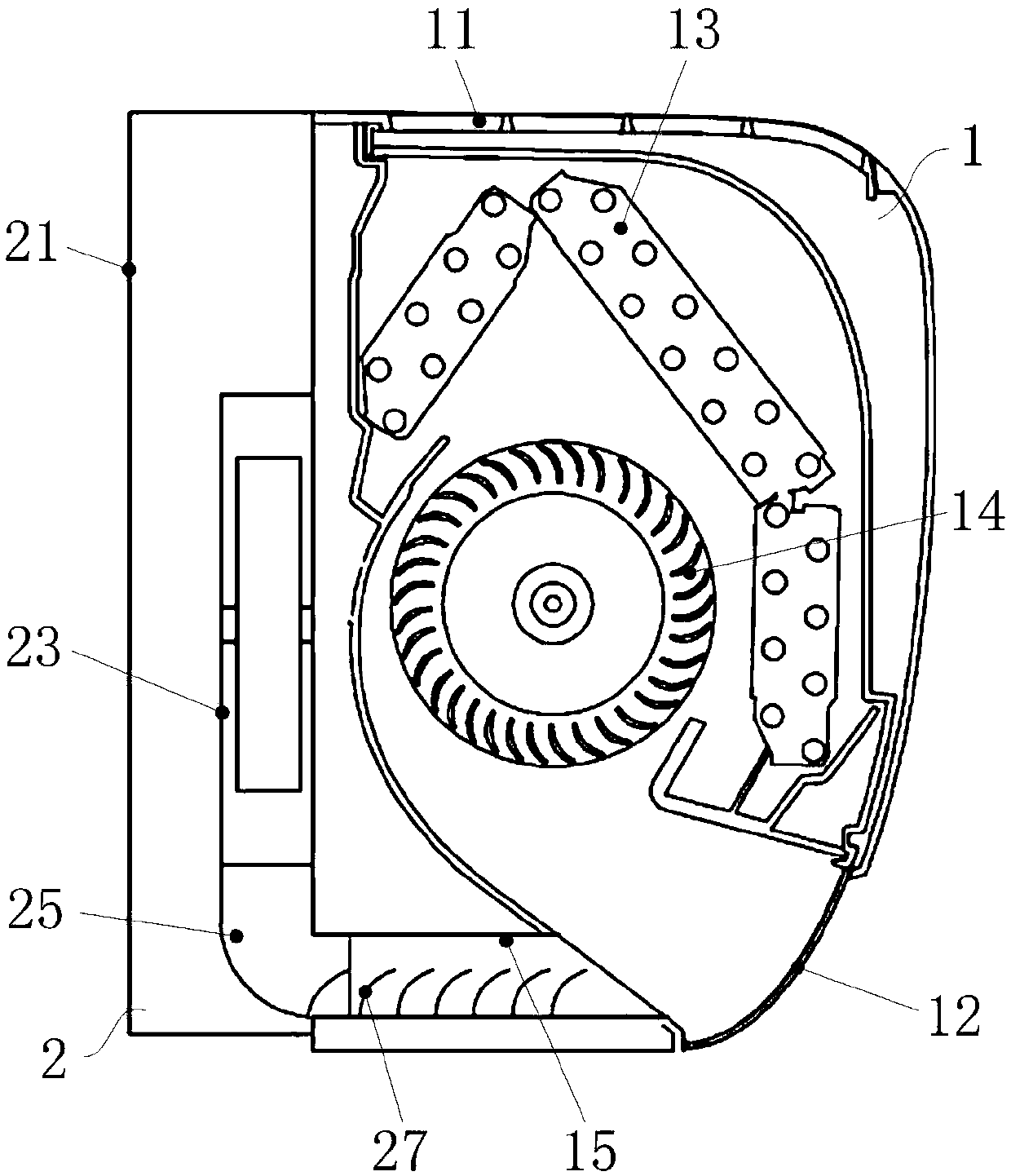
  • Figure 3
    Figure 3
Patent Text Reader

Abstract

The invention relates to the technical field of air conditioning, and specifically relates to an indoor unit of an air conditioner and a control method thereof. The indoor unit of the air conditionerand the control method aim at solving the problem of supercooled / superheated supplied air and loud noise of an existing air conditioner under high air supplying volume. The indoor unit of the air conditioner comprises an indoor unit body, wherein the indoor unit body is provided with an air returning port and an air supplying port; an air supplier is arranged in the indoor unit body. The indoor unit of the air conditioner further comprises an air compensating module; the air compensating module comprises a housing which is provided with a first air inlet; a purifying assembly and an induced draft fan are arranged in the housing; the air compensating module can be driven by the induced draft fan to guide indoor air into the housing through the air inlet, and the indoor air flowing throughthe purifying assembly is exhausted to the air supplying port through an air exhausting port of the induced draft fan and is mixed with an air phase exhausted by the air supplying port. With the adoption of the indoor unit of the air conditioner, the problem of supercooled / superheated supplied air of an indoor unit of the air conditioner can be reduced; and the noise of the indoor unit of the airconditioner in running can be reduced.
Need to check novelty before this filing date? Find Prior Art

Description

technical field

[0001] The invention relates to the technical field of air conditioning, in particular to an air conditioner indoor unit and a control method thereof. Background technique

[0002] With the improvement of living standards, people have higher and higher requirements for the quality of life, and this requirement is particularly evident in household appliances. Taking air conditioners as an example, when the indoor and outdoor temperature difference is large, in order to meet the needs of users for rapid cooling / heating after entering the room from the outside, the existing air conditioners usually have a rapid cooling / heating function. When functioning, the compressor of the air conditioner works at a higher frequency to quickly increase the cooling capacity / heating capacity, and the indoor unit of the air conditioner runs at a high speed and a large air volume to send the heat-exchanged cold air / hot air back to the room, thereby realizing indoor cooling. Quic...

Examples

Embodiment Construction

[0031] Preferred embodiments of the present invention are described below with reference to the accompanying drawings. Those skilled in the art should understand that these embodiments are only used to explain the technical principles of the present invention, and are not intended to limit the protection scope of the present invention. For example, although the first air inlets in the drawings are arranged on the front and rear sides of the housing, this positional relationship is not static, and those skilled in the art can make adjustments to suit specific applications. For example, the first air inlet can also be arranged on the top surface or the bottom surface of the casing.

[0032] It should be noted that, in the description of the present invention, the terms "center", "upper", "lower", "left", "right", "vertical", "horizontal", "inner", "outer" etc. The terms of the indicated direction or positional relationship are based on the direction or positional relationship s...