
A system and a method for realizing a network service access dynamic load sharing function under an NFV architecture
A dynamic load and network service technology, applied in transmission systems, digital transmission systems, data exchange networks, etc., can solve problems such as unbalanced user access load, avoid container suspended animation, realize dynamic expansion and shrinkage, and simplify networking desired effect
- Summary
- Abstract
- Description
- Claims
- Application Information
AI Technical Summary
Problems solved by technology
Method used
Image

Examples
Embodiment Construction
[0063] In order to describe the technical content of the present invention more clearly, further description will be given below in conjunction with specific embodiments.
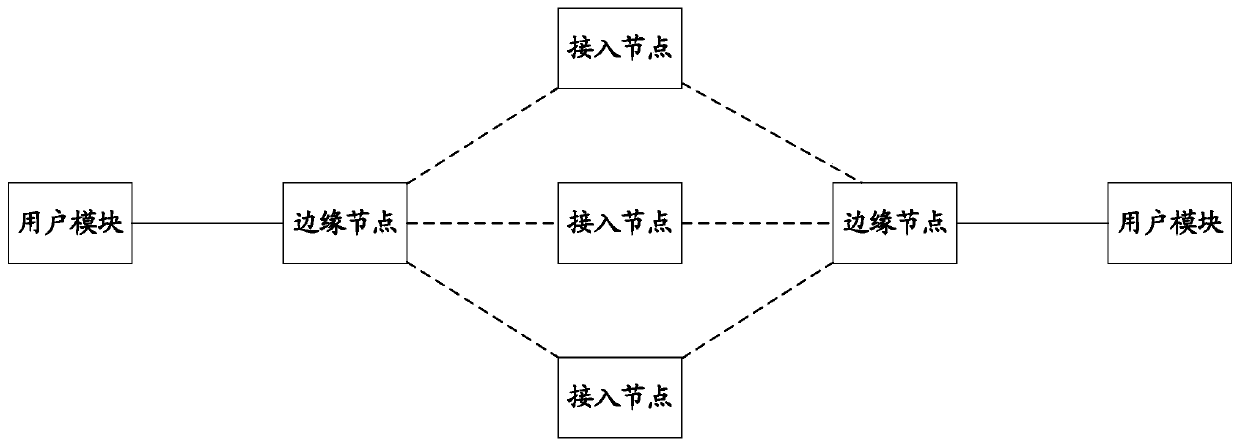
[0064] The system for realizing the dynamic load sharing function of network service access under the NFV architecture of the present invention includes several access nodes and several edge nodes, and both the access nodes and the edge nodes are VNF nodes, Each of the VNF nodes described is connected to the internal network of the system, wherein:
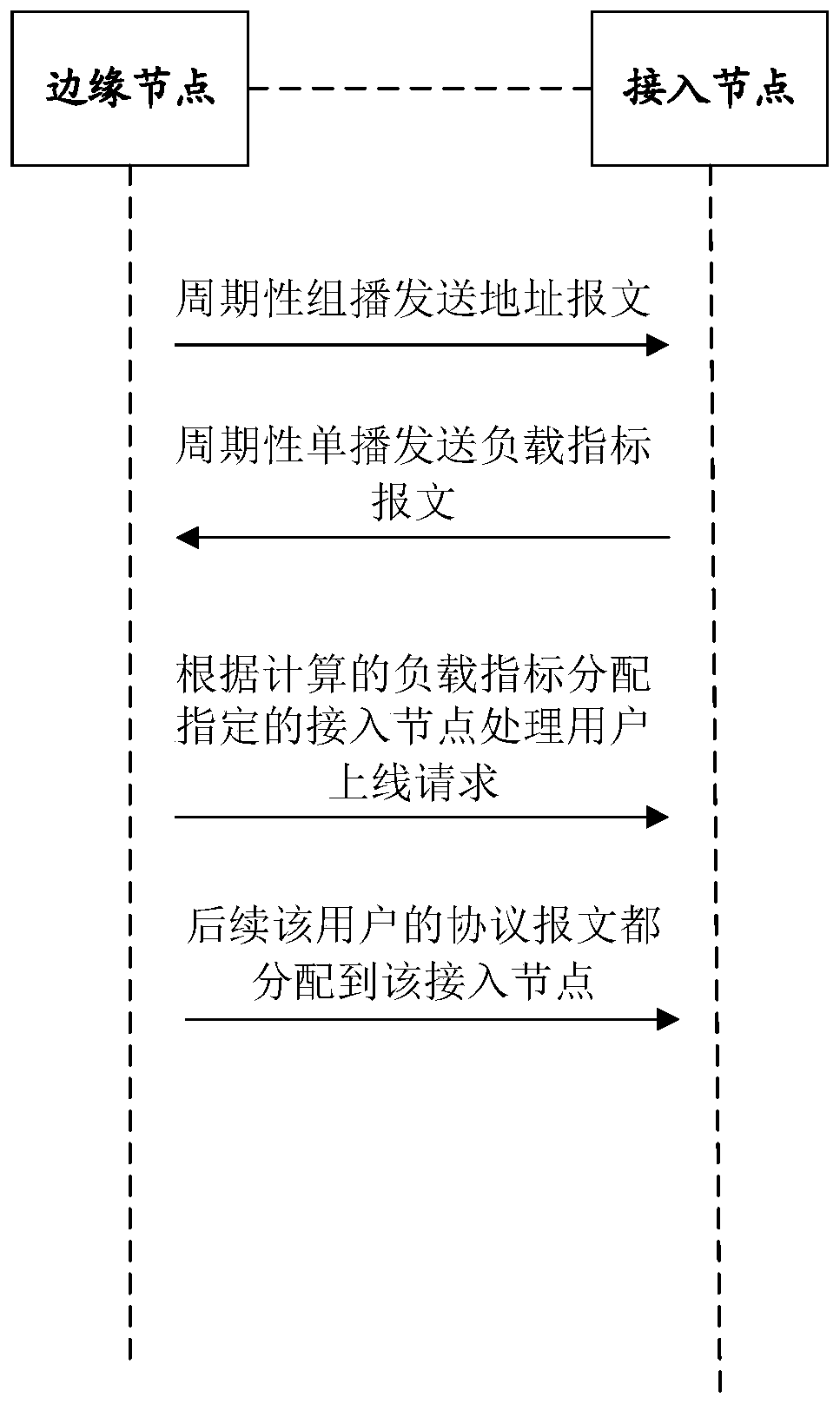
[0065] The edge node is connected to the external remote user module, and periodically multicasts its own IP address to the access node, and the edge node calculates the IP address according to the received load status of the access node. The load indicator of the access node described above, and select the corresponding access node for the external remote user module;
[0066] The access node is connected to each of the edge nodes, and is used to periodically...
PUM
 Login to View More
 Abstract
Description
Claims
Application Information
 Login to View More