
A non-noble metal oxygen reduction reaction catalyst with highly dispersed metal active sites and preparation method thereof
A non-precious metal, metal active technology, applied in the direction of structural parts, electrical components, battery electrodes, etc., can solve the problems of unfavorable large-scale production of catalysts, unfavorable dispersion of active sites, complicated preparation methods, etc., to achieve good metal dispersion, high electrical Chemical stability, low cost effect
- Summary
- Abstract
- Description
- Claims
- Application Information
AI Technical Summary
Problems solved by technology
Method used
Image

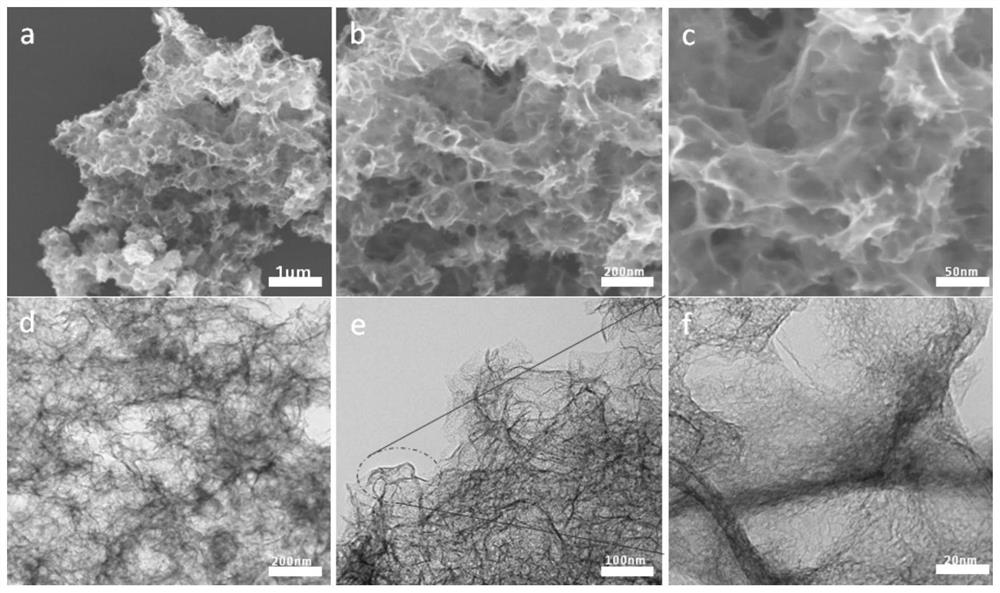
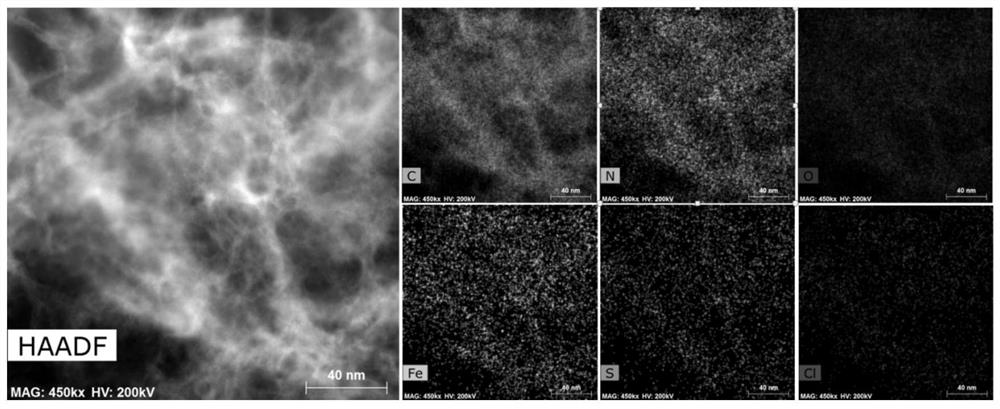
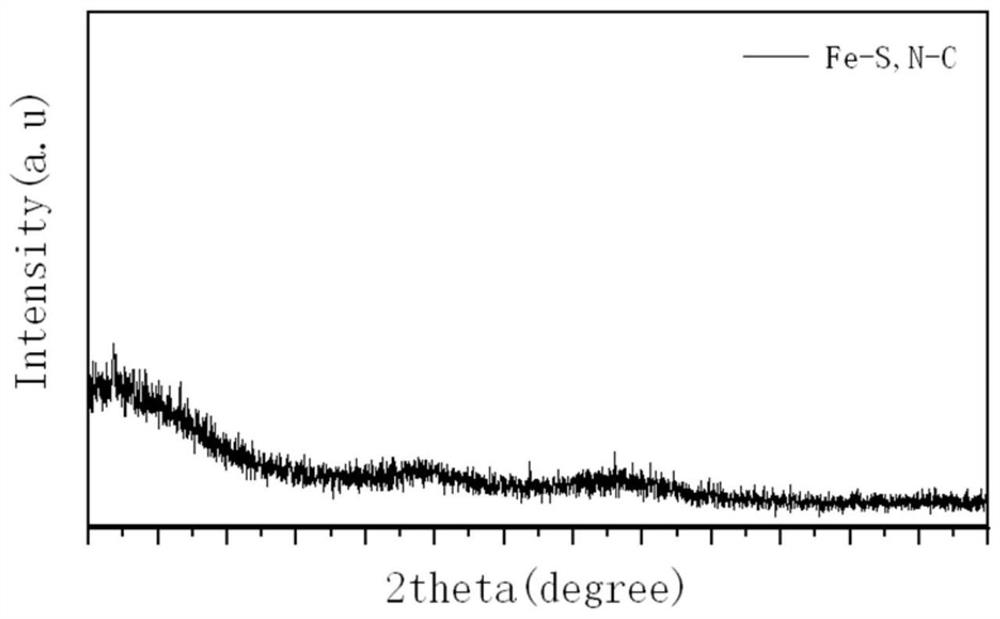
Examples
Embodiment
[0026] A method for preparing a non-noble metal oxygen reduction reaction catalyst with highly dispersed metal active sites, comprising the following steps:
[0027] 1) 476mg MgCl 2 Ultrasonic dissolved in 10mL water to obtain a clear and transparent solution;
[0028] 2) Ultrasonic disperse 200 mg heme in 100 mL NaOH solution in a beaker (NaOH concentration is 0.1 mol L -1 ), to obtain a reddish-brown solution;
[0029] 3) The mixed solution obtained in step 2) is added dropwise to the obtained MgCl-containing solution obtained in step 1 under stirring conditions. 2 solution, the resulting solution was stirred for 30 min;
[0030] 4) Add 200 mg of L-cysteine to the above solution, stir and ultrasonically oscillate to disperse evenly, stir and evaporate to dryness at 80°C, and then vacuum-dry at 80°C for 8 hours to obtain a brown-green powder;
[0031] 5) Put the above powder into a tube furnace, heat-treat at 800°C for 2h under a nitrogen atmosphere, and cool to room te...
PUM
 Login to View More
 Abstract
Description
Claims
Application Information
 Login to View More