
Multi-tenant permission system based on BRAC model
A multi-tenant, user permission technology, applied in the computer field, can solve problems such as inability to guarantee data isolation, inability to do so, and permission distribution disasters.
- Summary
- Abstract
- Description
- Claims
- Application Information
AI Technical Summary
Problems solved by technology
Method used
Image

Examples
Embodiment Construction
[0033] In order to make the purpose, technical solution and advantages of the present invention clearer, the technical solution of the present invention will be described in detail below. Apparently, the described embodiments are only some of the embodiments of the present invention, but not all of them. Based on the embodiments of the present invention, all other implementations obtained by persons of ordinary skill in the art without making creative efforts fall within the protection scope of the present invention.
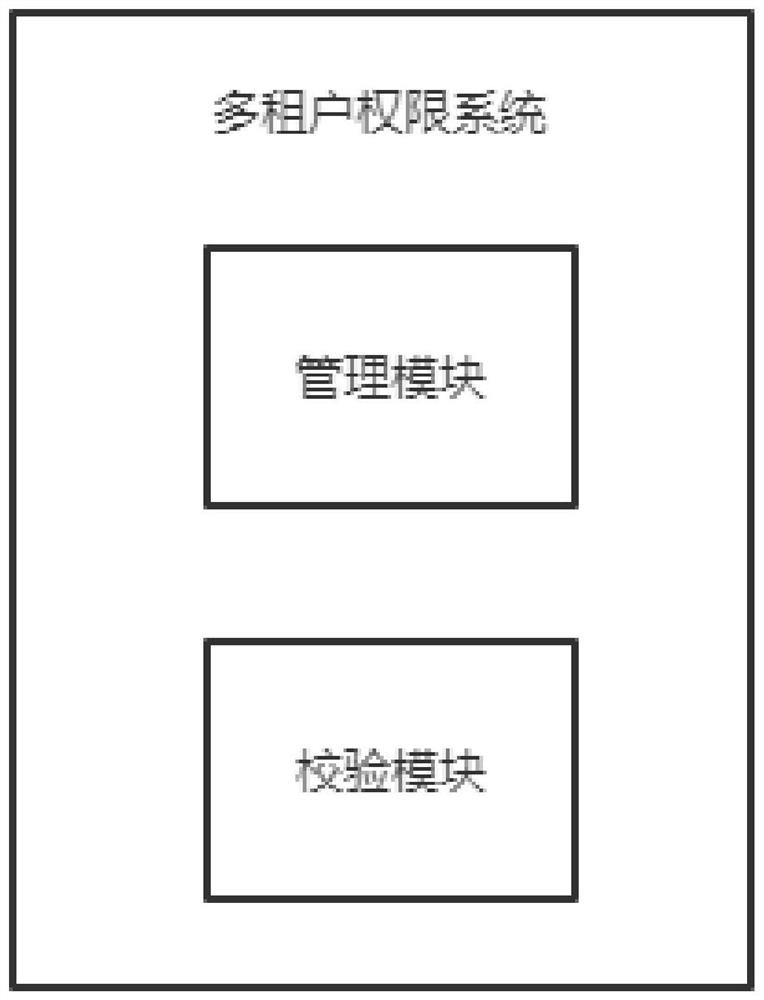
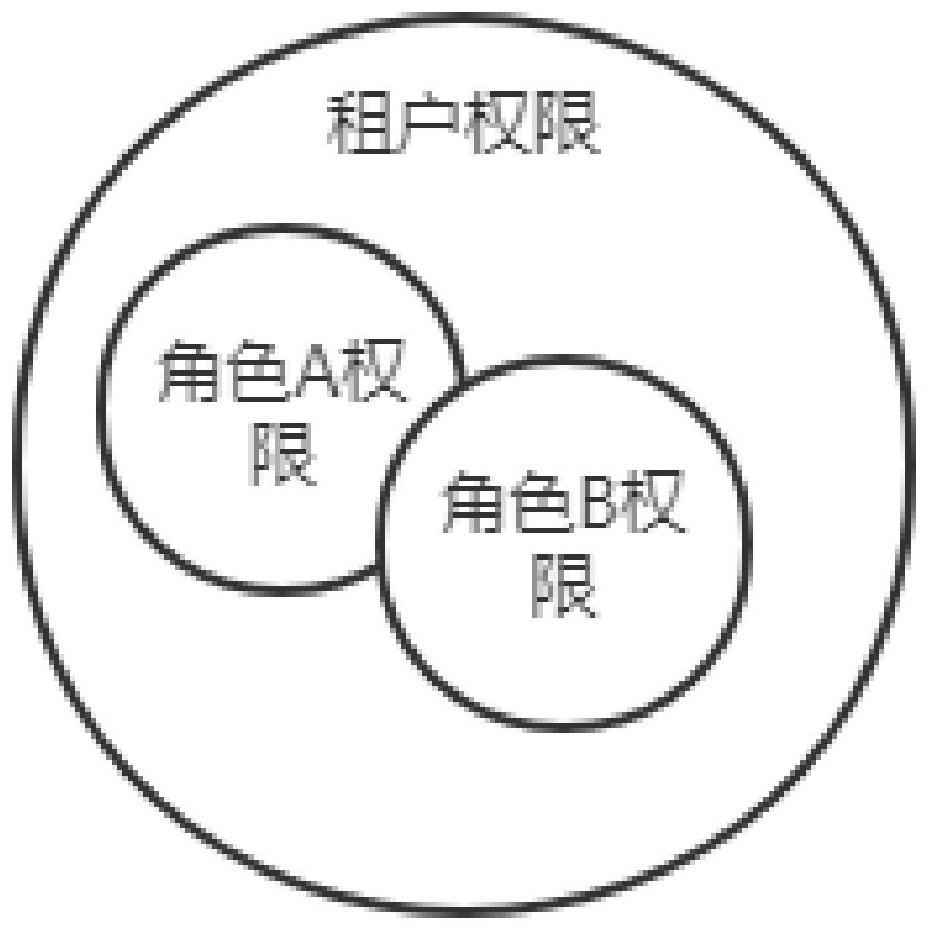
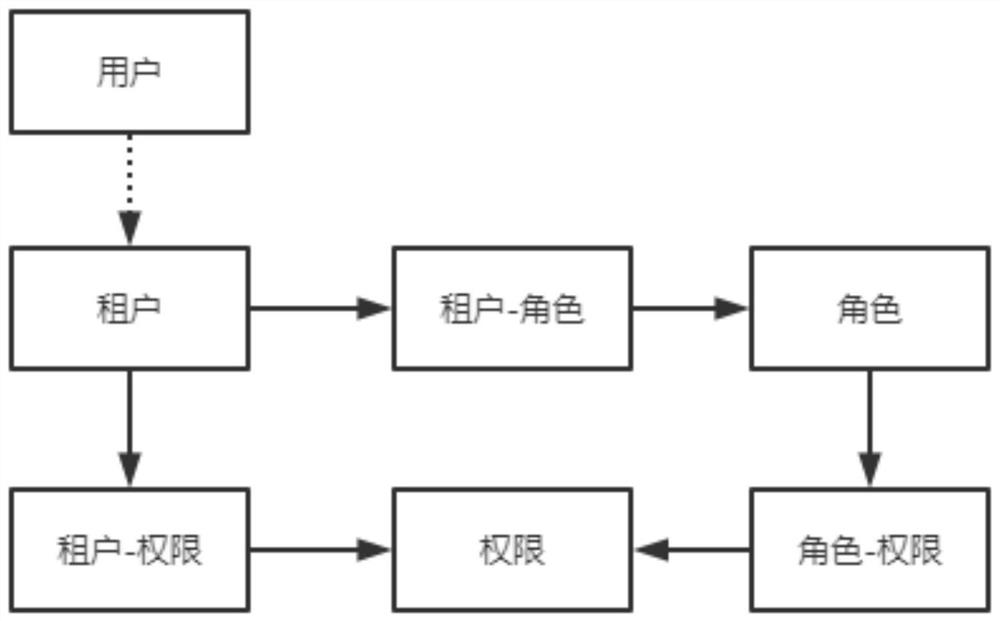
[0034] In either embodiment, if Figure 1-2 As shown, a multi-tenant rights system based on the BRAC model of the present invention includes: a management module and a verification module;
[0035] Wherein, the management module is used to create permissions, tenants, users corresponding to tenants, tenant roles, and assign tenant permission information; and assign permissions to tenant roles and assign tenant roles to users, so that users have permissions corr...
PUM
 Login to View More
 Abstract
Description
Claims
Application Information
 Login to View More