
Mycotoxin-binders
a technology of mycotoxin and binding agent, which is applied in the field of mycotoxin binding agent, can solve the problems of difficult generalizations about the geographical distribution of particular types of mycotoxins, devastating effects, and negative economic effects of mycotoxin contamination on food and feed producers, and achieve the effect of improving the binding ability of mycotoxin
- Summary
- Abstract
- Description
- Claims
- Application Information
AI Technical Summary
Problems solved by technology
Method used
Image

Examples
example 1
[0123]Brewer's yeast cells that are traditionally used in ethanol fermentations contain large amounts of β-glucans in their cell walls. These β-glucans should be hydrolysed by the use of enzymes and the resulting fragmented β-glucans are tested for their ability to bind mycotoxins by removing them from a mycotoxin-containing solution.
[0124]In later applications, the brewing yeast, which is an ingredient in fermented mash from the ethanol fermentation, should be hydrolysed within the process to create distillers dried grains with mycotoxin binding properties.
1.1 Enzymes:
[0125]The following enzymes listed in Table 1 were used alone or in different combinations.
[0126]
TABLE 1MainTypShortnameActivityUnitβ1-4 glucanaseGlu110016.97U / gβ1-4 glucanaseGlu210594.57U / gβ1-4 glucanaseGlu33583.18U / gβ1-3 glucanaseGlu5763.00U / mlβ1-3 glucanaseGlu4891.00U / gβ1-4 glucanase,Glu92588.00U / mlhemicellulasexylanase, β1-4Tre7glucanase
1.2 Enzyme Product Activity Determination:
Substrates: Glucanase: β-Glucan from...
example 2
[0161]Distillers dried grains (DDGS) as a by-product from a ethanol fermentation process, contains lots of residual yeast cells from the ethanol fermentation process should be tested for their ability to bind mycotoxins. As yeast cell walls contain mainly β-1,3-glucans DDGS should be tested against other yeast products and pure β-glucans for their mycotoxinbinding capabilities.
2.1 Fermentation of Corn to Ethanol
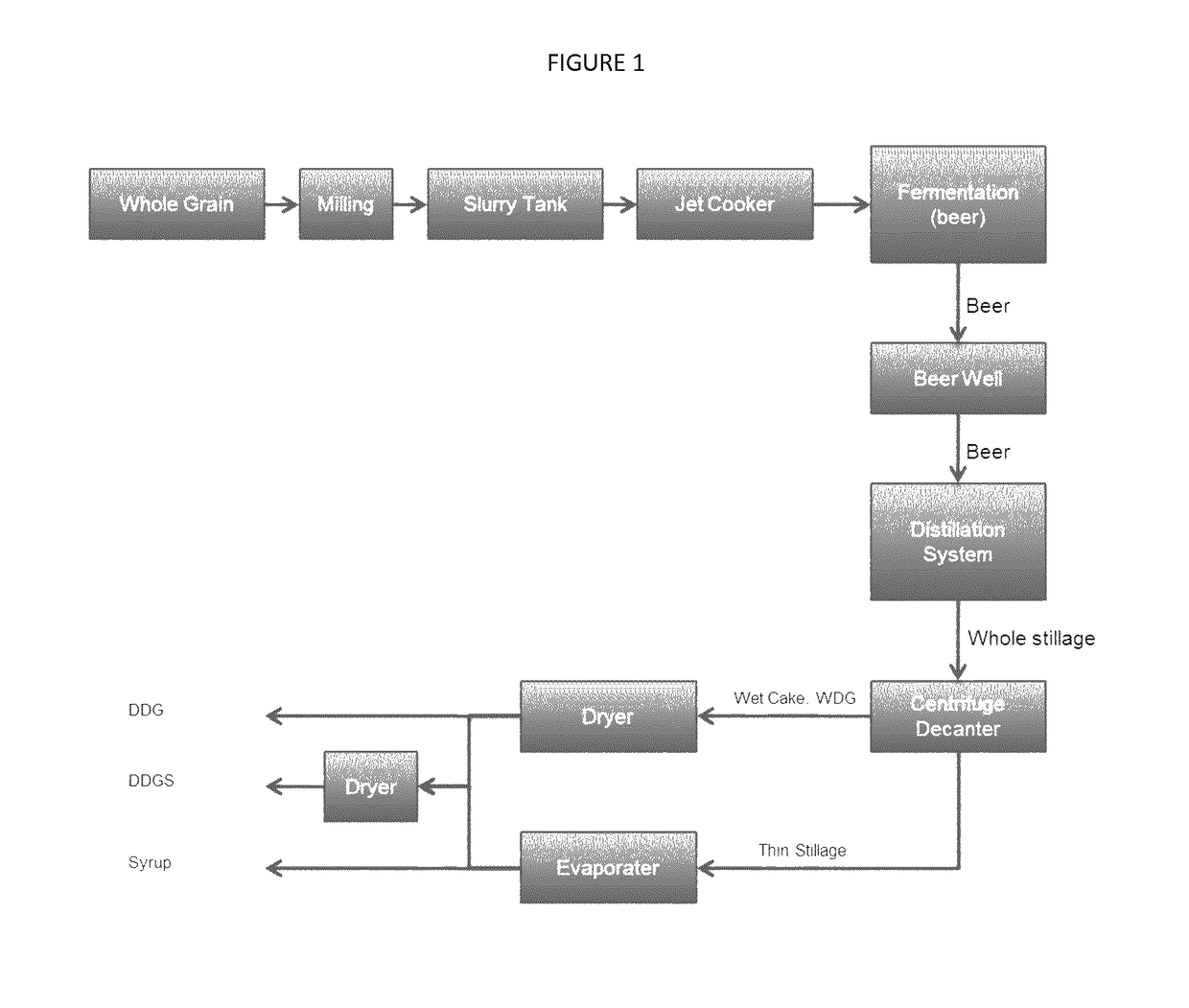
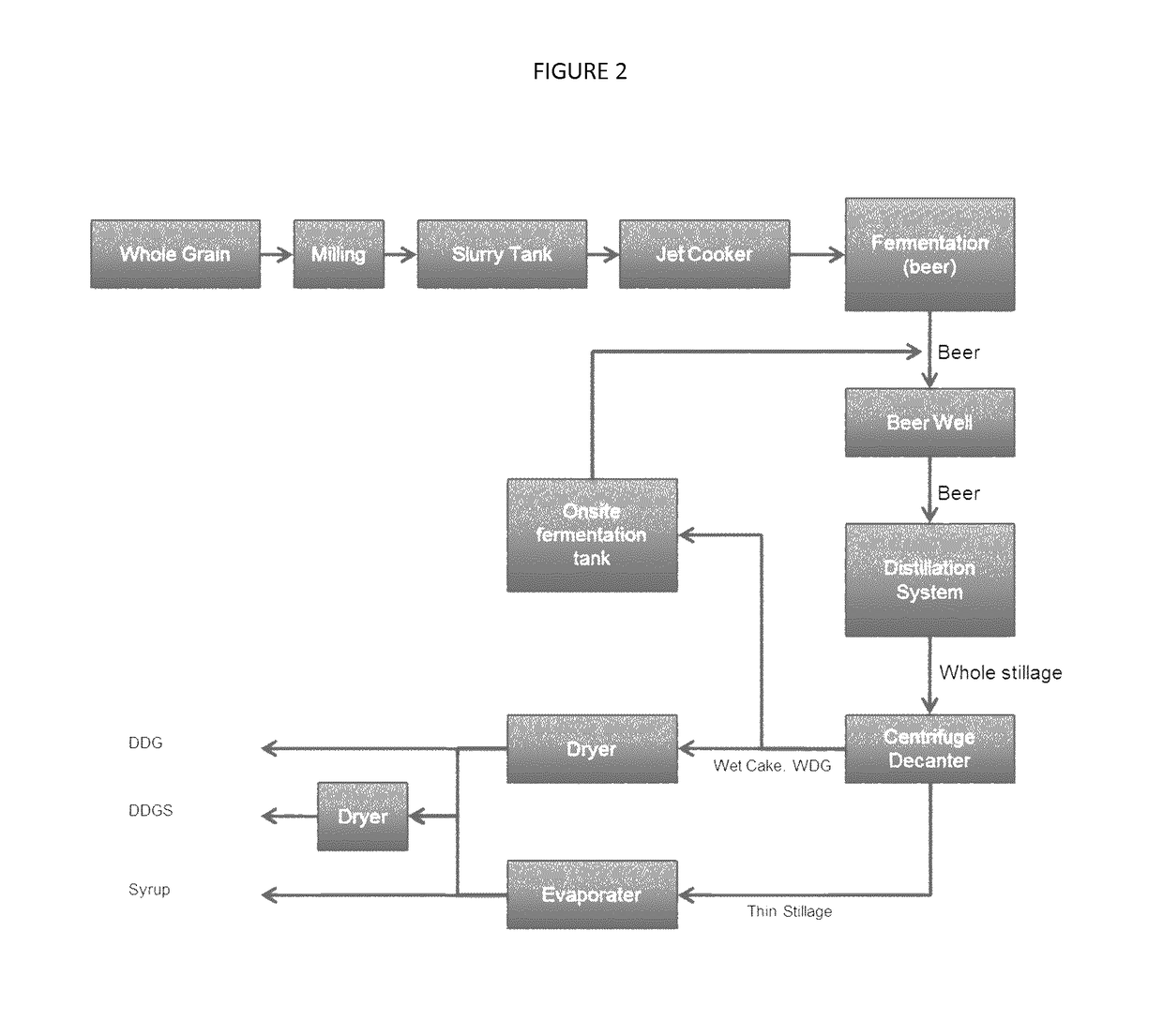
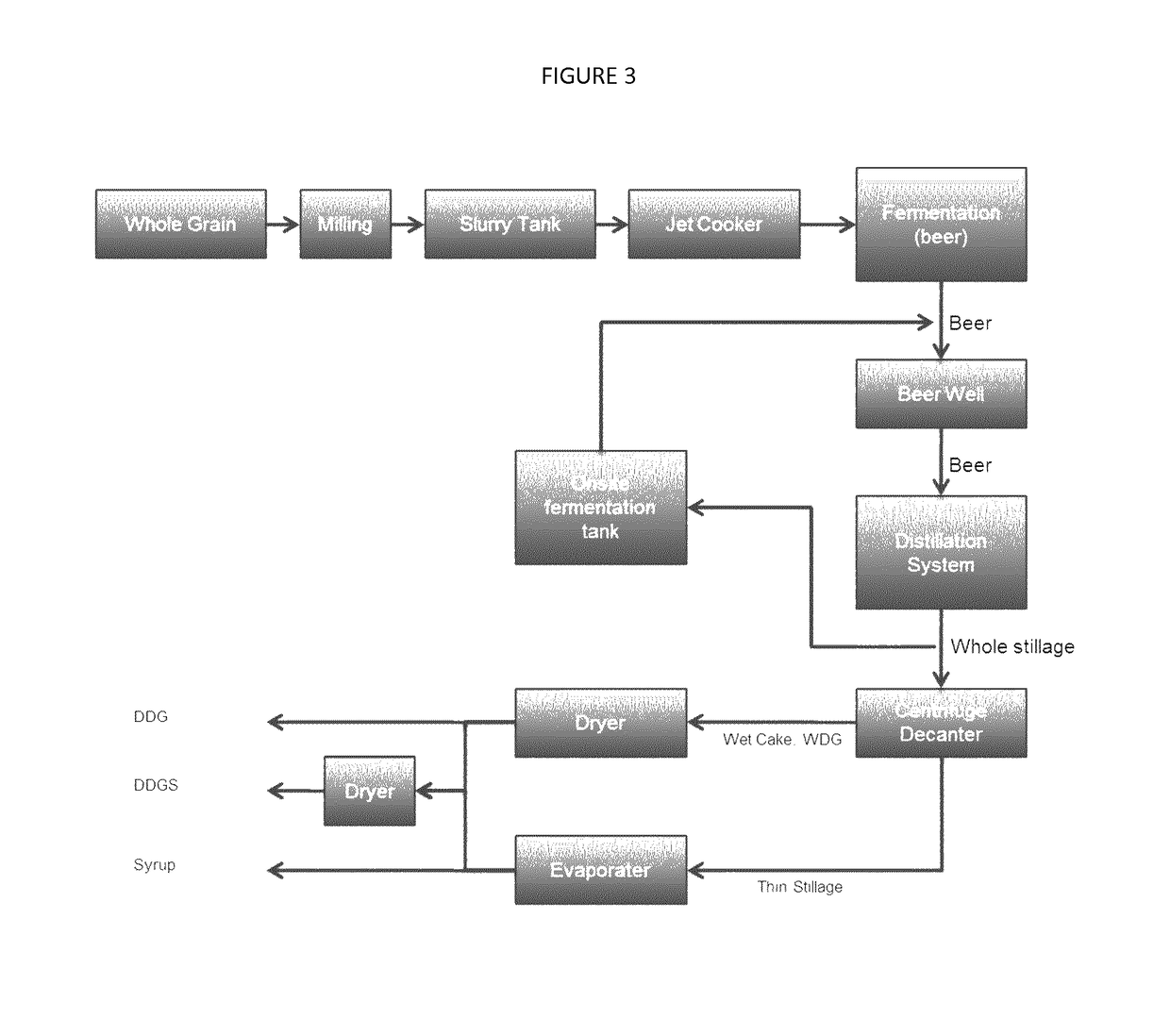
[0162]In one embodiment, the process of the production of ethanol form corn was performed as follows:
[0163]a) reducing the particle size of the starch-containing material by milling:[0164]corn was milled to
[0165]b) forming a slurry comprising the starch-containing material and water[0166]10 kg corn were tap water at 35° C. to obtain a ˜31.25% solid solution, total volume 30 liter[0167]pH range was 5.6-6.0
[0168]c) liquefying of the starch-containing material[0169]temperature was increased to 90° C.[0170]7 ml alpha-amylase (Novozymes Liquozyme SC) were added[0171]1% o antifoam...
PUM
| Property | Measurement | Unit |
|---|---|---|
| pH | aaaaa | aaaaa |
| temperature | aaaaa | aaaaa |
| temperature | aaaaa | aaaaa |
Abstract
Description
Claims
Application Information
 Login to View More