Airborne wind profiling portable radar system and method

a portable radar and airborne wind technology, applied in the field of airborne wind profiling portable radar system and method, can solve the problems of inability to effectively use an airborne platform to determine vector wind, lack of height coverage much above the boundary layer, and higher cost of building and operating 404-mhz profilers

US10921444B2Active Publication Date: 2021-02-16FOSTER-MILLER
15 Cites 5 Cited by

Patent Information

Authority / Receiving Office
US · United States
Patent Type
Patents(United States)
Current Assignee / Owner
Publication Date
2021-02-16

Smart Images

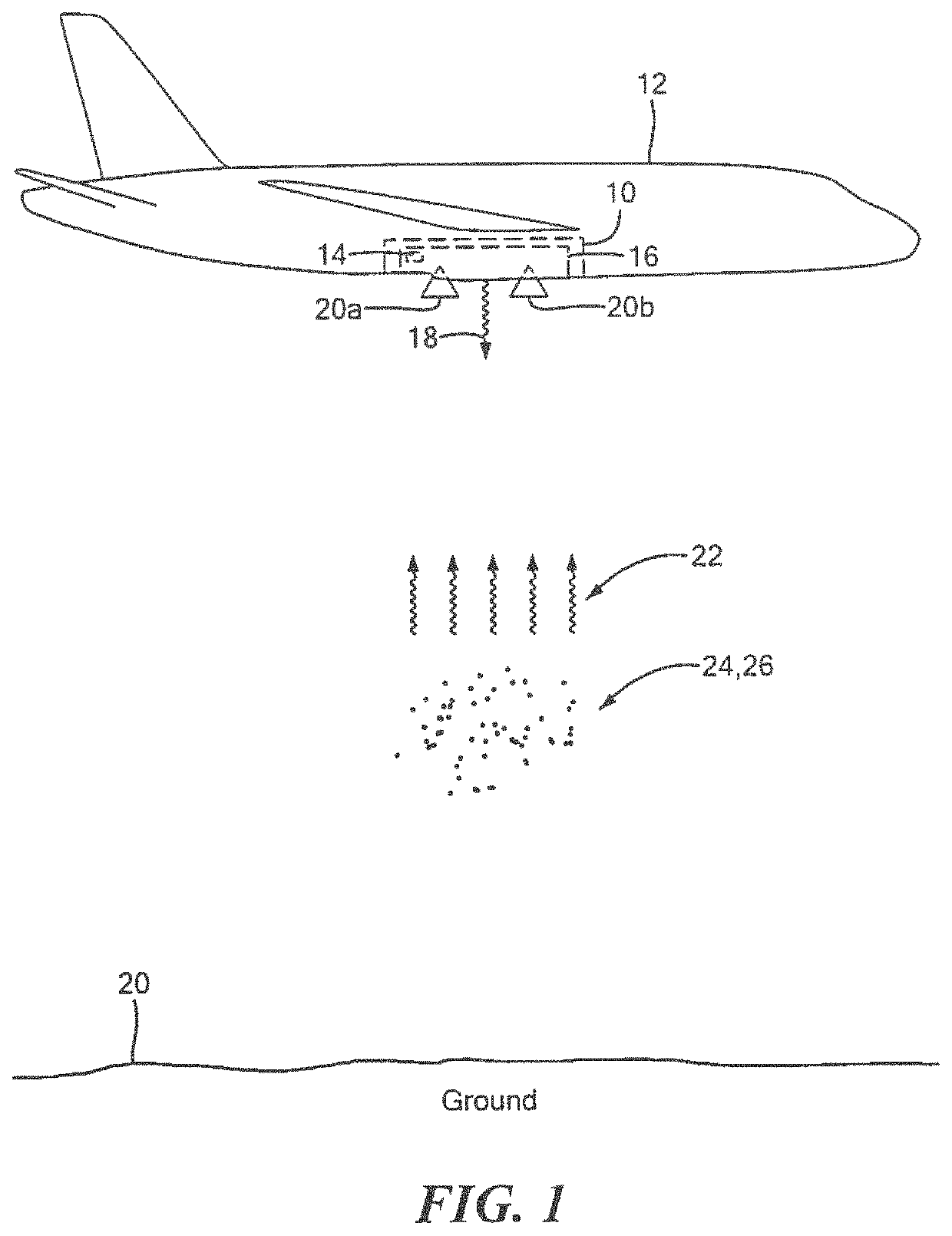
  • Figure 1
    Figure 1
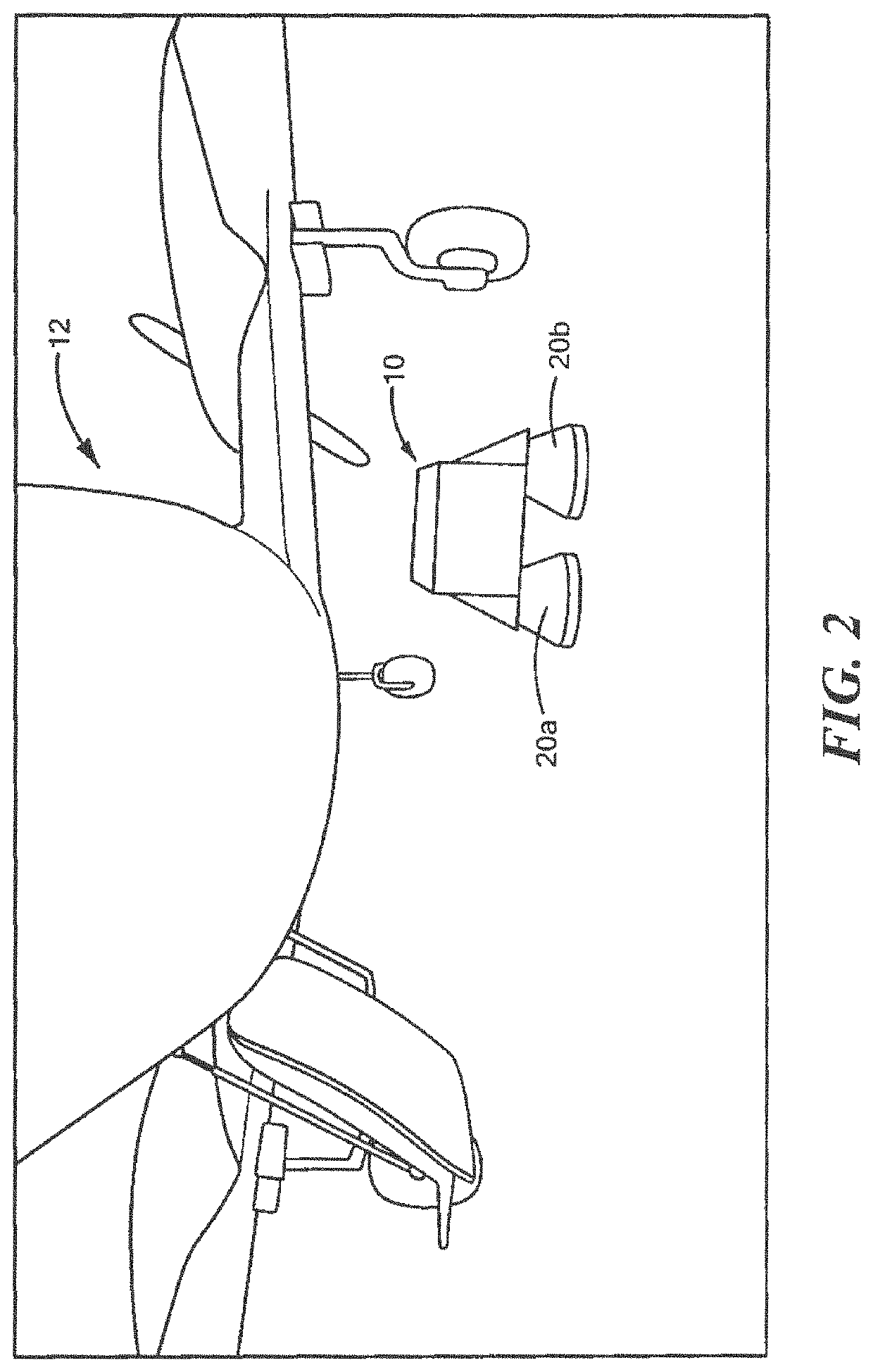
  • Figure 2
    Figure 2
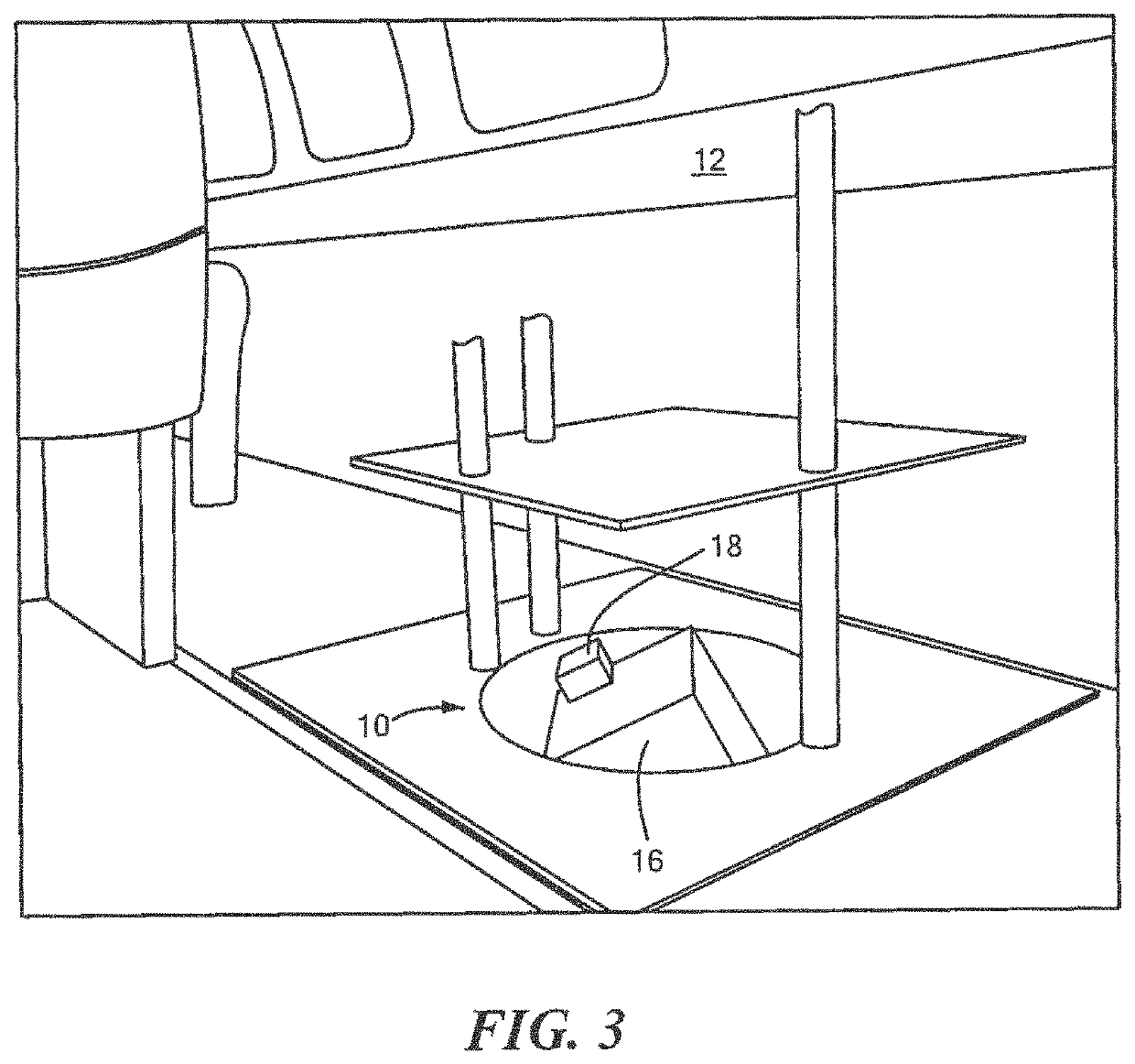
  • Figure 3
    Figure 3
Patent Text Reader

Abstract

An airborne wind profiling portable radar (AWiPPR) system comprising a mobile airborne platform including one or more navigation units configured to produce navigation data including at least the position and orientation of the mobile airborne platform. A radar unit is mounted and positioned to the mobile airborne platform, the radar unit is configured to transmit a wide-band frequency modulated continuous wave radar signal in a downward direction from the mobile airborne platform towards the ground and configured to continuously receive a reflected signal from a plurality of clear air scatters (CAS) targets or volumetric targets and output radar data. An inertial measurement unit (IMU) in communication with the one or more navigation units and the radar unit is configured to receive the navigation data and determine the position and orientation of the radar at a specific point in time and output IMU data. A data acquisition unit in communication with the radar unit and the IMU is configured to receive and time align radar data and the IMU data for each reflected signal from each of the plurality of CAS targets or volumetric targets to provide an antenna pointing direction for each received reflected signal. The data acquisition unit is configured to process the time aligned radar data and IMU data to determine a distance and a Doppler velocity of each of the plurality of CAS targets or volumetric targets, provide a range, a velocity, and an antenna pointing direction for each of the plurality of CAS targets or volumetric targets, and calculate a vector wind velocity using the range, the velocity, and the antenna pointing direction for each of the plurality of CAS targets or volumetric scatters targets. The data acquisition unit may be configured to further correct the range, the velocity, and / or the antenna pointing direction of each of the plurality of CAS targets or volumetric targets to accommodate for a motion shift in data produced by one or more of: a relative motion and orientation of the mobile airborne platform, a Doppler spread in the range, the velocity and / or the antenna pointing direction, and a ground echo.
Need to check novelty before this filing date? Find Prior Art

Description

RELATED APPLICATIONS

[0001] This application claims benefit of and priority to U.S. Provisional Application Ser. No. 62 / 589,650 filed Nov. 22, 2017, under 35 U.S.C. §§ 119, 120, 363, 365, and 37 C.F.R. § 1.55 and § 1.78, which is incorporated herein by this reference.FIELD OF THE INVENTION

[0002] This subject invention relates to an airborne wind profiling portable radar system and method.BACKGROUND OF THE INVENTION

[0003] Wind profilers are Doppler radars that typically operate in the VHF (30-300 MHz) or UHF (300-1000 MHz) frequency bands. There are three primary types of radar wind profilers in operation in the U.S. today. The NOAA Profiler Network (NPN) profiler operates at a frequency of 404 MHz. The second type of profiler that is used by NOAA research and outside agencies is the 915-MHz boundary-layer profiler. The 404-MHz profilers are more expensive to build and operate, but they provide the deepest coverage of the atmosphere. The 915-MHz profilers are smaller and cheaper to build...

Examples

Embodiment Construction

[0065]Aside from the preferred embodiment or embodiments disclosed below, this invention is capable of other embodiments and of being practiced or being carried out in various ways. Thus, it is to be understood that the invention is not limited in its application to the details of construction and the arrangements of components set forth in the following description or illustrated in the drawings. If only one embodiment is described herein, the claims hereof are not to be limited to that embodiment. Moreover, the claims hereof are not to be read restrictively unless there is clear and convincing evidence manifesting a certain exclusion, restriction, or disclaimer.

[0066]There are several problems associated with conventional wind profiling systems. First, mounting a ground based radar to a moving platform that is operating at velocities much greater than the wind speed requires new data processing as disclosed herein since the targets now smear in velocity space, and the velocity of ...