
Synthetic drum sound generation by convolving recorded drum sounds with drum stick impact sensor output
a technology of drum stick and output, which is applied in the field of electronic percussion system, can solve the problems of not allowing the percussionist to rub the drum with brushes, miss the smaller scrapes and hits,
- Summary
- Abstract
- Description
- Claims
- Application Information
AI Technical Summary
Benefits of technology
Problems solved by technology
Method used
Image

Examples
Embodiment Construction
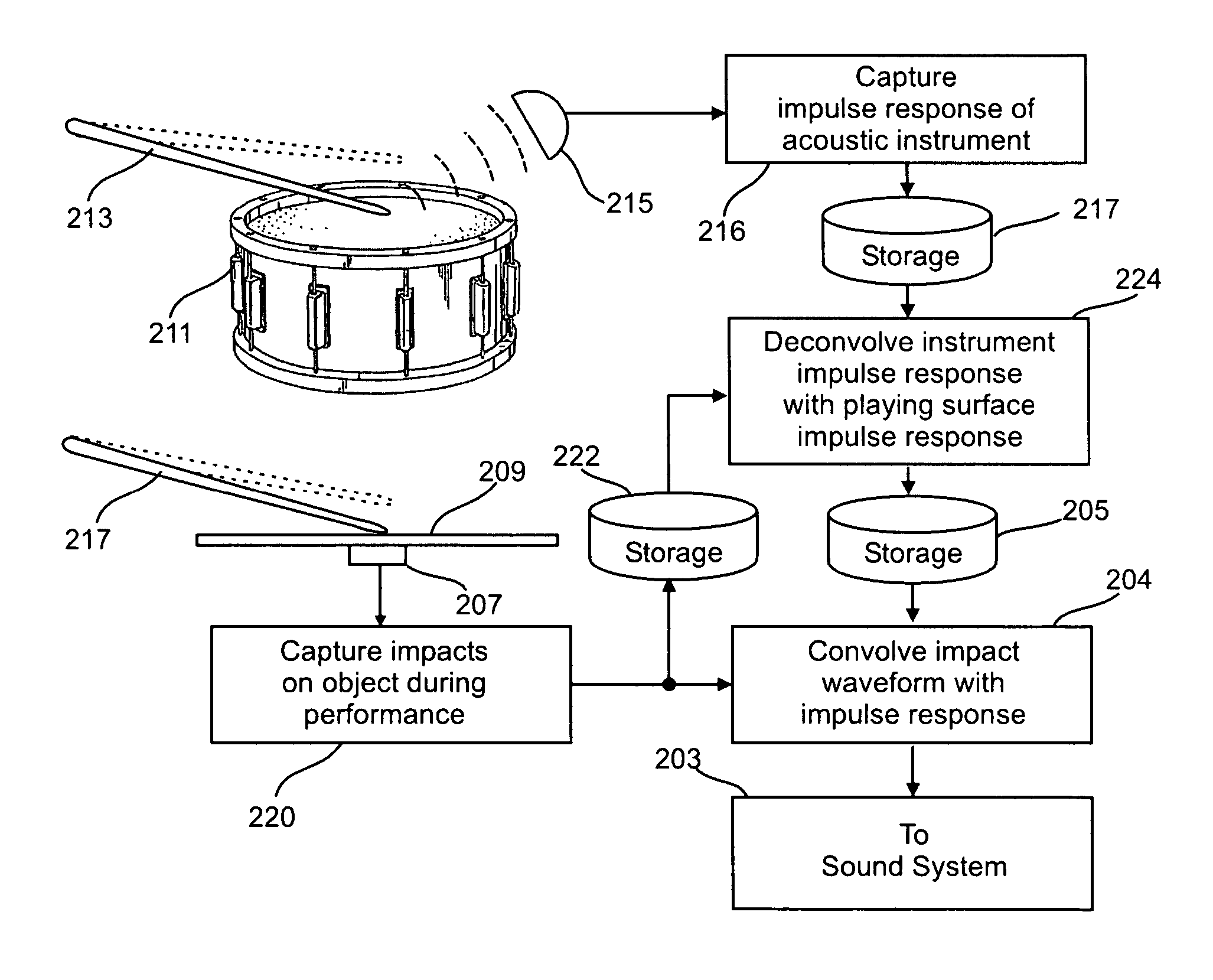
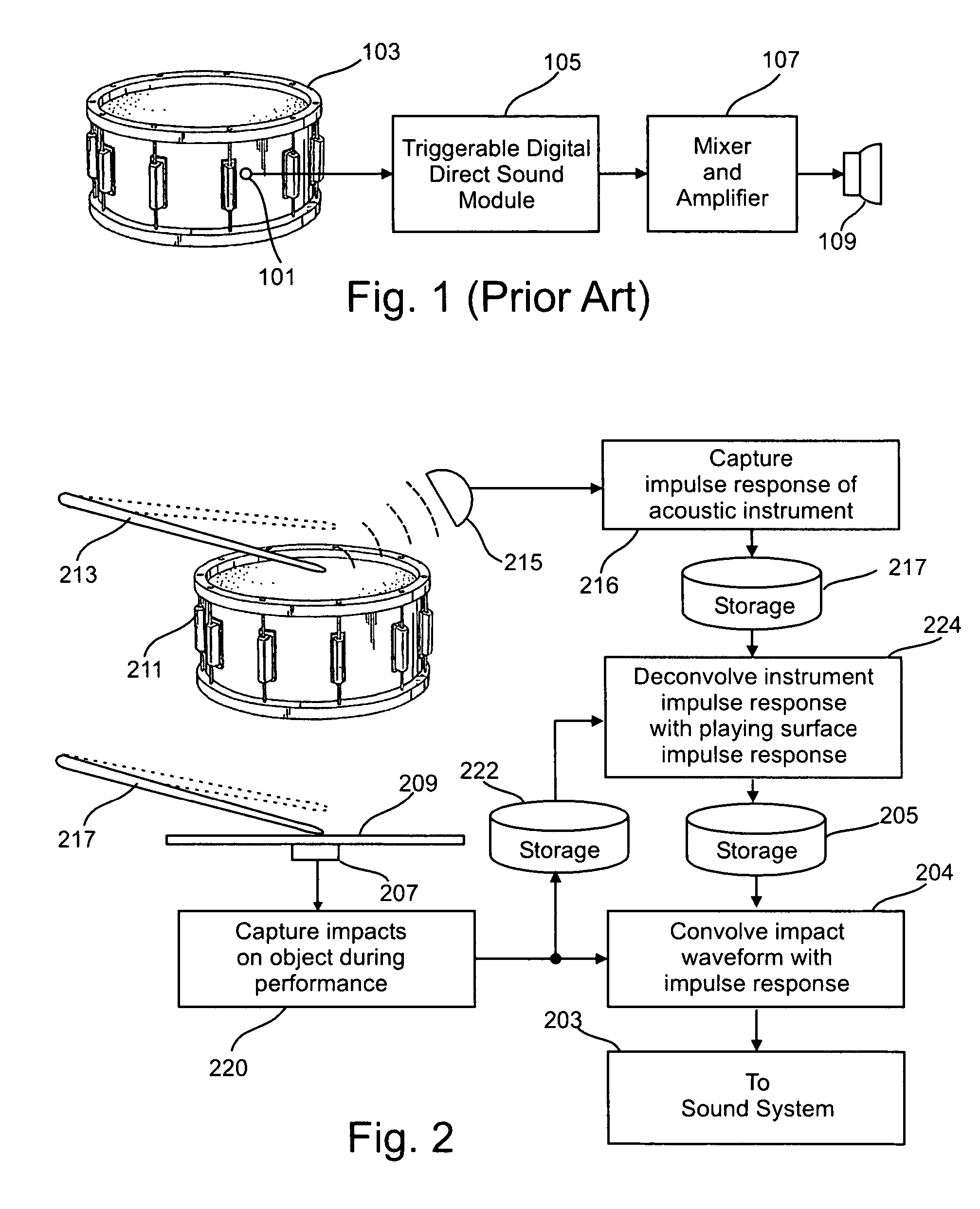
[0017] The preferred embodiment of the invention described below allows a percussionist to make sounds that can not be made with current electronic drum technology. Light brushes, scrapes, and the timbres of the hits on an acoustic instrument are important elements of a percussionist's performance but are often ignored by conventional synthetic percussion devices. Embodiments of the present invention allow a percussionist to “play” a physical object, and the impact forces acting on the object are sensed by a direct contact transducer and processed to create a resulting sound as if the percussionist had played a selected acoustic instrument. For example, the player could play a drum pad with a drum brush, and sensed signal from the pad may be processed to sound like a brush against a cymbal. Brighter hits result in brighter sounds, and small taps and scrapes on the sensing surface sound like the same taps and scrapes played on a cymbal.
[0018] As illustrated in FIG. 1, the preferred ...
PUM
 Login to View More
 Abstract
Description
Claims
Application Information
 Login to View More