
Hsan II related gene and expression products and uses thereof
- Summary
- Abstract
- Description
- Claims
- Application Information
AI Technical Summary
Benefits of technology
Problems solved by technology
Method used
Image



Examples
example 1
Identification of the Genetic Mutation Responsible for Hereditary Sensory and Autonomic Neuropathy—Type II (HSAN II)
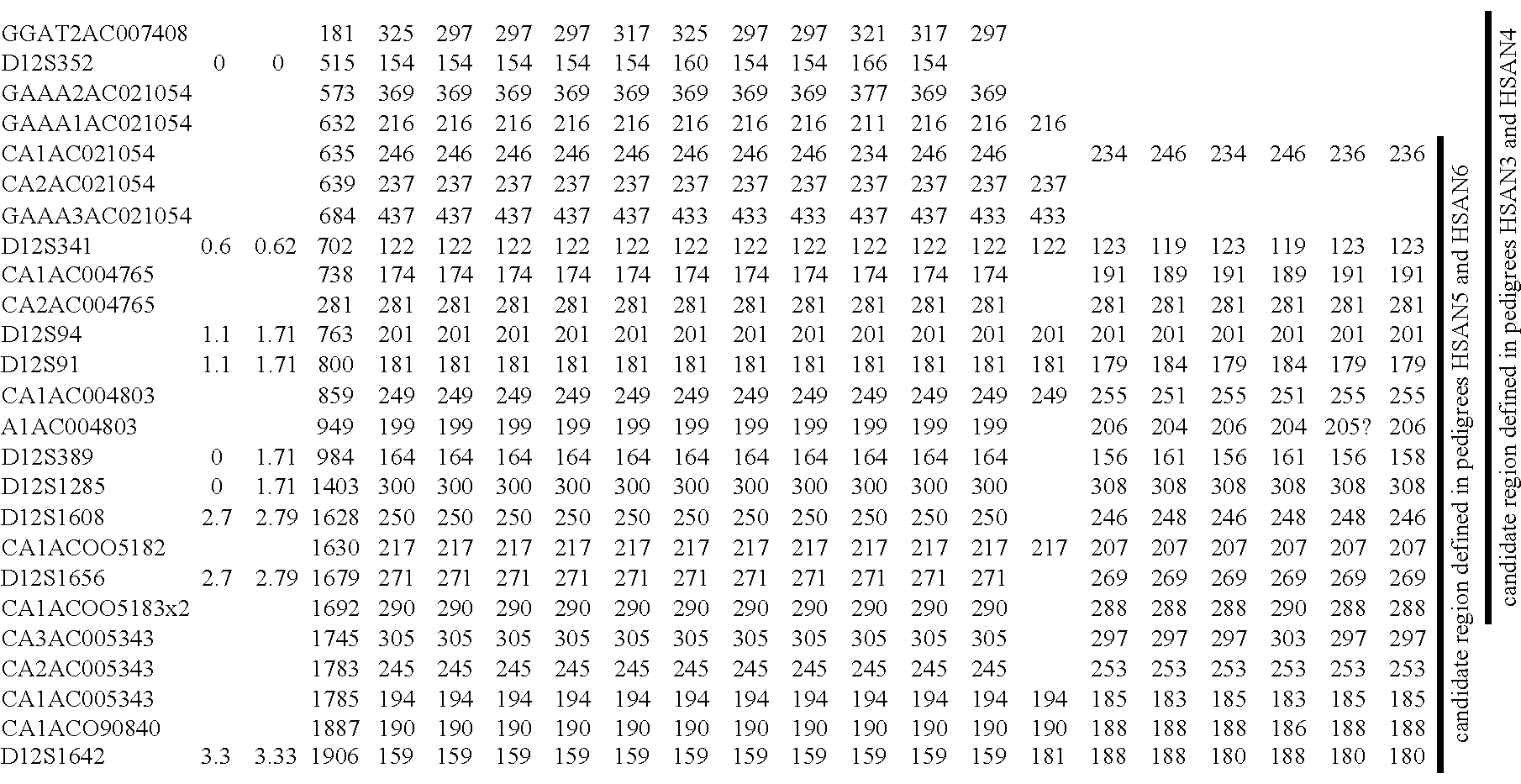
[0201] We performed a genomewide screen in two geographically isolated families, who are likely related, to map the HSAN II locus. We expanded a consanguineous multigenerational family with eight affecteds (HSAN4) from a sibship reported previously and collected a smaller family with two affecteds (HSAN3). Most of the patients live within a 100-mile radius in a geographically isolated region. In both families the mode of inheritance was autosomal recessive and affected members presented with severe and early-onset HSAN II. Sensory loss was predominantly distal, but the progression of the disorder varied, involving the trunk in some patients. Because of the common geographic origin of our subjects and the relationships established through family history, it became clear that the different degrees of sensory loss were part of a continuum of a single disease process, and...
PUM
| Property | Measurement | Unit |
|---|---|---|
| Fraction | aaaaa | aaaaa |
| Fraction | aaaaa | aaaaa |
| Fraction | aaaaa | aaaaa |
Abstract
Description
Claims
Application Information
 Login to View More