
Method, devices and program for computer-aided preventive diagnostics of an aircraft system, using critical event charts
a technology of critical event charts and aircraft systems, applied in the direction of instruments, testing/monitoring control systems, process and machine control, etc., can solve problems such as insufficientness
- Summary
- Abstract
- Description
- Claims
- Application Information
AI Technical Summary
Benefits of technology
Problems solved by technology
Method used
Image

Examples
Embodiment Construction
[0052]In general, the invention relates to a system of preventive diagnosis and failure tolerance analysis for an aircraft system, using critical event charts (or failure condition graphs) constructed here on the basis of fault trees developed during safety studies.
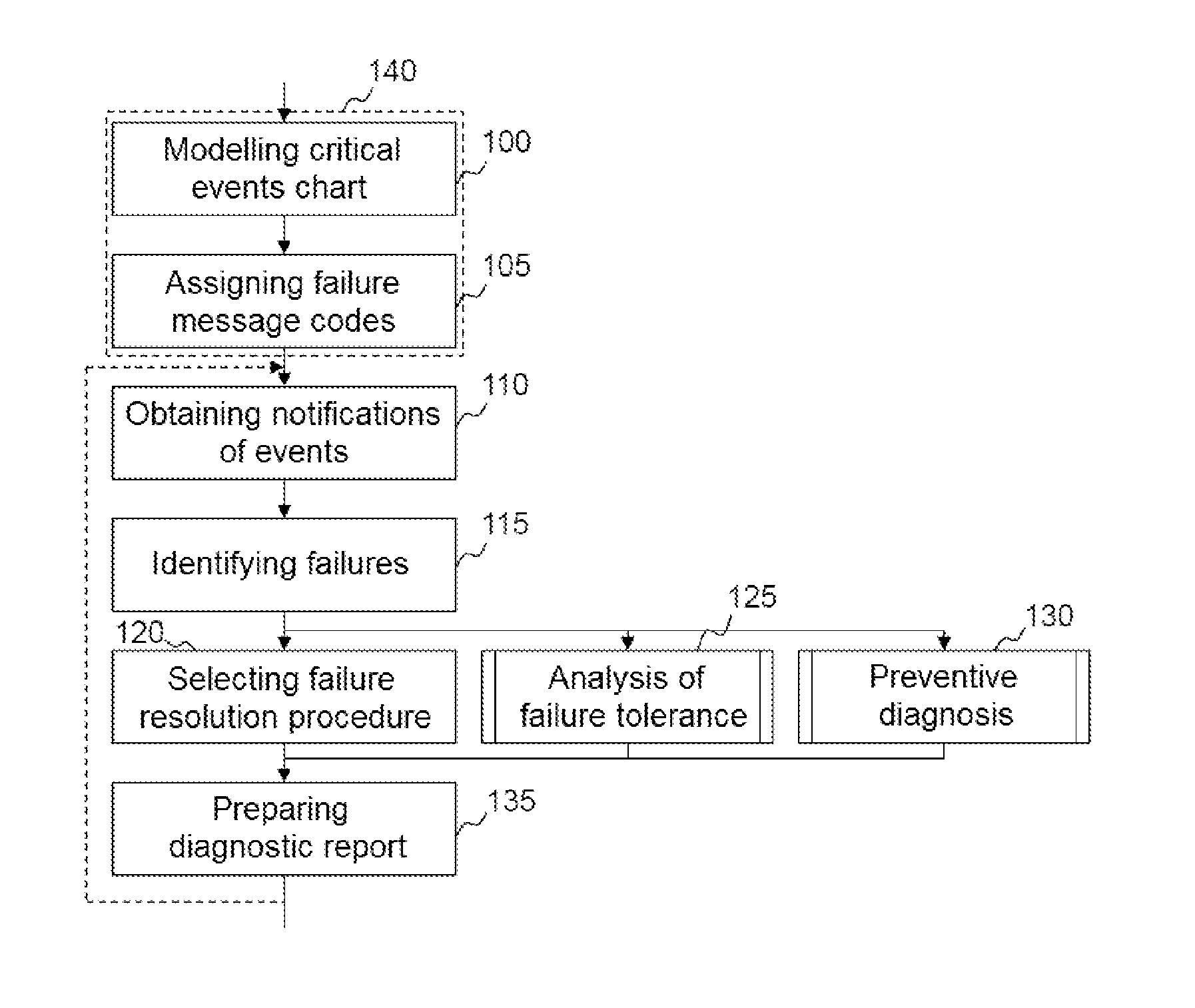
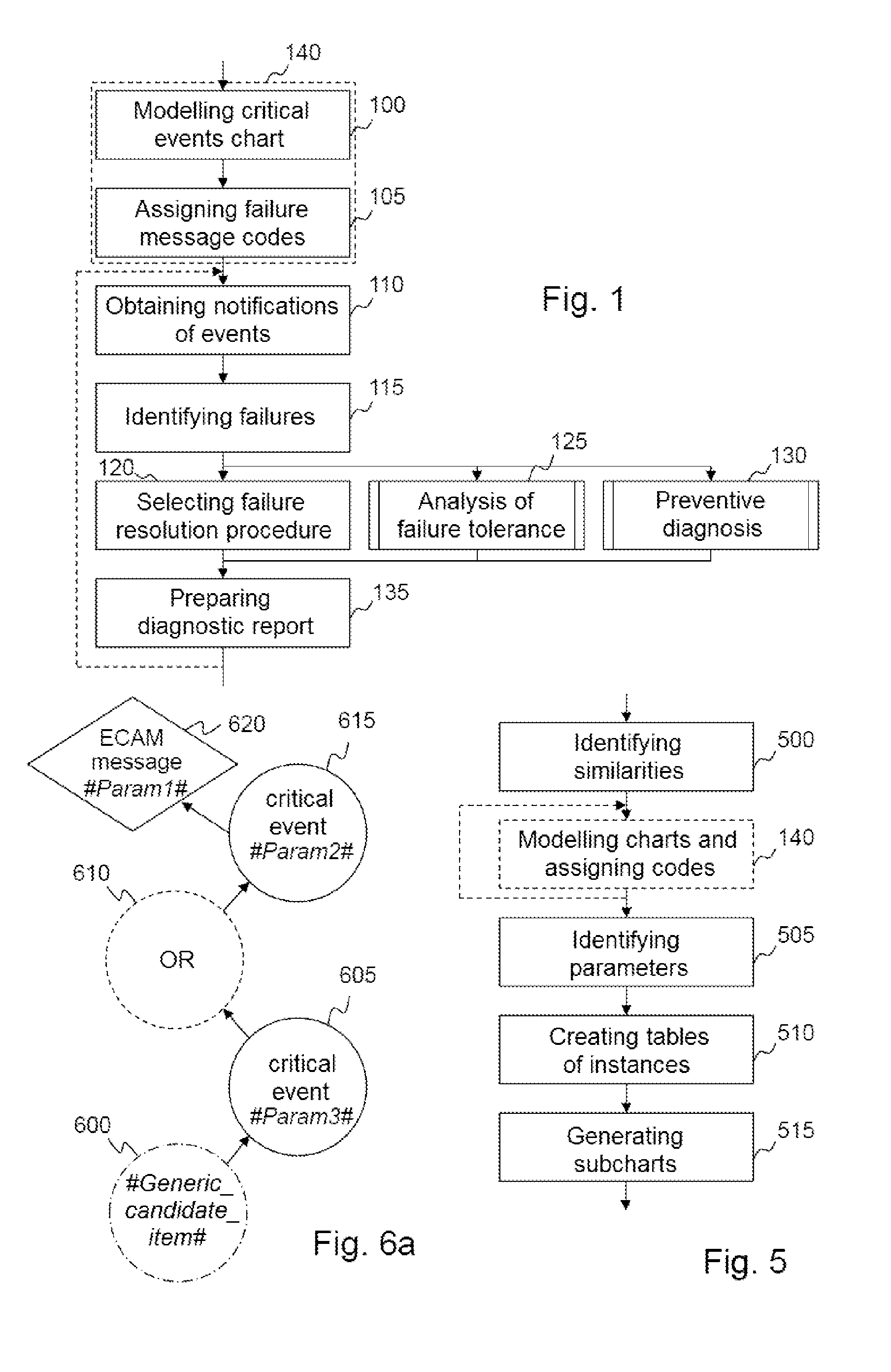
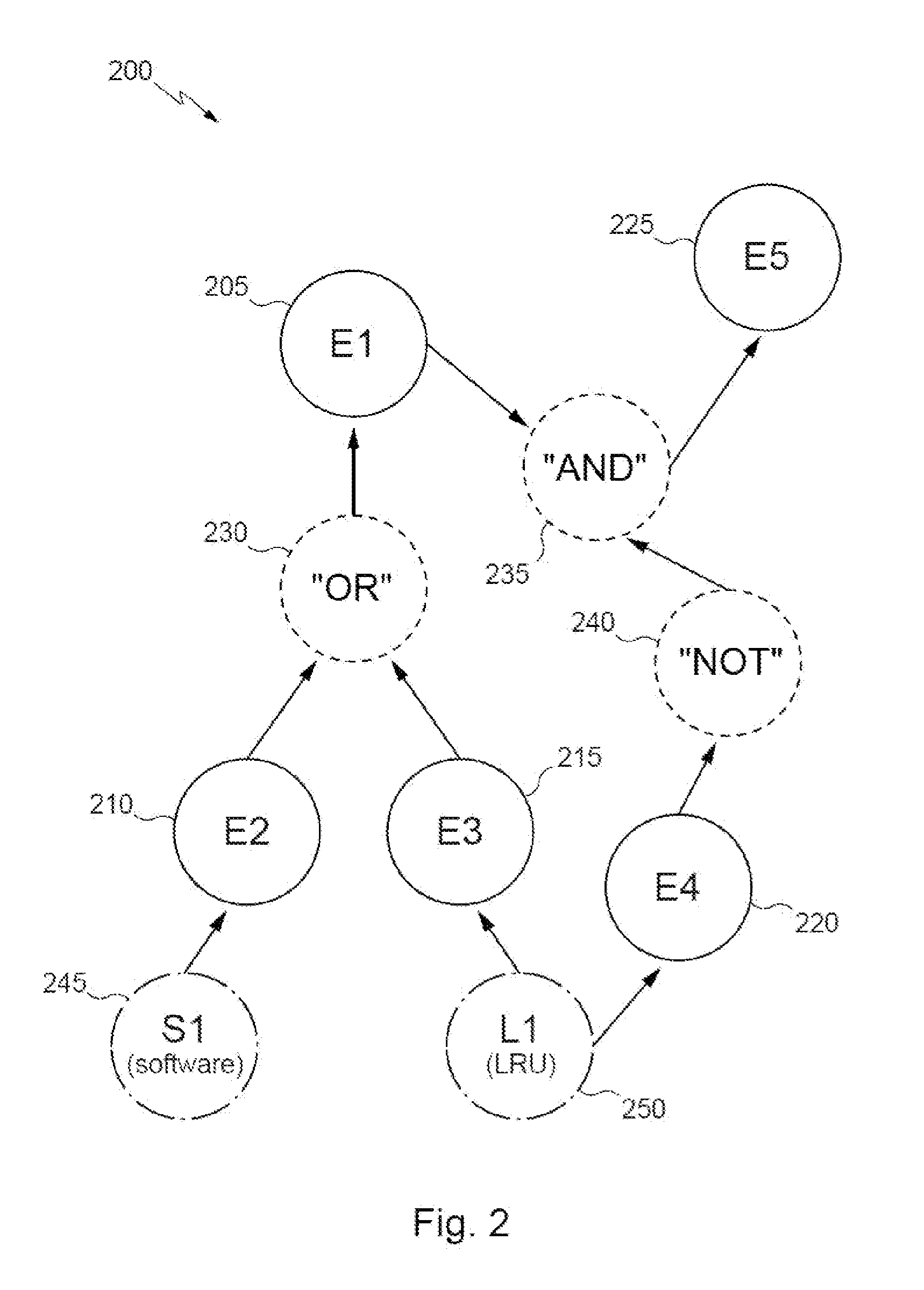
[0053]As shown in FIG. 1, the general method for preparing a diagnostic report is here broken down into several phases. A first phase (phase 100) relates to modelling a critical event chart. An example of such modelling is described with reference to FIGS. 2 and 3. A second phase (phase 105) relates to assigning failure message codes to the previously-modelled critical event chart. A third phase (phase 110) consists of obtaining real-time or deferred event-detection notifications issued by the aircraft monitoring systems. In a fourth phase (phase 115), a failure identification algorithm is executed by a machine in order to provide an aircraft diagnostic aid on the basis of the detected events and of the modelled critical ...
PUM
 Login to View More
 Abstract
Description
Claims
Application Information
 Login to View More