
Synergy-Based Biocontrol of Plant Pathogens
a biocontrol and plant technology, applied in the field of synergy-based biocontrol of plant pathogens, can solve the problems of biocontrol failure, economically important crop disease, etc., and achieve the effects of facilitating plant absorption, strengthening defense, and enhancing plant vigor or growth
- Summary
- Abstract
- Description
- Claims
- Application Information
AI Technical Summary
Benefits of technology
Problems solved by technology
Method used
Image

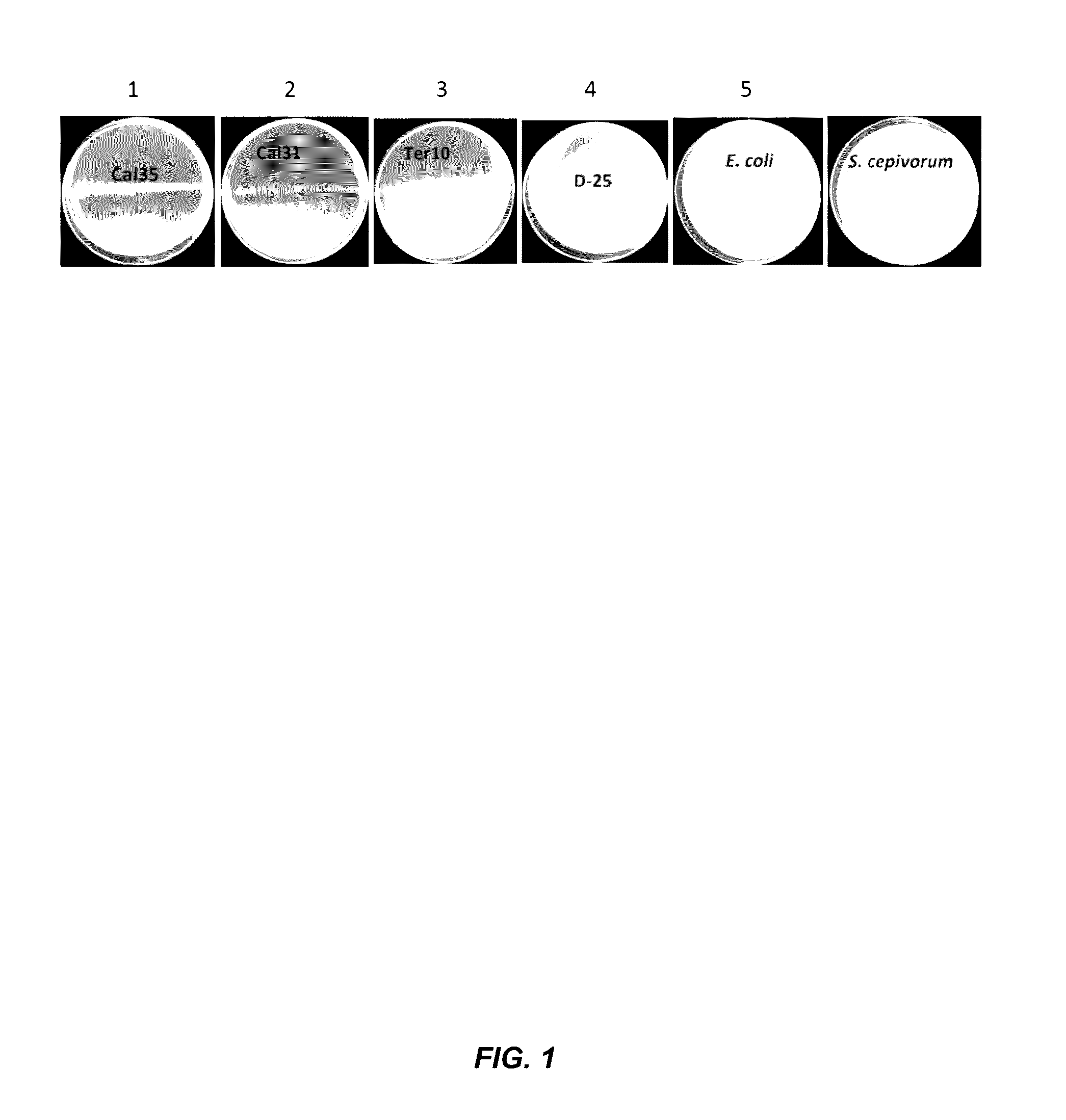
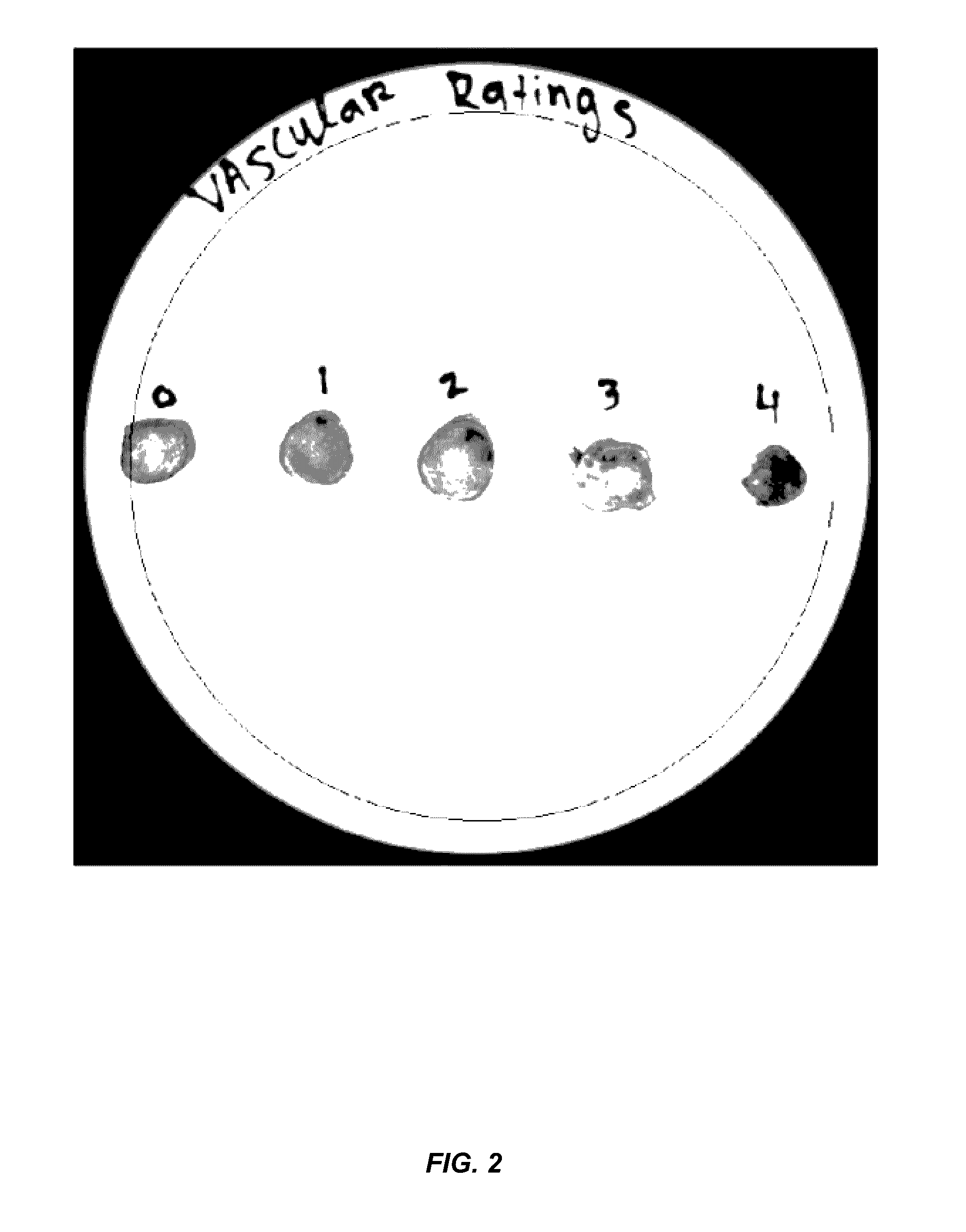
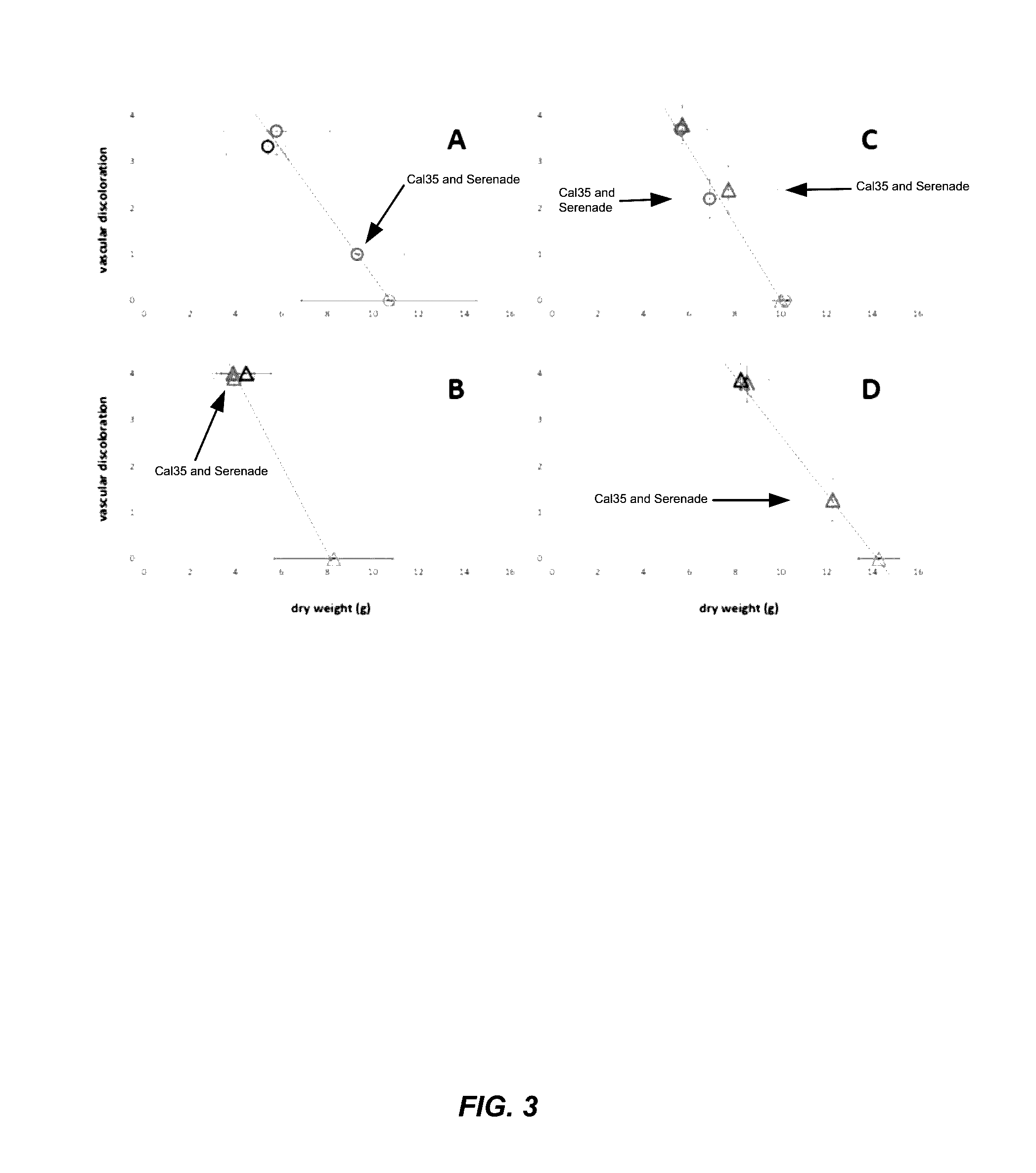
Examples
example 1
Antifungal and Antioomycete Properties of Collimonas Isoaltes and their Use in Synergy-Based Biocontrol of Fusarium Wilt
I. INTRODUCTION
[0112]The bacterial genus Collimonas (Leveau, J. H., S. Uroz, et al. (2010) Environmental Microbiology 12(2): 281-292) comprises three described species: C. fungivorans, C. pratensis, and C. arenae (de Boer, W., J. H. J. Leveau, et al. (2004) International Journal of Systematic and Evolutionary Microbiology 54: 857-864; Höppener-Ogawa, S., W. de Boer, et al. (2008) International Journal of Systematic and Evolutionary Microbiology 58: 414-419). Collimonads have antifungal (de Boer, W., P. J. A. Klein Gunnewiek, et al. (1998) Soil Biology &Biochemistry 30(2): 193-203; Mela, F., K. Fritsche, et al. (2011) ISME J 5(9): 1494-1504), mycophagous (de Boer, W., P. J. A. Klein Gunnewiek, et al. (2001) Applied and Environmental Microbiology 67(8): 3358-3362), chitinolytic (Leveau, J. H. J., S. Gerards, et al. (2006) Journal of Microbiological Methods 66(2): 276...
example 2
Soil Sample Analysis of Collimonads
[0127]A total of 24 soil samples were analyzed for the presence of collimonads. These samples were taken as triplicates from 8 agricultural fields in California that were planted with tomatoes, almonds, alfalfa, strawberry, wheat, lettuce, onion or carrot. Analysis was performed using an enrichment protocol as described before. In short, one gram from each soil sample was resuspended in 10 mL of 1× Basic Salt Solution (de Boer, W., Klein Gunnewiek, P. J. A., Lafeber, P., Janse, J. D., Spit, B. E., Woldendorp, J. W., 1998, Anti-fungal properties of chitinolytic dune soil bacteria. Soil Biology and Biochemistry. 30,193-203) by vortexing at maximum speed for 45 seconds. One milliliter of each suspension was inoculated into 50 ml of tryptic soy broth (Oxoid) with 50 mg natacid and 30 mg nalidixic acid per liter and incubated at 20° C. for 3 days at 200 rpm, after which a 100-μl aliquot was transferred to 50 mL of chitin broth (modified from de Boer, W....
PUM
 Login to View More
 Abstract
Description
Claims
Application Information
 Login to View More