
Surface-modified nanospheres encapsulating antigen-binding molecules
a technology of surface modification and antigen binding molecules, which is applied in the direction of antibody medical ingredients, immunological disorders, drug compositions, etc., can solve the problems of antibody encapsulation by nanospheres, antibody encapsulation is normally not able to cross biological barriers, and antibodies are potentially susceptible to proteolytic degradation, etc., to achieve the effect of facilitating cellular uptake of nanospheres
- Summary
- Abstract
- Description
- Claims
- Application Information
AI Technical Summary
Benefits of technology
Problems solved by technology
Method used
Image

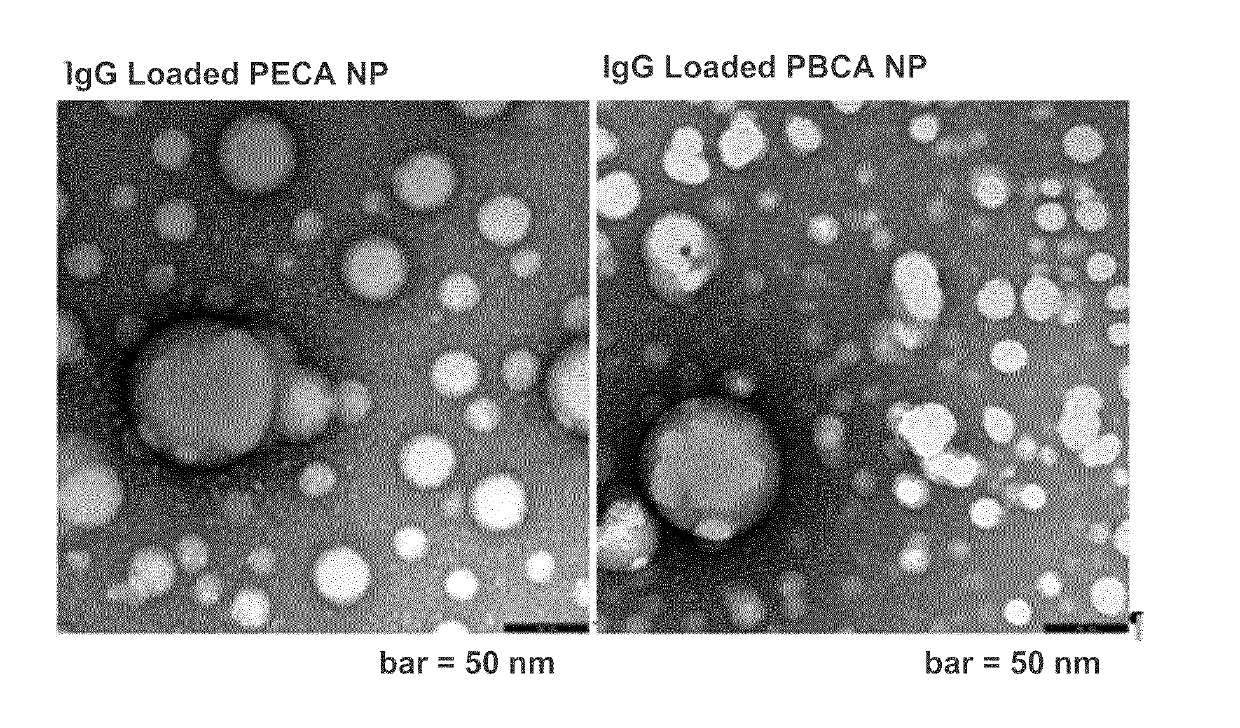
Examples
example 1 preparation
of Polymeric Nanospheres Loaded with Anti-Biotin Goat IgG
[0085]IgG-loaded poly(n-butyl 2-cyanoacrylate) (PBCA) nanospheres were prepared as follows:
[0086]250 μl n-butyl 2-cyanoacrylate (monomer) were mixed with 21.5 μl soybean oil so as to obtain an oil phase. 16.25 mg poloxamer 188 and 6.5 mg sodium dodecyl sulfate (SDS) were mixed with 1.3 ml 0.1 M phosphoric acid so as to obtain an aqueous phase. Both phases were kept on ice. The phases were mixed and the mixture was homogenized using a probe sonicator (Hielscher Ultrasonics GmbH, Germany, 70% amplitude, 1 cycle) for two minutes while still cooling on ice. 0.1 N sodium hydroxide (NaOH) was added dropwise to the obtained emulsion while stirring (700 rpm). As soon as the pH of the emulsion reached 5.0, 1 mg anti-biotin goat IgG was added slowly while continuing stirring. After addition of the IgG, stirring of emulsion was continued for about 10 min at room temperature. Then, the pH was increased to 7.0 by dropwise addition of 0.1 N...
example 3
Antigen-Binding Activity of Encapsulated IgG
[0090]250 μl n-butyl 2-cyanoacrylate (monomer) were mixed with 21.5 μl soybean oil so as to obtain an oil phase. 16.25 mg poloxamer 188 and 6.5 mg sodium dodecyl sulfate (SDS) were mixed with 1.3 ml 0.1 M phosphoric acid so as to obtain an aqueous phase. Both phases were kept on ice. The phases were mixed and the mixture was homogenized using a probe sonicator (Hielscher Ultrasonics GmbH, Germany, 100% amplitude, 1 cycle) for five minutes while still cooling on ice so as to obtain an emulsion. 500 μl of the emulsion was diluted with 800 μl aqueous phase having a composition as indicated above. 0.1 N sodium hydroxide (NaOH) was added dropwise while stirring (300-500 rpm). As soon as the pH of the emulsion reached 5, 1 mg non-specific goat IgG (without specific binding activity to biotin) or 1 mg anti-biotin goat IgG (binding specifically to biotin) was added slowly while continuing stirring. After addition of the IgG, the pH was increased t...
example 4 biological
Activity of Encapsulated IgG
[0094]The biological activity of encapsulated IgG was determined in PBCA nanospheres loaded with a monoclonal antibody (mab) against Repulsive Guidance Molecule A (RGMa) as follows:
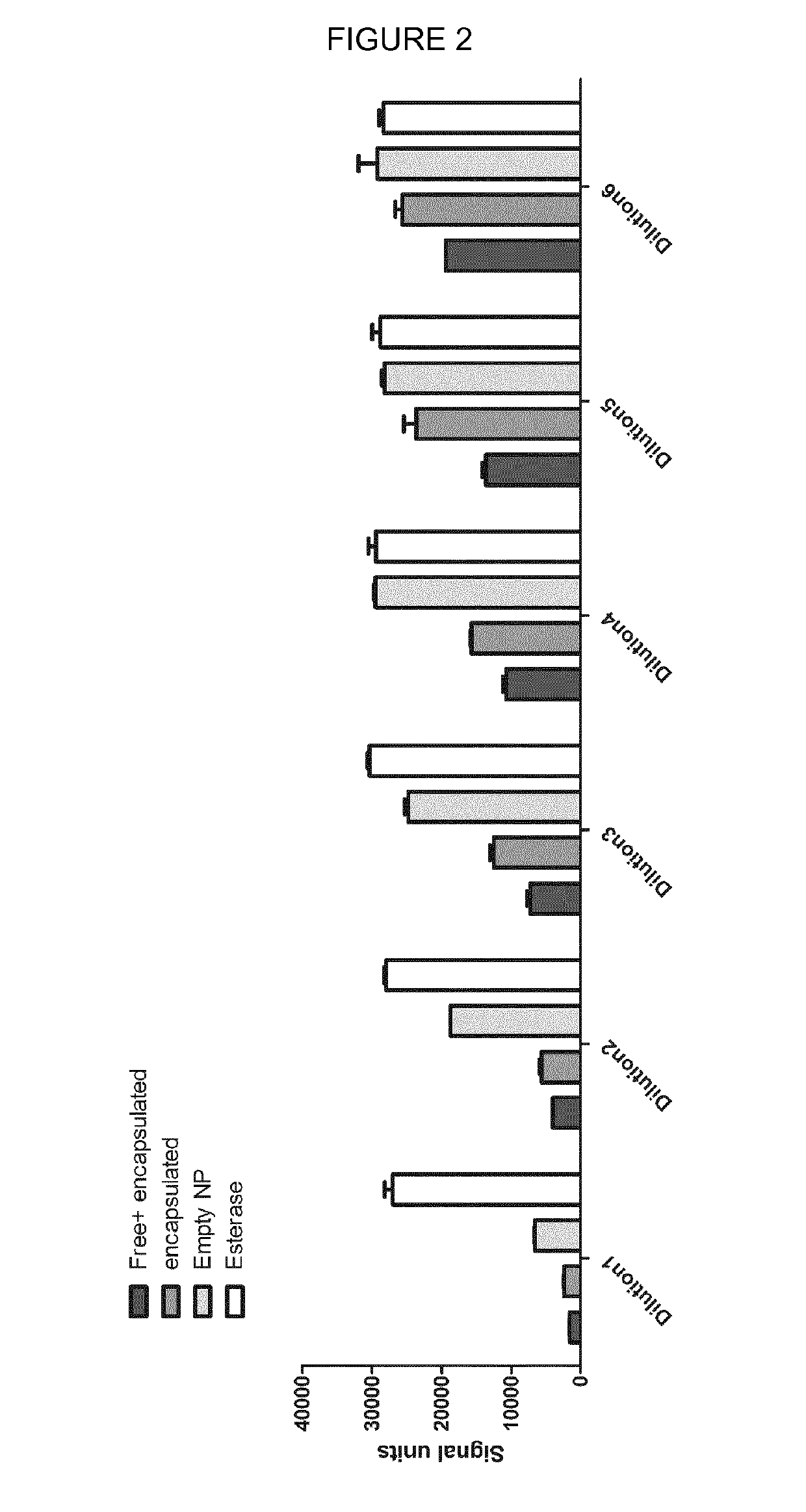
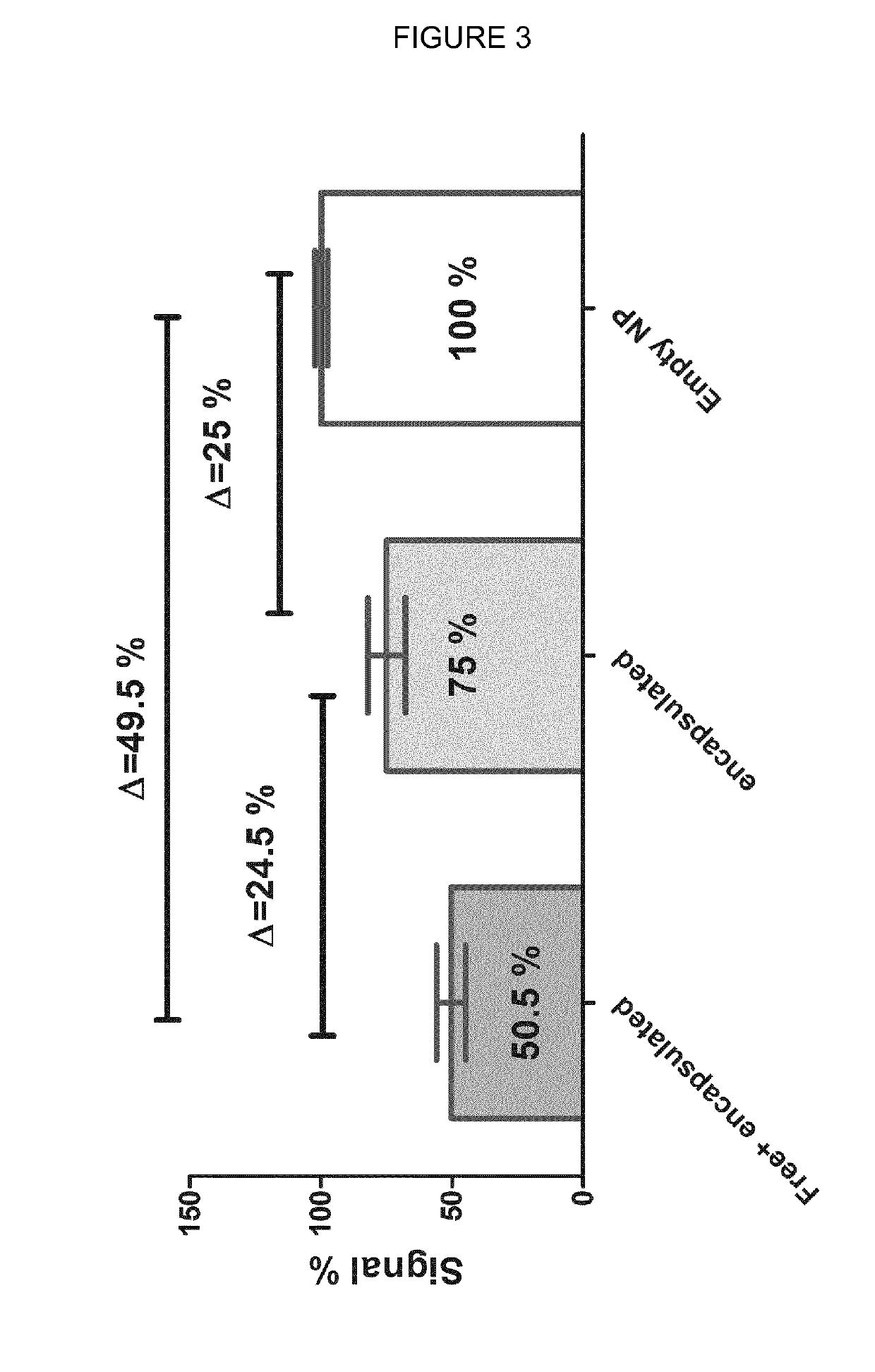
[0095]A suspension of anti-RGMa mab-loaded PBCA nanospheres was prepared using the method described in EXAMPLE 1 (adding 2.26 mg of the mab instead of 1 mg goat IgG) and contained free and encapsulated mab (sample name after esterase treatment: “Free+encapsulated”). The nanospheres of part of the suspension were sepa-rated from free mab by ultrafiltration (Amicon Cell and Biomax 500 kDa filter membrane), thus obtaining a sample that contained only encapsulated mab (sample name after esterase treatment: “encapsulated”). Part of each sample (9.55 mg / ml PBCA, 1:10 dilution) was treated with porcine liver esterase (Sigma Aldrich Co., Germany cat. no. E2884, ≥150 U / ml, final concentration: 0.22 mg / ml) for 4 h at 37° C. while shaking to release encapsulated mab from the nanospheres. ...
PUM
| Property | Measurement | Unit |
|---|---|---|
| diameter | aaaaa | aaaaa |
| polydispersity | aaaaa | aaaaa |
| pH | aaaaa | aaaaa |
Abstract
Description
Claims
Application Information
 Login to View More