
Universal book holder
- Summary
- Abstract
- Description
- Claims
- Application Information
AI Technical Summary
Benefits of technology
Problems solved by technology
Method used
Image

Examples
Embodiment Construction
In the following description as well as in the claims the term "book" or "books" will also represent magazines, newspapers, pictures, and other matter being examined visually. Similarly the terms "front member" and "transparent front member" will be used to represent any structure which is transparent and rigid enough to allow sufficient visual access to, and support of, a book to serve the purpose, including filamentary arrays and grids.
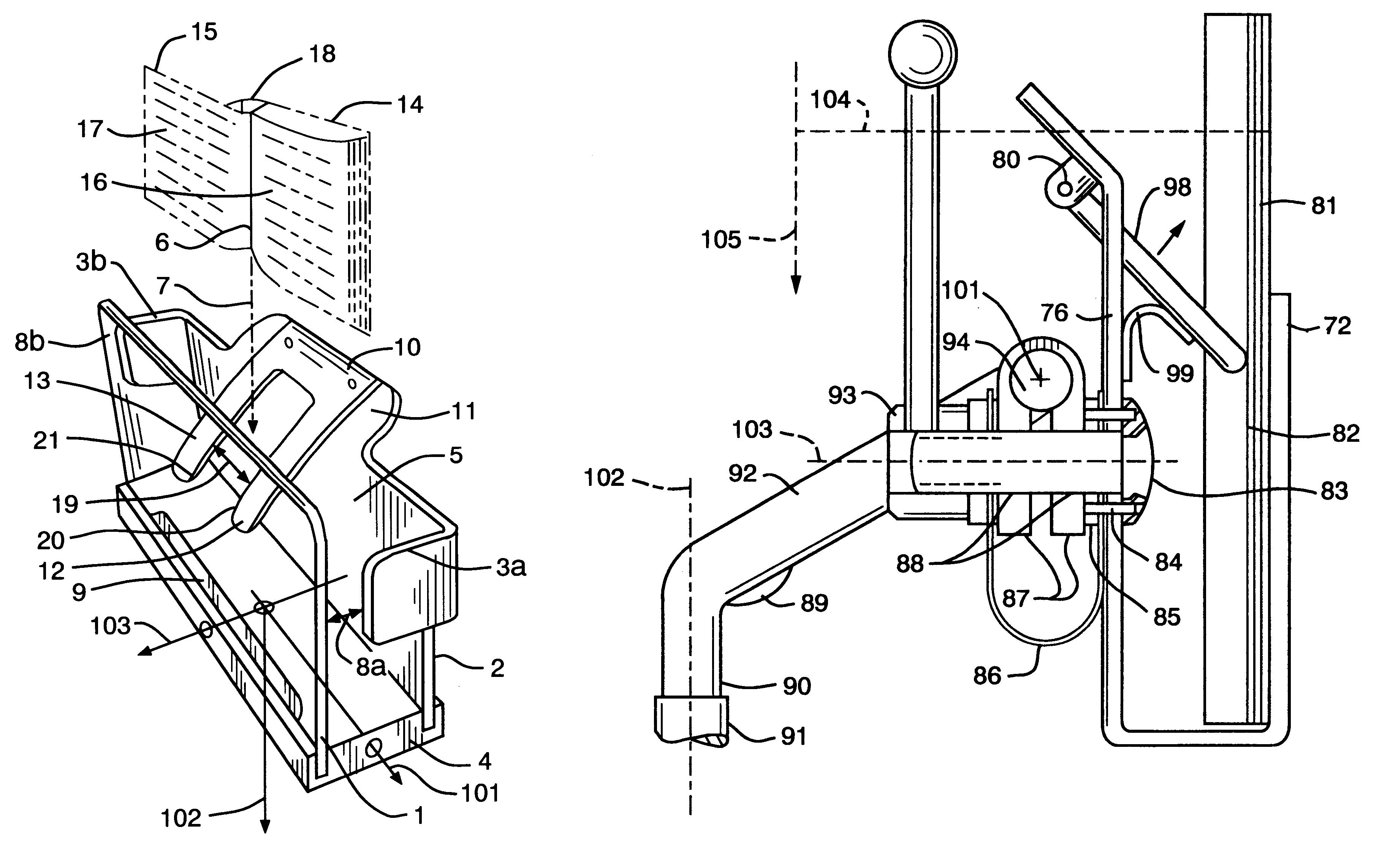
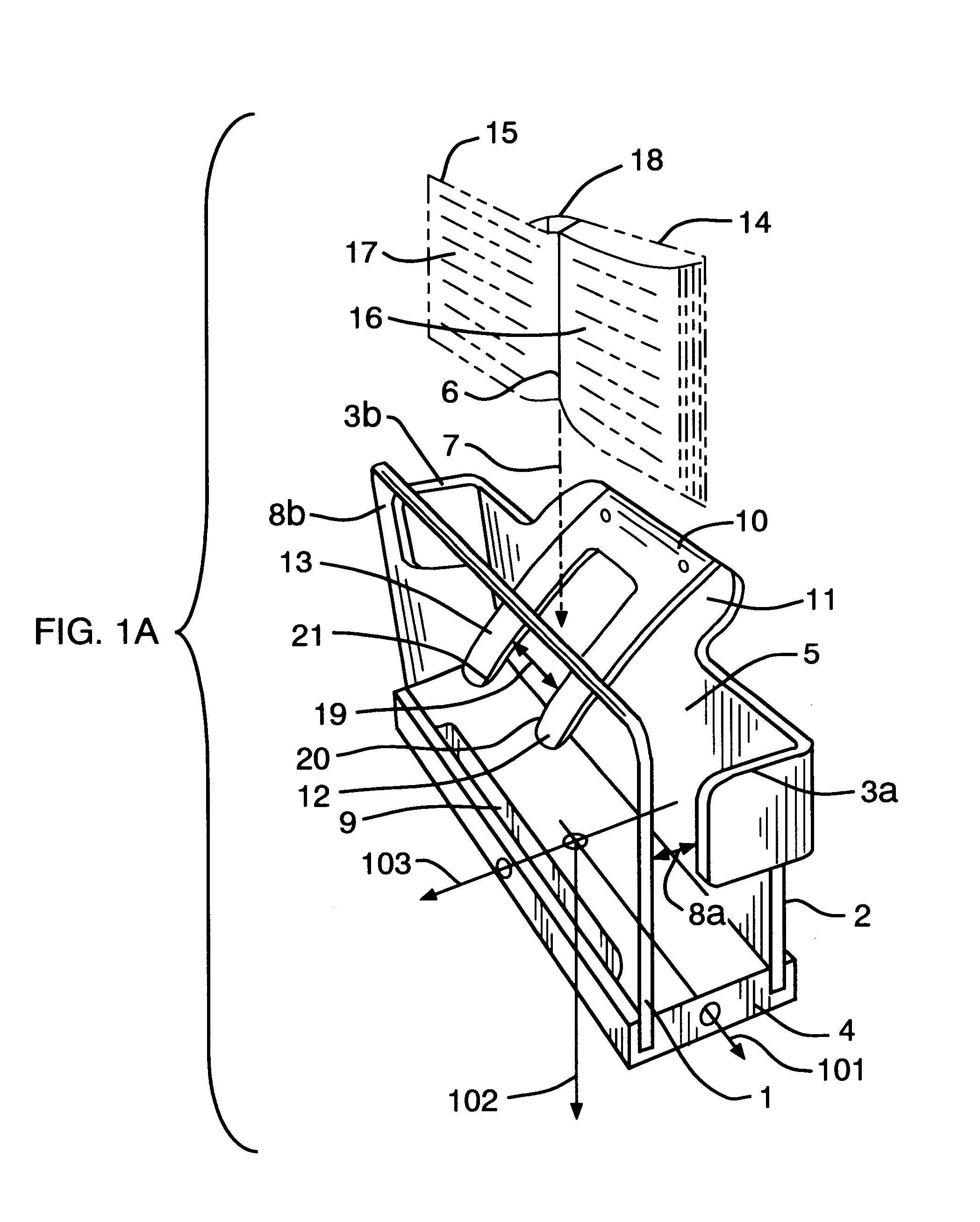
Referring now to FIG. 1A, a transparent front plate 1 and a back plate 2 with side wings 3a and 3b are attached to the base member 4 so as to form a book receiver 5 of generally rectangular cross section. An open book 6 is inserted from above into the enclosure 5 as indicated by arrow 7, to be supported by the base member 4. The figure shows spaces 8a and 8b between the wings 3a and 3b respectively and the front plate to allow open magazines, which usually are wider than most books, to protrude on either side. Another configuration of the spaces 1c ...
PUM
 Login to View More
 Abstract
Description
Claims
Application Information
 Login to View More