
Garden hose assembly
a technology for garden hoses and assemblies, applied in the direction of flexible pipes, pipe couplings, couplings, etc., can solve the problems that the garden hoses have always presented a tripping danger for people not seeing the garden hose, and achieve the effect of preventing tripping on the hos
- Summary
- Abstract
- Description
- Claims
- Application Information
AI Technical Summary
Benefits of technology
Problems solved by technology
Method used
Image

Examples
Embodiment Construction
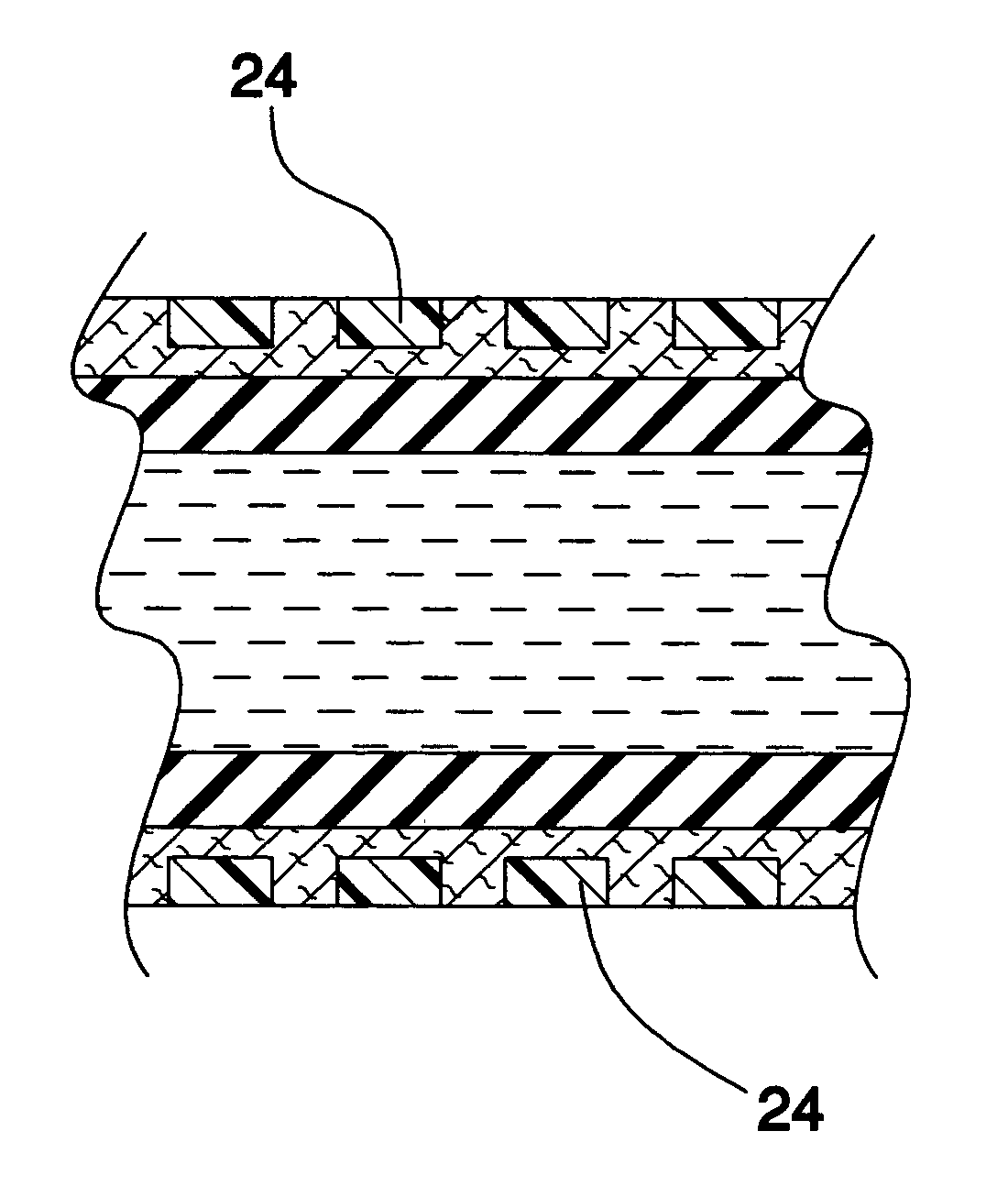
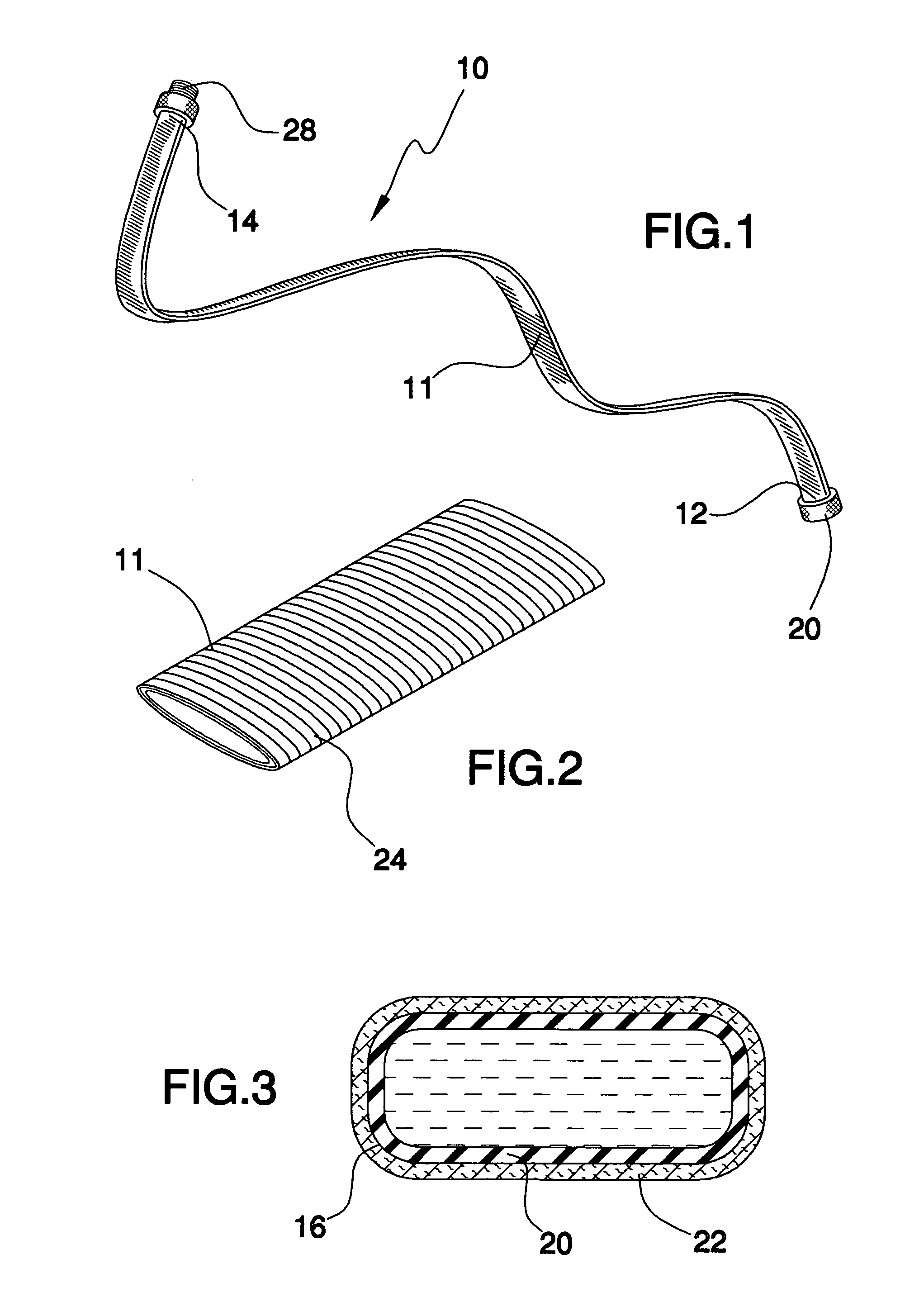
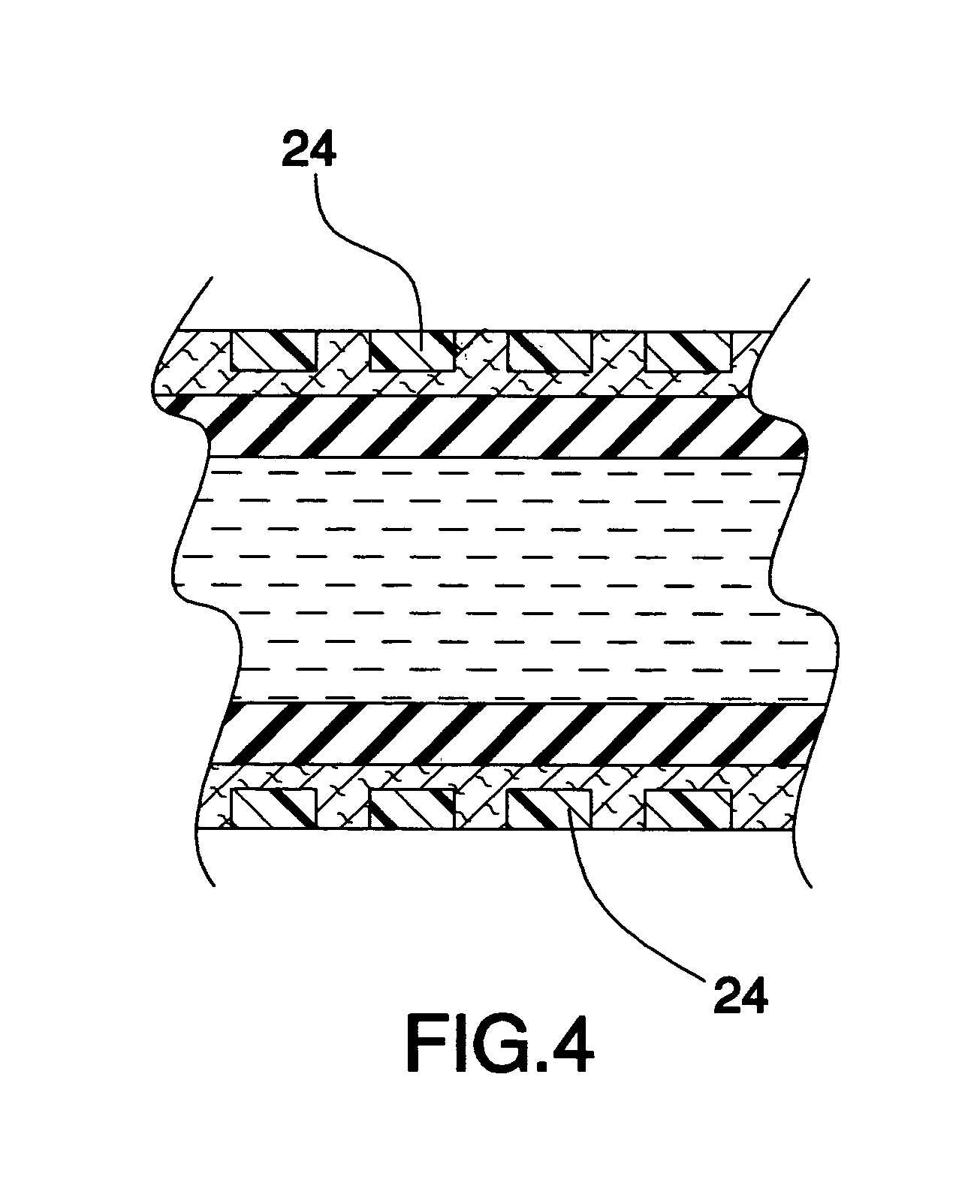
[0015]With reference now to the drawings, and in particular to FIGS. 1 through 4 thereof, a new garden hose device embodying the principles and concepts of the present invention and generally designated by the reference numeral 10 will be described.
[0016]As best illustrated in FIGS. 1 through 4, the garden hose assembly 10 generally comprises an elongated and flexible tubular member 11 including an open first end 12, an open second end 14 and a peripheral wall 18 extending between the first 12 and second 14 open ends. A cross-section taken traversely to a longitudinal axis of the tubular member 11, as shown in FIG. 3, has a generally oblong shape when the tubular member 11 is filled with a fluid and a substantially flattened shape when the tubular member 11 is not filled with a fluid. The tubular member 11 has an outer surface colored a fluorescent color. The fluorescent color ideally comprises an orange color though yellow may also be used. Preferably, the peripheral wall 16 includ...
PUM
 Login to View More
 Abstract
Description
Claims
Application Information
 Login to View More