Method and system of individualizing tone-reproduction curves calibration and applying thereof

a tone-reproduction curve and calibration method technology, applied in the field of calibration and operation of electronic printer output devices, can solve the problems of printing devices that may drift away from the ideal set point, the tone of the tone may prematurely appear saturated, and the user cannot specify a specific trc based on media-typ

US6999199B2Inactive Publication Date: 2006-02-14XEROX CORP
11 Cites 24 Cited by

Patent Information

Authority / Receiving Office
US · United States
Patent Type
Patents(United States)
Current Assignee / Owner
Publication Date
2006-02-14
Estimated Expiration
Not applicable · inactive patent

Smart Images

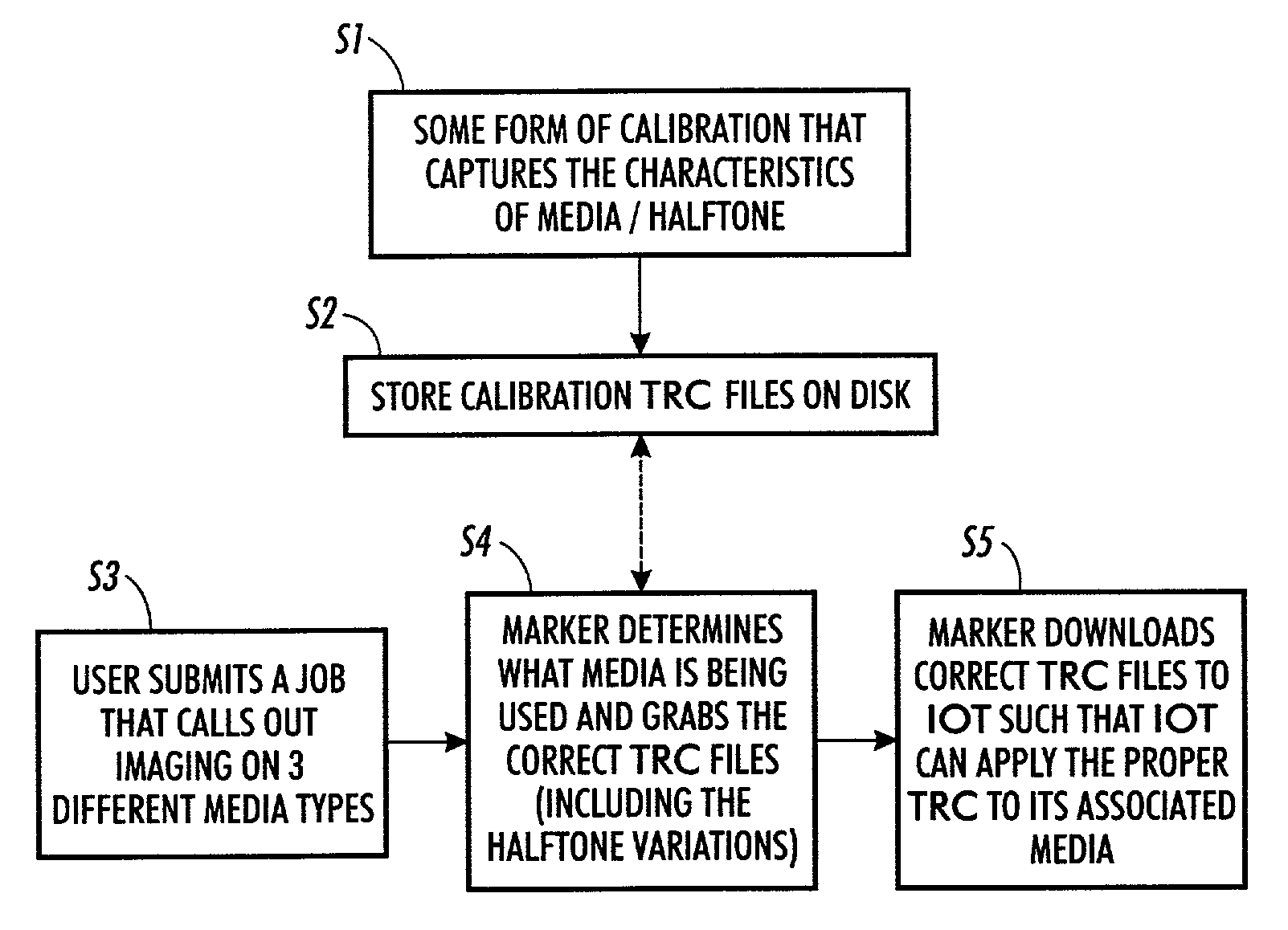
  • Figure 1
    Figure 1
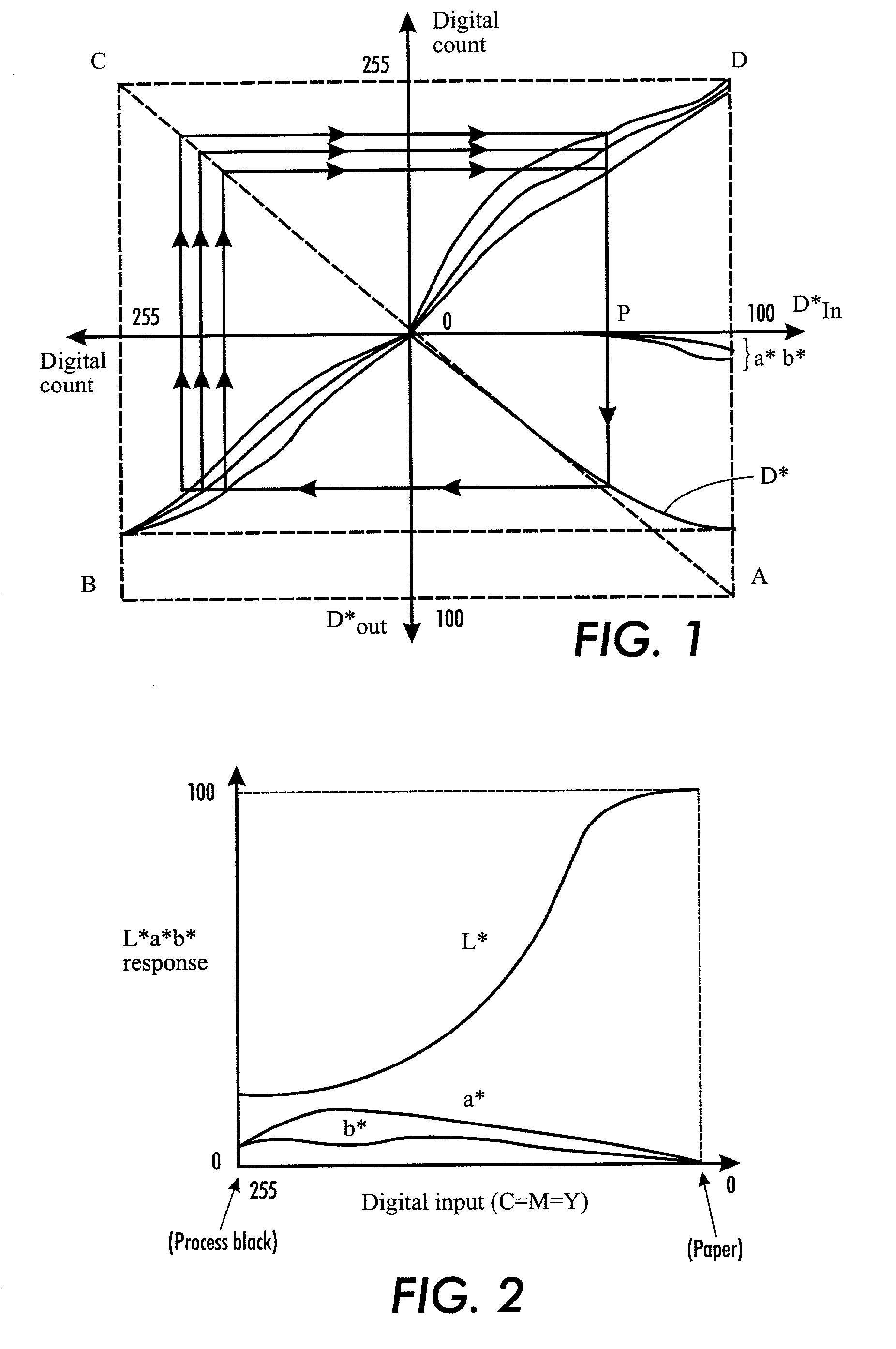
  • Figure 2
    Figure 2
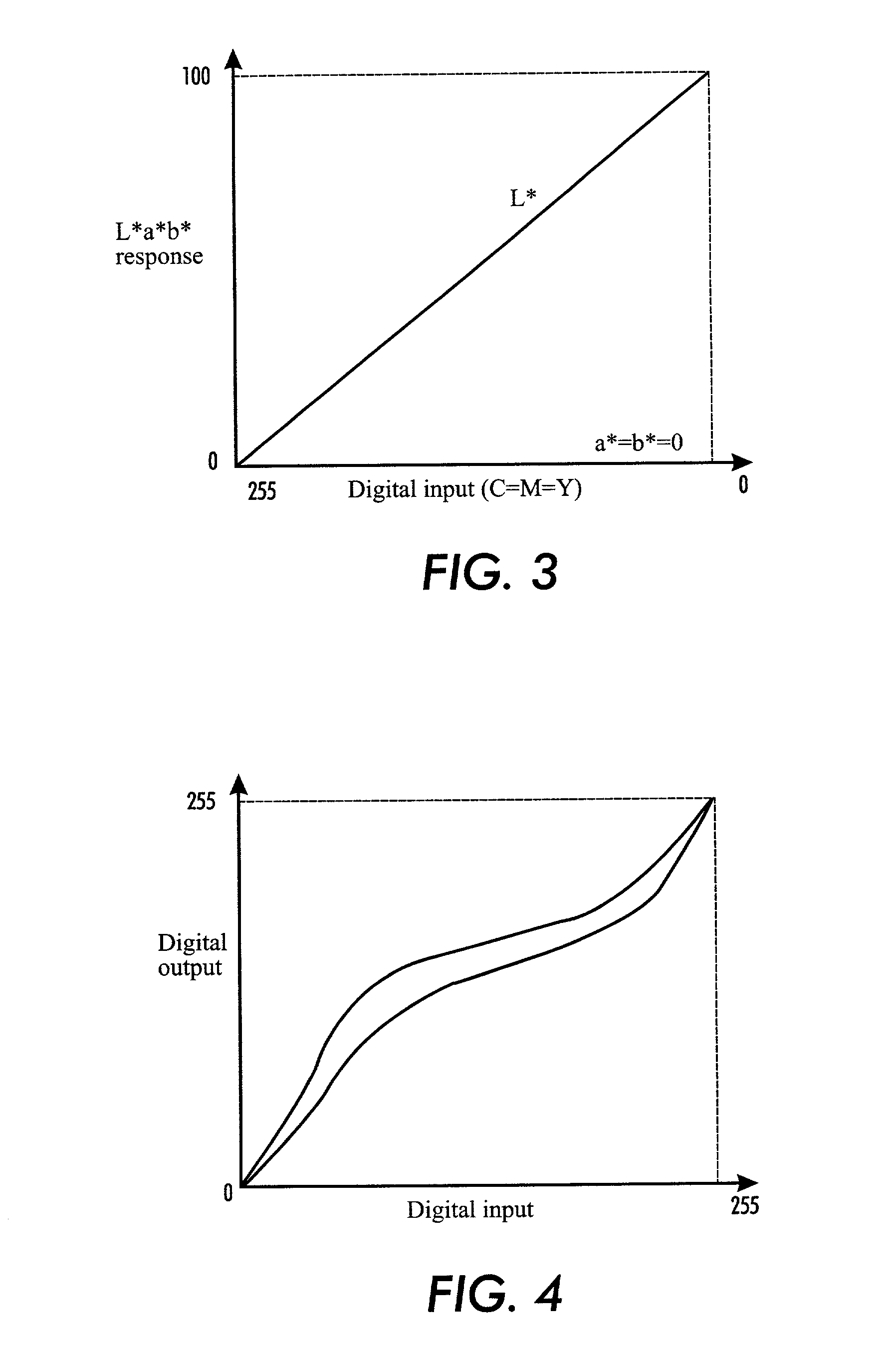
  • Figure 3
    Figure 3
Patent Text Reader

Abstract

A method and system updates individualized calibrated tone-reproduction curves. A plurality of predetermined stored calibrated tone-reproduction curves are used, each predetermined stored calibrated tone-reproduction curve corresponding to a distinct media type and halftone type combination along with a plurality of predetermined relationships between each stored calibrated tone-reproduction curve and a reference media type and reference halftone type combination. A new tone-reproduction curve corresponding to a reference media type and reference halftone type combination calibration operation is generated, and each predetermined stored calibrated tone-reproduction curves based on the newly generated tone-reproduction curve corresponding to the reference media type and reference halftone type combination and the plurality of predetermined relationships between each stored calibrated tone-reproduction curve and the reference media type and reference halftone type combination is updated. The TRCs can be applied upon a page basis. Moreover, generated TRCs can be mapped to existing TRCs to save memory.
Need to check novelty before this filing date? Find Prior Art

Description

BACKGROUND OF THE PRESENT INVENTION

[0001] The present invention relates to calibrating and operating an electronic printer output device. It finds particular application in conjunction with calibrating an electronic printer output device using a tone reproduction curve (“TRC”) and will be described with particular reference thereto. Moreover, the present invention also relates to applying a TRC from a plurality of TRCs on a media basis within the printing of a single job. Furthermore, the present invention is directed to calibrating a plurality of TRCs based the calibration of a single media / halftone combination TRC based on a plurality of relationships between the single media / halftone combination TRC and the plurality of TRCs. It will be appreciated, however, that the present invention is also amenable to other like applications.

[0002] An electronic printer output device (“printing device”), also referred to as an image output terminal (“IOT”), is generally capable of producing colo...

Examples

Embodiment Construction

[0034]Ideally, to enable a printing device to operate optimally, the printer, or more likely, the digital front end (“DFE”) of the printing device would have all possible TRCs representing all possible media / halftone interactions or combinations. To have realize such a state, the operator would need to calibrate for each for every media / halftone combination. Not only would the initial calibrations need to take place, each TRC would need to be recalibrated, thereby resulting in a large amount of downtime for the printing device. Conventionally, printing systems only allow the operator to calibrate for the media that is going to be used at that moment by the printing device. Again, this causes large amount of downtime if the printing device is continually changing media.

[0035]To better understand the aspects and advantages of the present invention, the process of TRC calibration will be explained. To facilitate this explanation, a few terms will be defined at the outset. In this expla...