
Liquid crystal display device with pixel electrode having trapezoidal shape
a liquid crystal display and trapezoidal technology, applied in static indicating devices, instruments, non-linear optics, etc., can solve the problems of difficult electric field formation and increase in manufacturing costs, and achieve wide viewing angle characteristics, improve transmittance, and suppress manufacturing costs
- Summary
- Abstract
- Description
- Claims
- Application Information
AI Technical Summary
Benefits of technology
Problems solved by technology
Method used
Image

Examples
Embodiment Construction
[0027]A liquid crystal display device according to an embodiment of the present invention will now be described with reference to the accompanying drawings. In the description below, exemplification is made of a liquid crystal mode in which an array substrate includes a pixel electrode, a counter-substrate includes a counter-electrode, and liquid crystal molecules are switched by mainly using a transverse electric field which is formed between the pixel electrode and the counter-electrode (i.e. an electric field which is substantially parallel to the major surface of the array substrate).
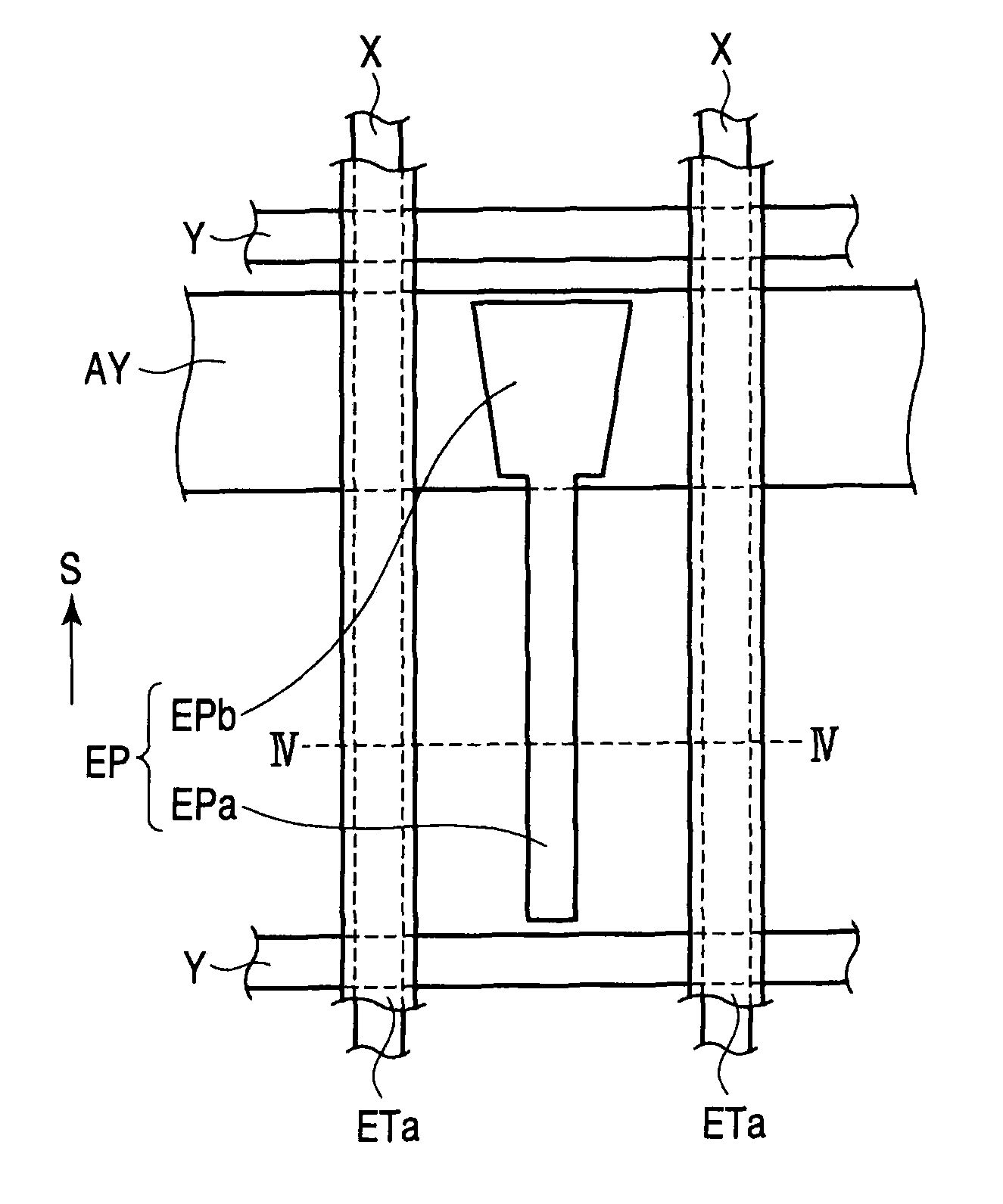
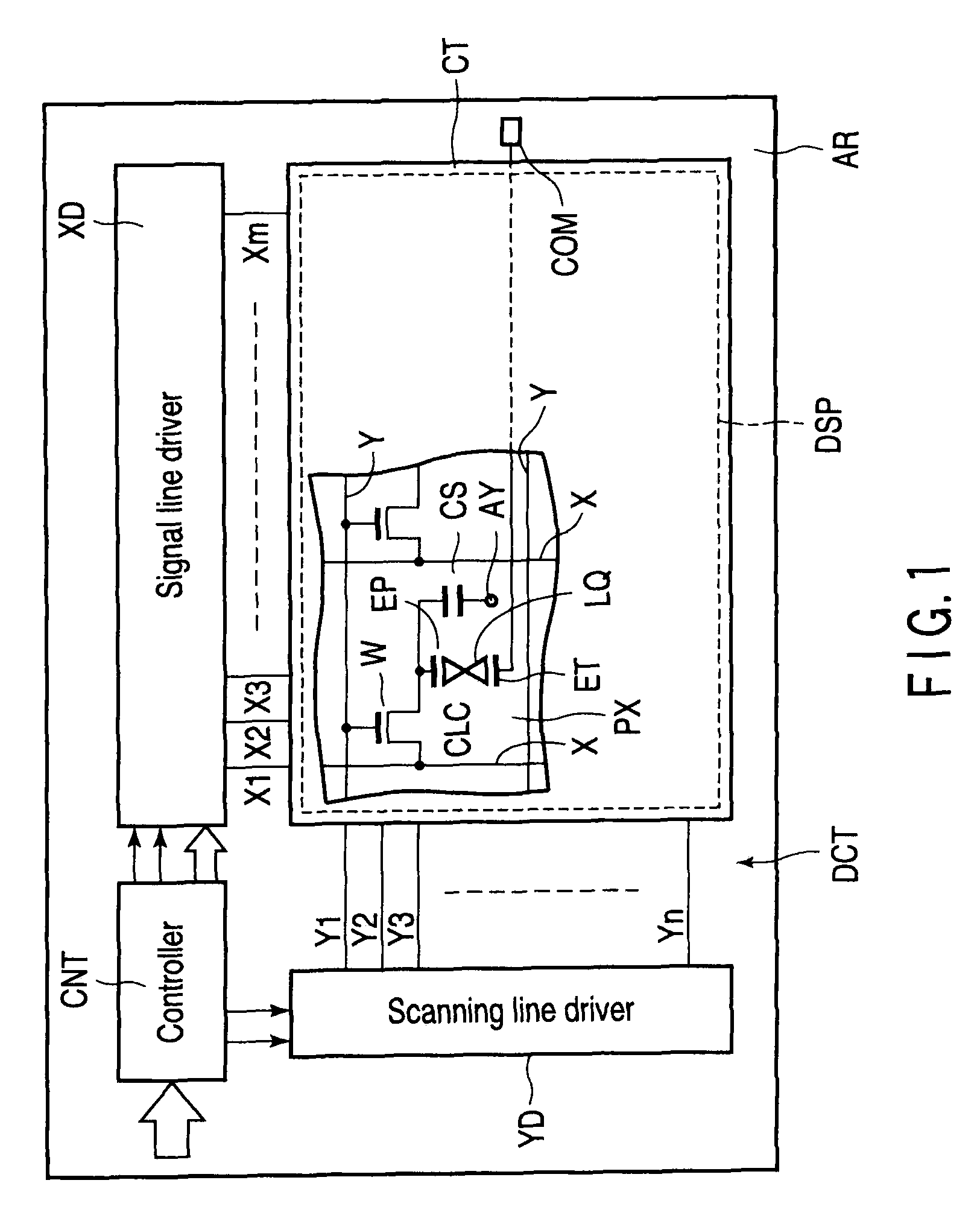
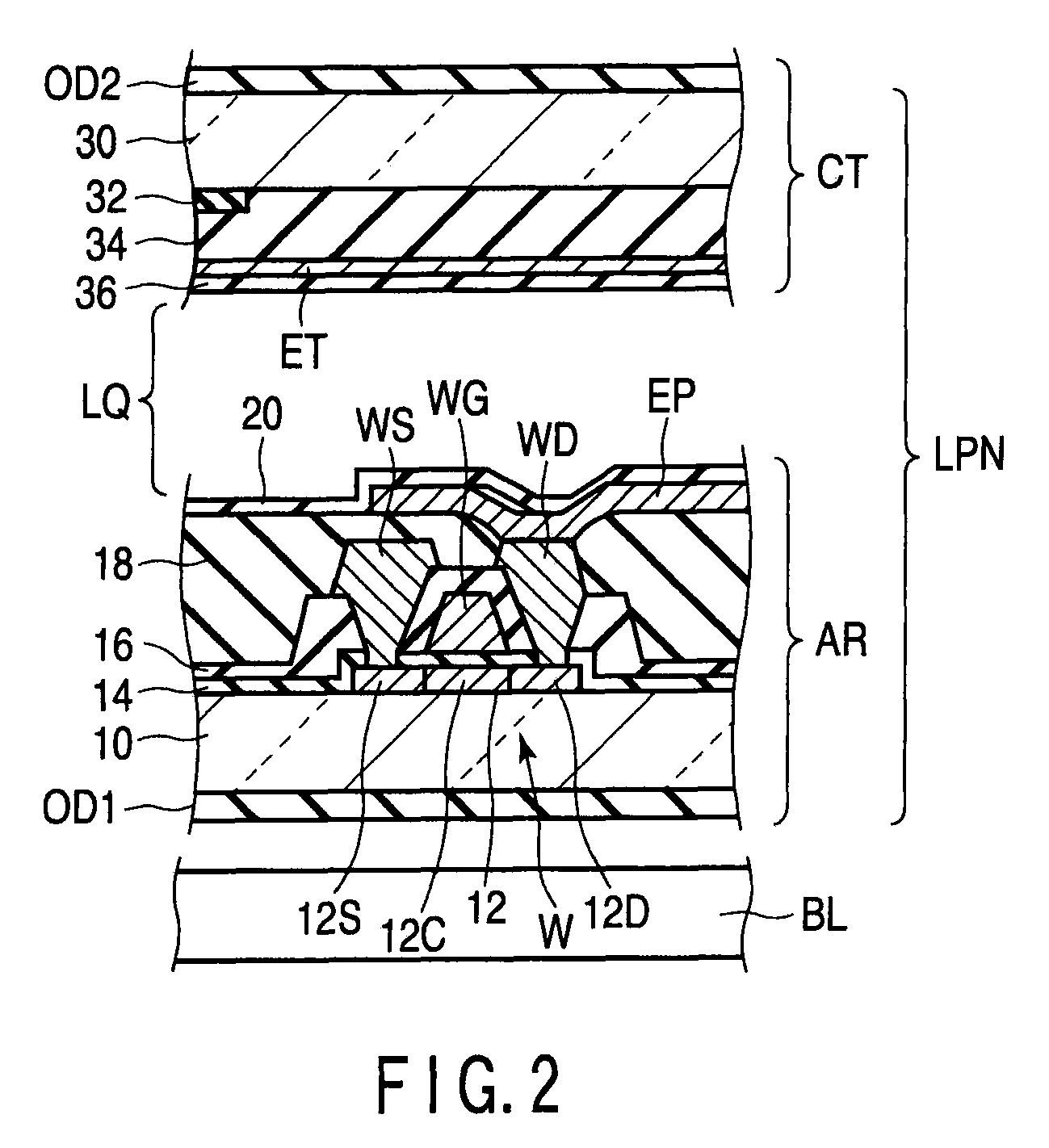
[0028]As shown in FIG. 1, FIG. 2 and FIG. 3, the liquid crystal display device is an active matrix liquid crystal display device, and includes a liquid crystal display panel LPN. The liquid crystal display panel LPN includes a pair of substrates, namely, an array substrate AR and a counter-substrate CT which is disposed to be opposed to the array substrate AR. Further, the liquid crystal display pan...
PUM
| Property | Measurement | Unit |
|---|---|---|
| distance | aaaaa | aaaaa |
| distance | aaaaa | aaaaa |
| distance | aaaaa | aaaaa |
Abstract
Description
Claims
Application Information
 Login to View More