
Gemini nicotinate quaternary ammonium salt and method for making same
A quaternary ammonium salt and nicotinic acid technology, applied in chemical instruments and methods, organic chemistry, transportation and packaging, etc., can solve the problems of decreased use effect, low bactericidal concentration, high water solubility, etc., and achieves weak foaming, high The effect of surface activity and strong sustained release ability
Patent Information
- Authority / Receiving Office
- CN · China
- Current Assignee / Owner
- Publication Date
- 2008-06-25
- Estimated Expiration
- Not applicable · inactive patent
Smart Images
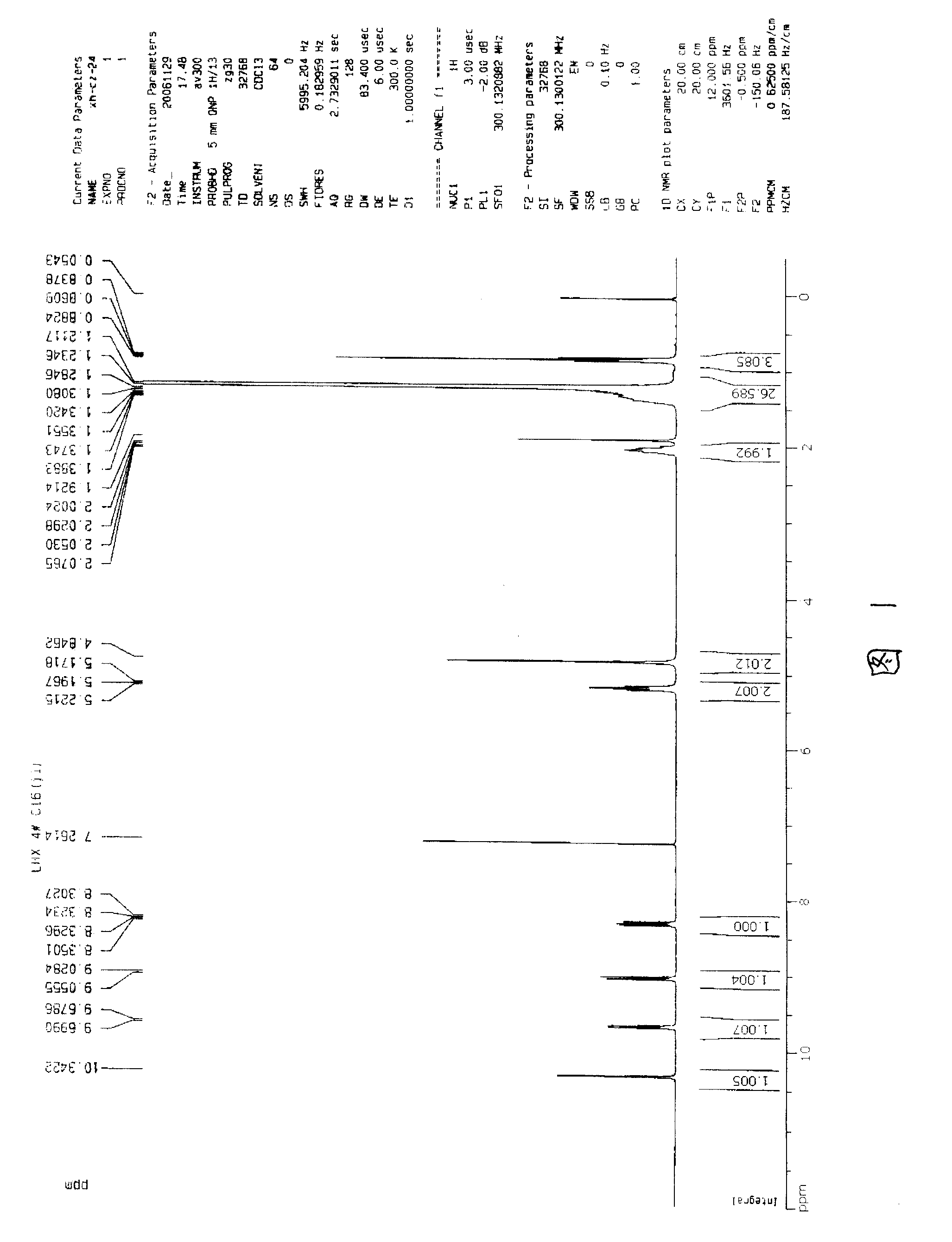
Figure 1 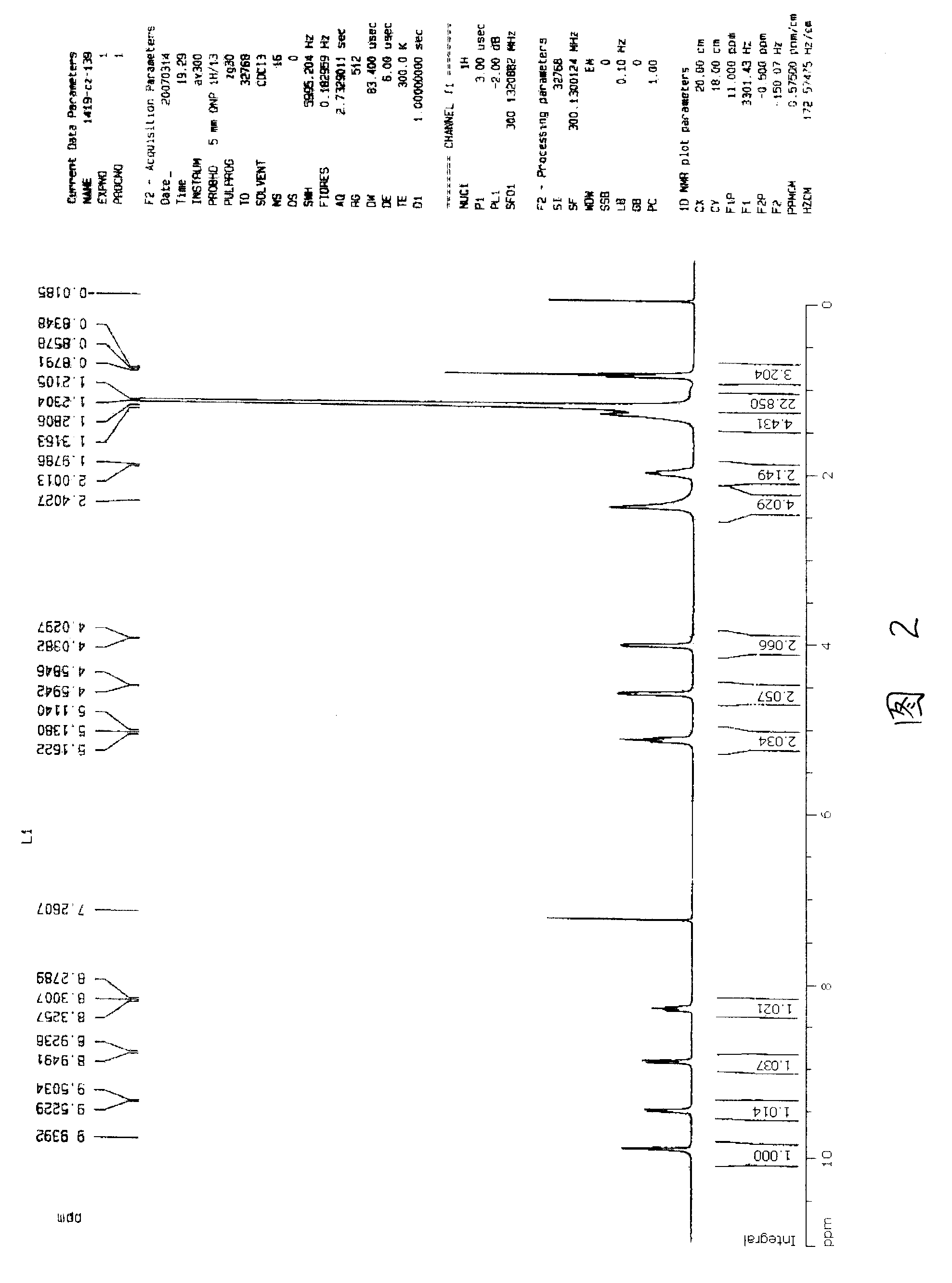
Figure 2 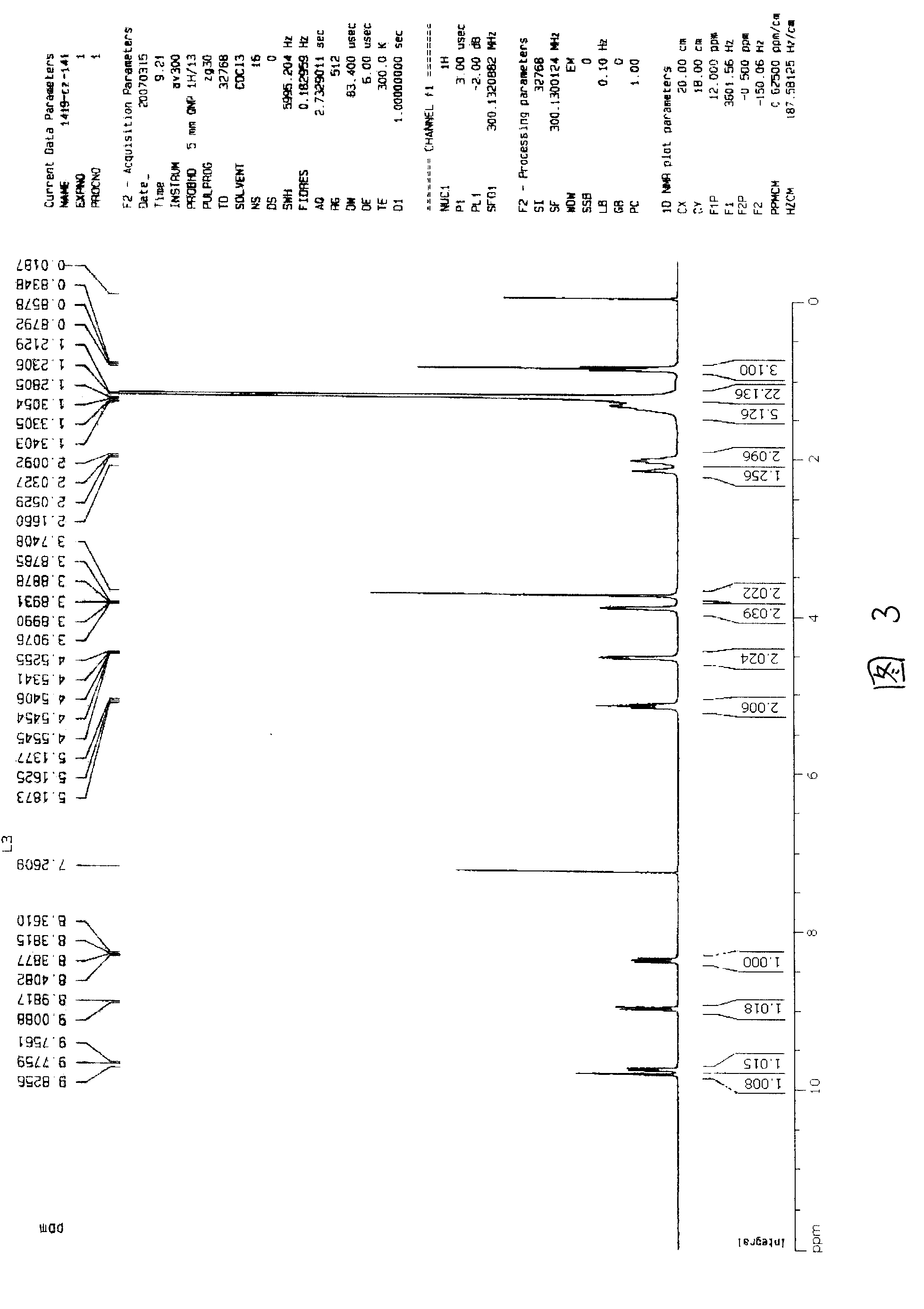
Figure 3
Abstract
Description
technical field
[0001] The invention relates to a gemininic acid ester quaternary ammonium salt and a preparation method thereof. Background technique
[0002] Surfactants have become indispensable chemicals in the national economy and human daily life. It is widely used in the fields of energy mining, metal processing, textile, daily chemical industry, food and pharmaceuticals. In 1935, Domagk discovered that cationic surfactants have bactericidal ability, the representatives of which are quaternary ammonium salt-type surfactants, in addition to pyridinium salts, imidazoline salts, and isoquinoline salts. Gemini quaternary ammonium compounds are characterized by their low toxicity, high efficiency, broad-spectrum antibacterial properties and extensive biological activity (Nagamune H et al.Evaluation of the Cytotoxic Effects of Bis-quaternary Ammonium Antimicrobial Reagents on HumanCells[J].Toxicology in Vitro, 2000, 14: 139-147), has been widely used in medicine, food, co...
Examples
Embodiment 1
[0033] Preparation of brominated di-N-alkylnicotinic acid ethylene glycol / diethylene glycol / triethylene glycol ester (EQn-m-n)
[0034] Synthesis of EQ16-2-16
[0035] Add nicotinic acid and thionyl chloride at a molar ratio of 1:5 into the reaction flask, stir and reflux, and NaOH solution absorbs the tail gas. After reacting for 4 hours, it was cooled, and the excess thionyl chloride was spin-dried under reduced pressure to obtain white needle-like crystals. Using dry chloroform as a solvent, slowly drop triethylene glycol with a molar ratio of 1:2 to nicotinic acid, NaOH solution to absorb tail gas, and reflux for 10 h. After cooling, the solvent was spin-dried, and an appropriate amount of water was added to dissolve it, and saturated Na 2 CO 3 Adjust the pH of the aqueous solution to be weakly alkaline, separate the organic phase, extract the aqueous phase with ethyl acetate 2-3 times, combine the organic phases, spin dry and pass through the column with ethyl acetate,...
Embodiment 2
[0044] Structural Characterization of Brominated Di-N-Alkyl Nicotinic Acid Ethylene Glycol / Diethylene Glycol / Triethylene Glycol Ester (EQn-m-n)
[0045] Structural characterization of EQ16-0-16
[0046]
[0047] Referring to Fig. 1, Fig. 1 is the hydrogen spectrogram of EQ16-0-16, according to the spectrogram the chemical shift and related parameters of EQ16-0-16 are listed in the following table 1:
[0048] Table 1EQ16-0-16 1 HNMR parameters
[0049] absorption peak
δ(ppm)
number of small peaks
ratio of hydrogen atoms
1
2
3
4
5
6
7
8
9
10.34
9.70
9.05
8.35
5.22
4.84
2.07
1.21-1.1.38
0.88
S
D.
D.
Q
T
S
m
m
T
1.005
1.007
1.004
1.000
2.007
2.012
1.992
26.598
3.085
1
1
1
1
...
Embodiment 3
[0067] Study on Surface Activity of Brominated Di-N-Alkyl Nicotinic Acid Ethylene Glycol / Diethylene Glycol / Triethylene Glycol Ester (EQn-m-n)
[0068] The surfactant to be measured is prepared into a series of aqueous solutions of a certain concentration with twice distilled water, and the surface tension of the aqueous surfactant solution is measured by the suspension ring method at 20°C. The measurement results are shown in Figure 4 and Table 4.
[0069] It can be seen from Figure 4 that with the addition of this series of surfactants, the surface tension of water drops sharply, and the concentration increases, the surface tension decreases slowly, and finally tends to be stable. The alkyl chain grows and the surface activity increases.
[0070] Table 4 cmc, γ of several surfactants cmc and C 20
[0071] substances
cmc (mmol / l)
gamma cmc (mN / m)
C 20 (mmol / l)
EQ08-0-08
3.65
50.5
3.022
[0072] EQ10-0...