
Encarsia Sophia artificial propagation production method
A technology for artificial reproduction of the pale yellow nephew aphid, applied in hunting equipment, applications, animal husbandry and other directions, can solve problems such as difficulty in mass reproduction, and achieve the effects of improving egg hatching rate, mass reproduction, and good natural control.
Patent Information
- Authority / Receiving Office
- CN · China
- Patent Type
- Applications(China)
- Current Assignee / Owner
- Publication Date
- 2009-03-25
- Estimated Expiration
- Not applicable · inactive patent
Smart Images
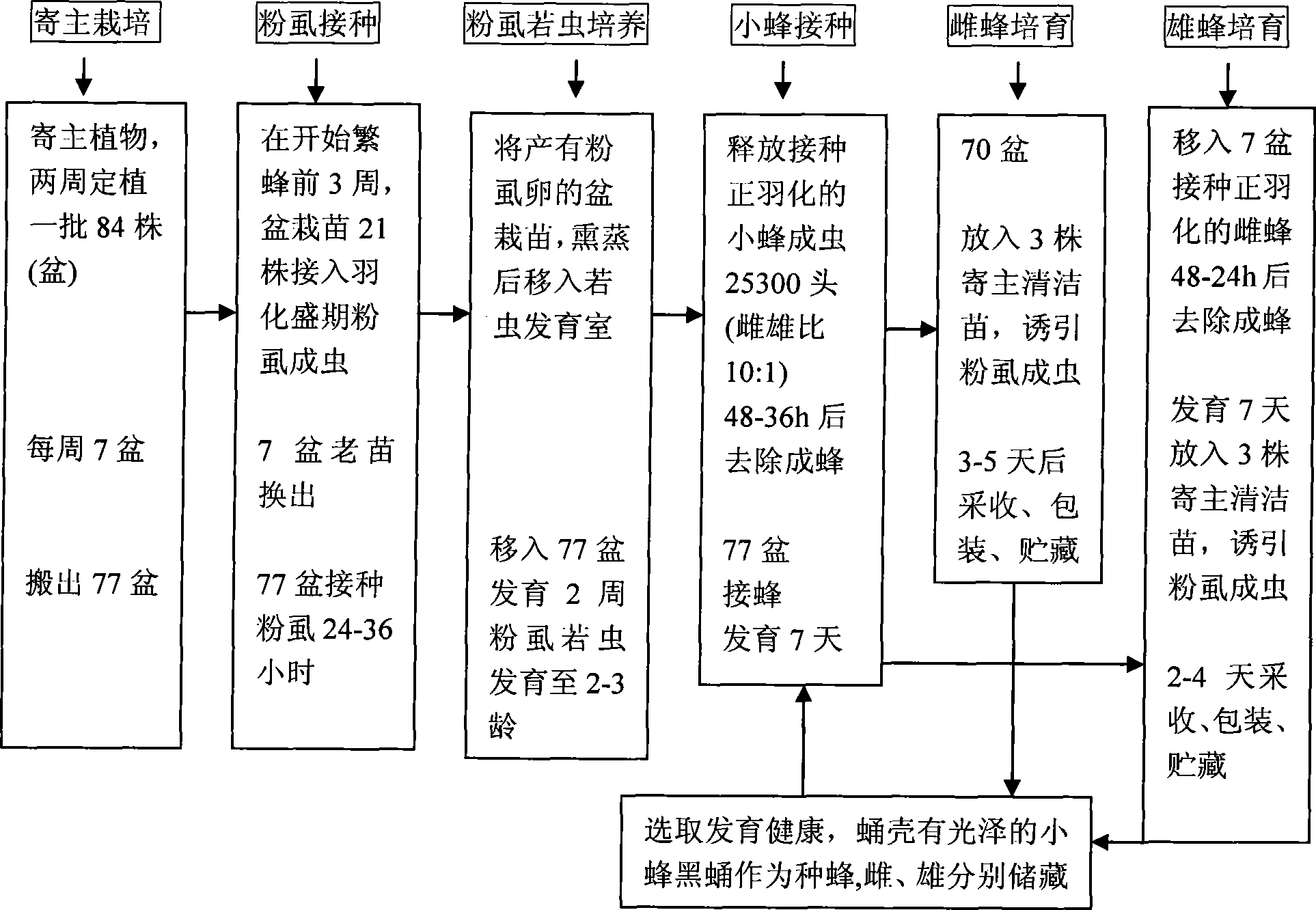
Figure 1 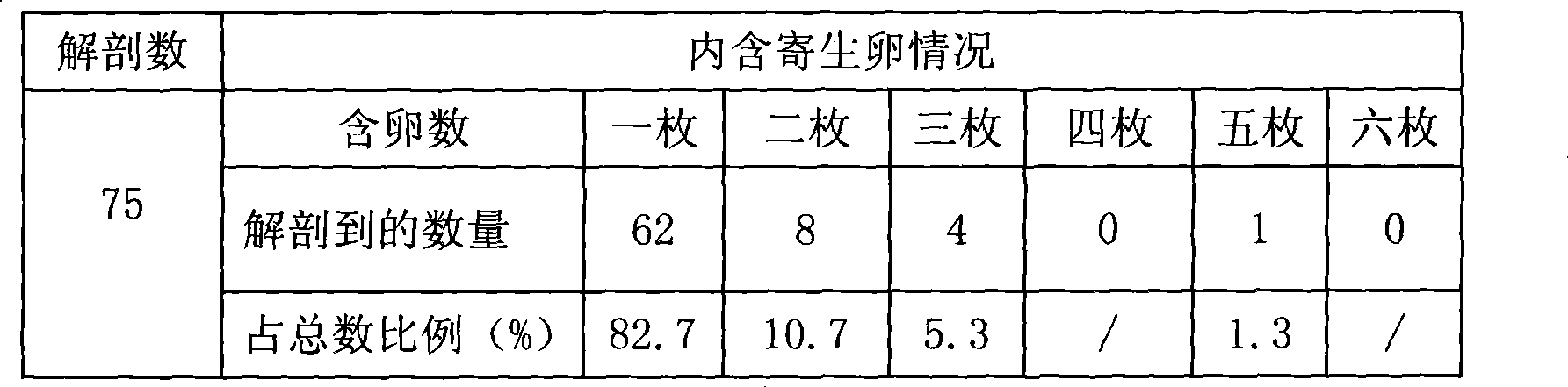
Figure 2
Abstract
Description
technical field
[0001] The invention relates to a bee breeding production process, in particular to a production method for the artificial reproduction of aphid aphids, belonging to the technical field of biological control of agricultural pests. Background technique
[0002] Whiteflies have caused great economic losses all over the world, with an average annual loss of more than 300 million U.S. dollars. In recent years, not only the occurrence of whitefly in greenhouses has been increasing year by year in my country, but also the invasive pest whitefly is rampant and endangers my country's agriculture. Because whitefly body is covered with wax, individual is tiny, habit is concealed, resistance is strong, chemical control is difficult, and it poses a serious threat to crop production. Over the years, countries all over the world are seeking ways and methods of biological control. Parasitic wasps are important natural enemies of whitefly, and there have been many successfu...
Examples
Embodiment 1
[0050] Embodiment 1, the mass production and reproduction of the light yellow aphid wasp
[0051] The main process of mass production and reproduction of A. figure 1 shown, specifically as follows:
[0052] 1. Collect and reproduce the species
[0053] (1) Collect bee species: collect the whitefly nymphs parasitized by Aphidia japonica, i.e. black pupae, on the leaves of field plants where whitefly occurs strictly;
[0054] (2) Purification and optimization of bee species: put the collected parasitic black pupae of Aphid japonica at 25-27°C and RH.60-70% for development, and transfer to the nymph of Bemisia tabaci after emerging from the queen bee , and then select excellent bee species through testing of parasitism rate, emergence rate, fecundity, sex ratio, storage characteristics and ability to search for eggs of target pests;
[0055] (3) Propagation of bee species: multiply the female and male bee species of E. flavonata respectively, and accumulate enough bee species ...
Embodiment 2
[0080] Embodiment two: comparative experiment
[0081] Comparative experiment 1: Screening of host plants
[0082] (1) Materials and methods
[0083] i) Insects to be tested
[0084] Bemisia tabaci were collected from tomato plants in the greenhouse of Beijing Academy of Agriculture and Forestry Sciences.
[0085] The light yellow bee (black pupa) came from the Agricultural Experiment Station of Texas A&M University in the United States.
[0086] ii) Host plant
[0087] Kidney bean, cucumber, cotton, poinsettia, cabbage, sweet potato and tomato were used as test hosts.
[0088] Bean, cucumber, cabbage, and tomato seeds were purchased from the Special Vegetable Center of Vegetable Institute, Beijing Academy of Agriculture and Forestry Sciences. Cotton and sweet potatoes were provided by the Institute of Zoology, Chinese Academy of Sciences, and poinsettias were purchased from Beijing Supermarket.
[0089] iii) Experimental conditions and equipment
[0090] Carried out in...