
Method for synthesis of flurbiprofen
A technology of flurbiprofen and fluorobiphenyl, which is applied in the field of compound synthesis, can solve the problems of complex operation and long preparation route, and achieve the effect of wide source of raw materials, low cost and easy operation
Patent Information
- Authority / Receiving Office
- CN · China
- Patent Type
- Applications(China)
- Current Assignee / Owner
- Publication Date
- 2011-02-16
- Estimated Expiration
- Not applicable · inactive patent
Smart Images
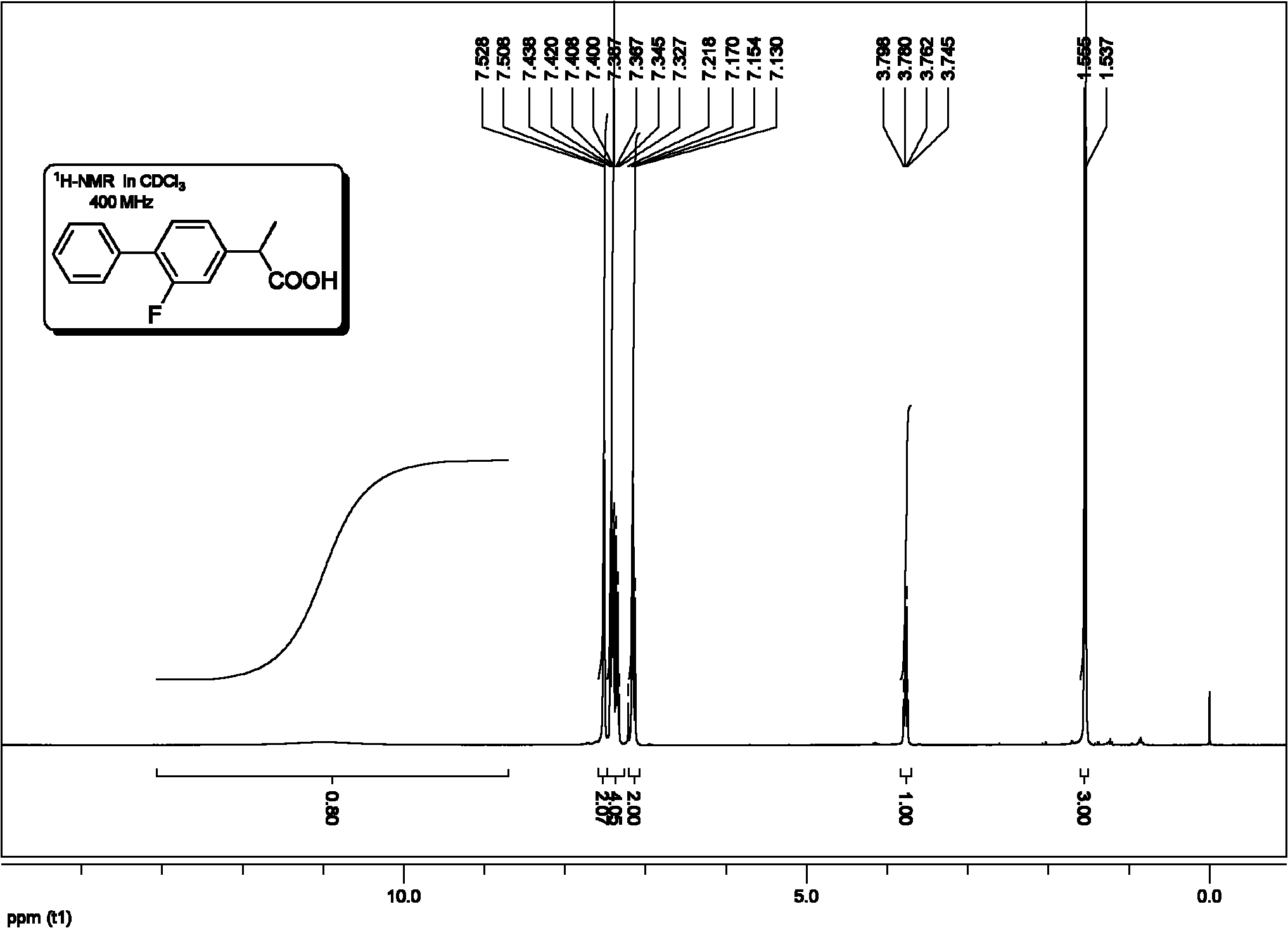
Figure 1 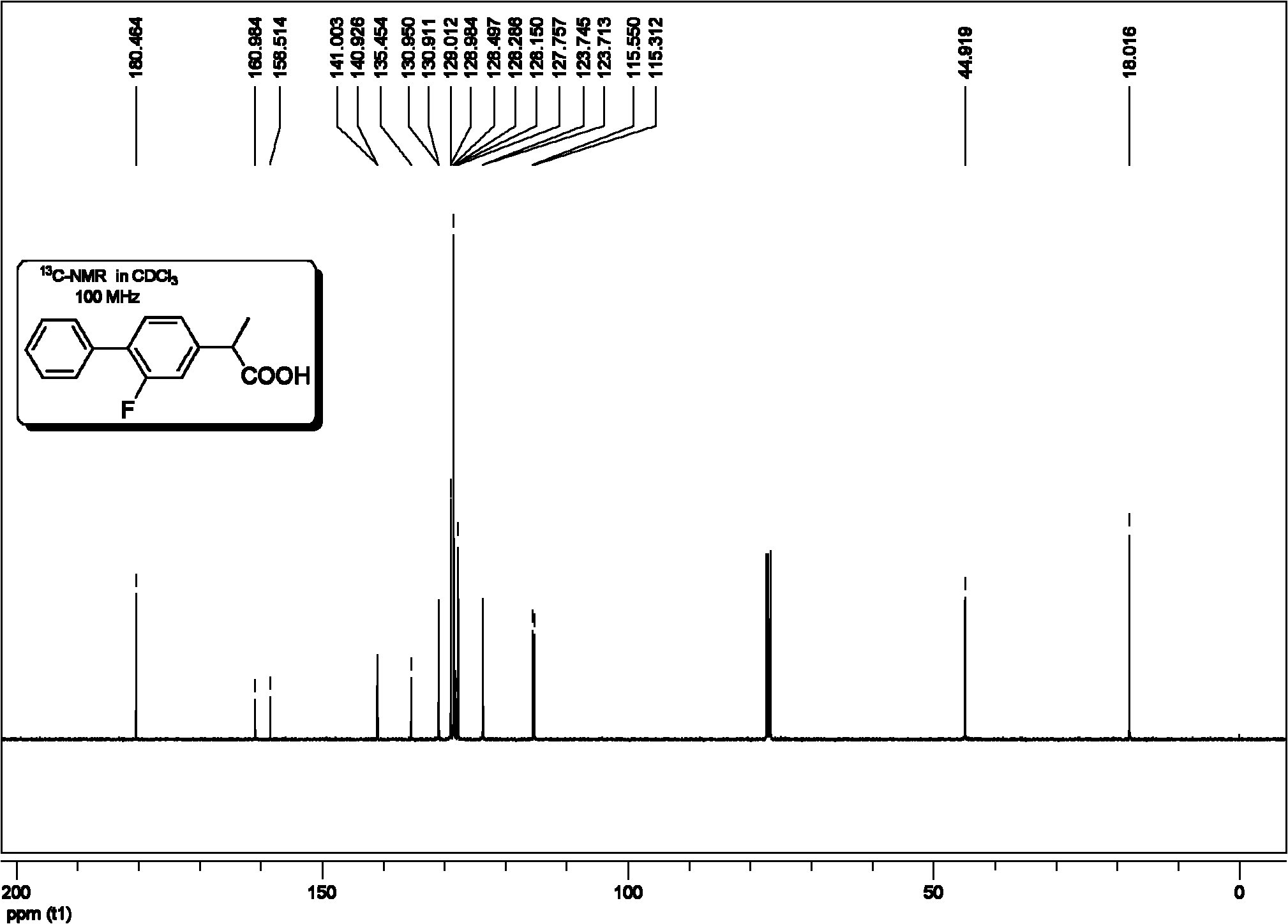
Figure 2 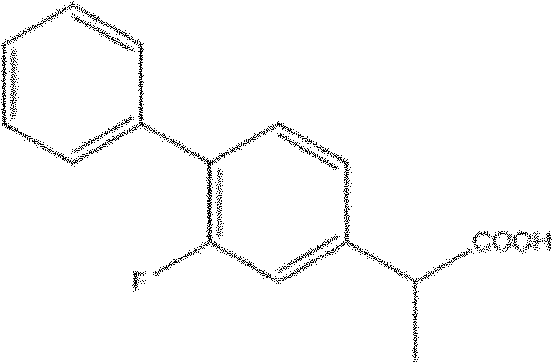
Figure 3
Abstract
Description
technical field
[0001] The invention relates to the field of compound synthesis, in particular to a method for synthesizing flurbiprofen. Background technique
[0002] The chemical name of flurbiprofen is 2-(2-fluorobiphenyl-4-yl)propionic acid. Its chemical formula is:
[0003]
[0004] Flurbiprofen (Flurbiprofen) is a non-steroidal anti-inflammatory analgesic developed by British Boots Company. The drug was launched in the UK in 1976 and has been included in the pharmacopoeias of the UK and the US. It is one of the excellent non-steroidal anti-inflammatory analgesics and is mainly used for the treatment of rheumatoid arthritis, osteoarthritis, and ankylosing spondylitis. , traumatic pain and other pain.
[0005] The existing flurbiprofen synthesis methods mainly include Chinese Journal of Pharmaceutical Industry 1990, 21 (6), 285, Chinese Journal of Pharmaceutical Industry 1991, 22 (1), 2, European Patent 0032620, US Patent 3959364 and Chinese Patent 200910031714.8. ...
Examples
Embodiment 1
[0077] (1) Preparation of 2-(2-fluorobiphenyl-4-yl)propionitrile
[0078] In an oven-dried 100 mL Schlenk flask equipped with a magnet, add dipolyallylpalladium chloride (0.0146 g, 0.040 mmol), 9,9-dimethyl-4,5-bis(di tert-butylphosphino)xanthene (0.0693 g, 0.120 mmol), 4-bromo-2-fluorobiphenyl (10.04 g, 40 mmol) and potassium 2-cyanopropionate (6.58 g, 48 mmol). The lid is coated with a vacuum grease grinding plug, connected to the Schrank vacuum line, the air in the container is drained and filled with nitrogen, repeat 3 times, and 40mL of mesitylene is added under the reverse flow of nitrogen. After the addition, cover with a stopper, put it into a 140°C oil pan after clamping, and stir for 20 hours. After the reaction was completed, it was directly separated by chromatographic column to obtain white crystals with a yield of 95%.
[0079] (2) Preparation of 2-(2-fluorobiphenyl-4-yl)propionic acid
[0080] In a clean 100mL round bottom flask equipped with a magnet, add 2-...
Embodiment 2
[0083] (1) Preparation of 2-(2-fluorobiphenyl-4-yl)acetonitrile
[0084] Add palladium chloride (0.0071 g, 0.040 mmol), 2-bicyclohexylphosphine-2′, 6′-dimethoxybiphenyl (0.0493 g, 0.120mmol), 4-chloro-2-fluorobiphenyl (8.27g, 40mmol) and sodium cyanoacetate (5.14g, 48mmol). The lid is coated with a vacuum grease grinding plug, connected to the Schrank vacuum line, the air in the container is drained and filled with nitrogen, repeat 3 times, and 40mL of mesitylene is added under the reverse flow of nitrogen. After the addition, cover with a stopper, put it into a 140°C oil pan after clamping, and stir for 20 hours. After the reaction was completed, it was directly separated by chromatographic column to obtain white crystals with a yield of 96%.
[0085] (2) Preparation of 2-(2-fluorobiphenyl-4-yl)propionitrile
[0086] In a 150 ml round bottom flask equipped with a magnet was added 2-(2-fluorobiphenyl-4-yl)acetonitrile (7.60 g, 36 mmol), NaH (0.86 g, 36 mmol) and 80 mL of DM...