
2-nuclear magnetic resonance imaging contrast agent taking 2, 3-biquinoxaline as connecting body and preparation method thereof
A nuclear magnetic resonance imaging and quinoxaline technology, which is applied to preparations, chemical instruments and methods for in vivo tests, compounds containing elements of Group 3/13 of the periodic table, etc., can solve the problem of poor thermodynamic stability and low relaxation efficiency. and other problems, to achieve the effect of favorable storage, good water solubility, and improved thermodynamic and kinetic stability
Patent Information
- Authority / Receiving Office
- CN · China
- Patent Type
- Applications(China)
- Current Assignee / Owner
- Publication Date
- 2012-07-18
Smart Images
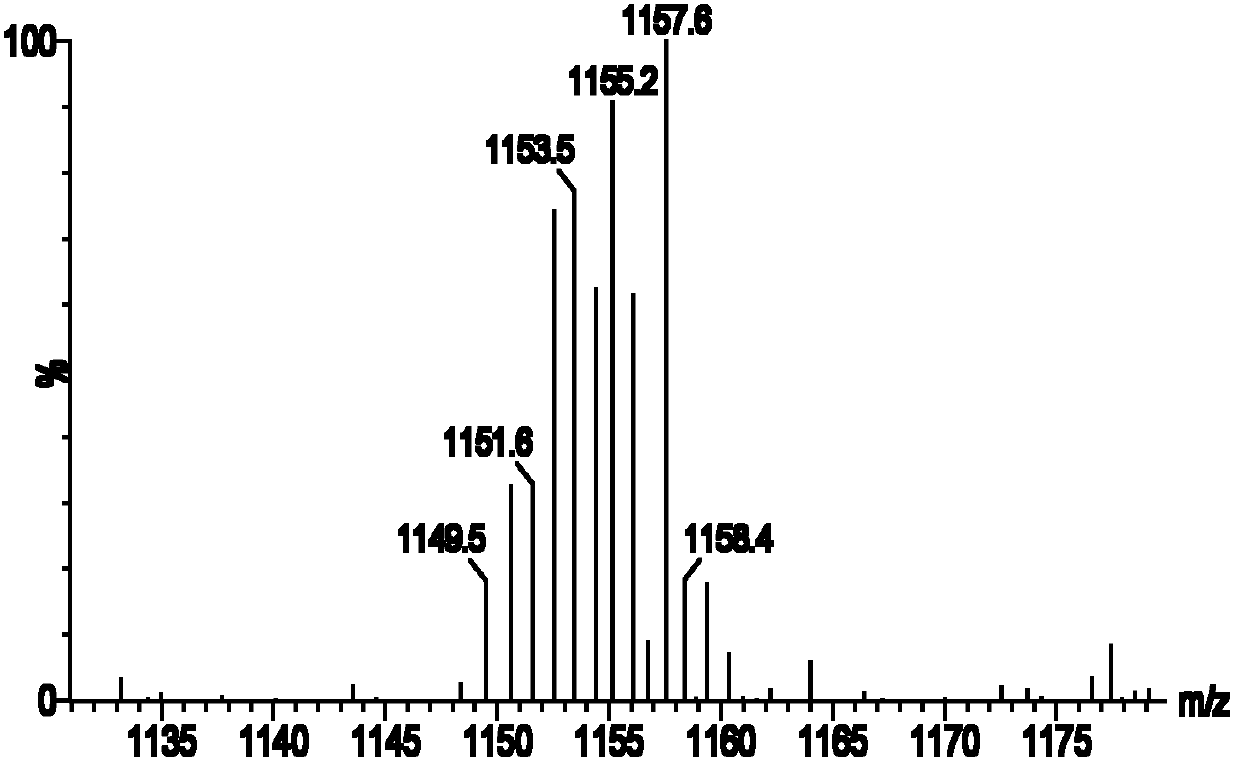
Figure 1 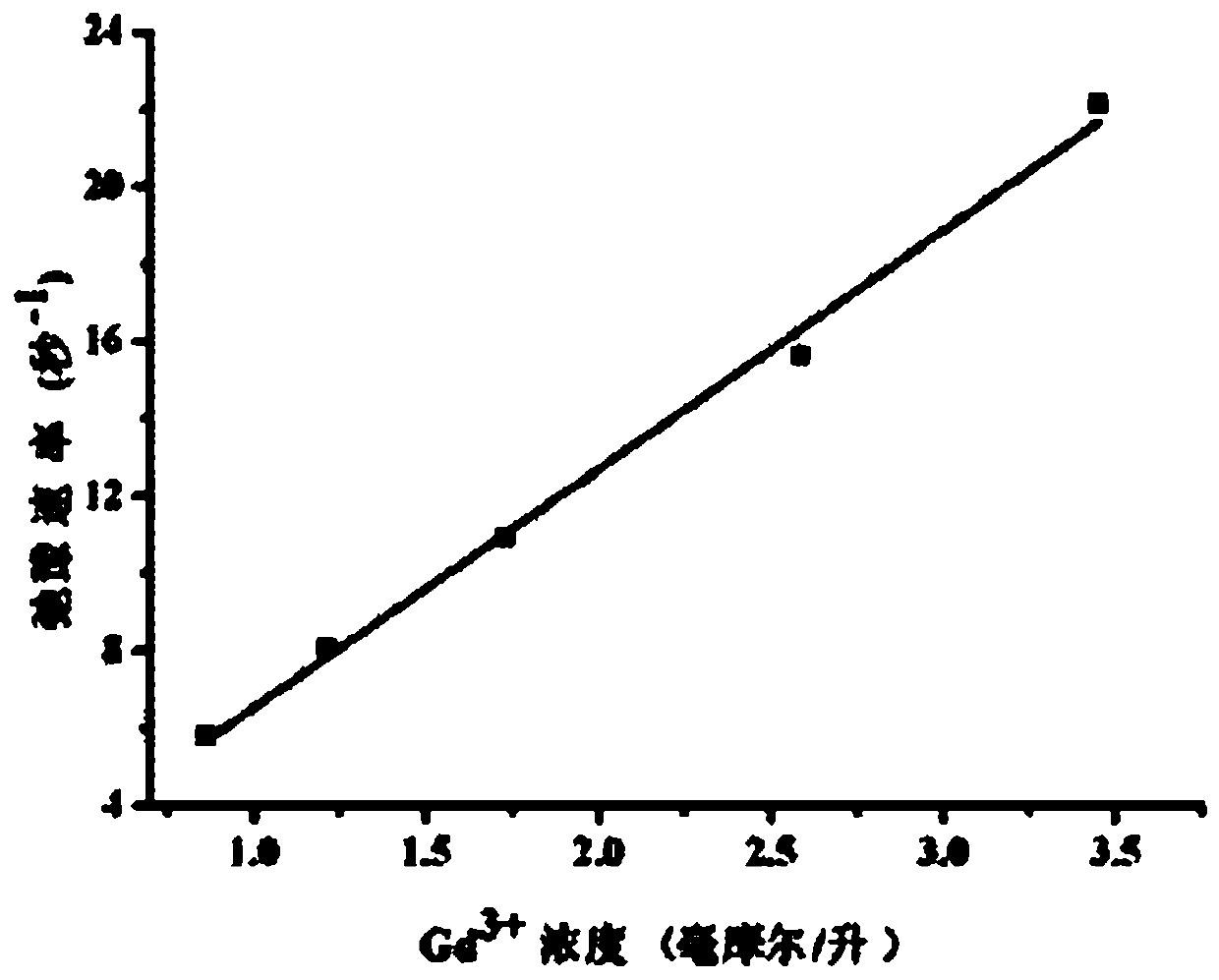
Figure 2 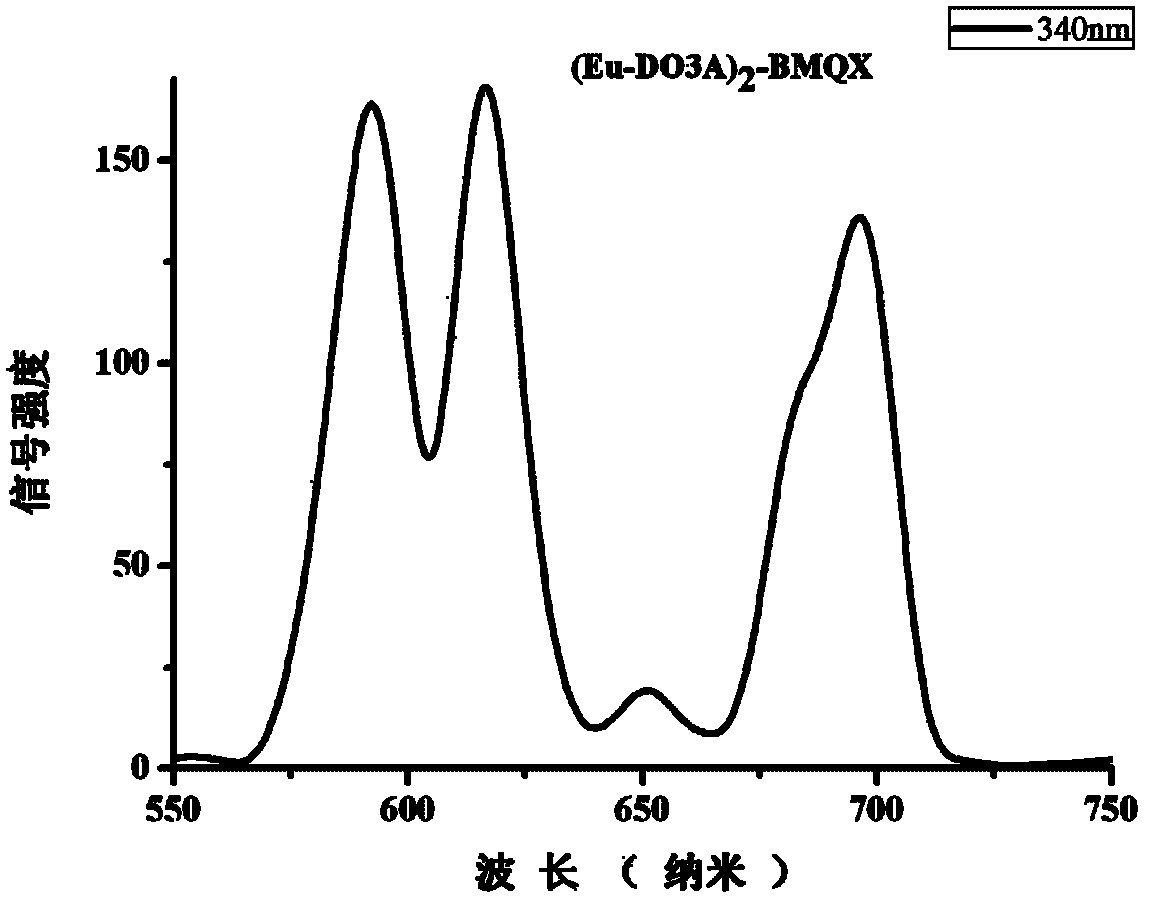
Figure 3
Abstract
Description
technical field
[0001] The invention relates to a magnetic resonance imaging contrast agent, in particular to a dinuclear magnetic resonance imaging contrast agent with 2,3-diquinoxaline as a linker and a preparation method thereof. Background technique
[0002] In recent years, Magnetic Resonance Imaging (MRI) has become a routine diagnostic method in medical diagnosis. With new magnetic imaging techniques, such as Functional MRI, Perfusion MRI, etc. The development and clinical application of high magnetic field strength instruments, and the use of high magnetic field strength instruments, the demand for excellent contrast agents with high magnetic relaxation efficiency, high water solubility, low osmotic pressure, and low toxicity has become increasingly important. The role of contrast agents in magnetic resonance imaging is to change the relaxation time of hydrogen atoms in water molecules around paramagnetic ions, increase the magnetic signal difference between the dete...
Examples
Embodiment 1
[0047] Example 1 (Gd-DO3A) 2 - Synthesis of BMQX
[0048] Step 1: Synthesis of 2,3-bis(bromomethyl)quinoxaline
[0049] Under nitrogen protection, add 0.681 g of o-phenylenediamine to a 50 ml round bottom flask, add 4 ml of anhydrous tetrahydrofuran to dissolve, stir at 5°C, add 1.46 g of 1,4-dibromo-2,3- 8 milliliters of tetrahydrofuran solution of diacetyl, obtain mixed solution, allow mixed solution rise to room temperature gradually, stop reaction after continuing to react for 3 hours, remove solvent tetrahydrofuran under reduced pressure distillation, obtain reaction product, product carries out chromatographic separation with silica gel column, The eluent was a mixture of ethyl acetate and petroleum ether at a volume ratio of 1:12, and the eluent was evaporated to obtain 1.67 g of 2,3-bis(bromomethyl)quinoxaline as a white solid;
[0050] Step two: ( t Bu-DO3A) 2 - Synthesis of BMQX
[0051] Under nitrogen protection, 1.22 g t Bu-DO3A HBr, 0.682 g NaHCO 3 Add it t...
Embodiment 2
[0058] Embodiment 2, (Gd-DO3A) 2 - Synthesis of BMQX
[0059] Step 1: Synthesis of 2,3-bis(bromomethyl)quinoxaline
[0060] Under nitrogen protection, add 0.681 g of o-phenylenediamine to a 50 ml round bottom flask, add 4 ml of anhydrous tetrahydrofuran to dissolve, stir at 10°C, add 1.46 g of 1,4-dibromo-2,3- 8 milliliters of tetrahydrofuran solution of diacetyl, to obtain mixed solution, allow mixed solution to rise to room temperature gradually, stop reaction after continuing to react for 2 hours, remove solvent tetrahydrofuran under reduced pressure distillation, obtain reaction product, product carries out chromatographic separation with silica gel column, The eluent was a mixture of ethyl acetate and petroleum ether at a volume ratio of 1:12, and the eluent was evaporated to obtain 1.67 g of 2,3-bis(bromomethyl)quinoxaline as a white solid;
[0061] Step two: ( t Bu-DO3A) 2 - Synthesis of BMQX
[0062] Under nitrogen protection, 1.22 g t Bu-DO3A HBr, 0.682 g NaHCO ...
Embodiment 3
[0075] Example 3 (Gd-DO3A) 2 - Synthesis of BMQX
[0076] Step 1: Synthesis of 2,3-bis(bromomethyl)quinoxaline
[0077] Under nitrogen protection, add 2.724 grams of o-phenylenediamine to a 100 ml round bottom flask, add 16 ml of anhydrous tetrahydrofuran to dissolve, stir at 0°C, add 5.84 g of 1,4-dibromo-2,3- 32 milliliters of tetrahydrofuran solution of diacetyl, to obtain mixed solution, remove the ice-water bath, allow mixed solution to rise to room temperature gradually, stop reaction after continuing to react for 4 hours, remove solvent tetrahydrofuran under reduced pressure distillation, obtain reaction product, product is carried out with silica gel column It was separated by chromatography, and the eluent was a mixture of ethyl acetate and petroleum ether at a volume ratio of 1:12. The eluent was evaporated to obtain 6.8 g of white solid 2,3-bis(bromomethyl)quinoxaline;
[0078] Step two: ( t Bu-DO3A) 2 - Synthesis of BMQX
[0079] Under nitrogen protection, 2....