

Carbon-based solid acid catalyst and preparation method thereof
A carbon-based solid acid and catalyst technology, which is applied in chemical instruments and methods, physical/chemical process catalysts, organic compounds/hydrides/coordination complex catalysts, etc., to achieve cheap and easy raw materials, increased specific surface area, and easy The effect of recycling
Patent Information
- Authority / Receiving Office
- CN · China
- Patent Type
- Patents(China)
- Current Assignee / Owner
- Publication Date
- 2014-05-07
- Estimated Expiration
- Not applicable · inactive patent
Smart Images
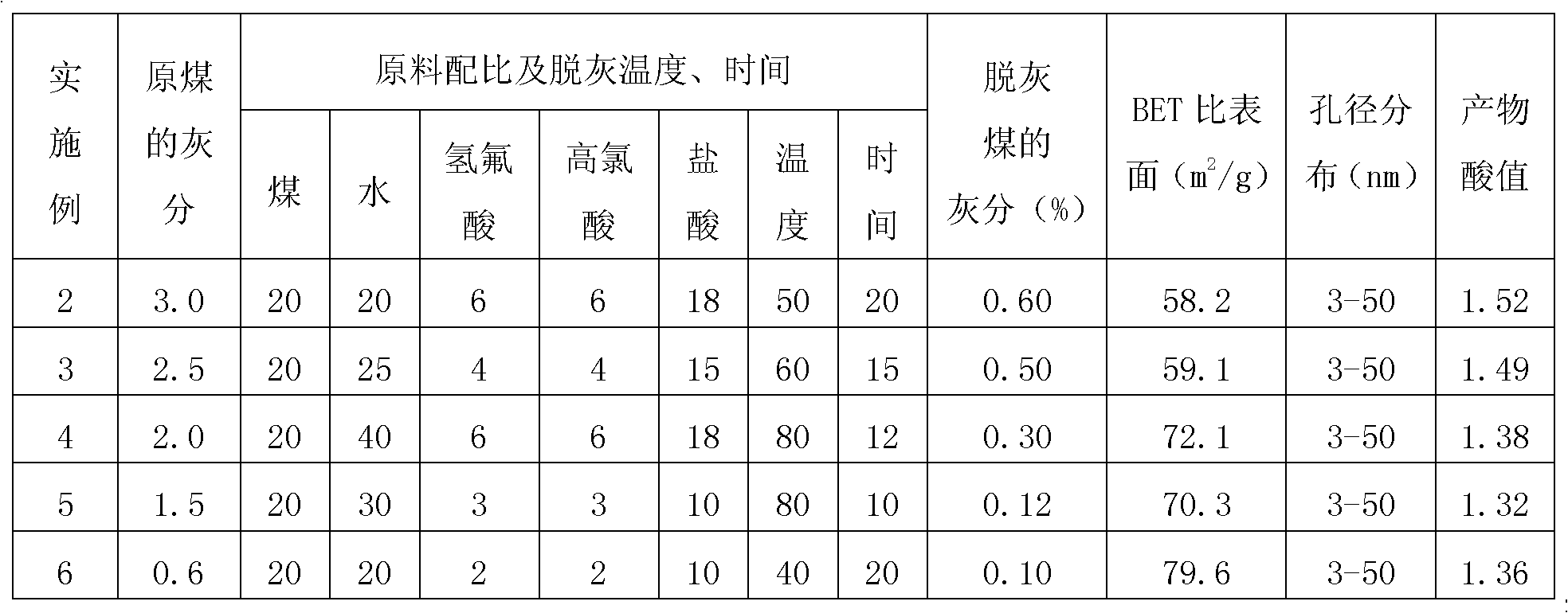
Figure 1 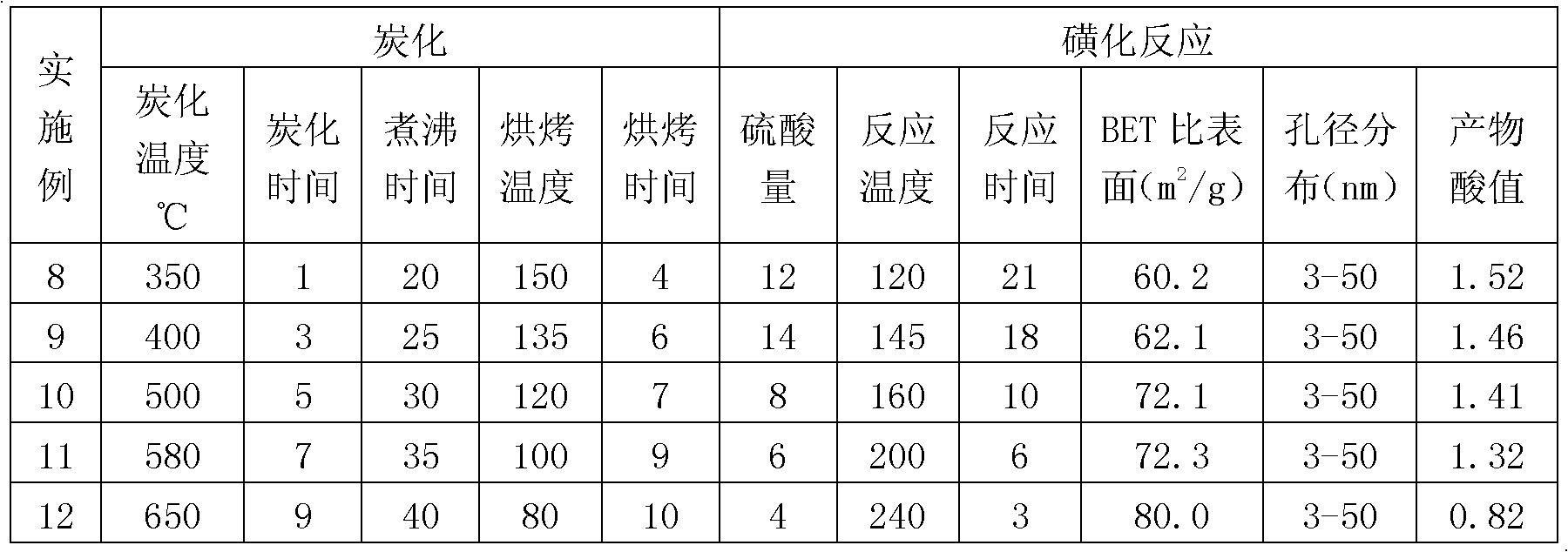
Figure 2 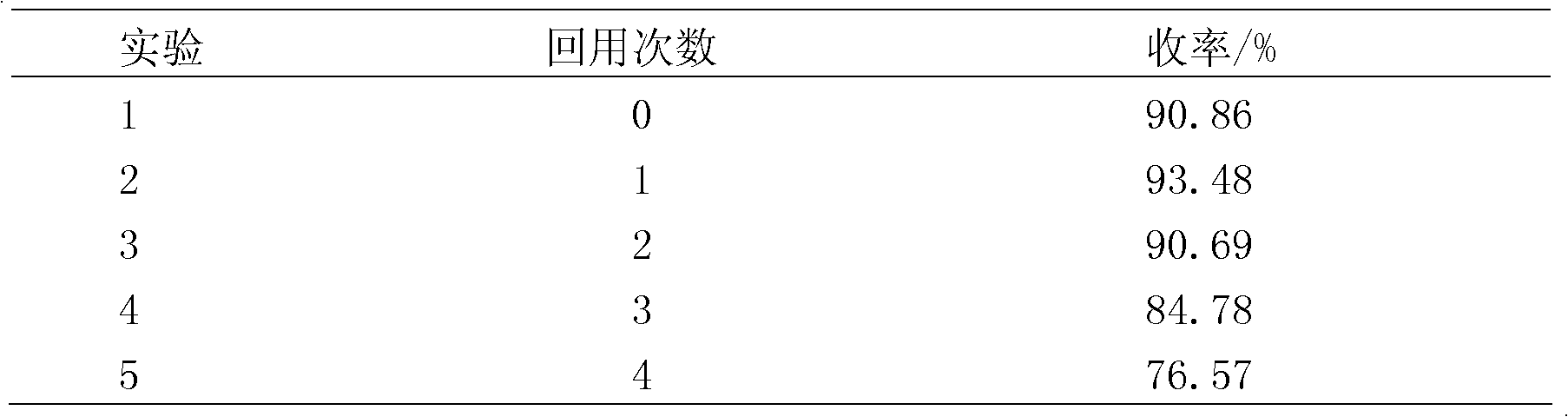
Figure 3
Abstract
Description
Technical field
[0001] The invention relates to the preparation of a catalyst, in particular to a carbon-based solid acid catalyst and a preparation method thereof. Background technique
[0002] In recent years, the preparation and application of solid carbon sulfonic acid catalysts have attracted the attention of academic circles. People have developed a variety of solid carbons obtained from polycyclic aromatic hydrocarbons, sugars (such as glucose, etc.), natural substances (such as wood, walnuts, millet, and lignin, etc.) through partial carbonization and then sulfuric acid sulfonation. Sulfonic acid, and has a good catalytic effect in some fine organic synthesis and biomass conversion. However, the materials obtained by these methods are limited by the source of the carbon source matrix, or the source of raw materials is expensive, and belongs to the powdery soft material. The surface has a dense structure, the pore size is not developed and is difficult to control, the aci...
Examples
Embodiment 1
[0016] The first step is the preparation of the precursor of modified coal: 20g of Taixi coal with 3.5% ash content is pulverized to a 200-mesh sieve, then placed in a polytetrafluoroethylene beaker and measured at 30:4:4:15 Add distilled water, hydrofluoric acid with a mass concentration of 40%, perchloric acid with a mass concentration of 99%, and hydrochloric acid with a mass concentration of 36% in weight ratio. After stirring evenly at room temperature for 24 hours, filter and wash with water until it is neutral. Drying at ℃, the measured ash content is 0.61%;
[0017] The second step, compounding: mix and knead the deashed Taixi coal, sodium humate as a binder, calcium oxide as a pore former and distilled water at a mass ratio of 100:25:8:40 Evenly, after natural air drying, put it in an oven and bake at 120°C for 2h, cool to room temperature, and then grind to below 200 mesh for use;
[0018] The third step, carbonization: send 20g of the obtained compound into a tube furna...
Embodiment 2-7
[0022] On the basis of the process steps of the above-mentioned Example 1, the step 1: the preparation conditions of the precursor of the modified coal are changed, and the process technical conditions of the other steps remain unchanged. Examples 2-6 are shown in the following table.
[0023]
[0024] In the above embodiment, the unit of ash content of raw coal is mass percentage, and the amounts of coal, water, hydrofluoric acid, perchloric acid, and hydrochloric acid are measured by weight. The concentrations of hydrofluoric acid, perchloric acid, and hydrochloric acid are the same as in Example 1. The unit of temperature is °C, the unit of time is hour, and the unit of product acid value is mmol / g.
Embodiment 7-12
[0026] On the basis of any of the above 2-6 embodiments, only the process conditions in the carbonization and sulfonation steps are changed, and the specific implementation mode is shown in the following table on the basis of the conditions of other steps unchanged;
[0027]
[0028] The specific implementation of using the carbon-based solid acid catalyst obtained in the above-mentioned examples to catalyze the ketal (aldehyde) reaction is as follows: