
A method for shot peening a gas carburised steel
A shot peening, medium technology, used in heat treatment equipment, heat treatment process control, manufacturing tools, etc.
Patent Information
- Authority / Receiving Office
- CN · China
- Patent Type
- Applications(China)
- Current Assignee / Owner
- Publication Date
- 2013-01-09
- Estimated Expiration
- Not applicable · inactive patent
Smart Images
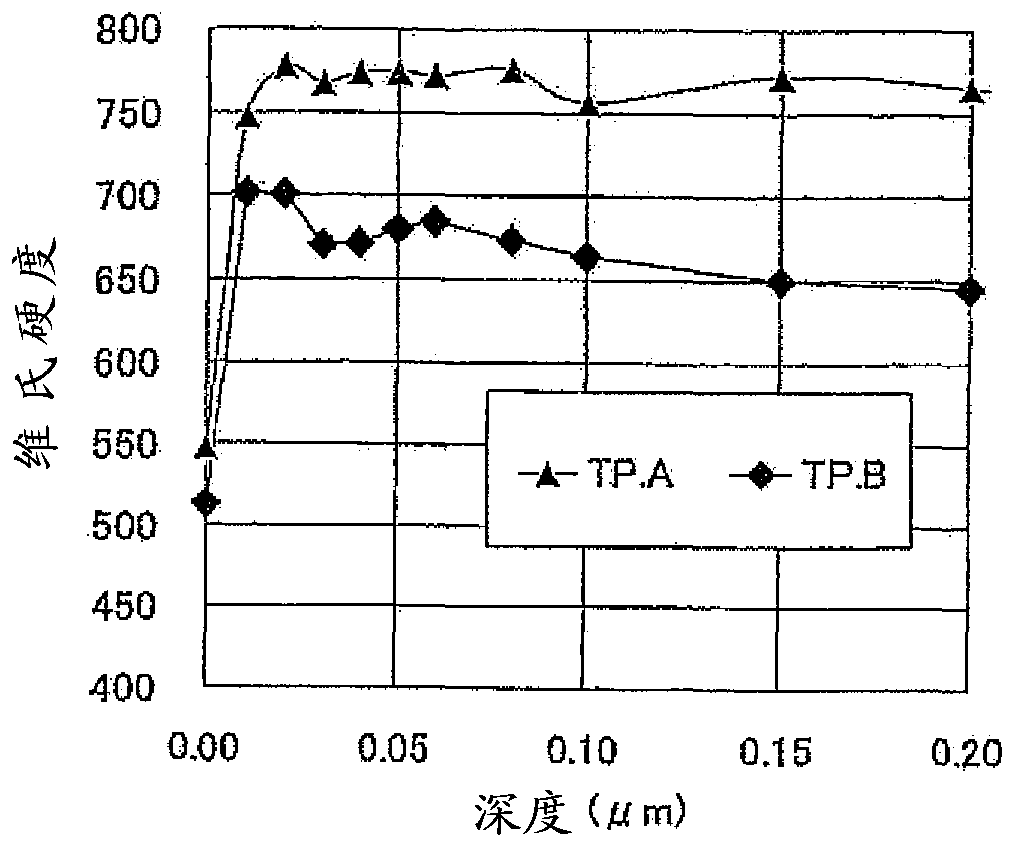
Figure 1 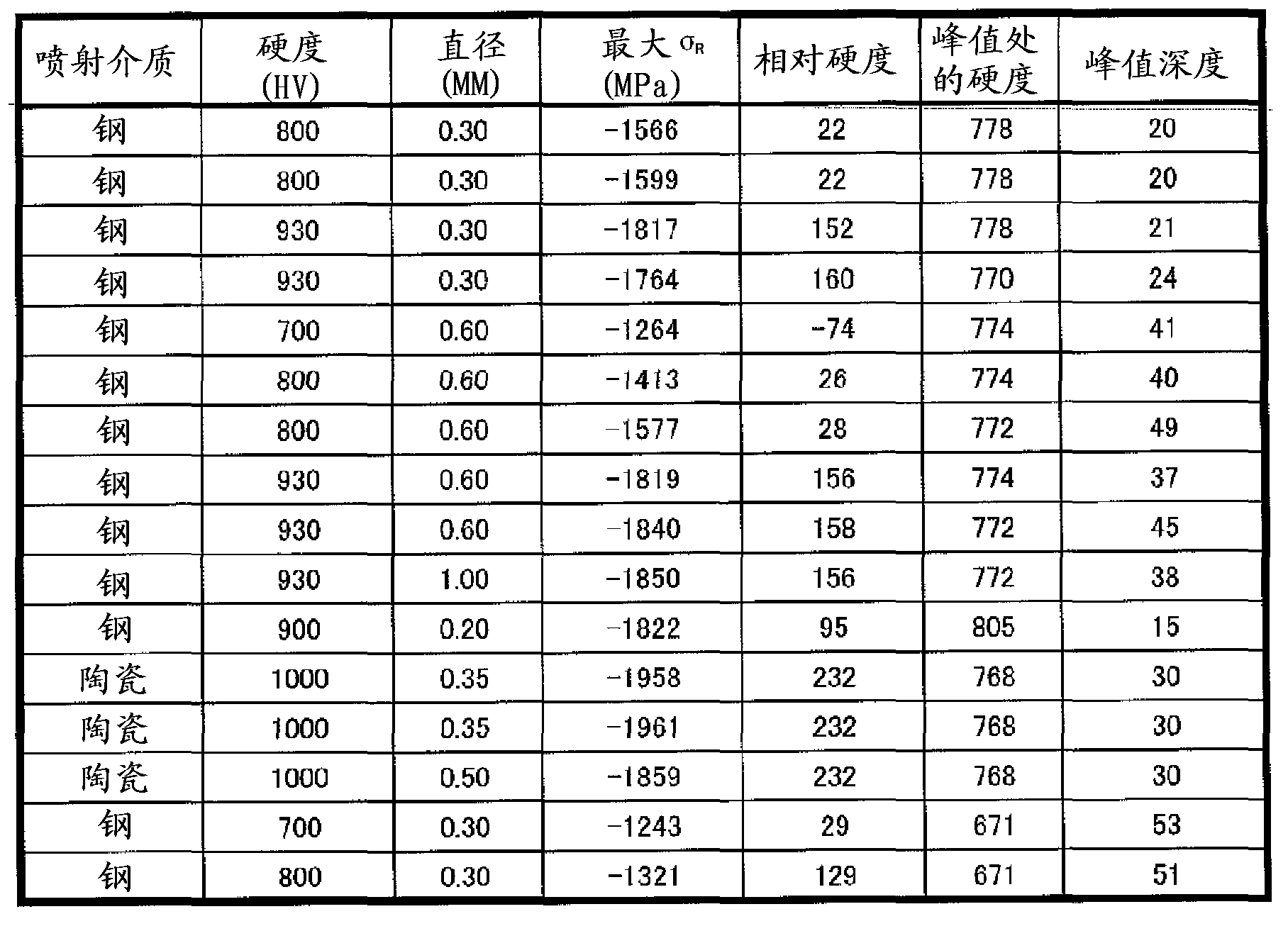
Figure 2 
Figure 3
Abstract
Description
technical field
[0001] The invention relates to a method for performing shot peening. In particular, the invention relates to a method for shot peening gas carburized steel. Background technique
[0002] Traditionally, shot peening has been known to generate compressive residual stress and increase hardness to improve the fatigue strength of gears (see author Japan Shot Peening Technology Association; Metal Fatigue and Shot Peening; Publisher Gendai Kogaku-sha; 2004). Furthermore, in order to achieve high fatigue strength aimed at reducing component weight, a method for increasing the compressive residual stress produced by shot peening is known (see Kazuyoshi Ogawa and Takashi Asano; Shot peening of hardened steel Theoretical prediction of the resulting compressive residual stresses; Journal of JSSR, No. 48 (2003) pp. 31-38).
[0003] However, in these studies, only the average value of the hardness on or near the material surface was focused. Therefore, the methods used...
Examples
Embodiment Construction
[0033] Hereinafter, embodiments of the present invention will be described with reference to the drawings.
[0034] figure 1 is a graph showing the distribution of hardness of processed steel used in Examples. The abscissa indicates the depth (microns) from the steel surface, and the ordinate indicates the Vickers hardness. Gas carburizing steel is used for the processed steel. In the figure, "TP.A" and "TP.B" represent steels that have been tempered at 180°C and 180°C, respectively.
[0035] figure 2 It is a table which shows the conditions and the result of the shot peening used in the Example. A compressed air shot peening system is used. A blasting medium having a hardness of 700 HV to 1,000 HV and a diameter (average diameter) of 0.2 mm to 1.0 mm is used.
[0036] The "maximum σ" in the table R ” represents the maximum compressive residual stress in the processed steel. By using a microstress analyzer available from Rigaku Corporation (X-ray tube: Cr-Kα; diffracti...