
Water-based optical lens cleaning agent composition
A technology for optical lenses and cleaning agents, applied in the direction of detergent compositions, soap detergent compositions, surface active non-soap compounds and cleaning compositions, etc., can solve equipment and electronic circuit corrosion, easy acidification of halogenated hydrocarbon solvents, Poor compatibility of halogenated hydrocarbons and other problems, to achieve the effect of improving coating yield, easy biodegradation, and excellent compatibility
Patent Information
- Authority / Receiving Office
- CN · China
- Patent Type
- Patents(China)
- Current Assignee / Owner
- Publication Date
- 2015-01-28
Smart Images
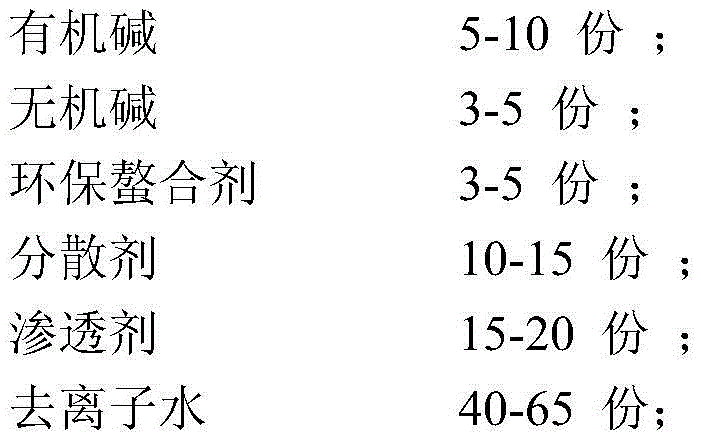
Figure 1 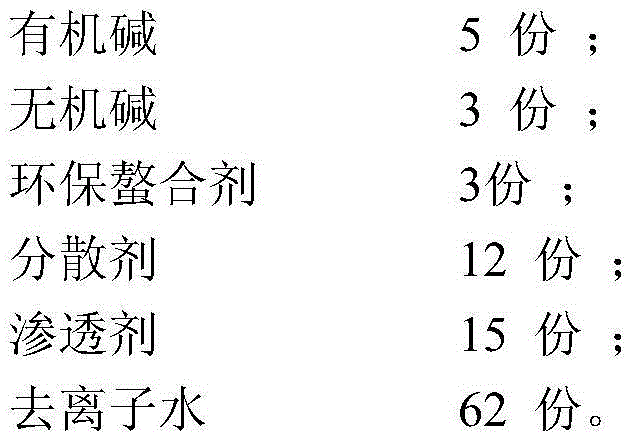
Figure 2 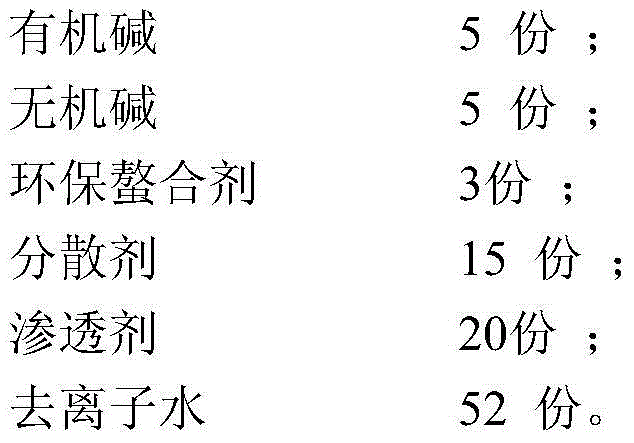
Figure 3
Abstract
Description
Technical field:
[0001] The invention relates to a cleaning agent composition, in particular to a water-based optical lens cleaning agent composition. Background technique:
[0002] In the optical electronics industry, the white spots, residual abrasive powder, adhesive, cutting oil, dust, and fingerprints, dust, and oil stains left before and after coating of optical lenses produced by cutting and grinding are traditionally treated with freon, trichloroethane, Traditional halogenated hydrocarbon solvents such as trichlorethylene are widely used for cleaning, which has strong cleaning ability, no flash point, fast drying speed and can be distilled and recovered. However, this type of cleaning solution has many disadvantages. The human body, the environment and the objects to be cleaned are all very harmful. To the human body: the above-mentioned halogenated hydrocarbon solvents are very toxic. Long-term exposure to or inhalation of vapor by the human body can easily cause l...
Examples
Embodiment 1
[0040] Present embodiment one concrete raw material and weight are:
[0041] 5 kilograms of triisopropanolamine;
[0042] Sodium citrate 3 kg;
[0043] Glutamic acid N, N-diacetic acid tetrasodium salt 3 kg;
[0044] Fatty acid methyl ester ethoxylation 12 kg;
[0046] 62 kg of deionized water.
[0047] The carbon number of the above-mentioned alkyl glycosides is 8-10.
[0048] The above-mentioned cleaning solution uses ultrasonic cleaning, which can effectively remove fingerprints, oil stains, dust and other impurities remaining after the lens glass is coated. The cleaning effect is shown in Table 1.
[0049] dirt type
[0050] Table I
Embodiment 2
[0052] Present embodiment two concrete raw materials and weight are:
[0053] 5 kilograms of triethanolamine;
[0054] Sodium metasilicate 5 kg;
[0055] Glutamic acid N, N-diacetic acid tetrasodium salt 3 kg;
[0056] Sulfonate of fatty acid methyl ester ethoxylate 15 kg;
[0058] 52 kg of deionized water.
[0059] The carbon number of the above-mentioned alkyl glycosides is 4-6.
[0060] The above-mentioned cleaning solution uses ultrasonic cleaning, which can effectively remove glass debris, oil stains, fingerprints, dust and other impurities remaining on the lens glass before coating. The cleaning effect is shown in Table 2.
[0061] dirt type
[0062] Table II