
The production and processing method of digging edge shears made of cr12mo1v1
A technology of cr12mo1v1 and processing method, which is applied in the field of cutting edge shears made of cold work die steel Cr12Mo1V1, can solve the problems of improper selection of heat treatment tempering temperature, destruction of internal stress balance, large amount of retained austenite, etc., to ensure processing quality and Efficiency rate, elimination of grinding stress, elimination of tissue stress and thermal stress effect
Patent Information
- Authority / Receiving Office
- CN · China
- Patent Type
- Patents(China)
- Current Assignee / Owner
- Publication Date
- 2016-08-10
Smart Images
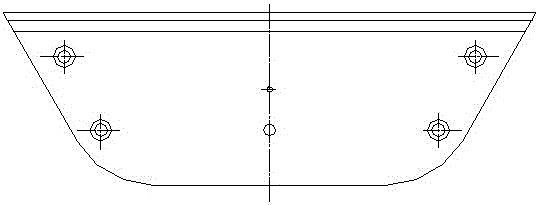
Figure 1 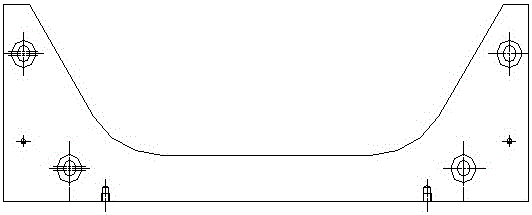
Figure 2
Abstract
Description
technical field
[0001] The invention relates to a production and processing method for making edge digging shears from cold working die steel Cr12Mo1V1. Background technique
[0002] When using side digging shears to process cold-rolled steel plates, due to the high hardness of cold-rolled steel plates, side digging shears made of ordinary materials cannot cut the steel plate. At this time, it is necessary to use materials with high hardness and high wear resistance to make side digging shears , so use Cr12Mo1V1 as the material of digging edge shears. The commonly used production and processing methods of edge digging shears are: processing the blank to the size before quenching, quenching and tempering, then rough and fine grinding, and finally wire cutting on the cutting edge. However, after Cr12Mo1V1 is quenched, the amount of residual austenite in the structure is large, and the tempering temperature of heat treatment is not selected properly or the tempering is not suf...
Examples
Embodiment Construction
[0008] The production and processing method of the material Cr12Mo1V1 digging shears of the present invention, the specific steps are as follows: (1) isothermal spheroidizing annealing of the forging: the forging is heated and kept at 850-870° C. for 4 hours, and is cooled to 730-750° C. for 5-6 hours with the furnace. Hours, with the furnace cooling to below 500 ℃ out of the furnace air cooling, its hardness is less than HB260. (2) Rough milling, flaw detection, component detection. (3) Stress relief and tempering: the workpiece is kept at 600°C for 5 hours, then cooled to 500°C with the furnace and air-cooled; fine milling to the size before quenching. (4) Quenching and tempering: Heating before quenching adopts three stages of temperature rise: 550°C for 120 minutes, 850°C for 120 minutes, 1010°C for 110 minutes; then out of the furnace for oil quenching, the oil temperature must be kept at 60 Between -80°C, cool down to below 150°C, after the oil is air-cooled to room tem...