
Application of willow herb to remediation of heavy metal lead pollution in soil
A technology for repairing soil and heavy metals, applied in the restoration of polluted soil, etc., can solve the problems of plant growth stress, affecting plant physiological and biochemical characteristics, etc., and achieve the effect of less environmental disturbance, no damage to soil physical and chemical properties, and low cost
Patent Information
- Authority / Receiving Office
- CN · China
- Current Assignee / Owner
- Publication Date
- 2013-12-11
- Estimated Expiration
- Not applicable · inactive patent
Smart Images
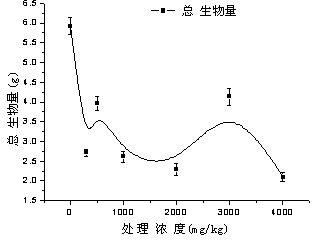
Figure 1 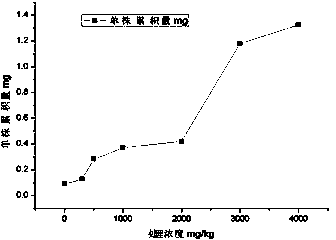
Figure 2 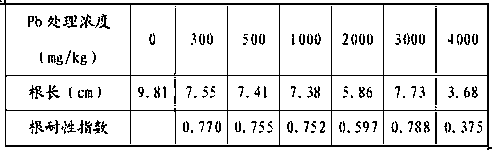
Figure 3
Abstract
Description
technical field
[0001] The invention relates to the technical field of phytoremediation of heavy metal pollution in the environment, in particular to the application of willow orchid in remediating heavy metal lead pollution in soil.
[0002] Background technique
[0003] Soil is an important material basis for human agricultural production. Due to the mining, processing and utilization of heavy metal deposits, the rise of township enterprises and the large and uncontrolled use of chemical fertilizers and chemical pesticides, the content of heavy metals in the soil has increased sharply, resulting in heavy metal pollution in farmland soil. Our country reduces grain production by more than 10 million tons every year due to heavy metal pollution. In addition, due to extensive soil pollution, our country produces as many as 12 million tons of heavy metal-polluted grain every year. This not only seriously affects the yield and quality of crops, but also affects the quality of ...
Examples
Embodiment 1
[0025] The potting soil was collected from Shuijin Village, Caoba Town, Ya'an City, Sichuan Province, and the soil type was paddy soil. The soil samples were air-dried indoors to remove impurities, crushed, passed through a 2-mesh sieve and mixed for further use. To analyze pure Pb(OAc) 2 ??3H 2 O supply soil Pb, Pb 2+ Set up 7 concentration gradients (in Pb 2+ Concentration meter), respectively 0mg / kg, 300mg / kg, 500mg / kg, 1000mg / kg, 2000mg / kg, 3000mg / kg, 4000mg / kg. Dissolve the weighed Pb(OAc) with a small amount of deionized water when preparing lead-contaminated soil 2 ??3H 2 O, then the dissolved Pb(OAc) 2 The solution was evenly mixed in 18 kg of soil with a wooden tool, and the soil was put into 3 numbered flower pots, each pot was about 6 kg, water was added repeatedly, and naturally air-dried, so that the soil was repeatedly passivated for 1 month. After passivation, one willow orchid was planted in each pot, and compound fertilizer was added as base fertilizer....