
Antibacterial peptide secreted by clostridium butyricum as well as preparation method and application thereof
A technology of Clostridium butyricum and antimicrobial peptides, which is applied in the biological field and can solve the problems of difficult separation and purification, separation and purification of antimicrobial peptides, and complex components.
Patent Information
- Authority / Receiving Office
- CN · China
- Patent Type
- Patents(China)
- Current Assignee / Owner
- Publication Date
- 2015-04-15
Smart Images
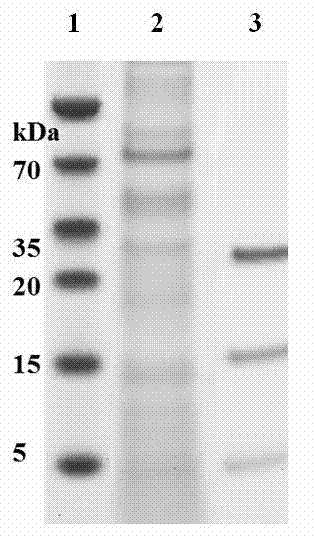
Figure 1 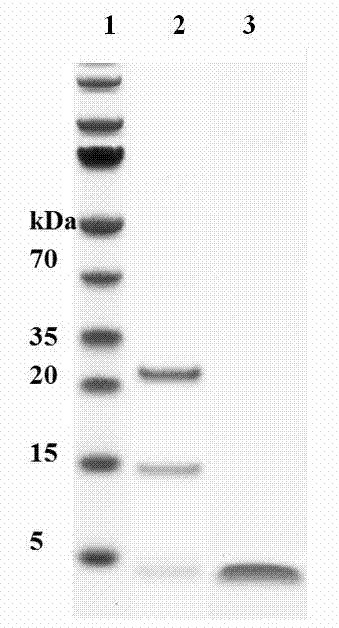
Figure 2 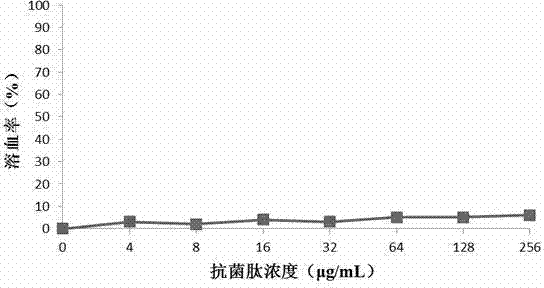
Figure 3
Abstract
Description
technical field
[0001] The invention belongs to biotechnology, and in particular, the invention relates to an antibacterial peptide secreted by Clostridium butyricum and its preparation method and application. Background technique
[0002] Antimicrobial peptides are an important component of the body's innate immunity and the first barrier for many organisms to resist the invasion of foreign pathogenic bacteria. Due to its unique and diverse biological functions and mechanisms of action, it has attracted widespread attention and research in the scientific community. On the one hand, it studies the biological basis of the role of antimicrobial peptides in innate immunity, and on the other hand, it is used as a new antibacterial and anti-infective agent. molecule template. Antimicrobial peptides are the product of natural evolution and have existed together with microorganisms for hundreds of millions of years. Despite long-term co-evolution, antimicrobial peptides have not l...
Examples
Embodiment 1
[0018] Example 1 Cation exchange purification of antimicrobial peptides secreted by Clostridium butyricum
[0019] 1) Column packing
[0020] 2) 10 volumes of low-salt buffer until the UV absorbance is stable
[0021] 3) Inject the sample into the injection column, and adjust the injection flow rate to 1 ml / min;
[0022] 4) 10 volumes of low-salt buffer until the UV absorbance is stable
[0023] 5) 0~0.5M NaCl sodium chloride gradient elution
[0024] 6) Collect samples, measure protein concentration with Bradford kit, adjust protein concentration to 1mg / ml with low-salt buffer, take 5 μg sample for NuPAGE analysis, such as figure 1 , and the rest were stored in a -80°C ultra-low temperature freezer.
Embodiment 2
[0025] Example 2 Purification of Antimicrobial Peptides Secreted by Clostridium butyricum by Molecular Sieve Chromatography
[0026] 1) Column packing
[0027] 2) Equilibrate with 10 volumes of buffer until the UV absorbance is stable
[0028] 3) Inject the sample into the injection column, and adjust the injection flow rate to 0.1 ml / min;
[0029] 4) Buffer elution, collecting the fourth peak
[0030] 5) Collect the samples and use the Bradford kit to determine the protein concentration. The antibacterial activity of each peak was detected by the agarose hole diffusion method, the protein concentration was adjusted to 1 mg / ml with low-salt buffer, and 5 μg samples were taken for NuPAGE analysis, as figure 2 , and the rest were stored in a -80°C ultra-low temperature freezer.
Embodiment 3
[0031] Example 3 Determination of the hemolysis rate of pig erythrocytes by antimicrobial peptides secreted by Clostridium butyricum
[0032] 1) Serially dilute the antimicrobial peptides on a 96-well plate, the final concentrations are 256, 128, 64, 32, 16, 8, 4 μg / mL, each concentration is 10uL, a total of seven concentrations, and three replicates are set at the same time;
[0033] 2) Add 90uL / well red blood cell suspension to the diluted polypeptide well, set the positive control well as 10% red blood cell suspension, add 10uL 10% Triton X-100 (final concentration is 1%); Add 10uL of 1×PBS to 1% red blood cell suspension;
[0034] 3) Place the 96-well plate in a 37°C, 5% CO2 environment for 18-24 hours;
[0035] 4) After the culture is over, centrifuge the 96-well plate at 1000-1500rpm for 20min without braking;
[0036] Carefully pipette the supernatant into a new flat-bottomed transparent 96-well culture plate, measure the absorbance of each well at 414nm and 546nm w...