
A fixed fluidized bed reactor and its application
A technology of fixed fluidized bed and reactor, applied in chemical instruments and methods, cracking, catalytic cracking, etc., can solve problems such as uneven distribution of catalyst, insufficient contact of oil agent, affecting product distribution, etc., to improve product distribution, Sufficient oil contact and stable bed velocity
Patent Information
- Authority / Receiving Office
- CN · China
- Patent Type
- Patents(China)
- Current Assignee / Owner
- Publication Date
- 2016-03-02
Smart Images
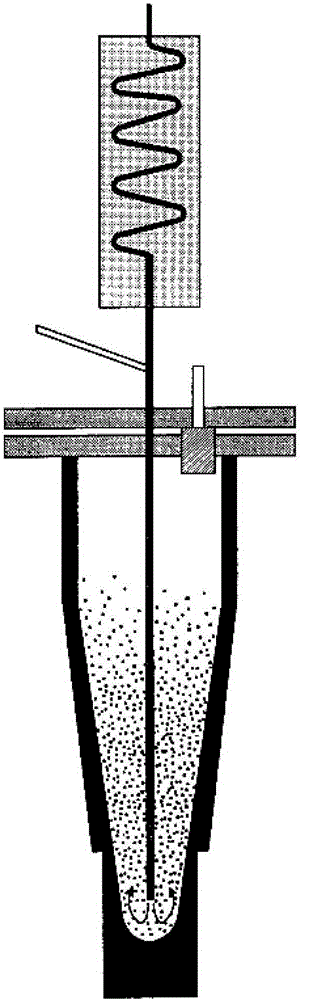
Figure 1 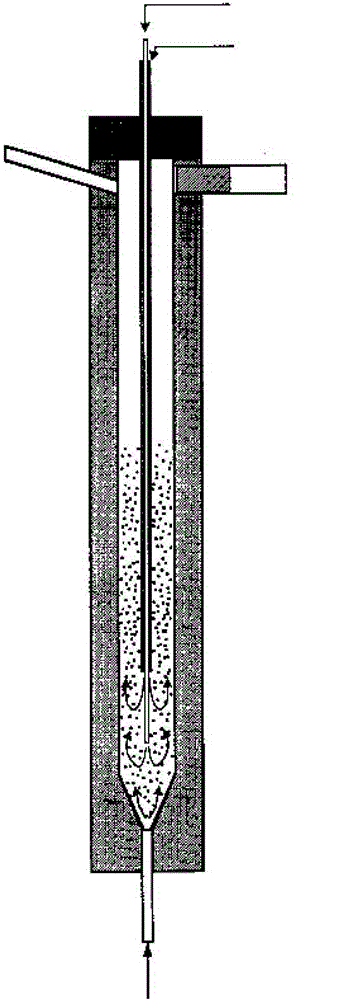
Figure 2 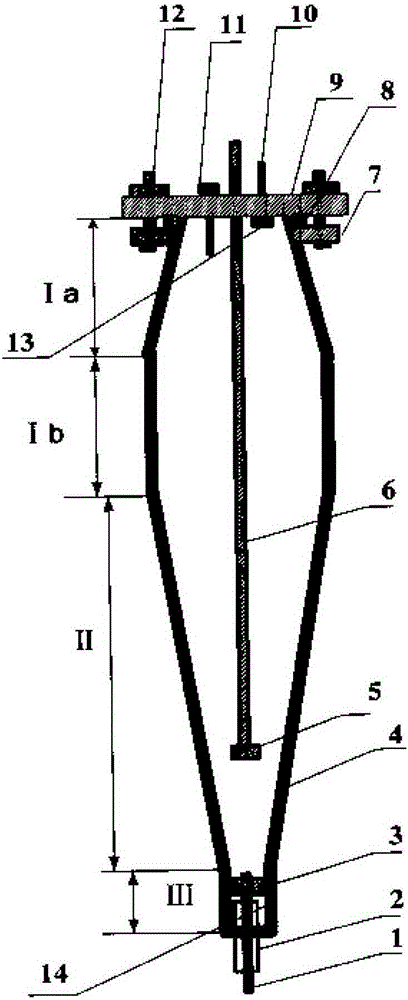
Figure 3
Abstract
Description
technical field
[0001] The invention relates to a fixed fluidized bed reactor and its application. Background technique
[0002] Catalytic cracking is a technology that cracks petroleum hydrocarbons in the presence of catalysts to produce low-carbon olefins. Due to the advantages of wide source of raw materials, easy adjustment of olefin product structure, low energy consumption and less carbon dioxide emissions, catalytic cracking technology has made great progress in recent years. a faster development. Especially for light oil products such as naphtha catalytic cracking technology is an important technology to optimize the utilization of naphtha resources and improve the economic benefits of refineries. The process development around this technology, the development of catalysts, or the screening of different feedstock oils and catalysts The evaluation is inseparable from the small evaluation device in the laboratory.
[0003] At present, the experimental devices used in...
Examples
Embodiment 1
[0065] This example is used to illustrate the fixed fluidized bed reactor provided by the present invention and its application.
[0066] according to Figure 4 The reactor configuration shown is a fixed fluidized bed reactor, and the reaction section II includes the first reaction section II-1 and the second reaction section II-2 from top to bottom, and the cross-sectional area of the lower end of the settling section I is the same as The cross-sectional area of the upper end of the first reaction section II-1 is equal, the cross-sectional area of the lower end of the first reaction section II-1 is equal to the cross-sectional area of the upper end of the second reaction section II-2, and the lower end of the second reaction section II-2 The cross-sectional area is equal to the cross-sectional area of the upper end of the oil agent initial contact section III, and the cross-sectional area of the first reaction section II-1 gradually increases from top to bottom, a...
Embodiment 2
[0086] This example is used to illustrate the fixed fluidized bed reactor provided by the present invention and its application.
[0087] According to the method of embodiment 1, adopt the fixed fluidized bed reactor described in this embodiment, the straight-run naphtha whose raw material properties are as shown in table 1 is catalyzed under the effect of catalyst properties as shown in table 2 Cracking reaction, and analysis of reaction products, operating conditions and product analysis results are shown in Table 4.
[0088] The difference is that the size parameters of each section of the fixed fluidized bed reactor used in this example are different, and the first reaction section II-1 and the second reaction section II-2 of the fixed fluidized bed reactor used in this example are both It is in the shape of a truncated cone, wherein the angle α of the first reaction section II-1 of the truncated shape is 41°; the angle β of the second reaction section II-2 of the truncate...
Embodiment 3
[0099] This example is used to illustrate the fixed fluidized bed reactor provided by the present invention and its application.
[0100] According to the method of embodiment 1, adopt the fixed fluidized bed reactor described in embodiment 1 to carry out catalytic cracking under the effect of the catalyzer of catalyst property as shown in table 2 to the straight-run naphtha whose raw material properties are as shown in table 1 Reaction, the difference is that only the cone angle and the aspect ratio of the oil agent initial contact section III are changed, the cone angle of the oil agent contact section III is 30°, and the aspect ratio of the oil agent initial contact section III is 1.87: 1, and the reaction product is analyzed, operating conditions and product analysis results are shown in Table 5.
[0101] table 5
[0102]
[0103] From the results in Table 5 above, it can be seen that under the condition that other conditions remain unchanged, only the cone angle of th...