
A kind of medicine for preventing or treating fxr-mediated disease and its preparation method and application
A drug and disease technology, applied in the field of drugs for preventing or treating FXR-mediated diseases and its preparation and use, can solve the problems of low oral utilization and short half-life, and achieve improved oral utilization and half-life prolonged effect
Patent Information
- Authority / Receiving Office
- CN · China
- Patent Type
- Patents(China)
- Current Assignee / Owner
- Publication Date
- 2017-06-06
Smart Images
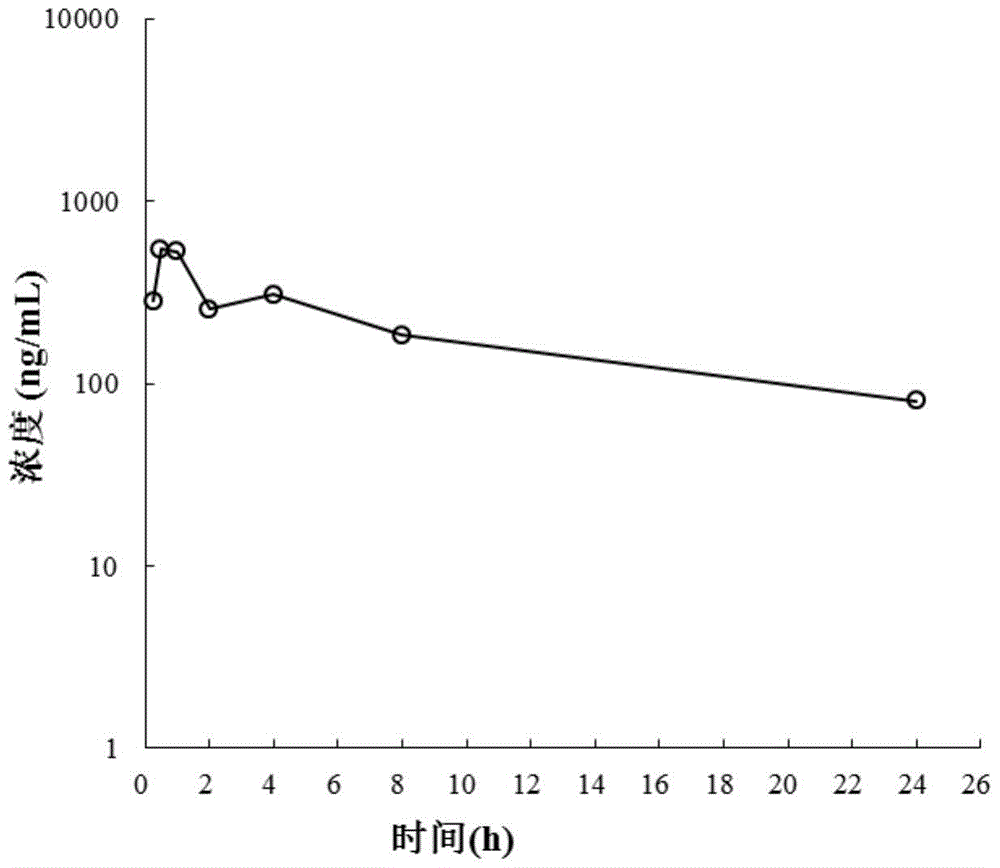
Figure 1 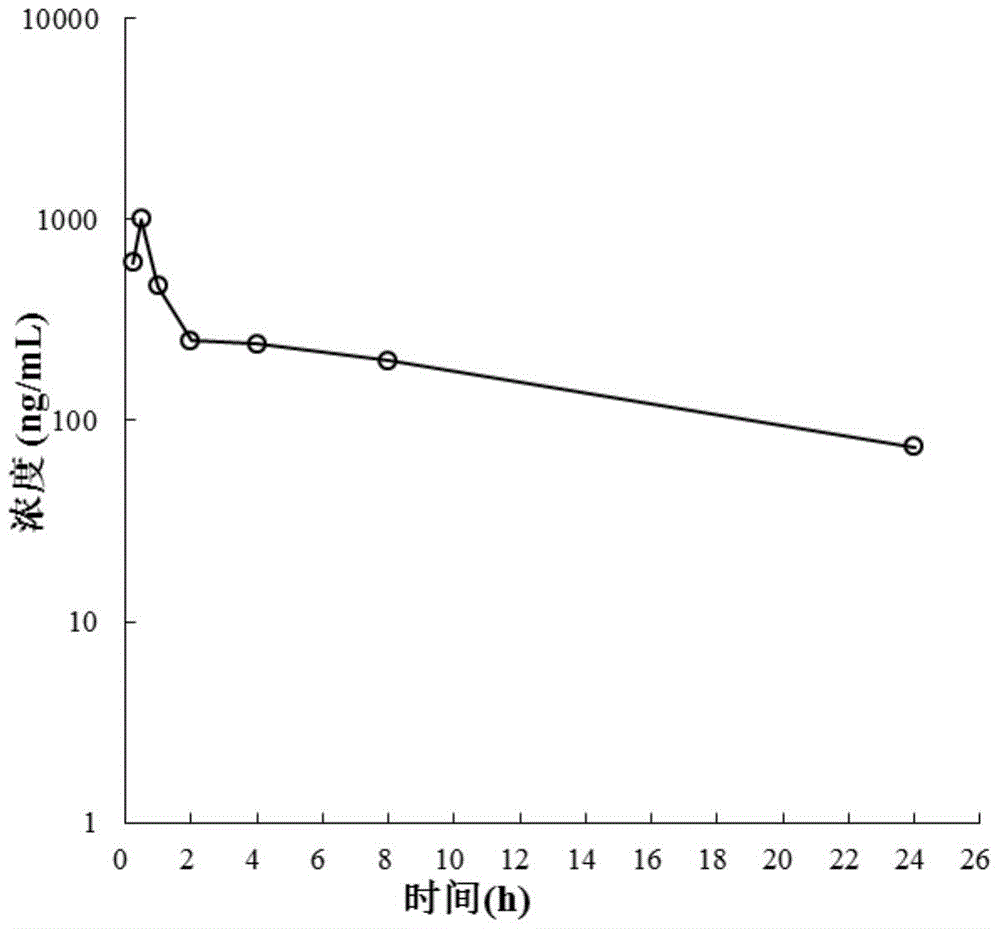
Figure 2 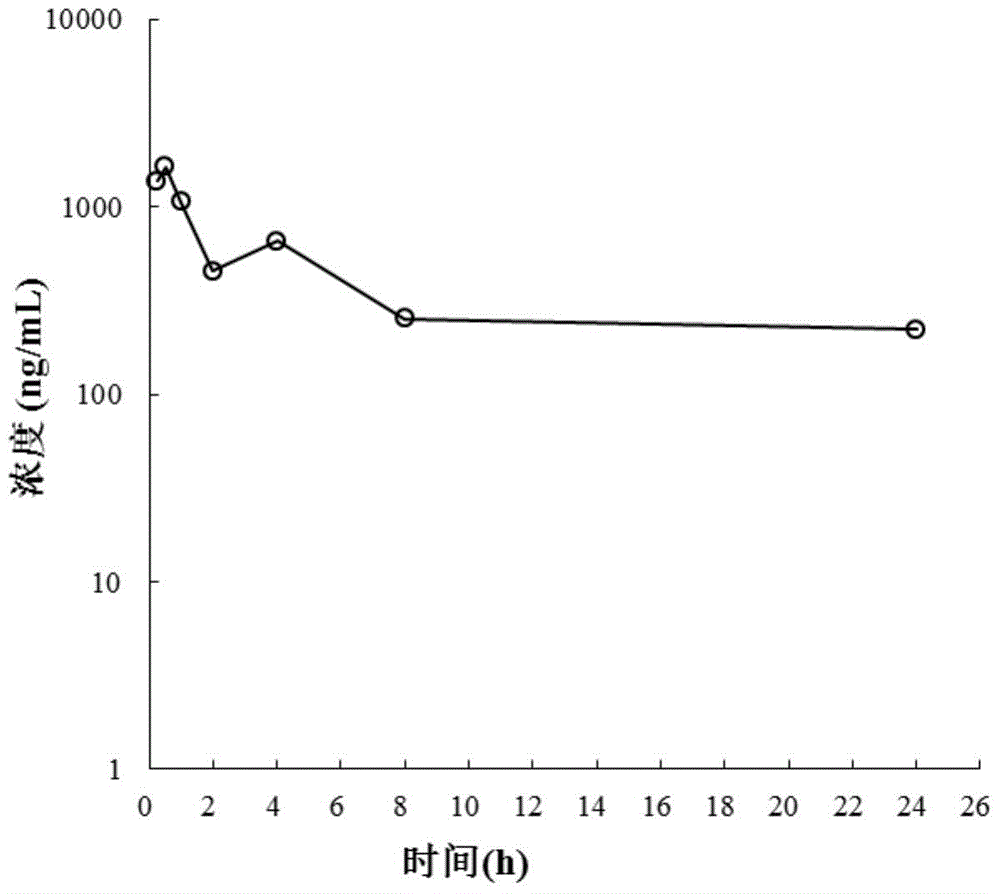
Figure 3
Abstract
Description
technical field
[0001] The present invention relates to a medicine for preventing or treating FXR-mediated diseases, its preparation method and application. Background technique
[0002] Farnesoid X receptor (FXR) is a member of the orphan nuclear receptor family. It was first cloned and discovered in rat liver cDNA library by Forman et al. in 1995. It is named because its transcriptional activity can be enhanced by supraphysiological concentrations of farnesoid. Northern and in situ analysis revealed that FXR is abundantly expressed in the lung, intestine, kidney, and adrenal gland. FXR forms a heterodimer with 9-cis retinoic acid receptor (RXR) and binds to DNA. The FXR / RXR heterodimer binds preferentially to a component consisting of binuclear receptor half-sites sharing the AG(G / T)TCA, which form inverted repeats and separate single nucleosides (IR-1 motif). However, these compounds fail to activate mouse and human FXR, making the nature of the endogenous FXR ligand un...
Examples
Embodiment 1
[0042] The preparation of the compound shown in embodiment 1 formula (III)
[0043]
[0044] To a solution of compound 1 (2.5 g, 6.4 mmol) in methanol (60 mL) was added p-TsOH.H 2 O(p-toluenesulfonic acid monohydrate) (0.12 g, 0.64 mmol). The resulting mixture was stirred at room temperature for 3 hours. The solvent was evaporated under reduced pressure, and the residue was dissolved in EtOAc (ethyl acetate) (150 mL). NaHCO 3 (saturated, 100mL), water (50mL) and brine (50mL) washed twice, the organic layer was washed with Na 2 SO 4 Dried and evaporated under reduced pressure to obtain product 2 as a white solid (2.5 g, 96%).
[0045] 1 H NMR (400MHz, CDCl 3):δ3.66(s,3H),3.60(m,1H),2.85(dd,J=12.4,6.0Hz,1H),2.47-2.30(m,2H),2.28-2.20(m,2H), 2.05-1.60(m,10H),1.50-1.09(m,14H),0.92(d,3H),0.65(m,J=6.4Hz,3H).
[0046] To a solution of diisopropylamine (5.2 mL, 39.5 mmol) in dry tetrahydrofuran (30 mL) was added dropwise a solution of n-butyllithium (15.8 mL, 2.5M in n-he...
Embodiment 2
[0049] The preparation of embodiment 2 compound A
[0050]
[0051] To a solution of compound (III) (83 mg, 0.2 mmol) in MeOH (10 mL) was added TsOH (p-toluenesulfonic acid) (5.1 mg, 0.03 mmol). The mixture was stirred at room temperature for 16 hours. The solvent was evaporated under reduced pressure and the residue was dissolved in EtOAc (20ml), washed with saturated aqueous sodium bicarbonate (2x10ml), water (10ml) and brine (10ml). The organic layer was dried over anhydrous sodium sulfate and evaporated to dryness. The residue was purified by column chromatography on silica gel (eluted with DCM / MeOH (dichloromethane / methanol)=100:1 to 80:1) to obtain compound A as a white solid (42 mg, 50%).
[0052] 1 H NMR (400MHz, CDCl 3 ):3.70(s,1H),3.66(s,3H),3.43-3.37(m,1H),2.39-2.31(m,1H),2.26-2.18(m,1H),1.00(td,J=14.0 ,3.2Hz,1H),0.93-0.388(m,9H),0.66(s,3H).LC-MS: m / z 869.7[2M+H] + ,452.3[M+H 2 O] + .
Embodiment 3
[0053] The preparation of embodiment 3 compound B
[0054]
[0055] To a solution of compound (III) (83 mg, 0.2 mmol) in EtOH (10 mL) was added TsOH (5.1 mg, 0.03 mmol). The mixture was stirred at room temperature for 16 hours. The solvent was evaporated under reduced pressure, the residue was dissolved in EtOAc (20ml), washed with saturated aqueous sodium bicarbonate (2 x 10ml), water (10ml) and brine (10ml). The organic layer was dried over anhydrous sodium sulfate and evaporated to dryness. The residue was purified by column chromatography on silica gel (eluted with DCM / MeOH=100:1 to 80:1) to obtain compound B as a white solid (30 mg, 36%).
[0056] 1 H NMR (400MHz, CDCl 3 ):4.12(q,J=7.2Hz,2H),3.70(s,1H),3.43-3.35(m,1H),2.38-2.30(m,1H),2.26-2.18(m,1H),0.95- 0.86(m,12H),0.66(s,3H).LC-MS: m / z 897.7[2M+H] + ,466.4[M+H 2 O] + .