
Slow-release fertilizer capable of reducing heavy metal ion content in soil and preparation method thereof
A technology of heavy metal ions and slow-release fertilizers, applied in the field of slow-release fertilizers, can solve the problems of application limitations, high cost, and long time consumption, and achieve the effects of saving costs, not easy to lose, and strong economic advantages
Patent Information
- Authority / Receiving Office
- CN · China
- Patent Type
- Patents(China)
- Current Assignee / Owner
- Publication Date
- 2018-08-24
Smart Images
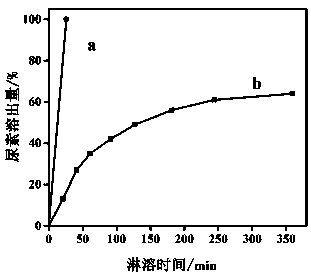
Figure 1 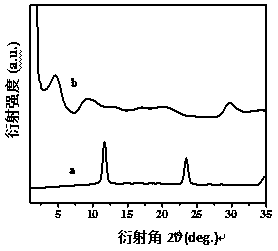
Figure 2
Abstract
Description
Technical field:
[0001] The invention provides a slow-release fertilizer capable of reducing the content of heavy metal ions in soil and a preparation method of the slow-release fertilizer, belonging to the field of organic-inorganic composite materials. Background technique:
[0002] With the continuous improvement of industrial development and urbanization, land resources are becoming increasingly tense, and the world today is suffering from various environmental problems. Due to the mining and smelting of metal mines, the discharge of industrial and domestic sewage, the application of heavy metal-containing pesticides and fertilizers, and sewage irrigation, the problem of heavy metal pollution in soil has become increasingly serious. According to statistics, the soil area polluted by heavy metals in my country is about 2×10 7 hm 2 , accounting for about 1 / 6 of the country's total arable land. If such soil is used for agricultural production, the content of heavy metals...
Examples
Embodiment 1
[0037]Sodium sulfide (0.5g) and polyvinyl alcohol 400 (50g) were added to water (500g) in sequence, and stirred for 40 minutes to mix the compounds uniformly to form solution A.
[0038] Add aluminum nitrate nonahydrate (2.6g) and magnesium nitrate hexahydrate (3.2g) into water (45g) from which carbon dioxide has been removed to form a mixed solution. While stirring the mixed solution, use 5wt% NaOH to adjust the pH to 7.0, and place the mixed solution at 70 °C, reacted for 2h under the protection of nitrogen, and filtered out the jelly B.
[0039] Then the solution A and the filtered jelly B were mixed evenly in a weight ratio of 1:1, placed at 50°C, and stirred for 5 hours to obtain a jelly solution C.
[0040] Then C and lignin were uniformly mixed in a weight ratio of 10:1, placed at 20°C, stirred and reacted for 1 hour, and D was obtained.
[0041] Finally, mix D and urea in a weight ratio of 11:2, place at 60°C, stir for 3 hours, dry at 65°C for 10 hours, crush and siev...
Embodiment 2
[0043] Sodium sulfide (0.8g) and polyvinyl alcohol 600 (80g) were added to water (600g) in sequence, and stirred for 40 minutes to mix the compounds uniformly to form solution A. Add aluminum nitrate nonahydrate (2.8g) and magnesium nitrate hexahydrate (3.9g) into water (50g) from which carbon dioxide has been removed to form a mixed solution. While stirring the mixed solution, use 10wt% NaOH to adjust the pH to 8.0, and place the mixed solution at 70 °C, under the protection of nitrogen, react for 10 h, and filter out the jelly B. Then, the solution A and the filtered jelly B were mixed evenly at a weight ratio of 2:1, placed at 60° C., stirred and reacted for 8 hours, and the jelly C was obtained. Then C and lignin were uniformly mixed in a weight ratio of 15:1, placed at 50° C., stirred and reacted for 5 hours, and D was obtained. Finally, mix D and urea at a weight ratio of 8:1, place at 80°C, stir for 6 hours, dry at 65°C for 10 hours, crush and sieve, and take granules ...
Embodiment 3
[0045] Sodium sulfide (1.4g) and polyvinyl alcohol 1000 (40g) were added to water (350g) in sequence, and stirred for 10 minutes to mix the compounds uniformly to form solution A. Then aluminum nitrate nonahydrate (3.1g) and magnesium nitrate hexahydrate (3.7g) were added to the water (65g) from which carbon dioxide was removed to form a mixed solution. The mixed solution was stirred with 15wt% NaOH to adjust the pH to 7.5, and the mixed solution was placed at 75 ℃, reacted under nitrogen protection for 6h, and filtered the jelly B. Then the solution A and the filtered jelly B were mixed evenly in a weight ratio of 3:1, placed at 55°C, stirred and reacted for 7 hours, and the jelly C was obtained. Then C and lignin were uniformly mixed in a weight ratio of 35:2, placed at 40° C., stirred and reacted for 10 h, and D was obtained. Finally, mix D and urea in a weight ratio of 11:4, place at 25°C, stir for 1 hour, dry at 65°C for 10 hours, crush and sieve, and take granules of 10...