

Method for preparing methyl 5-hydroxypentanoate
A technology of methyl hydroxyvalerate and methyl furoate, which is applied in the field of preparation of methyl 5-hydroxyvalerate, and can solve the problems of unsatisfactory production of methyl 5-hydroxyvalerate, cumbersome catalyst preparation, poor reaction selectivity, etc. problems, to avoid polymerization side reactions, inhibit the formation of by-products, and achieve the effect of easy separation
Patent Information
- Authority / Receiving Office
- CN · China
- Current Assignee / Owner
- Publication Date
- 2017-01-04
Smart Images
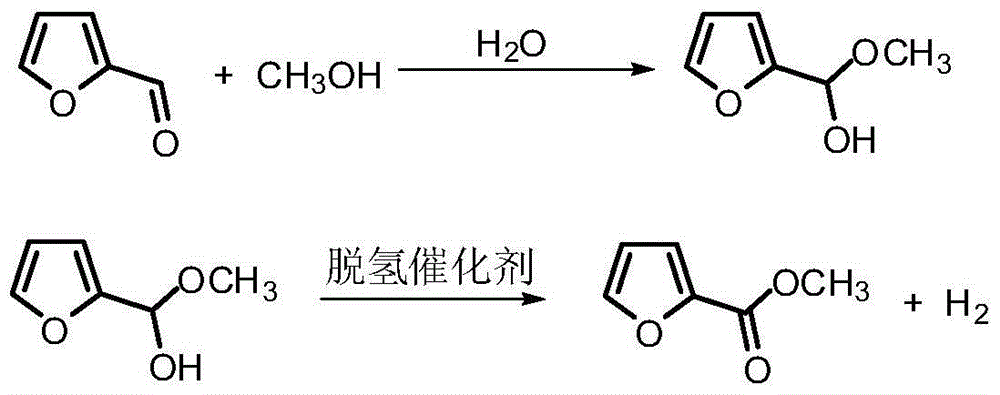
Figure 1 
Figure 2 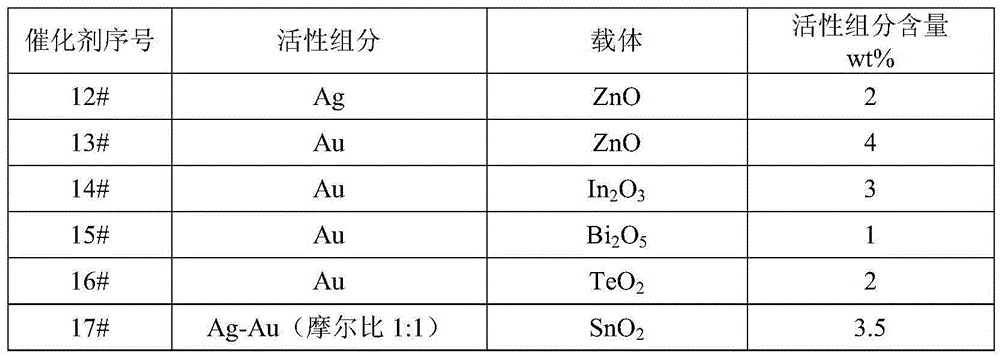
Figure 3
Abstract
Description
technical field
[0001] The invention belongs to the field of organic synthesis, and more specifically relates to a method for preparing methyl 5-hydroxyvalerate by using furfural, a biomass derivative. Background technique
[0002] Biomass has received more and more attention because of its wide range of sources and large reserves. It is more green and environmentally friendly to use biomass as the primary raw material to synthesize various chemicals. Furfural can be obtained from crop waste such as corn cobs and bagasse, and is produced in large quantities in North China and Shandong, but most of them are only exported at low prices, and deep processing is seriously lacking. Converting furfural into high value-added chemicals through catalytic means can not only comprehensively utilize agricultural waste, but also provide a new green and environmentally friendly way for the synthesis of chemicals.
[0003] Polyhydroxyalkanoate (Polyhydroxyalkanoate, PHA) is a biopolymer ma...
Examples
Embodiment 1~11
[0039] Embodiment 1~11: preparation of dehydrogenation catalyst
[0040] Prepare ruthenium chloride into a 10wt% aqueous solution, add carrier powder according to the ratio in Table 1, stir and mix evenly, impregnate at room temperature for 12 hours, dry at 120°C for 12 hours, and roast at 500°C for 4 hours; if the carrier is activated carbon, no roasting is required. Catalyst raw powders with different active component contents are prepared, and a shaped dehydrogenation catalyst precursor is obtained through tablet molding.
[0041] Table 1 Preparation of dehydrogenation catalyst
[0042] Catalyst serial number carrier Ru content wt% 1# activated carbon 5 2# SiO 2 4 3# al 2 o 3 5 4# TiO 2 3 5# MgO 2 6# SiO 2 -Al 2 o 3 (mass ratio 1:1) 4 7# SiO 2 -TiO 2 (mass ratio 4:1) 4 8# SiO 2 -MgO (mass ratio 1:2) 5 9# TiO 2 -Al 2 o 3 (mass ratio 2:3) 3 10# MgO-Al 2 o 3 (mass ratio 3:2)...
Embodiment 12~22
[0043] Embodiment 12~22: hydrogenolysis catalyst preparation
[0044] Prepared by a step-by-step equal-volume impregnation method, adding a solution of 10 wt% soluble salt of the active component into the carrier according to a certain metering ratio, stirring evenly, impregnating at room temperature for 12 hours, and then drying in an oven at 120°C for 12 hours; Calcining in air at 500° C. for 3 hours to obtain the original catalyst powder, and forming a shaped hydrogenolysis catalyst precursor by tablet molding.
[0045] Table 2 Hydrogenolysis Catalyst Preparation
[0046]
[0047]
Embodiment 23
[0048] Example 23: Catalyst Evaluation
[0049] The 1# reactor is a stainless steel tube with an outer diameter of 40mm, an inner diameter of 20mm, and a length of 1000mm. Load 50g of dehydrogenation catalyst precursor into 1# reactor, and reduce the catalyst precursor in situ before the reaction, the reduction temperature is 250°C, H 2 The pressure is 0.2MPa, H 2 The flow rate is 1.5L / min, and the reduction takes 4 hours.
[0050] The 2# reactor is a stainless steel tube with an outer diameter of 40mm, an inner diameter of 20mm, and a length of 1000mm. Fill 50g of the hydrogenolysis catalyst precursor into the 2# reactor, and reduce the catalyst precursor in situ before the reaction, the reduction temperature is 300°C, H 2 The pressure is 0.5MPa, H 2 The flow rate is 1.5L / min, and the reduction takes 4 hours.
[0051] Furfural, methanol, and water enter the 1# reactor, and take samples and analyze at the outlet of the 1# reactor; the reaction liquid and hydrogen of the 1...