
Separation method of flavone compounds in Clinopodium chinense (Benth.) O. Kuntze, and flavone composition
A technology of flavonoids and separation method, which is applied in the field of separation method and flavonoid composition of flavonoids in Campania, can solve the problem of unclear total flavonoids in Campanula, no definite compounds in total flavonoids, and flavonoids. different types of problems
Patent Information
- Authority / Receiving Office
- CN · China
- Patent Type
- Applications(China)
- Current Assignee / Owner
- Publication Date
- 2017-01-04
Smart Images
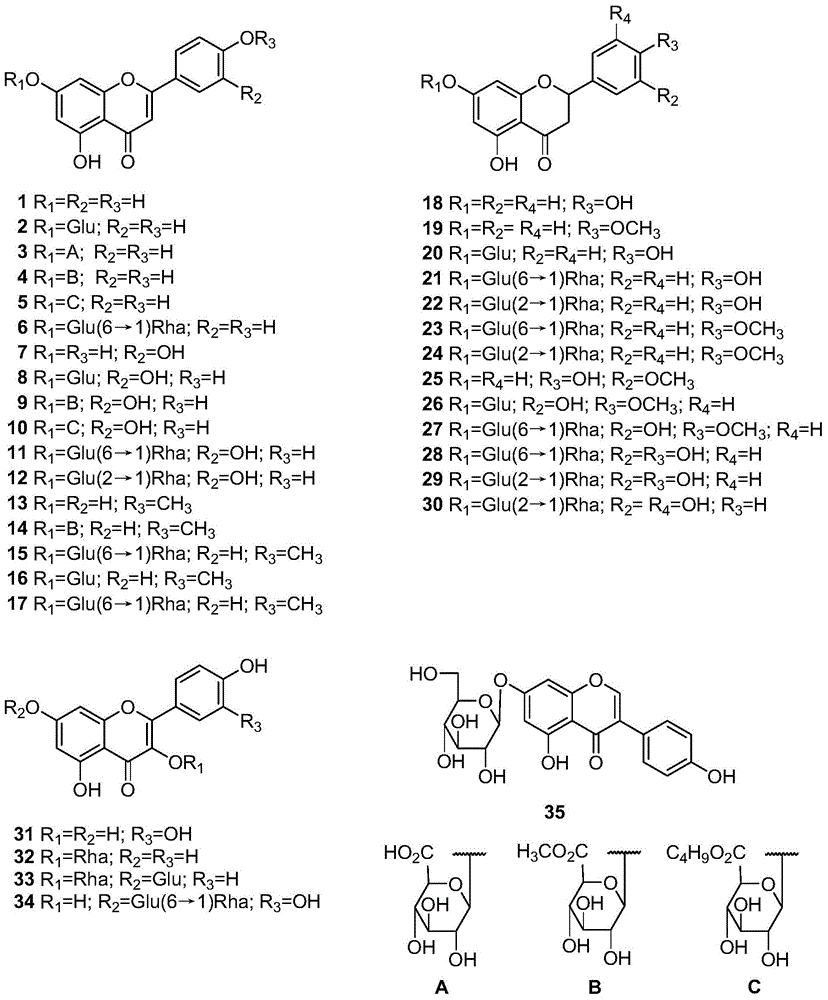
Figure 1 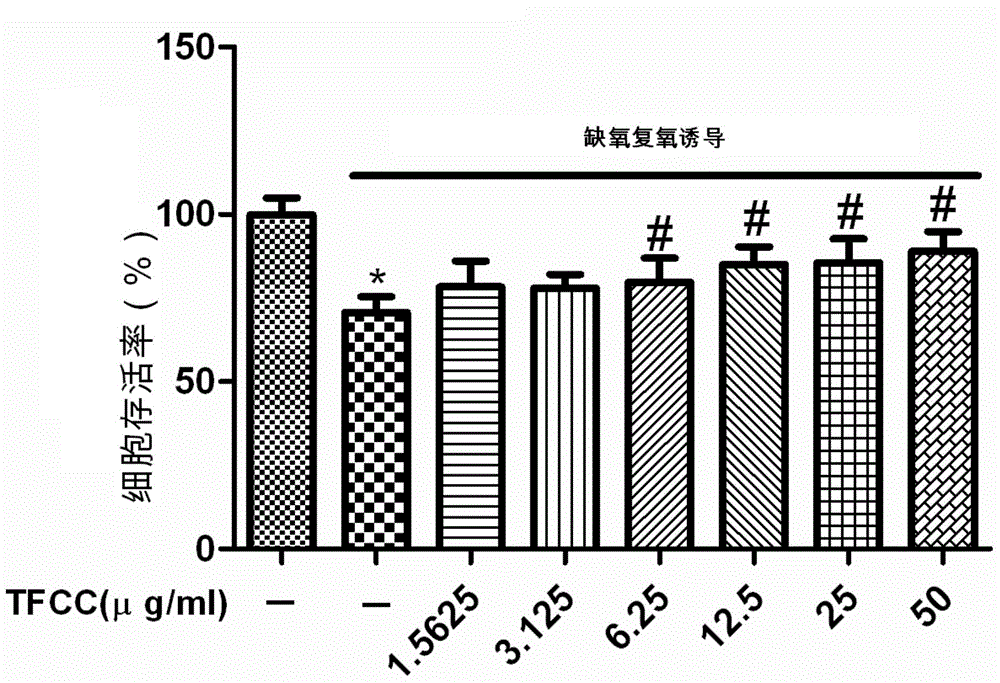
Figure 2
Abstract
Description
technical field
[0001] The invention relates to the field of traditional Chinese medicine compositions, in particular to a method for separating flavonoids from Pinnata pachyrhiza and a flavonoid composition. Background technique
[0002] Clinopodium chinense (Benth.) O. Kuntze is a plant of the genus Clinopodium chinense (Benth.) of Lamiaceae. In my country, it is mainly distributed in Shandong, Zhejiang, Jiangsu, Anhui, Fujian, Taiwan, Hunan, Hubei, Guangdong, Guangxi and northeastern Yunnan. Fengluncai is cool in nature, bitter and pungent in taste, and has the functions of dispelling wind and clearing heat, detoxifying and reducing swelling. For the treatment of colds, heatstroke, allergic dermatitis, enteritis, dysentery, hematuria embolism. It was first recorded in the grass section of "Rescue Famine Materia Medica" (1406), and has a long history of folk medicine in my country. It has been recorded in the Pharmacopoeia of the People's Republic of China as a medicine...
Examples
Embodiment 1
[0041] Example 1: Compound preparation.
[0042] Take the dry aboveground part of the spinach, cleanly select, cut into sections, and extract with water. The extract was concentrated and dried to obtain the extract, which was subjected to macroporous resin chromatography, using ethanol-water with ethanol volume concentrations of 20%, 50%, 70% and 95% as the eluent to obtain ethanol volume concentrations of 20% and 20%, respectively. %, 50% and 70% of the eluates were enriched by alkali extraction and acid precipitation, and the total flavonoids of Pinnata chinensis were obtained after refining.
[0043] The total flavonoids were separated by silica gel column chromatography. During the separation process, chloroform and methanol with a volume ratio of 100:5, 100:10, 100:15, 100:20 and 100:25 were used as eluents respectively. Gradient elution to obtain the 1-90th fraction, the 91-190th fraction, the 191-260th fraction, the 261-310th fraction and the 311-320th fraction in sequ...
Embodiment 2
[0050] Example 2: Protective effect of the total flavonoids of the spinach flavonoid composition of the present invention on H9c2 cardiomyocyte injury induced by hypoxia-reoxygenation
[0051] Rat cardiomyocytes H9C2 at 1×10 5 After inoculating in a 96-well plate for 36 hours, the flavonoid composition (1.5625, 3.125, 6.25, 12.5, 25, 50 μg / ml) was pretreated for 4 hours, hypoxia for 6 hours, and reoxygenation for 24 hours. Remove the supernatant, and incubate with 5mg / ml MTT (0.1mg / well) for 4h. Discard the supernatant, add 150 μl DMSO to each well to dissolve, and detect the absorbance with a 570 nm microplate reader (Spectrafluor, TECAN, Sunrise, Austria). The result is as figure 2 As shown, wherein, normal cells were used as positive control, and hypoxia-treated cells without drug treatment were used as negative control, from figure 2 It can be seen that the Campanula flavonoid composition provided by the present invention can protect cardiomyocyte death induced by hyp...