
Genetic toxicant detection vector and detection method
A genotoxicity and detection carrier technology, applied in the field of genotoxic substance detection, can solve the problems of long detection time, cumbersome steps, difficult preservation of strains, etc., and achieves the effects of simple and easy operation, high detection sensitivity, and no risk of disease.
Patent Information
- Authority / Receiving Office
- CN · China
- Patent Type
- Applications(China)
- Current Assignee / Owner
- Publication Date
- 2017-05-10
- Estimated Expiration
- Not applicable · inactive patent
Smart Images

Figure 1 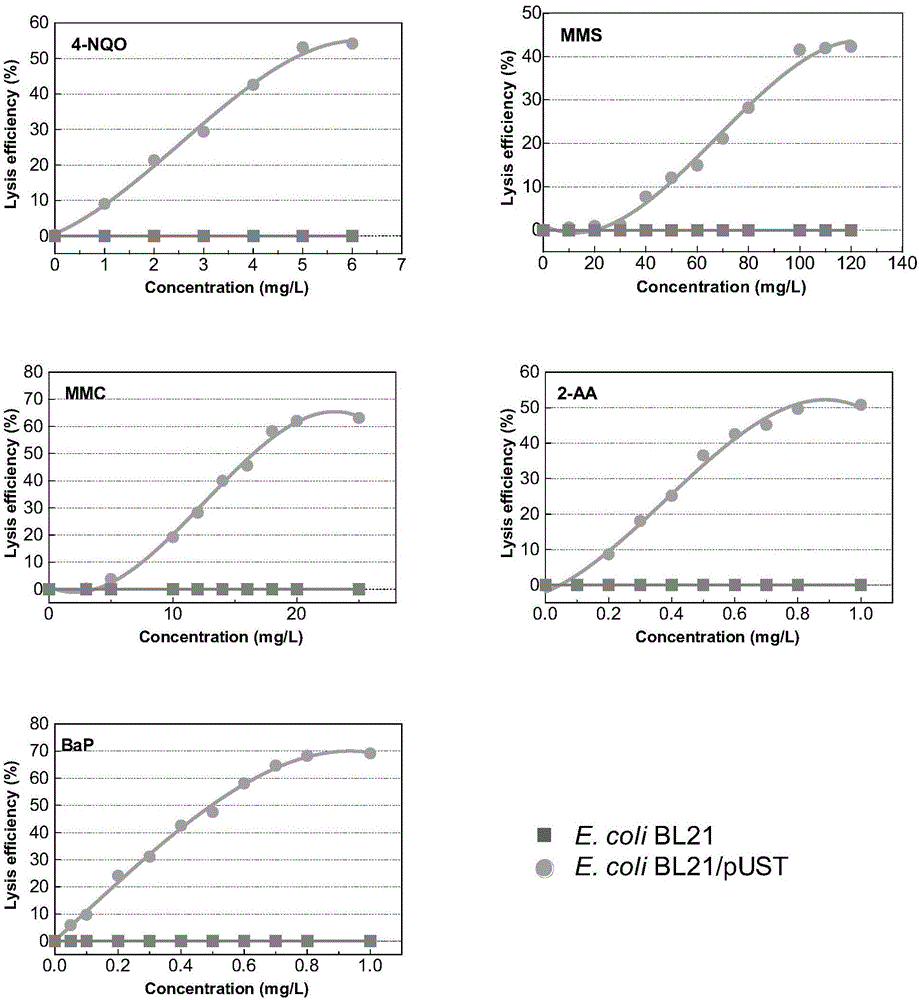
Figure 2 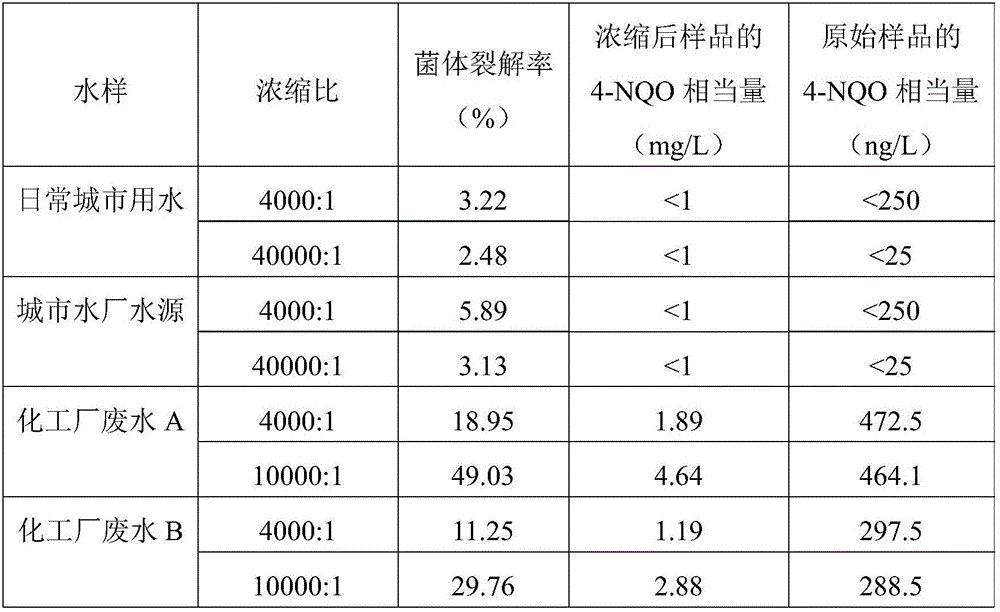
Figure 3
Abstract
Description
technical field
[0001] The invention relates to the technical field of detection of genotoxic substances in the environment, in particular to the detection of genotoxic substances in the environment by using recombinant Escherichia coli carrying a reporter gene. Background technique
[0002] The detection methods of genotoxic substances are divided into long-term testing and short-term testing. Long-term testing methods have been gradually replaced by fast and low-cost short-term screening methods due to the time-consuming, labor-intensive and long-term maintenance costs of experimental animals. Short-term tests are based on cytogenetic indicators to screen chemical mutagenic factors, usually using biological cells such as plants, mammals, and microorganisms to monitor the genotoxicity of residues. At present, there are comet test, sister chromatid exchange test, SOS color development test, unprogrammed DNA synthesis test, bacterial reverse mutation, prophage induction test...
Examples
Embodiment 1
[0047] Construction of genotoxic response vector
[0048] Using pUC18 as the starting vector, the genotoxic response vector pUST was constructed. The specific construction method is as follows:
[0049] a) Synthetic Genetic Response Promoter P umu (SEQ ID No. 1) and T7 terminator sequences, EcoRI and XbaI sites were added upstream of the promoter and T7 terminator, and SpeI and PstI restriction sites were added downstream.
[0050] b) Using lambda phage genomic DNA as a template, amplify the SRRz gene. EcoRI and XbaI, SpeI and PstI restriction sites were also added upstream and downstream of the SRRz gene.
[0051] c) Using the Biobricks method, using enzyme cleavage and ligation methods, each element is connected in the sequence of promoter-cleavage gene-terminator, and inserted into the pUC18 vector to obtain the genotoxic response vector pUST.
[0052] d) Transfer the vector pUST into E.coli BL21 competent cells to obtain recombinant E.coli BL21 / pUST for the detection o...
Embodiment 2
[0054] Calculation of cracking efficiency
[0055] 0.5h after the Escherichia coli detection solution was in contact with the sample to be tested, the light absorption value (OD) of each test bacterial solution at 600 nm was determined respectively. 600 ).
[0056] Cracking rate (%)=(A-B) / A*100%
[0057] Wherein, A—the bacterial liquid OD of adding methanol 600
[0058] B—the OD of the bacterial liquid added to the test sample 600 .
Embodiment 3
[0060] Genotoxic Substance Detection
[0061] 1. Recovery activation of recombinant E. coli
[0062] (1) The wild-type Escherichia coli (E.coli BL21 / pUC18) and the recombinant bacteria (E.coli BL21 / pUST) were streaked into LB plate medium from a -80° refrigerator, and the culture was resumed at 37°C. 14h.
[0063] (2) Pick a single colony, inoculate it into LB medium, and culture at 37°C and 250rpm for 12-16h.
[0064] 2. Preparation of Escherichia coli detection solution
[0065] Inoculate the revitalized bacterial solution into fresh LB medium at a volume ratio of 1:100, add 190 μl volume to a 96-well culture plate, and cultivate to OD at 35-37 °C and 800 rpm. 600 to 0.15-0.25.
[0066] 3. Contact with the test sample
[0067] Methanol and 10 μl each of 4-NQO, MMS, MMC, 2-AA and BaP with different concentrations were added to the 96-well plate respectively, and cultured at 35-37 °C and 800 rpm for 0.5 h, and 3 parallel groups were set up.
[0068] 4. The experimental r...