
rbcg expressing brucella melis l7/l12 gene and its construction method and application
A technology for brucellosis and brucellosis, applied in the field of rBCG expressing the L7/L12 gene of brucella melis and its construction, to achieve the effect of solving poor immune effect and saving costs
Patent Information
- Authority / Receiving Office
- CN · China
- Patent Type
- Patents(China)
- Current Assignee / Owner
- Publication Date
- 2020-06-23
Smart Images
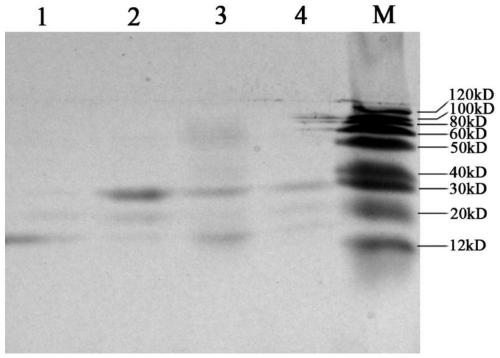
Figure 1 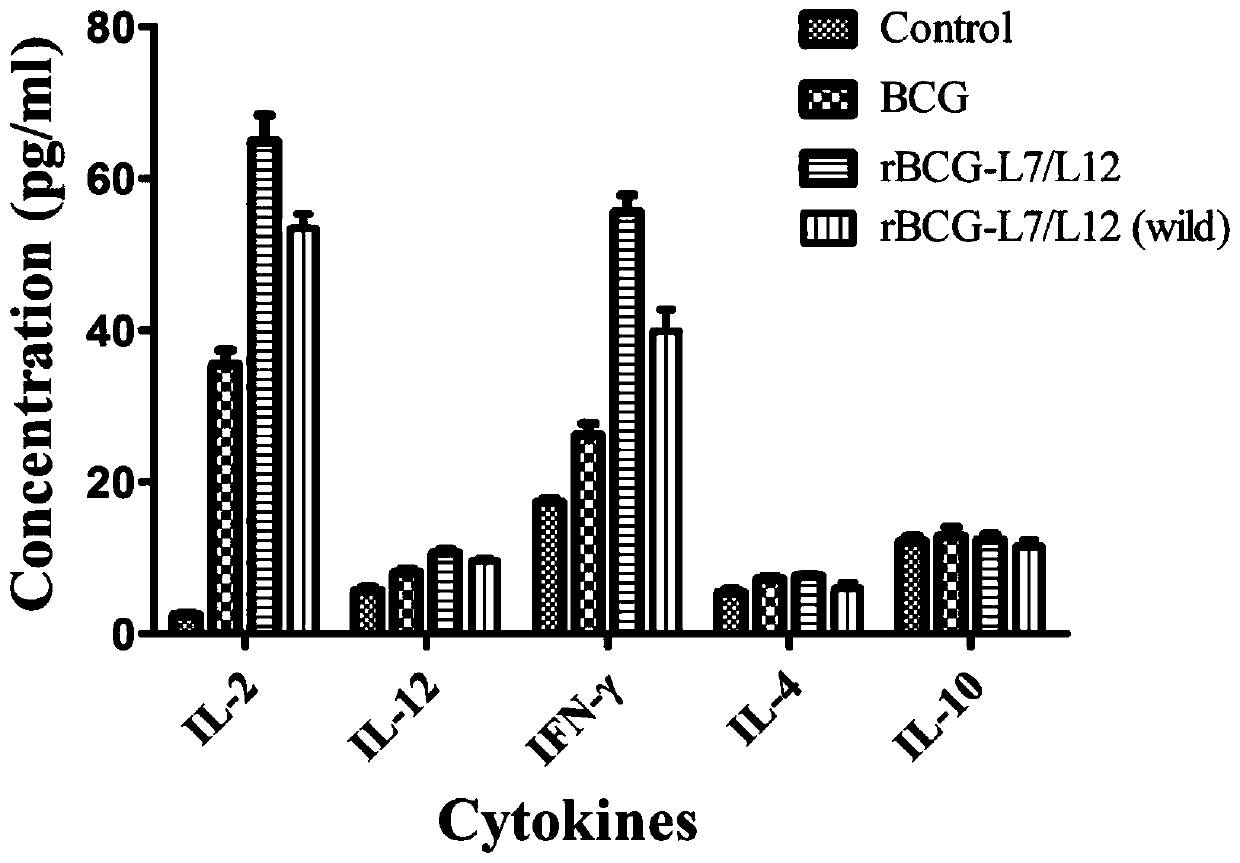
Figure 2
Abstract
Description
technical field
[0001] The invention relates to the technical fields of genetic engineering and vaccine preparation, in particular to an rBCG expressing the L7 / L12 gene of Brucella melis and its construction method and application. Background technique
[0002] Brucellosis, referred to as brucellosis, is a zoonotic infectious disease caused by Brucella infection. Brucella is a facultative intracellular parasite that is highly infectious and pathogenic to humans and mammals. The genus mainly includes 6 species of sheep, cattle, pig and dog. The first 3 species are mainly prevalent in China, among which Brucella melis infection is the most common. The modes of transmission of brucellosis are animal-animal and animal-human. Livestock such as sheep, cattle, and pigs are most susceptible to infection. Infection of animals can lead to inflammation of reproductive organs and fetal membranes, miscarriage, infertility, and various tissue lesions, which greatly increases the chance ...
Examples
Embodiment 1
[0030] Embodiment 1 carries the construction of the recombinant expression vector of Brucella melii L7 / L12 gene
[0031] Include the following steps:
[0032] 1. According to the published sequence of the L7 / L12 gene of Brucella melis (GenBank: EF173477.1), after codon optimization using Jcat software, the L7 / L12 gene after the full sequence optimization was artificially synthesized as the target gene (nuclear The nucleotide sequence is shown in SEQ ID NO: 1).
[0033] 2. Construction of the recombinant expression vector carrying the L7 / L12 gene of the M5 strain:
[0034] The above target gene was inserted into the shuttle expression vector pMV361 through two restriction sites of Mun I and Pvu II.
[0035] 3. Verification of inserting the correct recombinant expression vector:
[0036] Through nucleic acid sequence determination, it was confirmed that the recombinant expression vector carrying the optimized Brucella melis L7 / L12 gene was constructed successfully.
Embodiment 2
[0037] Example 2 Construction of rBCG expressing Brucella melis L7 / L12 gene
[0038] 1. Using BCG as the host bacterium, transform the recombinant expression vector constructed in Example 1 (full sequence shown in SEQ ID NO: 2) into BCG.
[0039] The electroporation method was used for transformation, and the experimental conditions were: 2500V, 25μF, 1000Ω, electroporation time 5ms, 0.1cm electric shock cup. The electroporation reaction system is: 4 μl of plasmid (concentration is 0.51 μg / μl), 100 μl of competent BCG bacterial solution (concentration is about 1×10 10 CFU / ml).
[0040] 2. Screening of positive clones
[0041] After electroporation, they were inoculated on a medium (slant) containing 50 μg / ml kanamycin for positive clone selection.
[0042] 3. Detection of target gene expression
[0043] The screened positive clones (ie, recombinant BCG) were inoculated into liquid medium for expansion culture, the culture supernatant was collected, and the expression level...
Embodiment 3
[0044] Effect experiment of embodiment 3 brucellosis vaccines
[0045] Immunize female Balb / c mice aged 6-8 weeks with recombinant BCG and inject subcutaneously at a dose of 4×10 8 CFU / mouse, 4 weeks after immunization, the expression of Th1 / Th2 cytokines in the serum of mice in each group was detected. The experimental results showed that compared with the recombinant BCG carrying the unoptimized L7 / L12 gene (rBCG-L7 / L12(wild)) and the untransformed BCG, the recombinant BCG carrying the codon-optimized L7 / L12 gene (rBCG-L7 / L12(wild)) L7 / L12) can effectively induce the production of Th1 cytokines such as IL-2 and IFN-γ. ( figure 2 )