
Method for producing foamed ceramic fireproofing and heat insulating material from white mud
A foamed ceramic, fire-proof and heat-insulating technology, which is applied in the production and application of ceramic products and ceramic materials, can solve problems such as no foamed ceramic fire-proof and heat-insulating materials, and achieves good heat preservation performance, beautiful foaming aperture, and simple process. Effect
Patent Information
- Authority / Receiving Office
- CN · China
- Current Assignee / Owner
- Publication Date
- 2017-08-11
- Estimated Expiration
- Not applicable · inactive patent
Smart Images
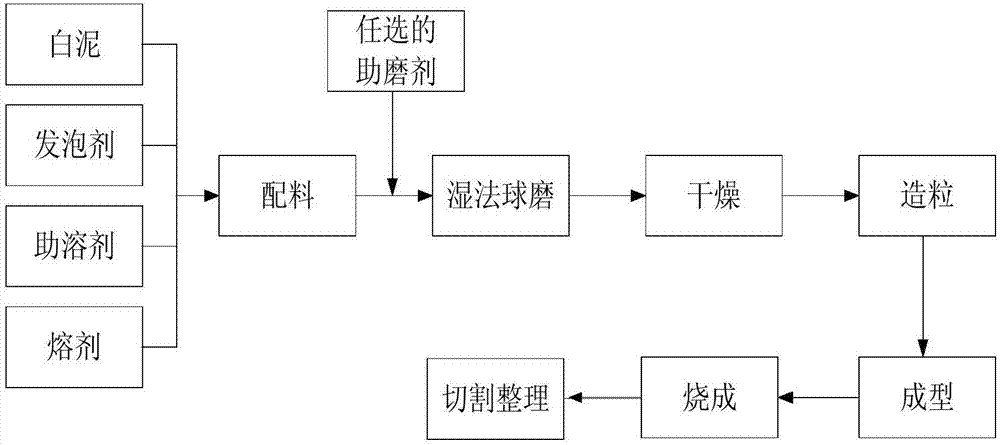
Figure 1 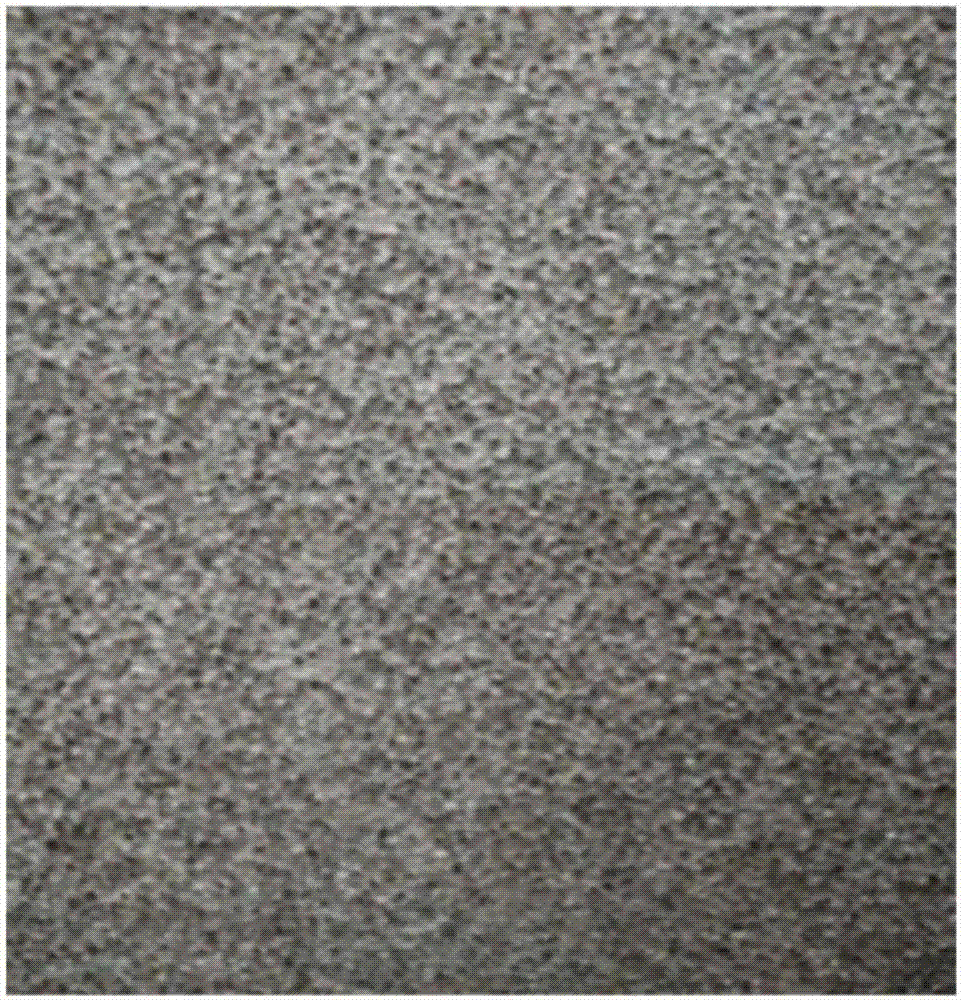
Figure 2 
Figure 3
Abstract
Description
technical field
[0001] The invention belongs to the comprehensive utilization of fly ash, relates to the technical field of energy-saving ceramic materials and its manufacture, and in particular relates to a fire-proof and heat-preserving foamed ceramic material produced from lime mud and a manufacturing method thereof. Background technique
[0002] Fly ash is a solid waste produced after the combustion of coal or gangue, and its main composition is SiO 2 、Al 2 o 3 , FeO, Fe 2 o 3 , CaO, TiO 2 Wait. my country is a country where coal is the main energy source. In 2000, the coal ash produced by coal power generation in the country was 150 million tons, and in 2010 it exceeded 300 million tons. The large amount of fly ash discharge has caused huge pressure on national economic construction and ecological environment. . The high-silicon tailings (collectively referred to as white mud) after extraction of alumina from fly ash have high silica and alumina content, small par...
Examples
Embodiment 1
[0039] 1) Get 500kg of white mud containing 22% alumina, 50% silicon oxide, add 25kg silicon carbide, 120kg potassium feldspar and 355kg glass powder;
[0040] 2) put the above-mentioned materials into a ball mill, add 2.5kg sodium tripolyphosphate and 500kg water to grind, grind to a fineness of 325 mesh sieves and then sieve 5%;
[0041] 3) Dry the ground slurry with an electric oven at 255° C.; granulate the dried material with a granulator, and mix the material obtained under the conditions of 40% remaining on a 10-mesh sieve and 60% remaining on a 20-mesh sieve.
[0042] 4) Put the granulated material into the silo, and feed from the silo to the 300mm×300mm×60mm refractory combined mold; put the mold with the material into the high-temperature kiln, and burn it at 1250°C for 4 hours; After the fired product is cooled to 50°C, it is taken out from the kiln and demolded;
[0043] 5) After the demolded product is cut and sorted, a finished product of fireproof and thermal i...
Embodiment 2
[0045] 1) Get 600kg of lime mud containing 18% alumina, 48% silicon oxide, add 30kg silicon carbide, 150kg potassium feldspar and 220kg glass powder;
[0046] 2) Put the above-mentioned materials into a ball mill, add 2.5kg sodium tripolyphosphate and 660kg water, grind, grind to a fineness of 325 mesh and 7.2% after sieving;
[0047] 3) Dry the ground slurry with an electric oven at 255°C; granulate the dried material with a granulator, and mix the material obtained under the conditions of 40% of the 10-mesh sieve and 60% of the 20-mesh sieve;
[0048] 4) Put the granulated material into the silo; feed the material from the silo into the 400mm×400mm×50mm refractory combined mold; put the mold with the material into the high-temperature kiln, and burn it at 1300°C for 3 hours; Cool the fired product to 80°C and take it out of the kiln and demould;
[0049] 5) After the demolded product is cut and sorted, a finished product of fireproof and thermal insulation material meeting ...
Embodiment 3
[0051] 1) Get 700kg of lime mud containing 25% alumina and 45% silica, add 25kg silicon carbide, 80kg potassium feldspar and 195kg glass powder;
[0052] 2) Put the above-mentioned materials into a ball mill, add 2.5kg sodium tripolyphosphate and 600kg water for grinding; grind to a fineness of 325 mesh sieves and put 6% left;
[0053] 3) Dry the ground slurry with an electric oven at 255°C; granulate the dried material with a granulator, and mix the material obtained under the conditions of 40% of the 10-mesh sieve and 60% of the 20-mesh sieve;
[0054] 4) Put the granulated material into the silo; feed the material from the silo into a 500mm×400mm×60mm refractory composite mold; put the mold with the material into the high-temperature kiln, and burn it at 1350°C for 3.5 hours; After the fired product is cooled to 65°C, it is taken out from the kiln and demolded;
[0055] 5) After the demolded product is cut and sorted, a finished product of fireproof and thermal insulation ...