
Novel electrolysis device
A technology of electrolysis device and power receiving device, which is applied in the direction of electrolysis process, electrolysis components, electrodes, etc. It can solve the problems of affecting the life of the anode, affecting the efficiency of electrolysis, and the peeling off of the anode coating, and achieves simplified pipeline layout, simple operation, The effect of reducing the footprint of the device
Patent Information
- Authority / Receiving Office
- CN · China
- Current Assignee / Owner
- Publication Date
- 2017-08-18
- Estimated Expiration
- Not applicable · inactive patent
Smart Images
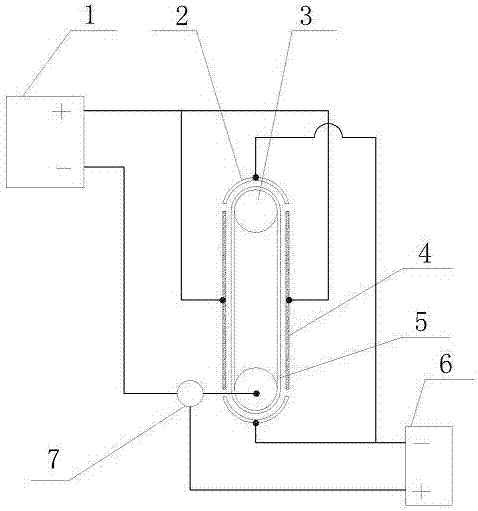
Figure 1 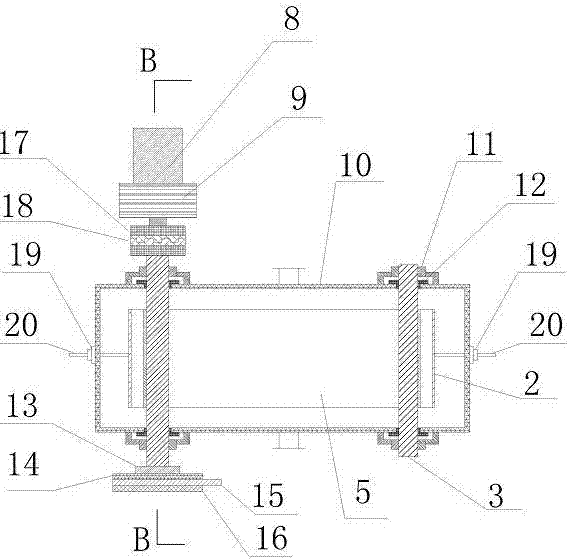
Figure 2 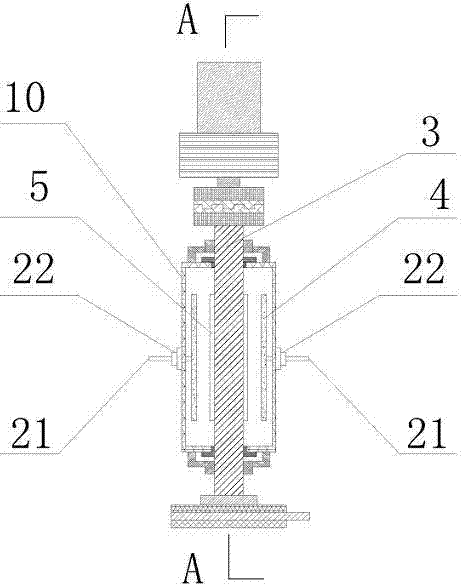
Figure 3
Abstract
Description
technical field
[0001] The invention relates to water treatment equipment, in particular to electrolytic chlorine production disinfection equipment. Background technique
[0002] On-site sodium hypochlorite generators are widely used to produce sodium hypochlorite because of their safety, stability and reliability. The device has a high degree of automation and realizes unattended operation. The current problem is that the cathode plate will deposit dirt during the electrolysis process, and it is necessary to periodically interrupt the electrolysis and switch to the descaling program. The current descaling methods include: pickling and dissolution method and reverse current method. After the cathode scaling is removed , and then turn to normal electrolysis, the disadvantages of these two methods are:
[0003] The pickling method will corrode the electrode and affect the life of the electrode. The pickling is not easy to complete, and the residual scale will also affect the ...
Examples
Embodiment Construction
[0026] Below in conjunction with accompanying drawing, the present invention is described in detail.
[0027] Such as figure 1 , figure 2 , image 3 A new type of electrolysis device shown mainly includes a tank body 10, a rotating device, a rotating power receiving device, an electrolysis power supply 1, and an inverted pole power supply 6. There is a cathode cylinder 3 at both ends of the tank body 10. A cathode roller 3 is covered with a cathode plate belt 5, the cathode plate belt 5 is connected end to end to form a closed ring belt and is tensioned by two cathode rollers 3, and the two sides of the cathode plate belt 5 are parallel with the anode plate 4, The anode conductive strip 21 connected to the anode plate 4 extends out of the tank body 10 through the seal 22 and is connected to the positive pole of the electrolysis power supply 1, and the two ends of the two cathode cylinders 3 extend out of the tank body 10 through the shaft seal 12 and are connected to the be...