
A kind of preparation method of high mesopority nitrogen-doped carbon electrode material
A nitrogen-doped, carbon electrode technology, applied in the field of materials, can solve problems such as macroscopic control of morphology, pore structure and surface chemical properties that are difficult to obtain precise, and achieve the effects of excellent electrochemical performance, reduced production cost, and high specific surface area.
Patent Information
- Authority / Receiving Office
- CN · China
- Patent Type
- Patents(China)
- Current Assignee / Owner
- Publication Date
- 2020-03-17
Smart Images
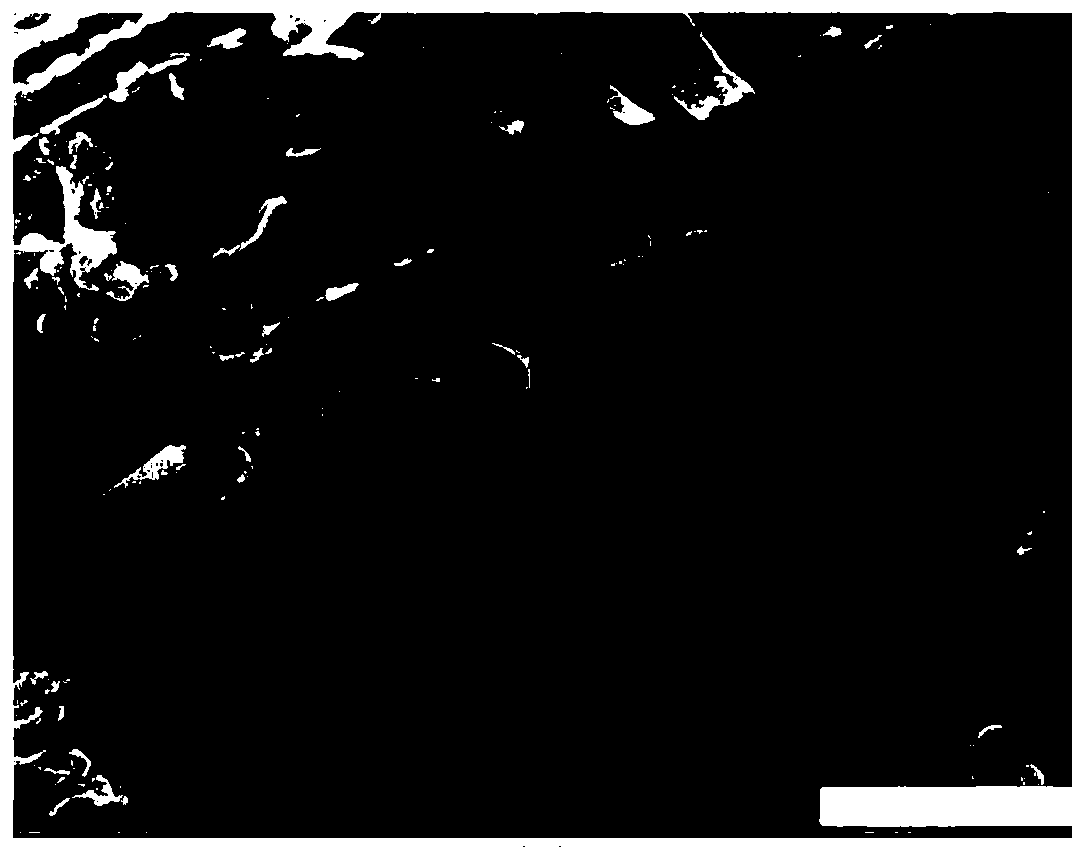
Figure 1 
Figure 2 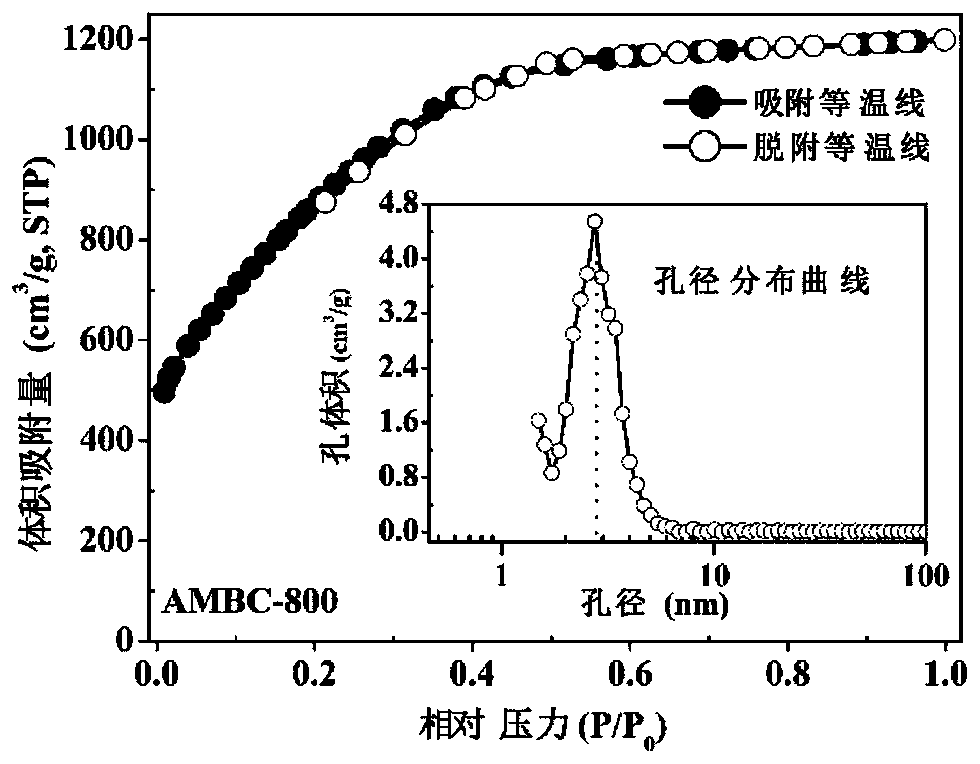
Figure 3
Abstract
Description
technical field
[0001] The invention relates to the field of material technology, in particular to a method for preparing a high-mesopority nitrogen-doped carbon electrode material. Background technique
[0002] Supercapacitor is a new type of energy storage device. The density of stored charges is many times higher than that of traditional standard capacitors. The key to the performance of supercapacitors lies in the electrode materials. Porous carbon materials have the characteristics of high specific surface area, well-developed pore structure, and chemical stability, making them the first choice for supercapacitor electrode materials.
[0003] Porous carbon materials can be prepared from different carbon precursors, including organometallics, polymers, and biomass. Among them, biomass is abundant, renewable and environmentally friendly, and has potential application value in large-scale preparation of porous carbon materials. The use of sustainable biomass waste as a ca...
Examples
Embodiment 1
[0036] A method for preparing a high-mesopority nitrogen-doped carbon electrode material, specifically as follows:
[0037] Pretreatment, specifically: peel off the collected bamboo shoot shells from the same batch of bamboo shoots, wash away impurities such as sand and dust with deionized water, dry them in an oven at 80°C overnight, cut them into small pieces and pulverize them with a pulverizer;
[0038] Hydrothermal reaction, specifically: accurately weigh 4g of bamboo shoot shell powder and mix it with 75mL of 1mol / L dilute sulfuric acid solution, mix it evenly, seal it in a 100mL polytetrafluoroethylene reactor, and react in a programmed temperature oven at 200°C for 24h , to obtain the hydrothermal carbon precursor;
[0039] Carbonization reaction, specifically: after filtering the hydrothermal carbon precursor, washing with deionized water, and drying overnight at 120°C, weigh 1g of the dry hydrothermal carbon precursor and 4g of melamine, mix and grind it, and place i...
Embodiment 2
[0051] The difference between Example 2 and Example 1 lies in the difference in activation temperature, that is, in this example, the activation treatment was performed at 600° C. for 1 hour under a nitrogen atmosphere. The specific implementation process is to peel off the same batch of bamboo shoot shells collected from the bamboo shoots, wash away impurities such as sand and dust with deionized water, dry them in an oven at 80°C overnight, cut them into small pieces and pulverize them with a pulverizer; 4g of bamboo shoot shell powder was mixed with 75mL of 1mol / L dilute sulfuric acid solution, stirred evenly, sealed in a 100mL polytetrafluoroethylene reactor, and reacted at a constant temperature of 200°C in a programmed temperature oven for 24h to obtain a hydrothermal carbon precursor; After the hot charcoal precursor is filtered, washed with deionized water and dried overnight at 120 °C, weigh 1 g of the dry hydrothermal charcoal precursor and 4 g of melamine, mix and gr...
Embodiment 3
[0053] The difference between embodiment 3 and embodiment 1 is: the activator is different, that is, the present embodiment adopts potassium oxalate (K 2 C 2 o 4 ) as an activator. The specific implementation process is to peel off the same batch of bamboo shoot shells collected from the bamboo shoots, wash away impurities such as sand and dust with deionized water, dry them in an oven at 80°C overnight, cut them into small pieces and pulverize them with a pulverizer; 4g of bamboo shoot shell powder was mixed with 75mL of 1mol / L dilute sulfuric acid solution, stirred evenly, sealed in a 100mL polytetrafluoroethylene reactor, and reacted at a constant temperature of 200°C in a programmed temperature oven for 24h to obtain a hydrothermal carbon precursor; After the hot charcoal precursor is filtered, washed with deionized water and dried overnight at 120 °C, weigh 1 g of the dry hydrothermal charcoal precursor and 4 g of melamine, mix and grind it, place it in a tube furnace, ...