
A kind of preparation method of iron phosphide loaded graphene foam composite material
A graphene foam, composite material technology, applied in chemical instruments and methods, nanotechnology for materials and surface science, chemical/physical processes, etc. , difficult to effectively control and other problems, to achieve the effect of easy large-scale generation, strong repeatability, and short reaction time
Patent Information
- Authority / Receiving Office
- CN · China
- Patent Type
- Patents(China)
- Current Assignee / Owner
- Publication Date
- 2020-10-13
Smart Images
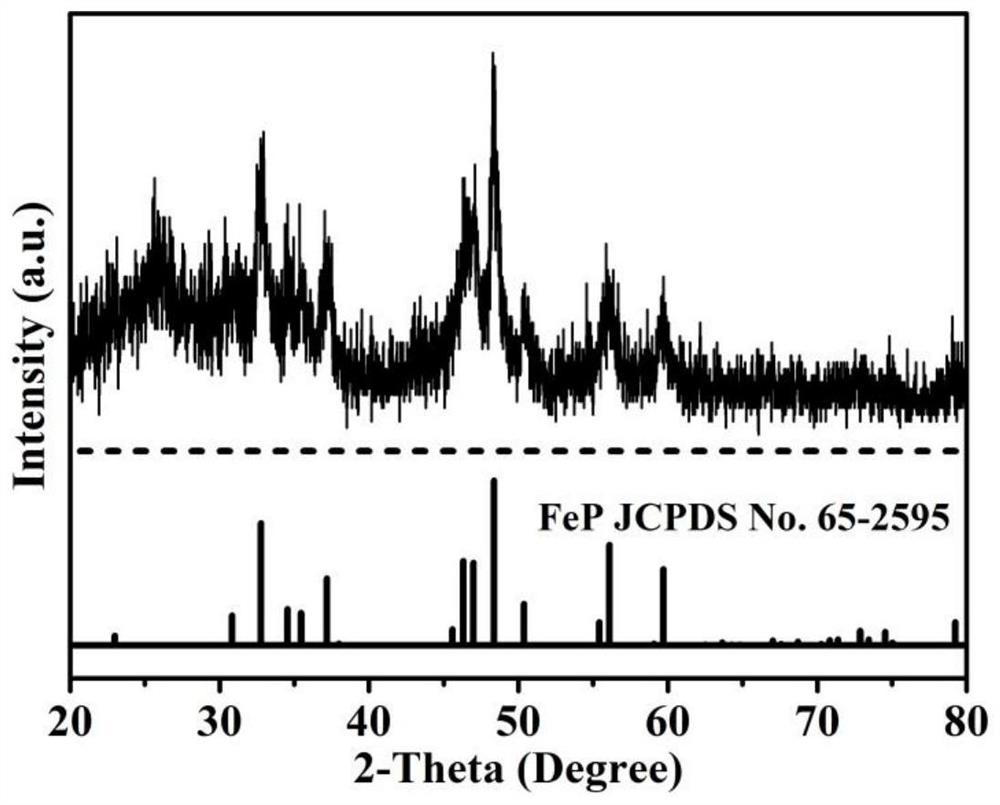
Figure 1 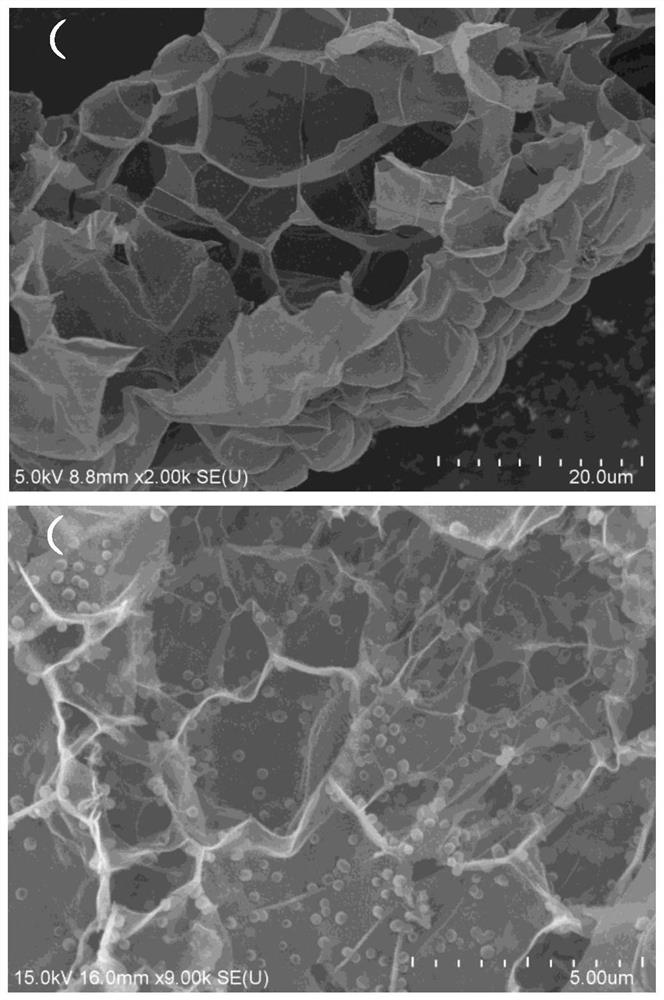
Figure 2 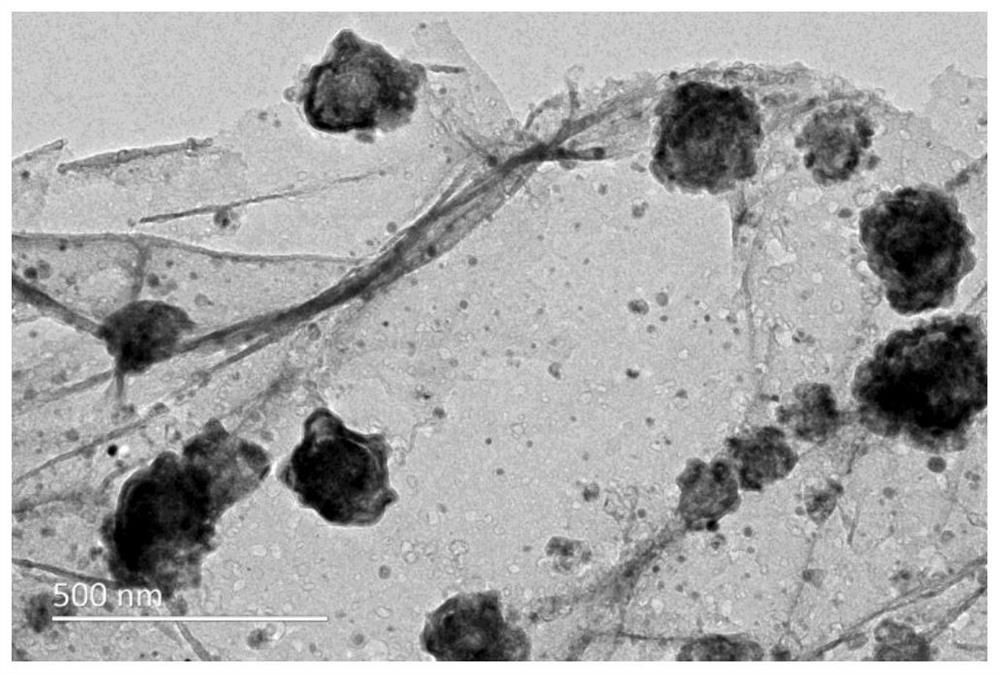
Figure 3
Abstract
Description
technical field
[0001] The invention belongs to the field of functional nanometer materials, and in particular relates to an iron phosphide-loaded graphene foam composite material and a preparation method thereof. Background technique
[0002] In recent years, transition metal phosphide materials have attracted great research interest due to their structural stability, good thermal conductivity, and excellent thermodynamic activity. Among them, nanomaterials represented by iron phosphide (FeP) and their composite materials have received extensive attention and research in the field of lithium-ion battery materials and electrocatalysis due to their good electrocatalytic activity and high reversible lithium storage capacity. . However, during the service process, FeP nanomaterials face problems such as particle agglomeration and particle damage due to volume expansion stress caused by intercalation / delithiation. In addition, FeP material itself has poor conductivity, which al...
Examples
Embodiment 1
[0026] Weigh 1.2g Fe(NO 3 ) 3 9H 2 O and 0.8g polyvinylpyrrolidone (PVP, K30) are completely dissolved in 40ml deionized water to make a transparent colloidal liquid, then put into an oven, and dry at 50°C for 12h to obtain an orange-yellow flaky block; Grind the flaky block into a powder with a particle size of ~100 mesh in a mortar, weigh 1.0g and put it into a 30ml burning boat with a cover, put it into a tube furnace, use an argon atmosphere, and heat it at 3°C / min Heating rate of heating to 500°C, holding for 1h, then slowly cooling to 230°C, holding for 1h in the air atmosphere, then cooling to room temperature, collecting precursor A, and then weighing 0.5g of precursor A into CVD small At one end of the tube furnace quartz furnace tube near the gas outlet, put 10g Na 2 h 2 PO 2 Place it at the end close to the gas inlet, adjust the argon gas flow rate to 80 sccm, raise the temperature to 360°C at 2°C / min, keep it warm for 6h, and then slowly cool to room temperatu...
Embodiment 2
[0028] Weigh 1.0g Fe(NO 3 ) 3 9H 2 O and 1.6g polyvinylpyrrolidone (PVP, K30) are completely dissolved in 35ml deionized water to make a transparent colloidal liquid, then put into an oven, and dry at 45°C for 24h to obtain an orange-yellow flaky block; Grind the flaky block into a powder with a particle size of ~50 mesh with a mortar, weigh 1.6g and put it into a 30ml burning boat with a cover, put it into a tube furnace, use a nitrogen atmosphere, and set the temperature at 4°C / min. Heating rate to 490°C, keep warm for 50min, then slowly cool to 260°C, keep warm in air atmosphere for 1h, then cool to room temperature, collect precursor A, then weigh 0.5g of precursor A into CVD small tube One end of the furnace quartz furnace tube near the gas outlet, put 10g Na 2 h 2 PO 2 Place it at the end close to the gas inlet, adjust the argon gas flow rate to 80 sccm, raise the temperature to 360°C at 2°C / min, keep it warm for 10h, and then slowly cool to room temperature to obta...
Embodiment 3
[0030] Weigh 1.2g Fe(NO 3 ) 3 9H 2O and 0.4g polyvinylpyrrolidone (PVP, K30) are completely dissolved in 35ml deionized water to make a transparent colloidal liquid, then put into an oven, and dry at 45°C for 16h to obtain an orange-yellow flaky block; Grind the flaky block into a powder with a particle size of ~200 mesh with a mortar, weigh 2.0g and put it into a 30ml burning boat with a cover, put it into a tube furnace, use an argon atmosphere, and heat it at 4°C / min Heating rate of heating to 480°C, holding for 1 hour, then slowly cooling to 200°C, holding for 0.5 hours in the air atmosphere, then cooling to room temperature, collecting precursor A, and then weighing 0.5g of precursor A into CVD small At the end of the tube furnace quartz furnace tube near the gas outlet, put 6g Na 2 h 2 PO 2 Place it at the end close to the gas inlet, adjust the argon gas flow rate to 100 sccm, raise the temperature to 400 °C at 1 °C / min, keep it for 6 hours, and then slowly cool to ...